Rural Landowner Buys an Acre With a Hidden Road Easement in the Contract — Then Learns She Isn’t Legally Allowed to Gate Her Own Land
Photo credit: AI-generated image created using ChatGPT. Illustrative only.
Buying rural land is supposed to feel like a fresh start: space, privacy, and the freedom to build your fences the way you want. For one new landowner, that dream started unraveling almost immediately—because a few lines of contract language quietly handed her neighbor something far bigger than “access.”
In the original post, she explains that she recently bought an acre and later realized the paperwork included a utilities easement. That part wasn’t the shock. The surprise was what was tucked into the wording: the seller would make a road on that easement for her own use—and the new owner legally can’t put gates across it.
It wasn’t just an easement—it was a road she can’t control
A utilities easement is the kind of thing many buyers expect to see. Power, water, or other service lines need a corridor. The problem here was the add-on: a road built on that corridor, specifically for the seller’s use, sitting inside the boundaries of the acre that just changed hands.
Once that clicked, the implications were immediate. The owner estimates she effectively lost about 8% of her acre, not because the land vanished, but because she can’t treat that strip like the rest of her property. She can’t secure it with gates, and she can’t use fencing the way rural owners often do—one continuous perimeter that keeps things simple and safe.
It’s the kind of detail that feels minor at signing and enormous once you’re trying to live with it. On paper, it’s a “road on an easement.” In real life, it’s an always-open lane through your land, with someone else expecting to use it.
The part that stings: nobody caught it at closing
What makes this story hit hard is how common the setup feels. The buyer says neither she nor her realtor caught the road language in time. The easement was in the contract, but the road provision was “virtually hidden in the wording,” the kind of clause you don’t see until you’re staring at the consequences.
Rural property deals often come with thick packets: legal descriptions, addenda, surveys (if you’re lucky), disclosures, exceptions, and easement language that reads like another language. Most buyers are looking for the big hazards—bad title, boundary disputes, unpaid taxes—not a sentence that quietly changes how you can control access to your own land.
And once you’ve closed, you’re not negotiating anymore. You’re managing damage. Not the kind you fix with a shovel or a weekend project, but the kind that changes how you can fence, how you can keep livestock or dogs, and how safe and private your home site feels.
Fencing turned into a running argument instead of a weekend job
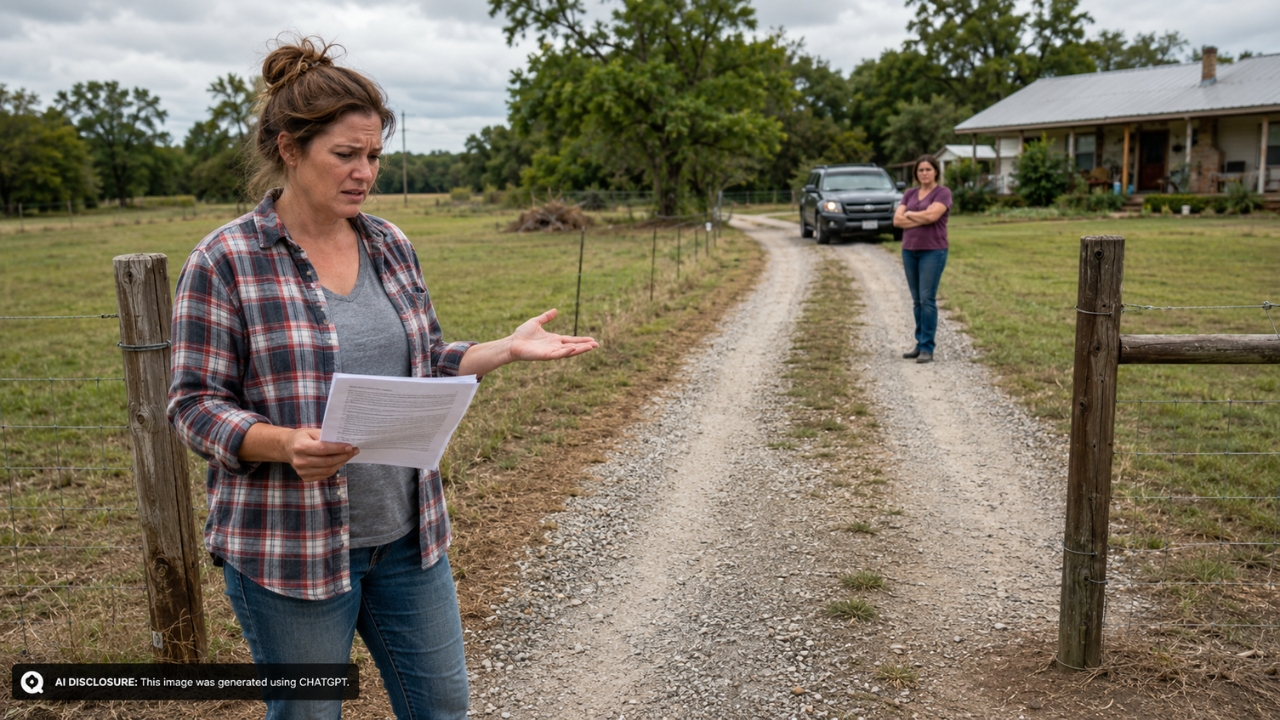
The owner’s next problem wasn’t theoretical—it was personal and constant. She says the neighbor monitors any fencing she puts up. That’s the sort of detail that turns “I made a mistake in my paperwork” into “I have a person watching my property choices in real time.”
According to the post, the neighbor also texts her fencing regulations that “don’t apply.” Even without an HOA involved, nothing spikes a rural landowner’s blood pressure like someone acting like an enforcement office from across the property line—especially when they aren’t correct.
The emotional shift is fast. Instead of building out a new place—maybe a garden, a driveway, a perimeter fence—every improvement becomes a potential flashpoint. Fence posts aren’t just fence posts anymore. They’re a message, a boundary, and apparently an invitation for commentary.
When access can’t be gated, the stakes get practical fast
The inability to gate the road is where this stops being a simple neighbor annoyance. In rural living, gates aren’t just about keeping people out. They’re how you manage animals, control traffic, and protect equipment.
An open road easement can also complicate the feeling of “home.” You might plan your house site, your driveway, your outbuildings, and your fencing based on one mental map—then find out you have a permanent travel lane cutting through that plan. Even if the easement holder uses it politely, you’re designing around someone else’s access.
And if the neighbor is already monitoring fencing and sending messages, it’s easy to imagine how quickly disagreements could spill into daily life. Every time a vehicle comes down that road, it’s a reminder that the land isn’t as private as it looked on the listing photos.
People zeroed in on documentation and boundaries, not retaliation
The poster asked for ideas on how to legally “give her the finger.” That’s an honest reaction when you feel cornered: you want a move that restores some control without crossing a line. But the most practical responses in these kinds of property disputes usually start with something less satisfying and more effective—paper.
When an easement road is involved, the exact wording matters. Where it starts, where it ends, what it allows, and what it doesn’t. The difference between a utilities easement, a private access easement, and a road agreement can change what fencing is allowed, what maintenance is required, and whether the neighbor can expand use beyond what was written.
And when someone is monitoring your fencing choices, the smart play is often to document everything on your side too. Photos of existing conditions, screenshots of texts, a written log of dates and interactions—boring stuff that becomes valuable if the dispute escalates. Even the decision to build a fence can turn into a “who said what” mess later.
The unresolved tension: living next to someone who won’t let it go
The hardest part in the post isn’t the lost percentage of land. It’s the feeling that the neighbor has already decided to be an antagonist. The owner says she’s “ruined any chance of being a good neighbor,” and that sentence reads like someone realizing they’re not dealing with a one-time misunderstanding.
Once a relationship starts with a hidden clause and ends with monitoring and unwanted rule texts, it changes how you live on your own property. You hesitate before you build. You second-guess where you place a corner post. You look up when a car goes by because you’re waiting for the next message.
For now, the owner is stuck with the reality of what’s recorded and enforceable—an easement road she can’t gate—and a neighbor who seems determined to keep pressure on. It’s the kind of rural headache that doesn’t show up in a walk-through, but can shape everything that comes after: the layout, the privacy, and whether your acre feels like yours at all.
Like Fix It Homestead’s content? Be sure to follow us.