New Homeowner Finds a Neighbor Reclaiming a Thirty-Foot Strip of Land He Once Apologized For — Then Blames His Ex-Wife for the Mistake
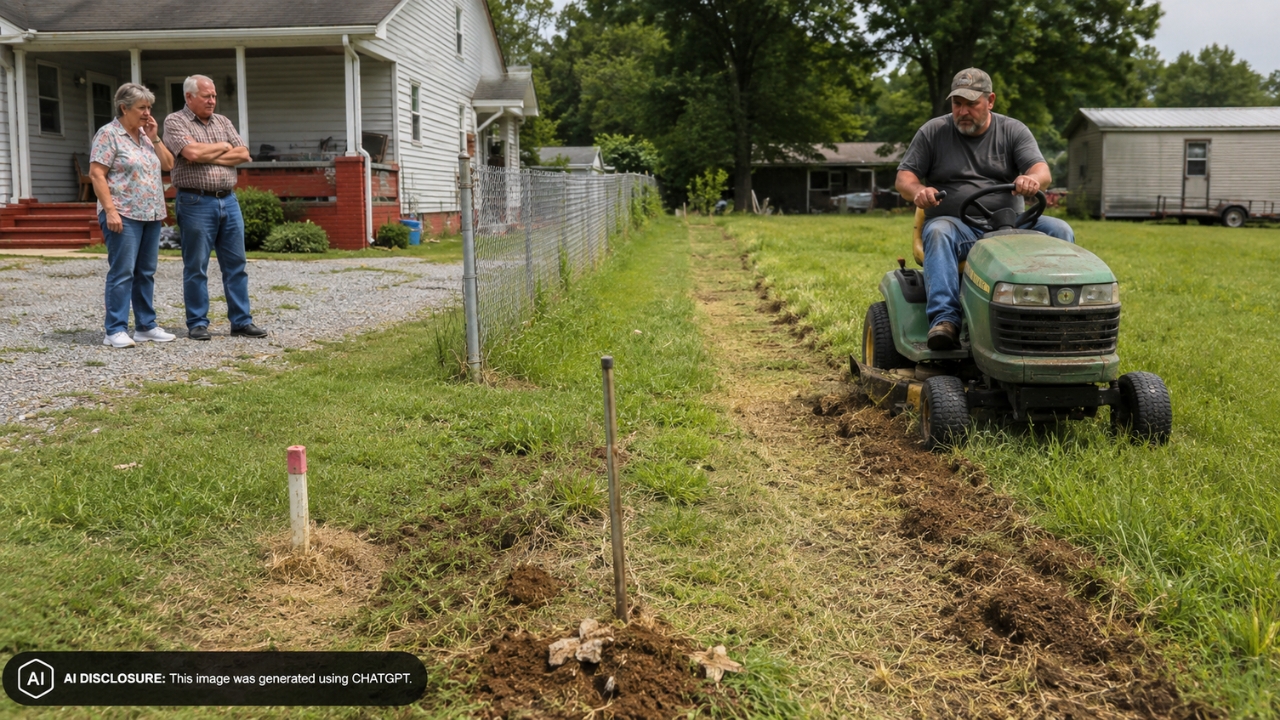
Photo credit: AI-generated image created using ChatGPT. Illustrative only.
A property line fight doesn’t always start with a new fence or a shouting match. Sometimes it starts with a neighbor acting like something is his again—mowing, stripping grass, and moving like nobody ever settled it.
That’s what one Tennessee family says they’re dealing with, in the original post describing a neighbor who once backed down from a 30-foot claim… then circled right back after life at his house changed.
The first time, he admitted he was wrong
According to the family member who wrote in, the neighbor believed he owned roughly a 30-foot strip running down the side of the parents’ land. Years ago, the neighbor even “surveyed it himself” and then eventually apologized for being mistaken.
At the time, the neighbor reportedly pinned the error on his wife. That detail felt like a weird footnote then—until the poster says the wife left about a year ago, and the neighbor’s attitude shifted. The neighbor, described as abusive, “crazy,” and dangerous, allegedly started acting like the strip was his again.
It’s the kind of rural-life headache that can feel small on paper—just a side strip—but huge in real life. A few dozen feet can mean access, mowing, driveway edge, drainage flow, where you can put a fence, and whether you feel comfortable walking your own property line.
Then the survey markers disappeared
The family says the neighbor removed survey markers about six months ago. The poster’s wording makes it clear they believe “obviously it was him,” but belief and proof are not the same thing when you’re trying to get help.
Once those markers were gone, the neighbor allegedly started “stripping the grass on our side again.” That’s a physical act you can see from the window, not a paperwork argument. It also creates a new kind of pressure: if you don’t respond, it can start to look like you’ve accepted the new normal.
The poster’s parents are older and living on Social Security, which turns every decision into a math problem. Even a “simple” fix—pay for a survey, set posts, hang signs—stops being simple when you’re choosing between peace of mind and the bills.
The sheriff’s advice left them feeling stuck
When the family reached out to law enforcement, the advice they got felt, in the poster’s words, “crazy.” They say the sheriff told them that since they can’t prove who removed the markers, nothing can be done about that part.
Worse, they were told that because the matter is “in dispute” and the markers are gone, the sheriff can’t stop the neighbor from using the land. The family also says they were told neither side can put up a fence or even trespass signs while the line is disputed.
The only boundary that did get enforced was personal: the neighbor was “trespassed from knocking on their door.” That’s something, but it doesn’t protect the strip of land itself—especially if the neighbor’s goal is to keep pushing the edge and forcing the parents to spend money to prove what they already believe is theirs.
The poster also describes watching the sheriff and the neighbor walking the property together, “laughing and cutting up,” which only made the family trust the guidance less.
Old surveys, new bills, and the fear of endless do-overs
In the post, the family member says there were two surveys done years ago (around 2012 and 2014), and the neighbor had his own around 2016. But they say they were told all of those surveys are “no good” now.
The implication, as the family heard it: pay for new surveys again. And even then, the neighbor could simply pull up new markers, and the family would be right back where they started—except poorer.
That’s the part that makes property-line disputes feel like they’re designed to grind people down. The practical reality is that markers can be disturbed, posts can be yanked, and paint can be scraped off. If the neighbor is the type to do it in the dark and deny it in the daylight, the “fix” starts to look less like a one-time project and more like a recurring expense.
The poster says they installed cameras and already have recordings of the neighbor going “very far into their property” while doing the grass stripping. But even with video, families in small towns often worry about whether anyone will act—especially when the neighbor is known to be volatile.
This wasn’t just about land—it was about safety at the house
The story doesn’t read like a petty squabble about mowing. The family member describes the neighbor as paranoid and dangerous, and says he’s the type to “hold you at gun point on your own property,” adding that it happened to them.
That changes the whole decision tree. Putting in a fence isn’t just a weekend project anymore; it becomes a potential flashpoint. Even walking the line to take photos becomes a risk assessment.
The poster also expects retaliation if they build anything: a “cheap fence and signs,” followed by the neighbor removing posts “later that night.” That fear—of doing everything right and still getting undone—creates a feeling of helplessness that’s hard to shake, especially for older homeowners who just want to live quietly on their own land.
Readers pushed documentation and professionals over face-to-face fights
Even from the way the post is written, the direction of travel is clear: the family member is trying to scrape together money for a new survey, while also leaning hard on cameras and recorded evidence.
That’s typically where outside observers land in disputes like this: document everything, avoid direct confrontations with someone unstable, and get the property line established by someone who doesn’t have a personal stake in the outcome. The “self-survey” detail from years earlier is the kind of thing that might calm a disagreement between reasonable neighbors, but it doesn’t hold up when the other party decides the old apology doesn’t matter anymore.
There’s also a quiet theme running through the post that a lot of homeowners recognize: sometimes the toughest part isn’t the technical fix. It’s the local reality—who shows up, who takes it seriously, and how much effort it takes to get basic boundaries respected.
The family member’s plan—cameras, a new survey, then fencing—sounds straightforward on paper. But living next door to someone they describe as violent makes every step feel like it could trigger the next escalation.
For now, the family is left in that uncomfortable in-between: a visible strip of yard being treated like a prize, older homeowners on a fixed income, and a neighbor who once admitted he was wrong but now blames his former spouse and acts like the apology never happened. In property disputes, the land is the battleground—but the real cost is often the constant vigilance it demands.
Like Fix It Homestead’s content? Be sure to follow us.