Rural Landowner Finds a Neighbor Claiming a Shared Gate and Power Pole Belong to Him — Then Learns It’s Written Into the Easement
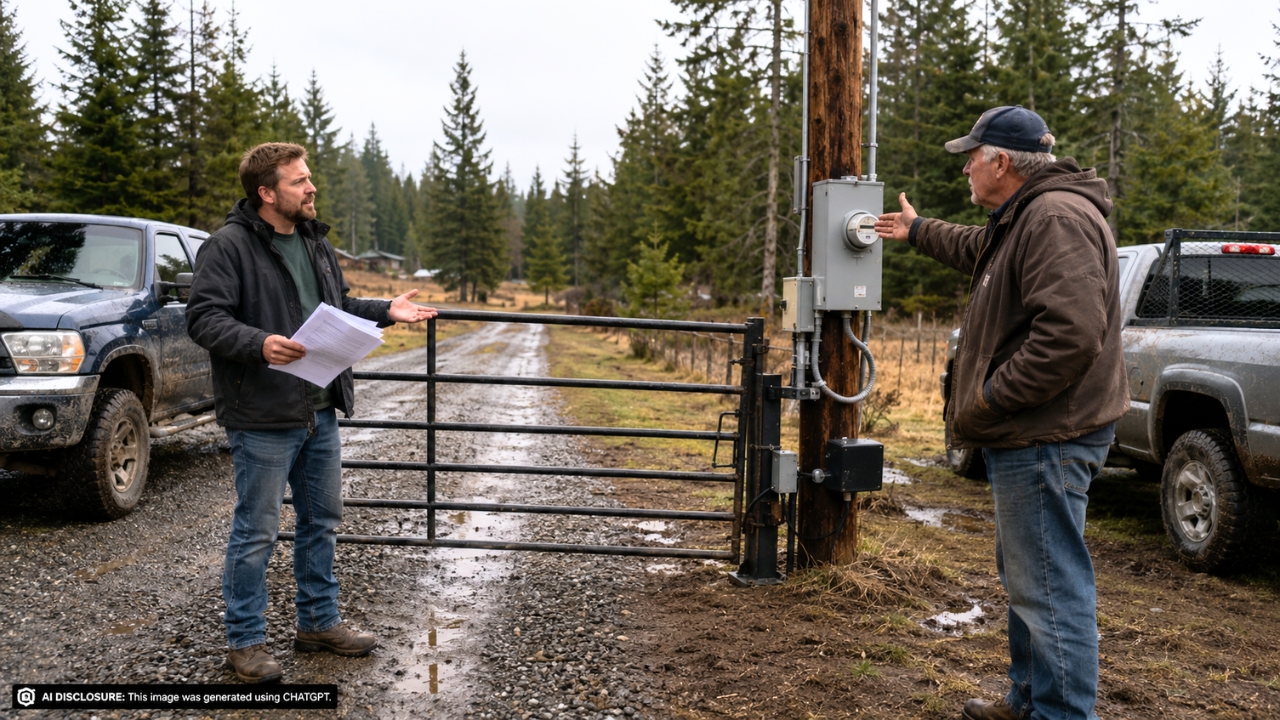
Photo credit: AI-generated image created using ChatGPT. Illustrative only.
On a raw piece of rural land, it’s easy to assume the few “improvements” you see are part of what you bought. A gate across the driveway. A power pole set nearby to run that gate. It looks like infrastructure, the kind of thing you’d rather keep working than argue about.
That’s where one Lewis County, Washington landowner found themselves after buying a lot with a known access and utilities easement—only to discover their neighbor believed the gate and power setup belonged to the neighbor, not the land it sits on. The details came out in the original post, and the story is the kind of slow-burn property drama that can turn a peaceful stretch of woods into a daily standoff.
A gate in the middle of “raw land”
The landowner said their property is “completely raw,” except for one very visible exception: a gate and a power pole installed right in the middle of their parcel. The gate wasn’t something the new owner installed. It had been put in by an earlier owner, back when the property was subdivided.
According to the landowner, the original owner subdivided the land and also created an easement that would “stay with the land” for whoever owned the lower property. In plain terms, the neighbor’s parcel has the right to cross the landowner’s property for ingress and egress, and there’s also an easement for utilities going “over under and thru” the landowner’s land.
None of that surprised the buyer. They said they were aware of the easement before purchasing and didn’t object to access. The problem wasn’t the concept of an easement—it was what the neighbor believed the easement included.
A quick handshake agreement lasted one day
At first, this looked like it might be a simple neighbor-to-neighbor conversation. The landowner spoke with the neighbor about using the power pole. The neighbor reportedly said it was fine and that they were “over the gate any way,” implying the gate wasn’t a big deal anymore.
So the landowner took a practical next step: they put the power in their own name. That’s the kind of thing rural property owners do all the time when they’re trying to get a site ready—power is the first domino, because it affects everything else from tools to security lighting to future building plans.
For a few hours, it sounded like the issue was solved with a simple conversation and a utility account change. Then the tone shifted.
The text message that changed everything
Later that night, the landowner received a text saying the neighbor had no intention of letting them use that power, and that the neighbor’s attorney would be sending information about ownership. That’s a jarring turn—one day you’re talking about sharing, and by nightfall you’re being told lawyers are involved.
Then came the move that made the dispute feel less like a misunderstanding and more like a power struggle. The landowner said the neighbor put the power back into the neighbor’s name about three weeks later.
On top of that, the landowner reported the power outlet was vandalized so they couldn’t use it. When you live out in the county, small acts like that don’t stay small. If someone is willing to damage an outlet at a shared access point, it raises the question of what else they’ll mess with—locks, hinges, cameras, even the gate mechanism itself.
The paperwork didn’t match the neighbor’s certainty
The attorney eventually sent a copy of the easement agreement. The landowner read it expecting to see language about the gate and power pole, since the neighbor was acting like ownership was settled.
But the landowner said the document “says nothing about the gate and power.” That’s where the core frustration landed: how can a neighbor claim ownership of structures located on someone else’s property—structures installed long before the current neighbor ever bought their parcel—when the written easement doesn’t spell it out?
The landowner also described feeling boxed in by the neighbor’s confidence and the attorney’s posture, like they were being told to accept the arrangement without question. On rural land, where boundaries can be hard to visualize and improvements are sparse, that pressure can be effective—especially when one party acts like they’ve already won.
Why a gate and a power pole become a big deal fast
In a neighborhood setting, a gate is already loaded: it controls access, sets the tone for who “belongs,” and signals whether a road is public-feeling or private-feeling. But on raw land, it’s even more central. That gate might be the only controlled point between a quiet property and anyone who wants to drive onto it.
Add a powered gate and you’ve got more than a fence line. You’ve got wiring, a meter account, maintenance costs, and potential safety hazards. If the pole and outlet are damaged, someone has to fix them. If the gate fails, someone will likely demand it be repaired quickly because it affects daily access.
And then there’s the bigger, uglier piece: control. The person controlling the power can effectively control the gate. If one neighbor can shut off electricity, lock out the other, or make “repairs” that conveniently keep the other party from using the setup, the dispute isn’t just about property rights—it’s about who gets to dictate the rules at the entrance.
Reactions focused on proof, not arguments
Even without a long comment thread included in the source material, this kind of dispute tends to pull practical instincts out of homeowners: stop relying on verbal assurances, and start building a paper trail. Once an attorney is involved and there’s alleged vandalism, casual driveway chats usually stop being productive.
The landowner’s key detail—that the easement copy they received didn’t mention the gate or power—highlights why people in these disputes obsess over recorded documents. A neighbor can say “I own it” all day. But when access rights, utilities, and permanent structures overlap, what matters is what’s recorded, what’s permitted, and what can be proven later.
Just as important is documenting what’s happening on the ground. In rural areas, damage can be dismissed as weather or “someone messing around,” and it can be hard to prove who did what. When the outlet is suddenly unusable and the account changes hands, dates and records start to matter.
The landowner in Lewis County is still stuck with the immediate reality: a gate and pole sitting on their land, tied to a neighbor’s access, and now wrapped in a disagreement that has already escalated beyond friendly conversation. Out in the country, where your driveway is your front door, that kind of tension doesn’t stay at the property line—it becomes part of daily life.
Like Fix It Homestead’s content? Be sure to follow us.