Homeowner Finds Privacy Shrubs Cut Down With a Chainsaw While No One Was Home — Then a Ten-Foot Pile of Waste Is Left Blocking the Driveway
Photo credit: AI-generated image created using ChatGPT. Illustrative only.
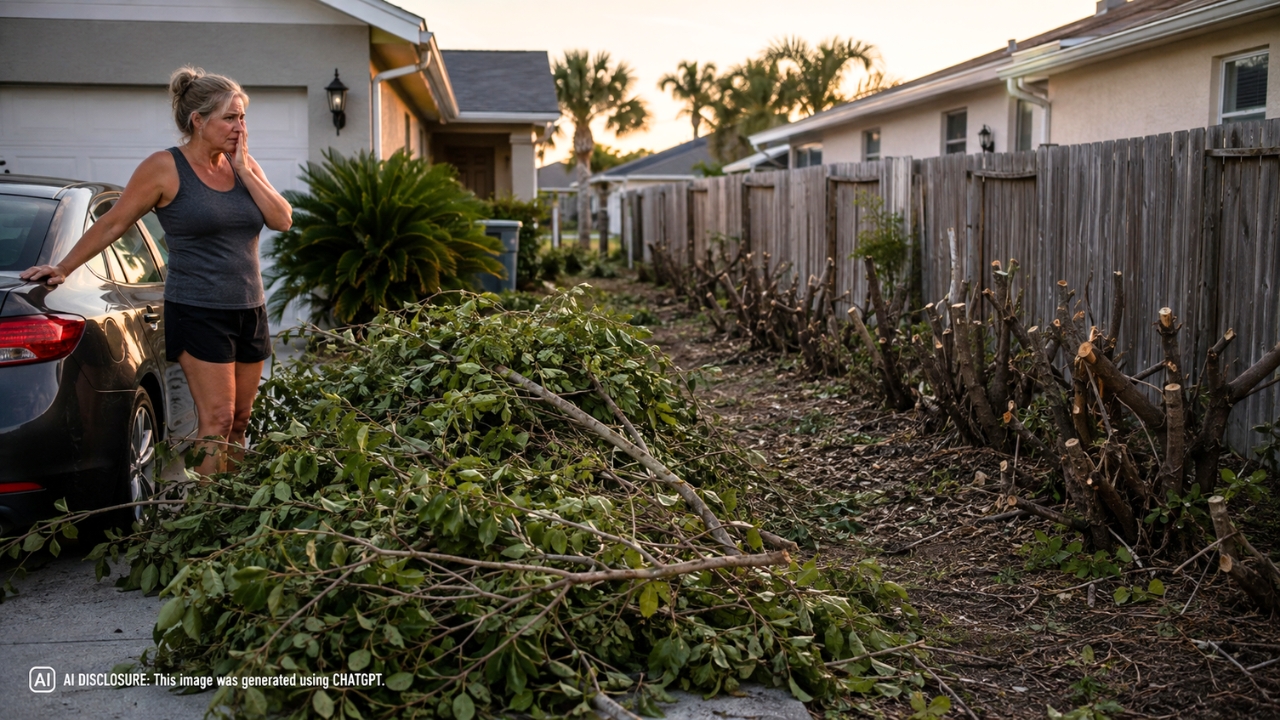
The homeowner pulled into the neighborhood expecting a normal evening and instead found the kind of surprise that makes your stomach drop: their privacy shrubs had been hacked down while they were gone. Not trimmed neatly, not shaped back—cut low enough to change the whole look of the yard and expose what the greenery had been screening.
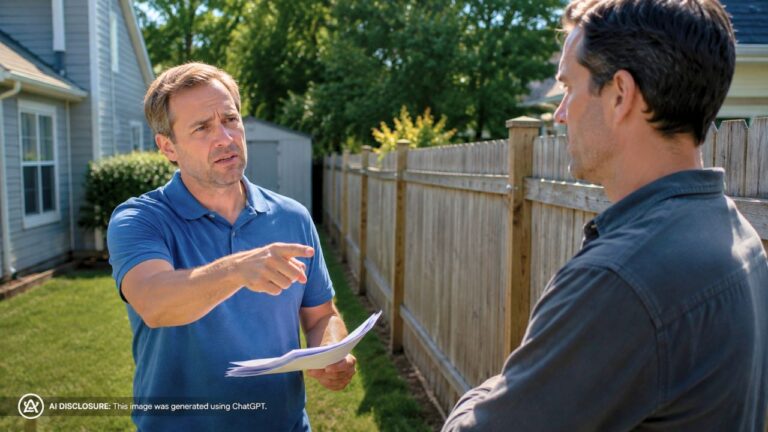
In the original post, the homeowner said the shrubs sat along the line near a neighbor’s fence. When they confronted the neighbor, they were told the neighbor had knocked, gotten no answer, and “went ahead and cut them” anyway. The homeowner lives in Florida and said the neighbor appeared to know better.
Coming home to a yard that suddenly felt exposed
Privacy shrubs aren’t just landscaping. For a lot of homeowners, they’re the cheap, living alternative to a taller fence—something that blocks sightlines, dampens noise, and makes a small yard feel like it belongs to you.
That’s why this kind of damage lands differently than, say, a flowerbed getting stepped on. The homeowner described the cut as severe: the shrubs were cut down to under the neighbor’s fence line, leaving the planting looking “terrible.” Whatever sense of screening and symmetry the hedge had provided was gone in one afternoon.
There’s also a specific kind of anger that comes from realizing someone didn’t just make a bad choice—they came onto your property to do it. The homeowner believed the neighbor “obviously came on my property,” and the change was big enough that it couldn’t be chalked up to a misunderstanding from the sidewalk.
The explanation: “I knocked, no one answered”
When the homeowner confronted the neighbor, the neighbor’s logic was blunt: no one answered the door, so he took matters into his own hands. It wasn’t framed as an accident or a quick snip of overhanging branches. It was a chainsaw job, done deliberately, and justified after the fact.
The homeowner suspected the motive was simple: leaves dropping into the neighbor’s yard. That’s a common neighbor complaint, especially in tighter Florida neighborhoods where lots are close and fences make every stray leaf feel personal.
But the homeowner’s frustration wasn’t just about leaves or aesthetics. It was the boundary being crossed—literally. The neighbor apologized repeatedly, but apologies don’t put back mature shrubs, and they don’t erase the fact that someone treated another person’s landscaping like a shared nuisance instead of private property.
Then the mess showed up: a pile of cuttings blocking the driveway
As if the cut-down hedge wasn’t enough, the homeowner said the neighbor left a roughly ten-foot pile of yard waste in front of the home, blocking part of the driveway. So now it wasn’t only about damage—it was about access and day-to-day inconvenience.
Anyone who’s dealt with yard waste knows how quickly it turns from “I’ll handle that later” to a real problem. It can attract bugs, get soaked and heavy in rain, and sit there long enough for neighbors to start side-eyeing the house like it’s the one failing to maintain the property.
The homeowner also worried the neighbor might have tried to make the cleanup someone else’s problem by calling waste management and giving the homeowner’s address, since the neighbor reassured them that “he called someone to come pick it up.” Even if pickup was legitimately scheduled, the optics were rough: the person who made the mess wasn’t the one storing it on their own curb.
The part that makes homeowners nervous: property lines and proof
With shrubs planted near a fence line, everything starts to hinge on what’s actually on whose side. The homeowner felt confident the neighbor stepped onto their property. They also documented it the way most people wish they’d done sooner: photographs and video.
That documentation matters because landscaping fights tend to turn into “he said, she said” within minutes. One person calls it trespassing and damage; the other calls it trimming an encroachment. Without clear proof, the dispute can spiral into a long argument that doesn’t match the size of the yard—but absolutely matches the size of the resentment.
The other reason homeowners get nervous in these moments is what comes next. If someone was willing to cross the line once—chainsaw in hand—what happens the next time there’s an annoyance? It’s not just the shrubs. It’s the signal that boundaries are negotiable if the neighbor feels justified.
Reactions focused on documentation, cleanup, and not letting it get normalized
The homeowner asked for advice and made it clear they were furious. Even without a full comment thread included, the usual homeowner takeaways in these disputes are predictable for a reason: people have learned the hard way that the first few days set the tone.
Most practical reactions in property-line landscaping disputes focus on locking down the basics before the story gets rewritten. Save the photos and video in more than one place. Take additional pictures showing where the shrubs were cut in relation to the fence line. Document the yard waste pile where it sits, including how it blocks the driveway, because the blockage adds a fresh, separate headache to the original damage.
There’s also a social reality neighbors understand: if you absorb the cost and hassle quietly, it can become the new normal. Today it’s shrubs. Next time it might be a fence panel “fixed” without asking, or a gate “adjusted,” or a tree limb cut back so far it dies later. People who have lived through this kind of feud often urge homeowners to keep communication in writing once tempers flare, precisely so a casual apology doesn’t replace accountability.
A yard can be repaired, but living next door is the long game
Privacy shrubs grow back slowly, if they recover at all after being cut down aggressively. Even when they do, the homeowner is left with a yard that feels different in the meantime—more open, more visible, and suddenly subject to someone else’s preferences.
And the waste pile in front of the house is the cherry on top: a physical reminder of what happened, sitting there until someone hauls it away. It’s hard to feel relaxed on your own property when part of your driveway is blocked by debris you didn’t create.
The neighbor’s multiple apologies show they understood, at least on some level, that they crossed a line. But the homeowner’s response captured the real tension: in a nice neighborhood, with an “educated” adult, there’s an expectation that you don’t solve minor annoyances with a chainsaw on someone else’s land. The shrubs can be replaced. The trust is the harder thing to replant.
Like Fix It Homestead’s content? Be sure to follow us.