Rural Property Owner Finds a Neighbor Poured a New Driveway a Foot and a Half Across the Property Line — Then the Neighbor Offers a “Written Waiver” Instead of Moving It
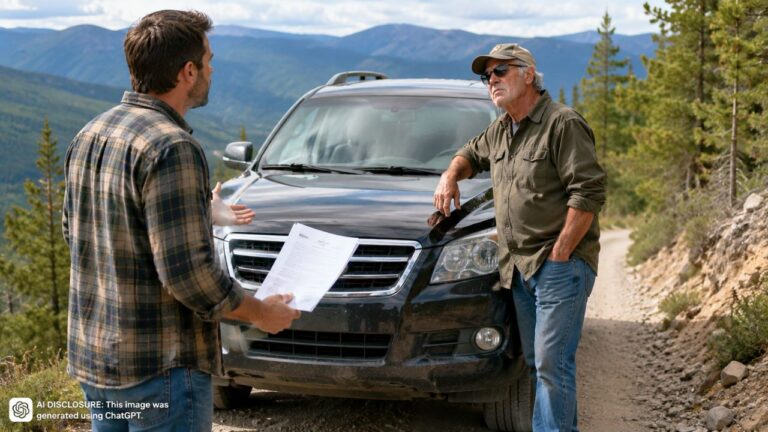
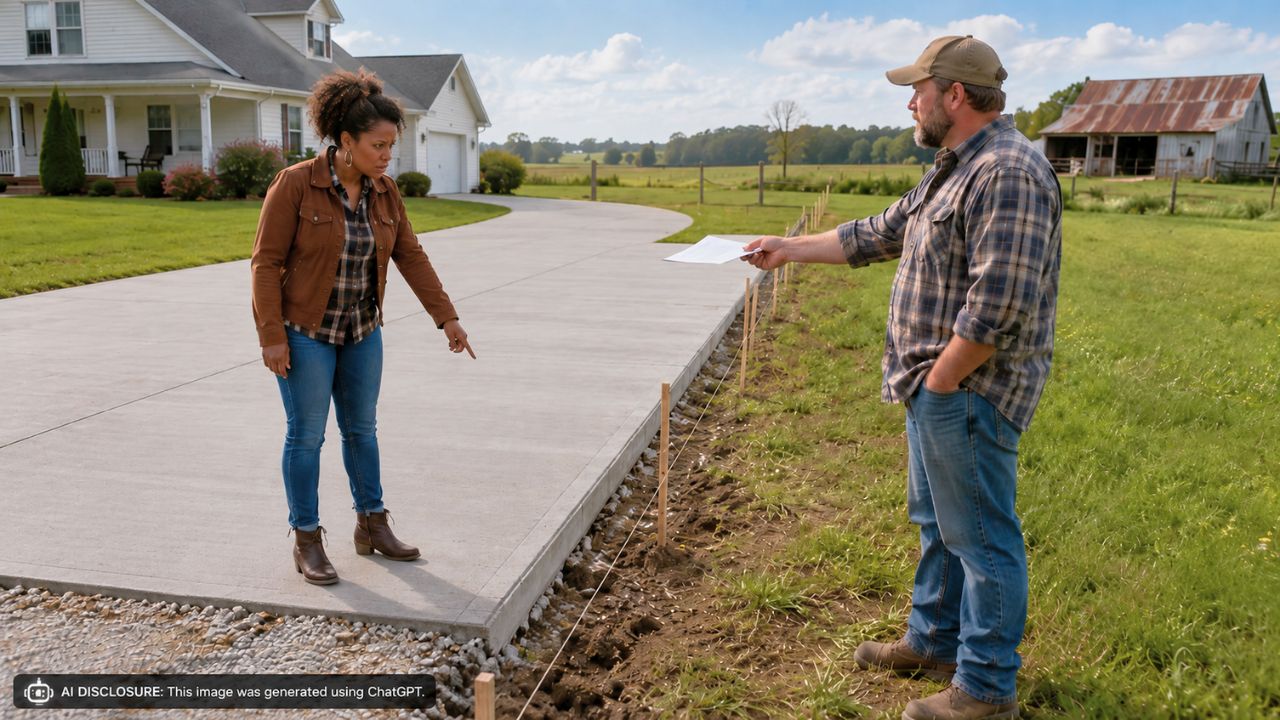
Photo credit: AI-generated image created using ChatGPT. Illustrative only.
It started the way a lot of property-line fights start: a neighbor “improves” something and you feel that nagging sense it’s not where it’s supposed to be. In Massachusetts, one rural property owner says their neighbors repaved a driveway soon after moving in, and the end of it suddenly got wider—less steep, less curved, and a little too comfortable for the people who don’t own the ground under it.
They didn’t rely on vibes. They hired a surveyor and found the widened section was on their land by several feet. The homeowner laid it out in the source post: they asked the neighbors to remove the encroaching driveway about a year ago, and nothing happened. Then, after another repaving job, they watched the line marker get covered again—turning a simmering boundary dispute into something that felt deliberate.
The repave that changed the boundary from “maybe” to measurable
The driveway wasn’t just resurfaced; it was functionally redesigned at the bottom to make the climb up to the neighbor’s house easier. That’s where the homeowner suspected the overreach happened, and the survey confirmed it.
That kind of change matters because it’s not a fence panel you can pop out and re-set. Asphalt and base stone are labor, equipment, and real money. It also signals intent: widening a driveway end isn’t a maintenance patch, it’s a footprint change.
Once the homeowner had a survey in hand, they did what most people think is the “reasonable neighbor” step. They asked for it to be removed from their land. A year later, they say the driveway was still there.
It wasn’t just the pavement—other backyard grievances piled up
Driveways are visible, but the homeowner’s frustration didn’t sound limited to a strip of asphalt. They also said the neighbors drained their pool into the homeowner’s yard.
They described winter problems too: snow being blown off the neighbor’s driveway and onto the homeowner’s garage roof. On a homestead or rural property, that’s not a petty annoyance—snow loads and ice can mean real damage, and redirecting meltwater can create lingering drainage and foundation headaches.
Add in “overall rude” behavior, and you get the kind of slow-burn conflict where every new action feels like proof the other side will push until someone pushes back harder.
The day the line marker disappeared again
The breaking point came when the homeowner saw the driveway had been repaved again, covering the land marker again. Whatever breathing room existed when the encroachment was older or ambiguous disappeared under fresh blacktop.
The homeowner called the police. But the neighbors reportedly told officers, “that’s how the driveway was when we got here, they can take us to court if they want.” That response didn’t promise cooperation. It dared the homeowner to spend time and money to force the issue.
And it set up the question a lot of fed-up property owners eventually ask: if it’s on my land, can I just remove it?
The backhoe temptation and the risk of making it worse
The homeowner’s proposed fix was blunt: use a backhoe and remove the driveway section from their property without going to court first. It’s the kind of thought that comes after you’ve asked nicely, waited, and watched the problem get literally paved over again.
But “self-help” fixes around shared boundaries are where homeowner logic and legal reality collide. Even if the ground is yours, tearing out a neighbor’s driveway can trigger escalation fast—arguments, retaliation, and a competing claim that you damaged their property or blocked access.
In rural areas, access is everything. Driveways aren’t decorative; they’re how people get to work, how deliveries arrive, and how emergency vehicles find a house. If you rip out part of a driveway and someone can’t safely enter or exit, the conflict stops being a property-line argument and starts becoming a safety and liability nightmare.
What commenters pushed: proof, paperwork, and patience (even when it hurts)
In the responses, the practical tone came through: people tended to steer the homeowner away from the backhoe-and-justice approach. The consistent theme was that even when you’re right about the boundary, you don’t want to be the one caught on camera tearing out pavement while the other party claims they were “just maintaining what was there.”
Commenters leaned on the tools that are unglamorous but powerful in these disputes: the survey, documentation, and formal notice. If the marker was covered again, that made photos and dated records feel urgent—show what was visible, what changed, and when it changed.
Another common thread in these kinds of discussions is to get the dispute into writing. If you already asked a year ago, and the neighbors ignored it, then certified letters, a property attorney, and a clear demand can matter more than a heated conversation at the end of the drive.
Where a “written waiver” can feel like a trap
When an encroachment is measured—“several feet” over the line—it’s not unusual for the encroaching neighbor to offer paperwork instead of removal. Homeowners often hear some version of: “Let’s just sign something and move on.” In plain English, that can sound like cooperation.
But for the person losing land, it can also sound like being asked to give up rights permanently to avoid a fight today. A “waiver” can mean many things depending on how it’s drafted: permission to keep the driveway where it is, an agreement not to sue, or language that muddies who owns what down the line.
That’s why people get tense about signing anything in the shadow of a fresh repave. When the pavement is new and the marker is buried again, a homeowner can reasonably worry the other side is trying to turn an overstep into something that looks legitimate later.
The homeowner in Massachusetts wasn’t asking how to win a neighbor feud. They were asking how to protect a boundary that had already been proven once, then covered over again. And the hard part is this: the more physical and permanent the “improvement” becomes, the more expensive and emotionally draining it is to undo—whether that undoing is done with a backhoe or a lawyer.
For now, the land is still under that driveway. The neighbor has made it clear they don’t intend to move it voluntarily. And the homeowner is left staring at a strip of fresh pavement that didn’t just cross a line—it erased the marker that proved the line existed in the first place.
Like Fix It Homestead’s content? Be sure to follow us.
- Man Says He Found Out the Fence He Paid For Wasn’t Actually on His Property
- Woman Says Her Neighbor Started Taking Mulch From Her Delivery Pile Before She Could Even Spread It
- I made Joanna Gaines’s Friendsgiving casserole and here is what I would keep
- What Caliber Works Best for Groundhogs, Armadillos, and Other Digging Pests?