Texas Landowner Finds an Easement Added to His Deed by a Correction He Never Signed — Then a Court Rules the Neighbor May Keep Crossing It
Photo credit: AI-generated image created using ChatGPT. Illustrative only.
You know that uneasy feeling when a neighbor starts using “your” edge of the property like it’s a public road? In Lubbock County, Texas, that anxiety turned into a full-blown legal fight after a landowner discovered a 30-foot access strip showing up in the paperwork—added by a correction he says he never signed.
The dispute, laid out in the court’s opinion, ended with the neighbor keeping the right to cross anyway. Not because the court shrugged at the signature issue, but because the history around the property made it hard to pretend the access was ever optional.
The “driveway” wasn’t a driveway — it was a 30-foot strip
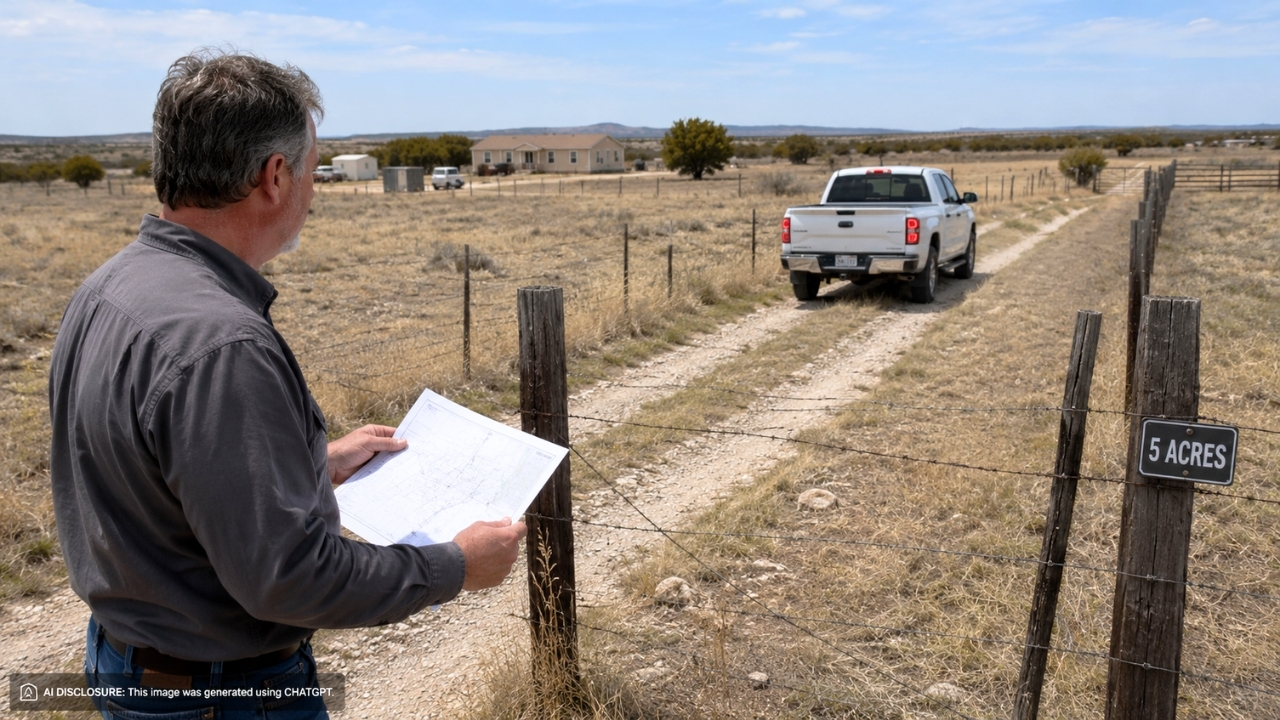
John Neudorf owned a little over five acres. Next door sat a 15.99-acre tract that, over time, ended up owned by Jeffrey Coomer. The catch was access: that adjoining tract depended on using the north 30 feet of Neudorf’s land for ingress, egress, and utilities.
That kind of easement can feel like a technicality when everything’s calm. It’s just a wide path on a map, maybe a worn track in grass, maybe a place you don’t build a fence because you “know” it’s supposed to stay open.
But it becomes very real the moment someone new buys next door and starts treating it like a guaranteed right—because for them, it often is.
The paperwork glitch that set the trap
Here’s where it got messy. When Neudorf bought his property back in 2005, the sales contract specifically said the adjoining tract would have an easement across his land for access and utilities. He personally signed that contract.
Then the mistake: the easement was accidentally left out of the original deed. That’s the sort of omission that can sit quietly for years, until somebody needs financing, wants to sell, or decides they’re done with “informal” arrangements.
The sellers later filed correction deeds in 2006 to add the easement back in. Neudorf’s position was that he never signed those correction deeds—so in his view, the fix wasn’t valid, and the easement wasn’t real.
Sixteen years of use makes “no easement” a hard sell
The neighboring tract changed hands twice and eventually landed with Coomer in 2023. Through those transfers, the deeds in that chain of title continued to describe the same 30-foot easement.
And it wasn’t just ink on paper. The court pointed to long-term, real-world use: the later owners used the easement for 16 years, contributed to improvements on it, and were never stopped by Neudorf.
That detail matters in the way homestead disputes usually do. A path gets used, gravel gets spread, ruts get filled, maybe a gate goes in or gets left open—small decisions that quietly create “normal.” Once that normal runs for a decade-plus, trying to reverse it can feel less like enforcing your rights and more like cutting off someone’s only way home.
The court also noted the adjoining tract was otherwise landlocked. That’s the kind of fact that changes the temperature of the entire dispute, because “please stop crossing my property” becomes “you’re blocking access entirely.”
The escalation: a letter, a lawsuit, and an easement by estoppel
After Coomer bought the tract, Neudorf’s attorney sent a letter claiming no easement existed. If you’ve ever had a neighbor relationship go from waves-at-the-mailbox to “my lawyer will be contacting you,” you know how fast that flips the tone.
Coomer sued and asked the court to declare he had an easement by estoppel. That doctrine is basically the legal version of “you can’t promise access, let people rely on it, and then take it back when it becomes inconvenient.”
Under Texas law (as described in the opinion), easement by estoppel requires three things: a representation, belief in that representation, and detrimental reliance. It can apply even when the written paperwork for an express easement is defective—which is crucial in a case where the argument centers on a missing signature and a corrective filing.
The appeals court found the evidence strongly favored Coomer. Neudorf had signed the original contract recognizing the easement, the property next door relied on it for access, and the use wasn’t new or occasional—it was the established way the tract functioned for years.
The signature argument didn’t land the way he hoped
Neudorf argued the easement shouldn’t be enforced because he never signed the later correction deeds. The court rejected that argument for two reasons spelled out in the record.
First, even if a written instrument is unenforceable, it can still be used as evidence supporting an easement by estoppel. In other words, the court wasn’t limited to a narrow “is this document perfect?” question; it could look at the whole history of what was represented and how people acted.
Second, those correction deeds were filed in 2006, and Texas law treats older correction instruments as effective unless a court specifically rules they fail statutory requirements. Neudorf had never obtained such a ruling.
He also claimed things like “there is no easement” and that the strip hadn’t been regularly used, but the court described those as largely unsupported legal conclusions, not enough to create a genuine fact dispute. The end result: the trial court’s summary judgment was affirmed, and the easement stood.
Homeowner reactions: “This is why you never treat deed language like a suggestion”
This is the kind of property story that tends to split homeowners into two camps fast. One side focuses on the gut-level unfairness of a “correction” showing up on a deed without the current owner’s signature. The other side reads the timeline and says, “He signed a contract acknowledging the easement, the neighbor’s land is landlocked, and the access was used for years—what did he think would happen?”
Practically, people who’ve lived through boundary and access disputes usually lock onto the same pressure points: what the contract said at purchase, what the chain of title shows, and what the day-to-day reality has been on the ground. Long-term use, improvements, and a history of nobody stopping it can weigh as heavily as any single sheet of paper.
For rural and semi-rural properties especially, access strips can be the difference between a usable parcel and a stranded one. And once there’s a court order declaring an easement exists, it’s no longer a neighborly favor—it’s a permanent feature you have to plan around when you fence, build, insure, or sell.
In the end, this one reads like a classic homestead headache: an early paperwork omission, a “fix” filed later, years of routine use, and then a new neighbor purchase that forces the issue. Neudorf went looking for a clean reset based on a signature problem. The court looked at the original deal and the years of reliance, and decided the crossing stays.
Like Fix It Homestead’s content? Be sure to follow us.