10 Mistakes People Make Watering Livestock in Freezing Weather
Photo credit: Fix It Homestead
Cold snaps turn watering into a twice a day crisis. Hoses freeze solid, tanks skin over with ice, and a simple chore starts breaking stuff. Most of the trouble comes from small habits that work fine in October and fail hard in January.
1. Waiting Until Water Is Already Frozen
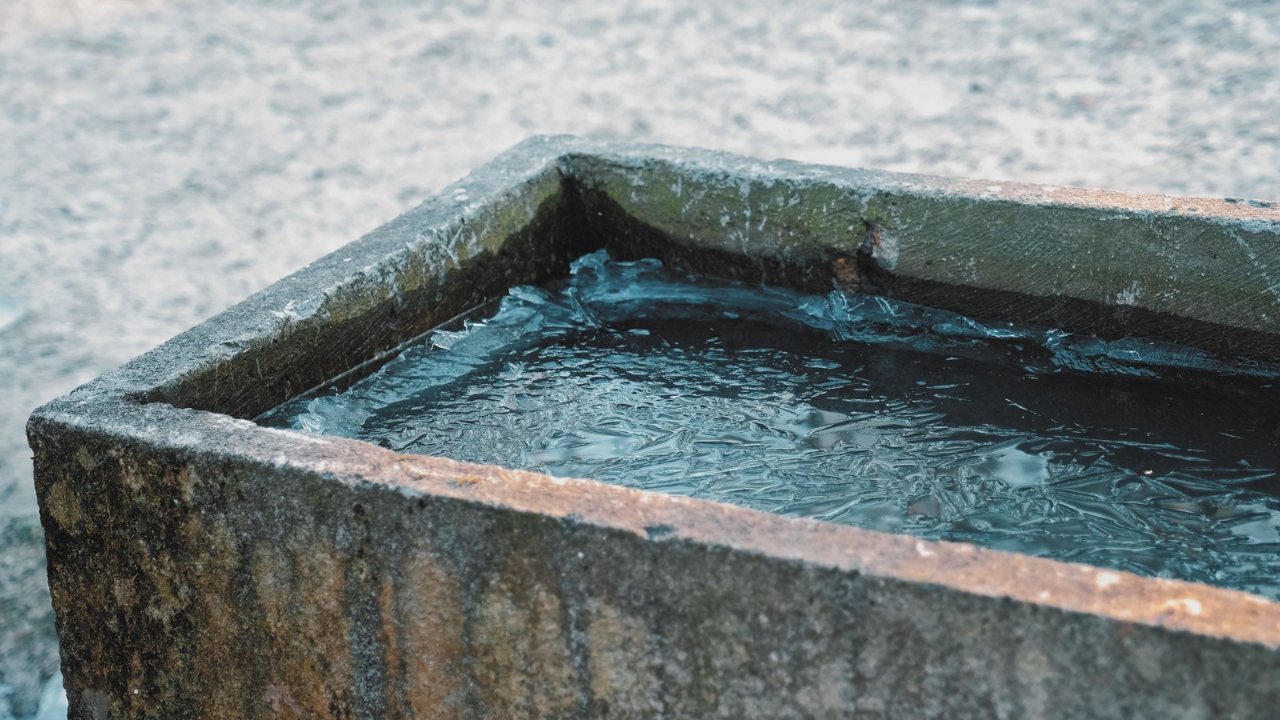
The failure shows up at chore time, not when the temperature drops. You walk out with a bucket, find a tank capped with ice, and start hacking at it with whatever’s handy. That’s how heaters get cracked, rubber gaskets get cut, and you lose time while animals stand there thirsty and pushy.
Get ahead of the freeze by checking water first, before feed, on the coldest mornings. If you use a stock tank heater, plug it in before the deep cold hits so it’s warming water, not trying to thaw a solid block. Keeping a thin skim from forming is way easier than melting inches of ice.
2. Breaking Ice With The Wrong Tool
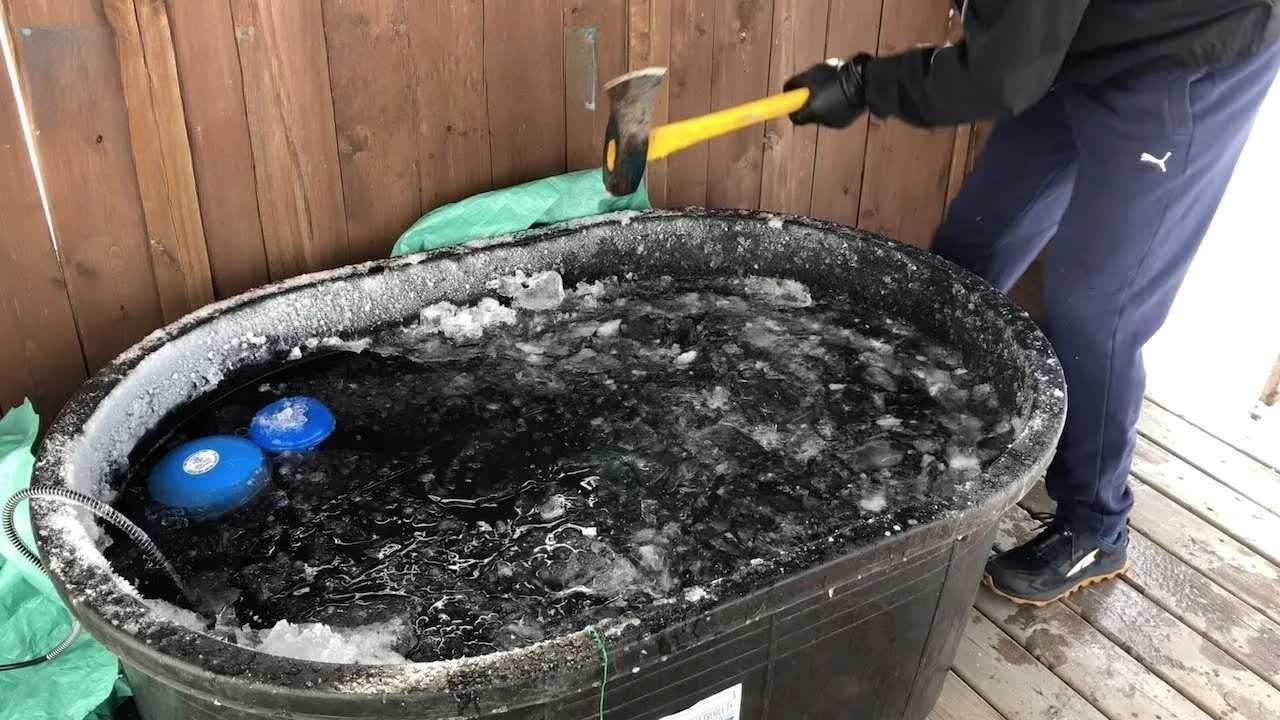
A splitting maul, shovel, or pry bar feels efficient until it isn’t. One bad hit can puncture a plastic tank, chip a galvanized tank’s coating, or smack a floating de-icer hard enough to break the housing. Then you’re buying a new tank or heater when you really just needed water today.
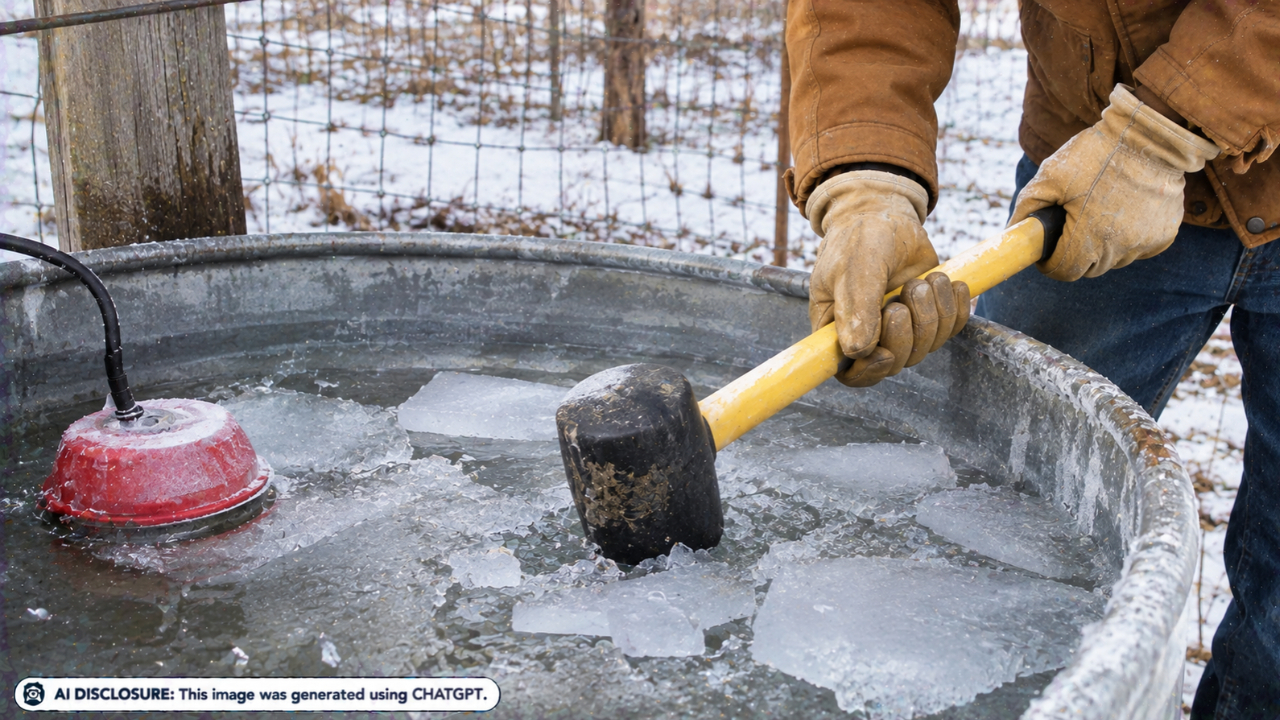
Use a rubber mallet, a short wood club, or a purpose-made ice chopper that won’t spear the tank. If there’s a heater in the tank, unplug it before you start breaking ice and keep the strikes away from the cord and guard. When you can, lift ice sheets out in pieces instead of pulverizing them into slush that refreezes fast.
3. Leaving Hoses Full And Coiled
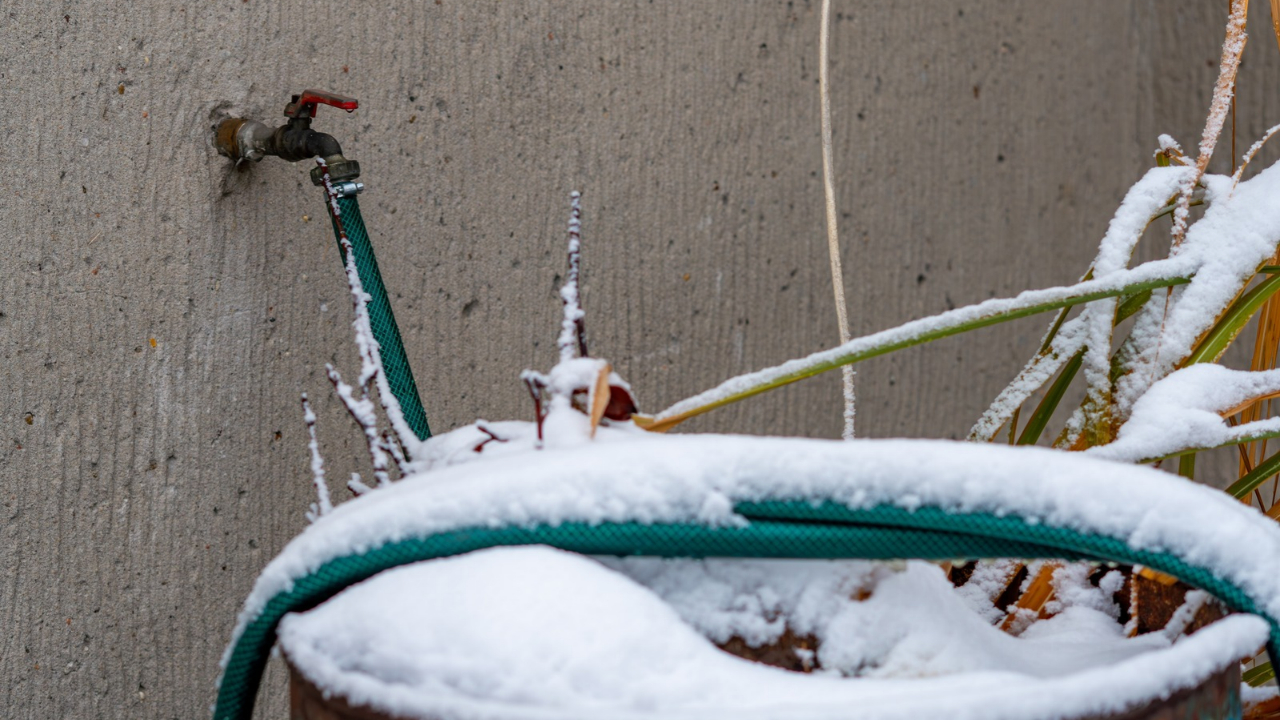
Dragging a hose to the barn and dropping it in a heap works great until the first hard freeze. Water trapped in low spots turns to ice plugs, and the next time you turn on the spigot the hose either won’t flow or it balloons and splits. You end up doing chores with a leaky noodle that sprays your boots and freezes the walkway.
After filling, shut off the spigot, then open the nozzle and walk the hose out so it drains downhill. Store it stretched out on a fence line, on big hooks, or inside an unheated but wind-sheltered spot where it can drain straight. A heated hose can make sense for a long winter, but only if you can protect it from chewing and you have enough circuit capacity to run it safely.
4. Plugging Heaters Into Sketchy Power
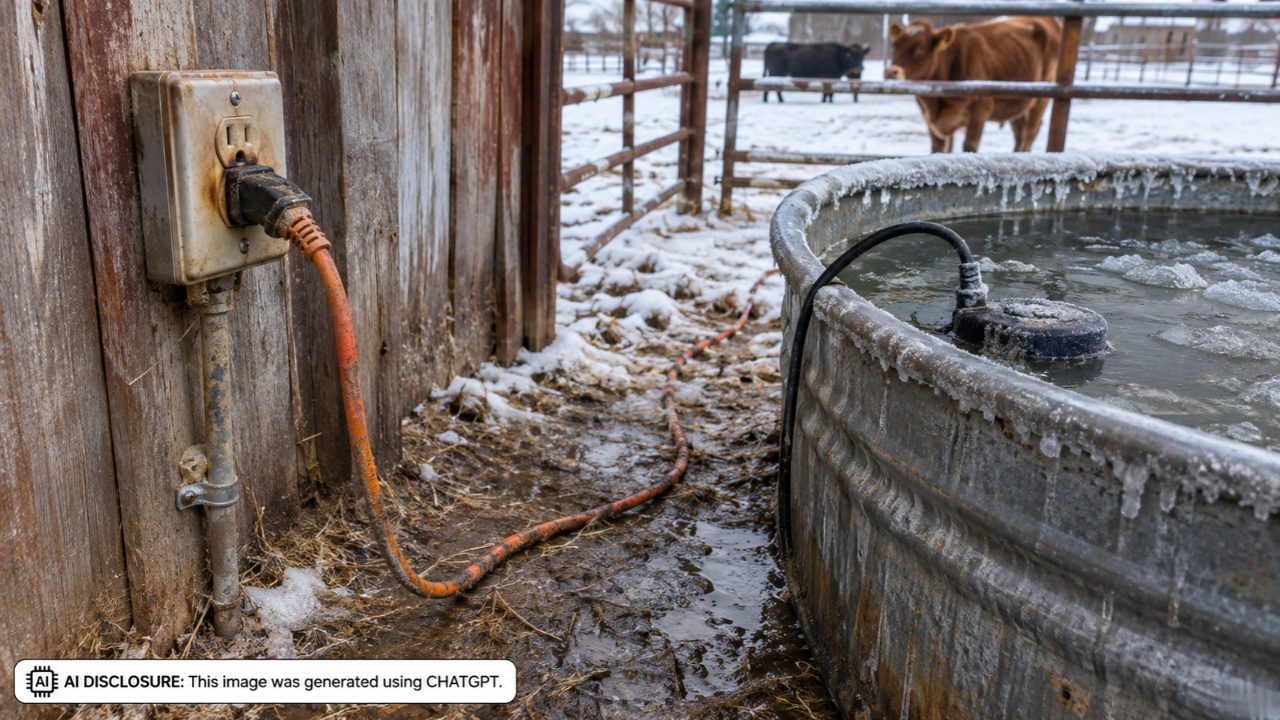
A stock tank de-icer pulling steady wattage on a light-duty extension cord is asking for trouble. The cord gets warm, the plug gets loose, and you’ll see the outlet face darken or smell that hot plastic odor. Even if nothing fails, voltage drop can make the heater weak so ice still forms.
Use a heavy outdoor-rated cord sized for the load and keep the connection up off the ground, not sitting in wet bedding or snowmelt. A GFCI-protected outlet is standard for a reason, and if you don’t have one where you need it, that’s a job for a licensed electrician. Don’t snake cords through doors where they get pinched, and don’t bury them under straw where nobody notices damage.
5. Letting Animals Chew Cords And Hoses
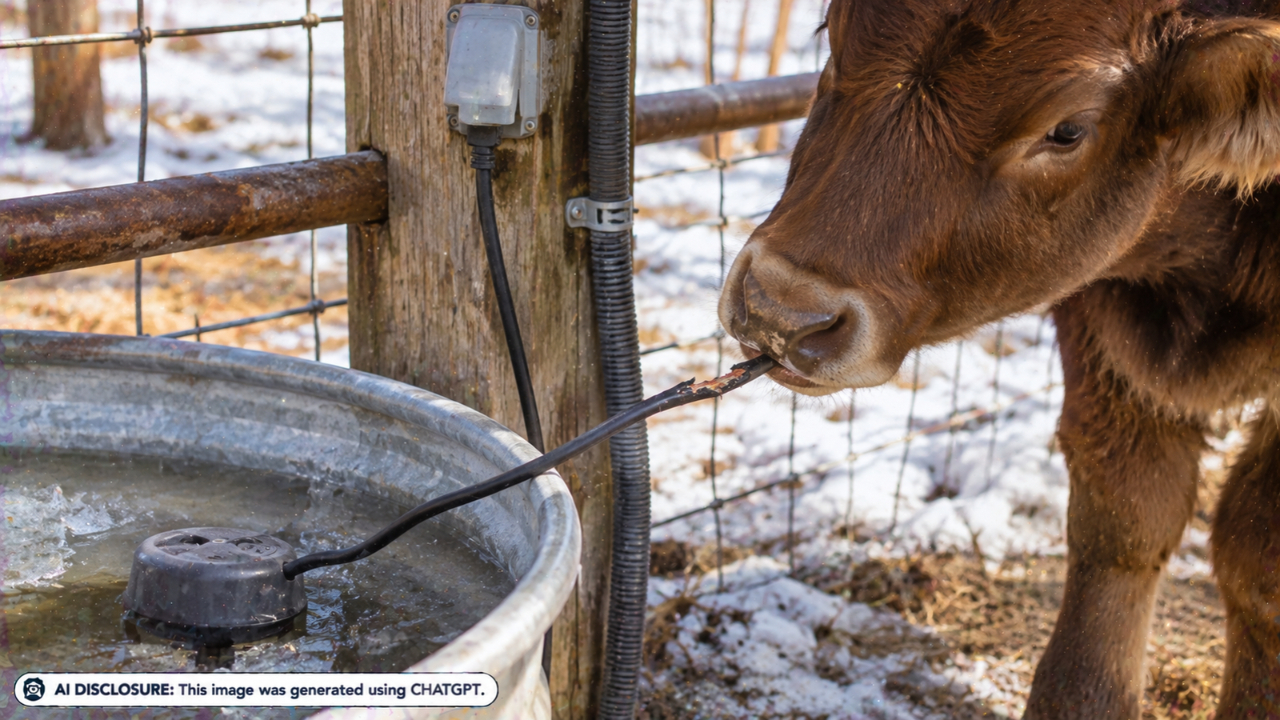
Some winters the real problem is teeth, not temperature. Livestock will mouth anything within reach, and a dangling cord or a slow-dripping hose is a magnet. You end up with a heater that keeps tripping the GFCI or a hose that suddenly won’t hold pressure.
Route cords overhead, through conduit, or behind rigid panels where noses can’t reach them. If the tank has to sit near a fence, add a simple cord guard or a short section of PVC pipe as a chew sleeve right where the cord exits the heater. Fix drips right away, because a tiny leak makes a lickable ice sculpture that keeps the habit going.
6. Skipping A Thermostat Or Timer
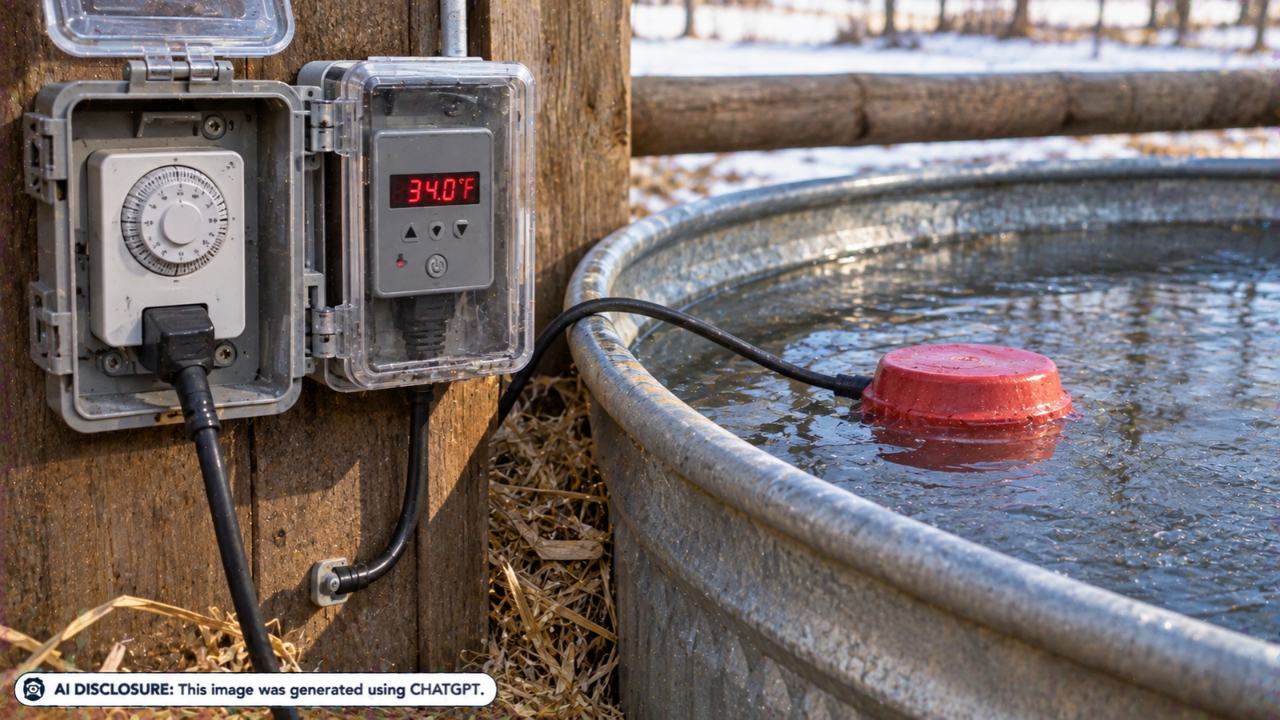
Running a heater full blast all winter is how you pay to heat the neighborhood. In mild cold, open water loses heat slowly, so a big de-icer can cycle too often or run longer than it needs. You’ll notice it on the electric bill long before you notice it in the tank.
A thermostat-controlled unit or an external thermostat can cut run time a lot, especially in shoulder season. A timer can be fine too, with an honest exception: if your area does surprise plunges or wind-driven cold, timers can leave you with ice at the worst moment. For places with stable winter patterns, a simple timer set for the coldest hours is a cheap option that’s often good enough.
7. Hauling Hot Water Like It Solves Everything
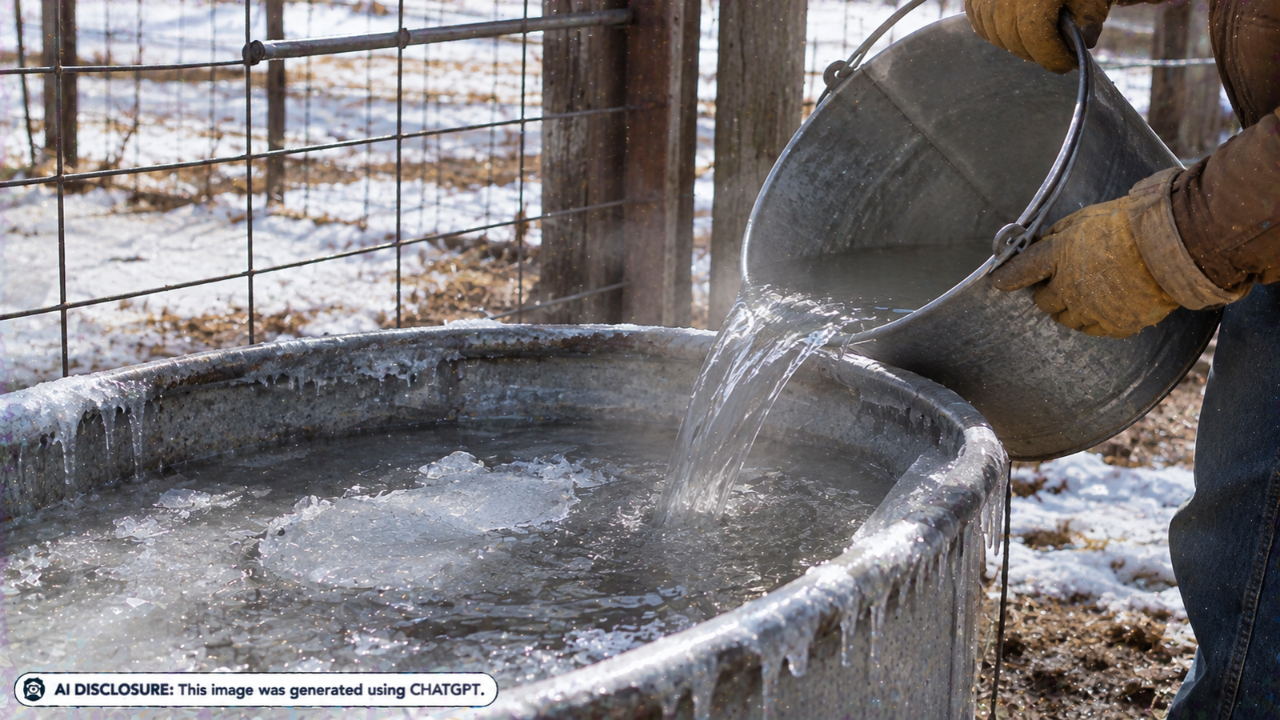
Dumping hot water into tanks feels like a fix, and it does melt ice fast. Then it cools, and you get a thicker, smoother sheet of ice that’s harder to break next time. If you do this on a deep freeze day, you also raise humidity in a small barn, which turns into frost on walls and slick floors.
Use warm water as a spot tool, not a daily plan. Melt a frozen valve or free a stuck float, then switch back to keeping water moving and protected. If you’re carrying water, carry more volume less often, because a fuller tank freezes slower than a shallow one.
8. Setting Tanks In The Windiest Spot
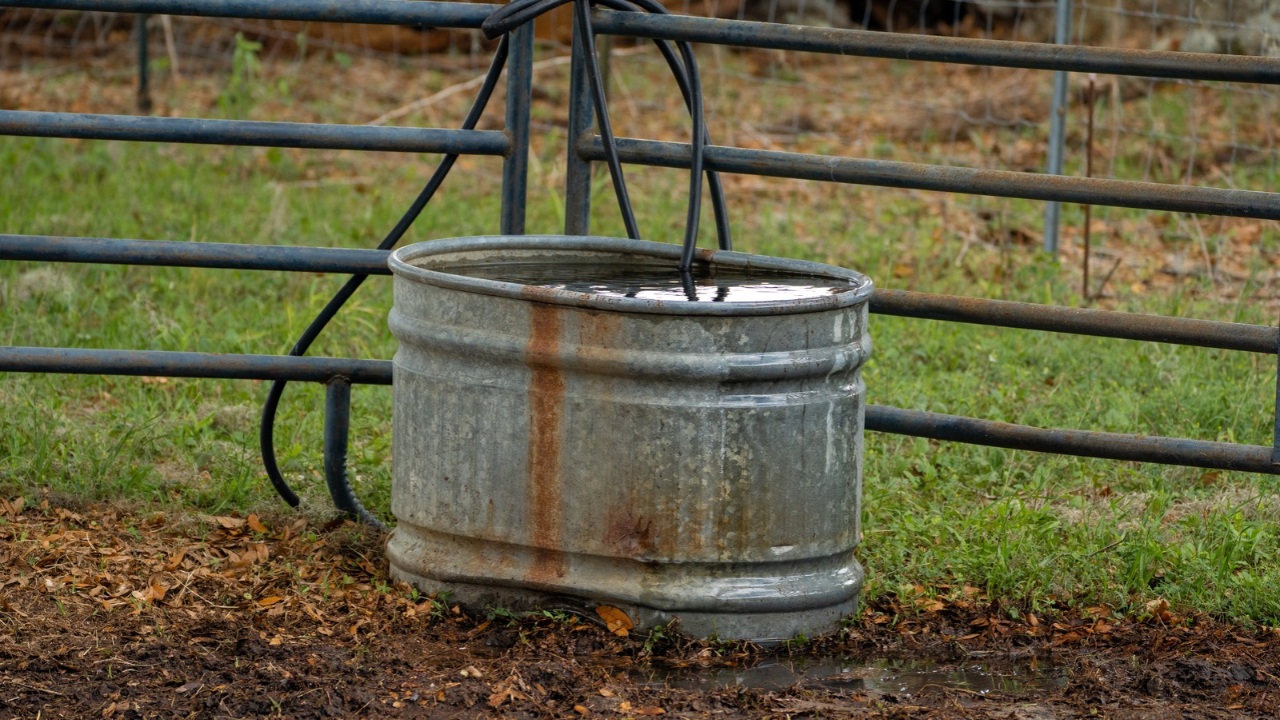
Wind is a thief. A tank that stays open at 25°F in a sheltered corner can ice over solid at the same temperature out in a draft. People blame the heater, swap it out, and the new one struggles the same way.
Move the tank to the lee side of a building, inside a three-sided shed, or behind a simple windbreak panel. If relocation isn’t possible, even stacking square bales as a temporary wind block helps, as long as you keep them far enough away that animals don’t climb and knock the tank over. Keep the path to the tank dry too, because wind-driven splash turns into glare ice where you walk.
9. Forgetting The Valve, Float, And Hydrant
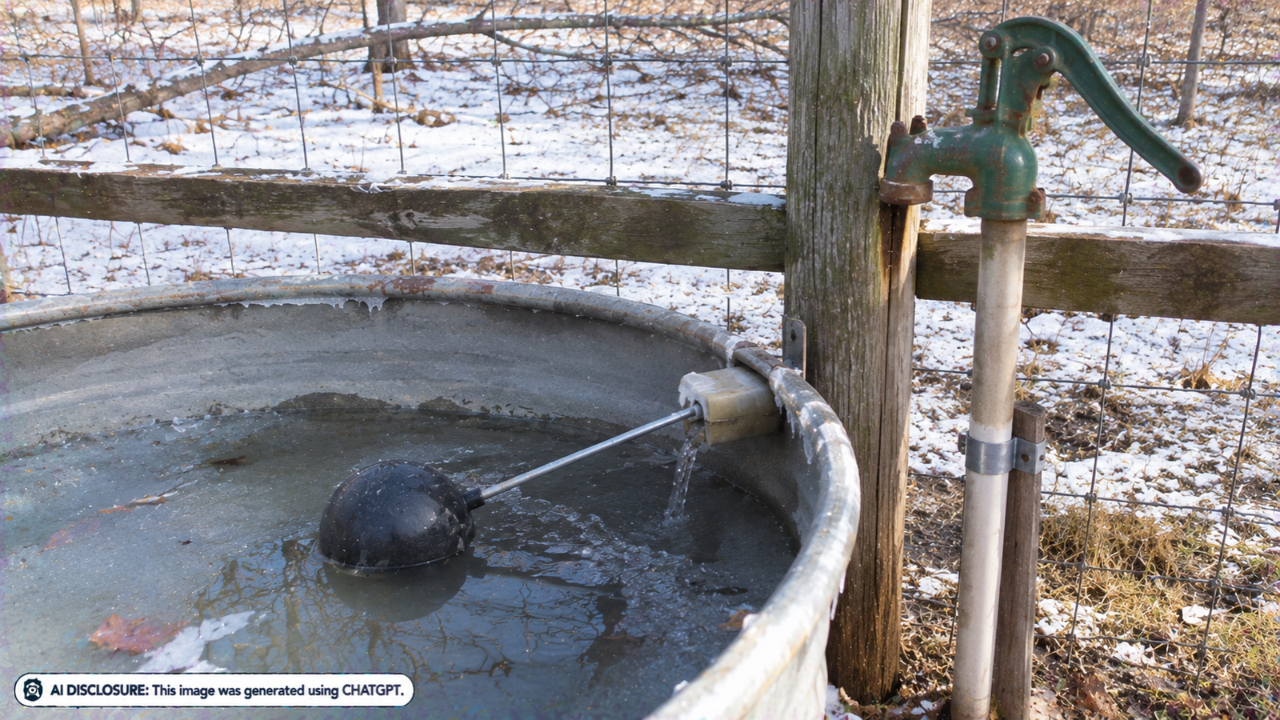
The tank isn’t the only thing that freezes. Float valves stick, hydrants leak underground and create an ice dome, and quick-connect fittings trap water that expands and cracks them. You end up with a tank that looks fine but won’t refill, or a hydrant that won’t shut off when you need it to.
Before winter, replace worn washers in hydrants, check float movement, and set the float level so water isn’t right at the rim where it splashes and freezes. If you have a frost-free hydrant that drains poorly, that’s usually a gravel pocket or installation issue, not something you fix with more force on the handle. Digging to repair water lines is a plan-ahead job, and you should call for utility locates before you put a shovel in the ground.
10. Treating Ice As “Normal” Instead Of A Signal
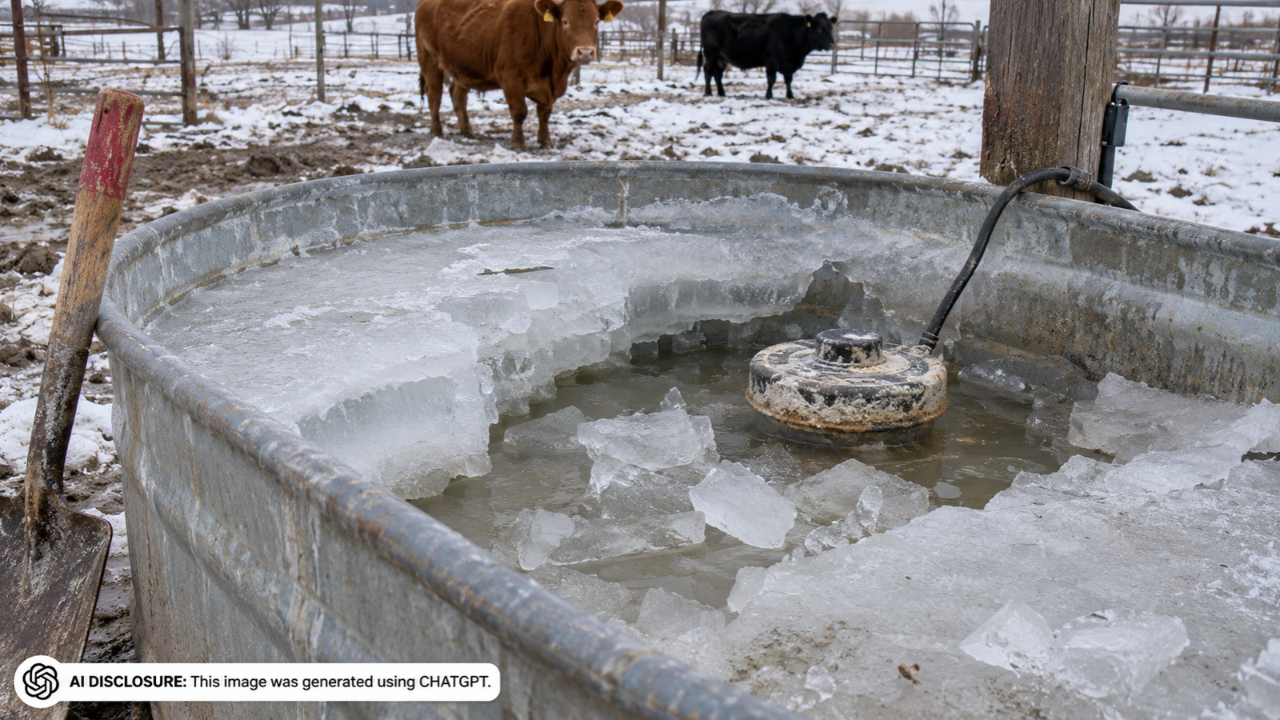
A skim of ice happens, but thick ice every day is telling you something is off. Maybe the heater is scaled up, the tank is too small for your herd, or the animals are emptying it faster than you think and leaving shallow water that freezes fast. Shrugging and chopping ice all winter is wasted effort and hard on your gear.
Watch how fast the level drops and size the tank so it stays at least half full through the coldest stretch. Clean mineral scale off heater elements when power is disconnected and the unit is cool, because buildup makes them run hotter and shorter-lived. If you keep fighting the same freeze spot, change the setup, not your swing.
Winter watering gets calmer once you treat it like a system: water source, delivery, tank, power, and animal behavior. Make one small change at a time so you can tell what actually fixed the problem, and keep a backup plan for the one morning everything decides to freeze anyway.
Like Fix It Homestead’s content? Be sure to follow us.