
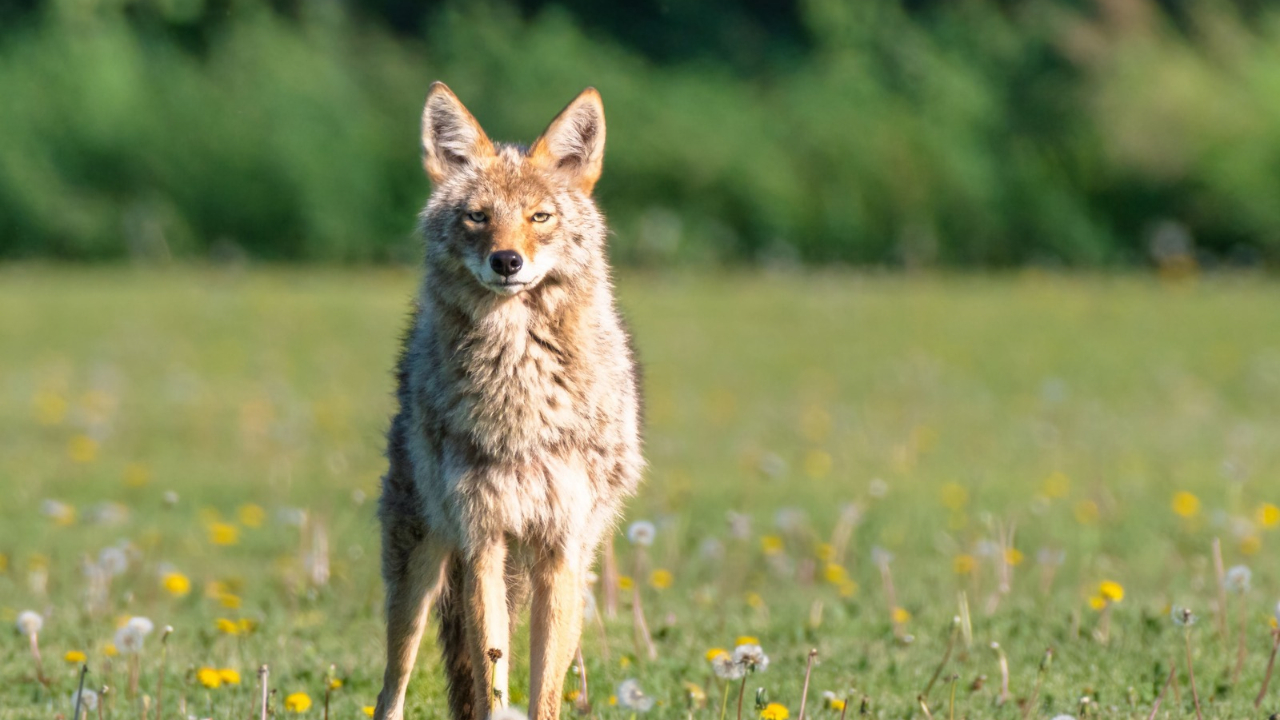
10 Signs a Coyote Is Getting Comfortable Around People
Photo credit: Wirestock Creators/Shutterstock.com
Most coyotes want nothing to do with people. The problem starts when one learns your place is easy, quiet, and full of snacks. Once that lesson sticks, you get repeat visits, bolder behavior, and more risk for pets and livestock.
1. Watching You Without Backing Off
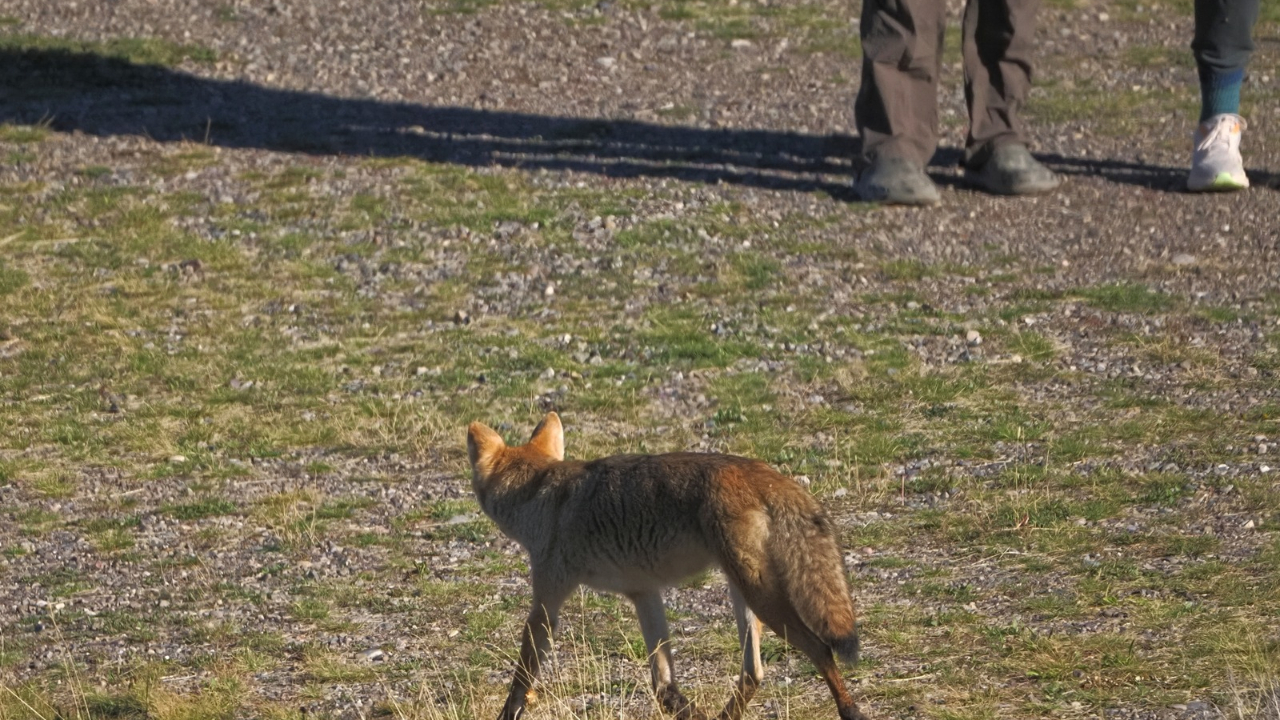
A normal coyote clocks you and fades out fast. A comfortable one stands in the open, looks you over, and doesn’t seem rushed to leave, even when you step outside or clap your hands. You’ll notice it holding eye contact, then walking off slow like it owns the fence line.
Fix the conditions that make your yard feel safe. Trim brush piles, mow down tall edges, and open up sight lines near sheds, hedges, and creek banks so there’s less cover. If it happens more than once, use loud haze tactics the moment you see it, shout, bang a pot, hit the panic button on a car fob, and make that “watching spot” uncomfortable every time.
2. Crossing The Yard In Daylight
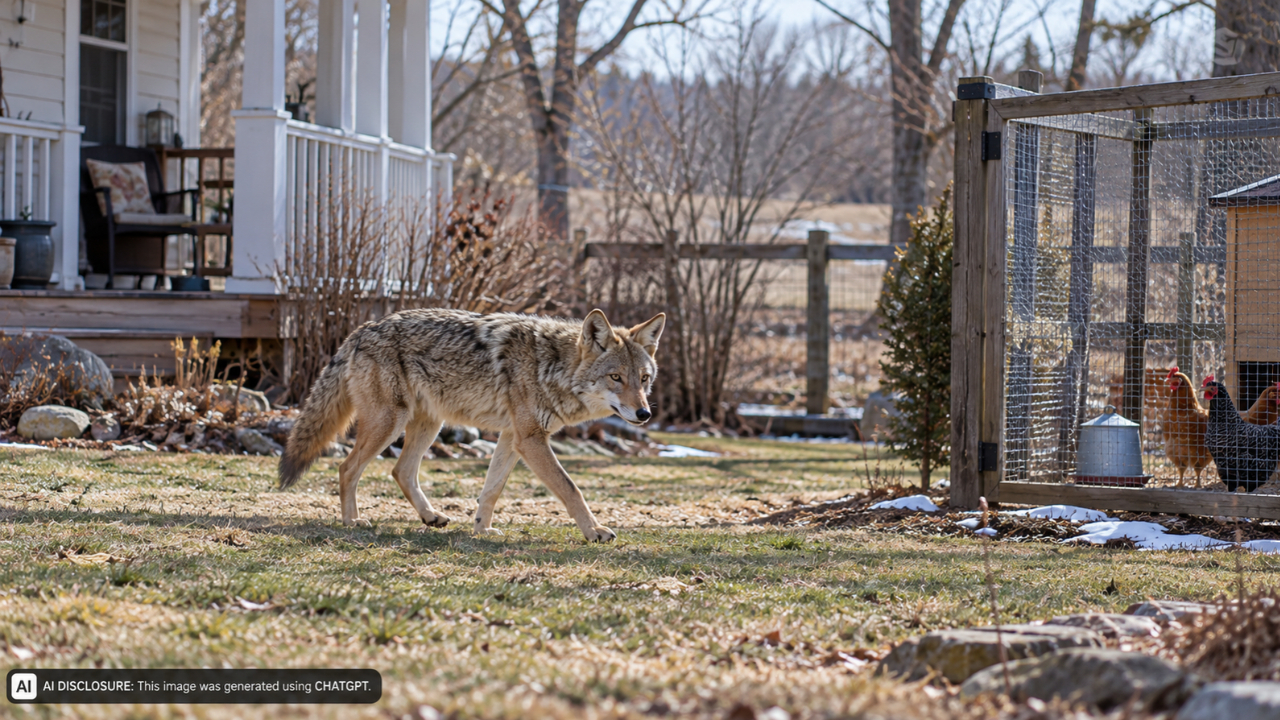
Seeing a coyote at noon isn’t an automatic emergency, especially in winter or during pup season when they travel more. What matters is how it acts. Trotting straight through like it has a route is one thing, slowing down to check your porch, chicken run, or dog pen is another.
Daytime scouting usually pays off because food is close. Tighten trash lids, pull fallen fruit, and don’t leave pet food outside, even for a half hour. If you keep poultry, add a roof or hot wire to the run, coyotes learn your weak spots fast and will time their visits around your routines.
3. Hanging Around After You Yell

People try a quick “Hey” from the back door and figure that’s enough. If the coyote pauses, looks at you, and keeps doing what it was doing, it’s getting used to human noise. That’s how nuisance animals start, with a bunch of small non-reactions that teach them there’s no consequence.
Get more direct and more consistent. Step toward it, make yourself big, throw a stick or a clod of dirt near it, not at your neighbor’s house, and keep at it until it leaves the property. The timing matters more than the tool, do it the second you see it, not after it’s already sniffed the coop door.
4. Trail Camera Shows Repeat Visits

A single blurry night photo doesn’t mean much. A comfortable coyote shows up on the same path, the same time window, over and over, like it’s checking a vending machine. You’ll often see it pause at your compost, walk the same fence, or circle the same outbuilding.
Use that info like you would for a leak, find the source, not just the puddle. Walk the exact route in daylight and look for attractants: spilled feed, holes under a fence, a gap behind the shed, bones in the burn pile. Patch entry points with hardware cloth, set a motion light to cover the travel lane, and change what it’s getting paid for.
5. Dogs Bark, Coyote Doesn’t Leave

A wary coyote avoids a barking dog. A comfortable one may hold its ground outside the fence, pace back and forth, or sit down like it’s watching TV. That behavior can slide into “luring” where a coyote hangs out to get a dog worked up, then the dog bolts out and ends up outnumbered.
Don’t let your dog do perimeter duty alone, especially at dusk and dawn. Walk the yard with a bright light, keep dogs on a leash until you’ve scanned, and fix fence gaps right away. If you use an invisible fence, treat it like a training tool, not a barrier, it won’t stop a wild animal from walking in.
6. Rabbit, Cat, Or Small Pet Disappearances
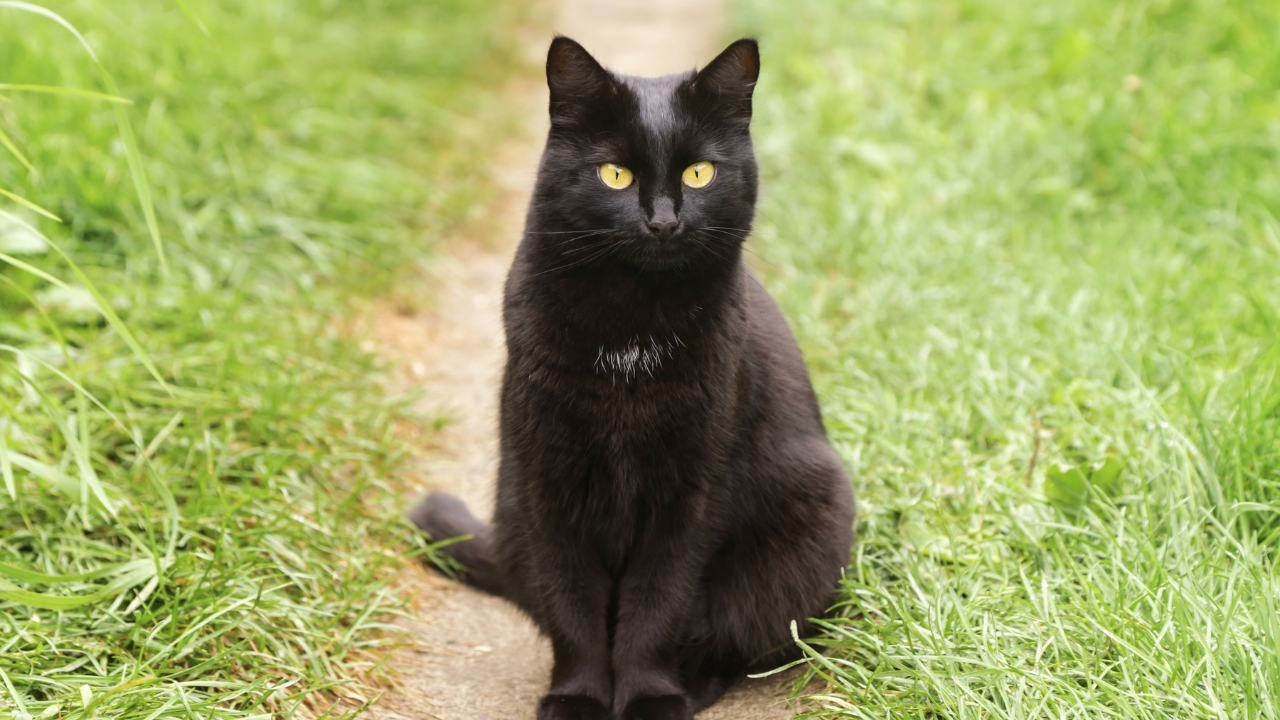
When a coyote gets comfortable, your property starts to look like a menu. Missing outdoor cats, fewer rabbits, and a sudden quiet yard can be signs it’s hunting close. You might find tufts of fur, a drag mark in snow, or scattered feathers near a fence corner.
Bring small pets in before dusk and stop feeding cats outdoors. For hutches and runs, swap chicken wire for welded wire and add a skirt of hardware cloth out from the base so digging doesn’t pay off. If you can’t change the whole setup fast, add a temporary hot wire low to the ground and keep it clear of weeds so it actually bites.
7. Turning Over Compost And Garden Beds
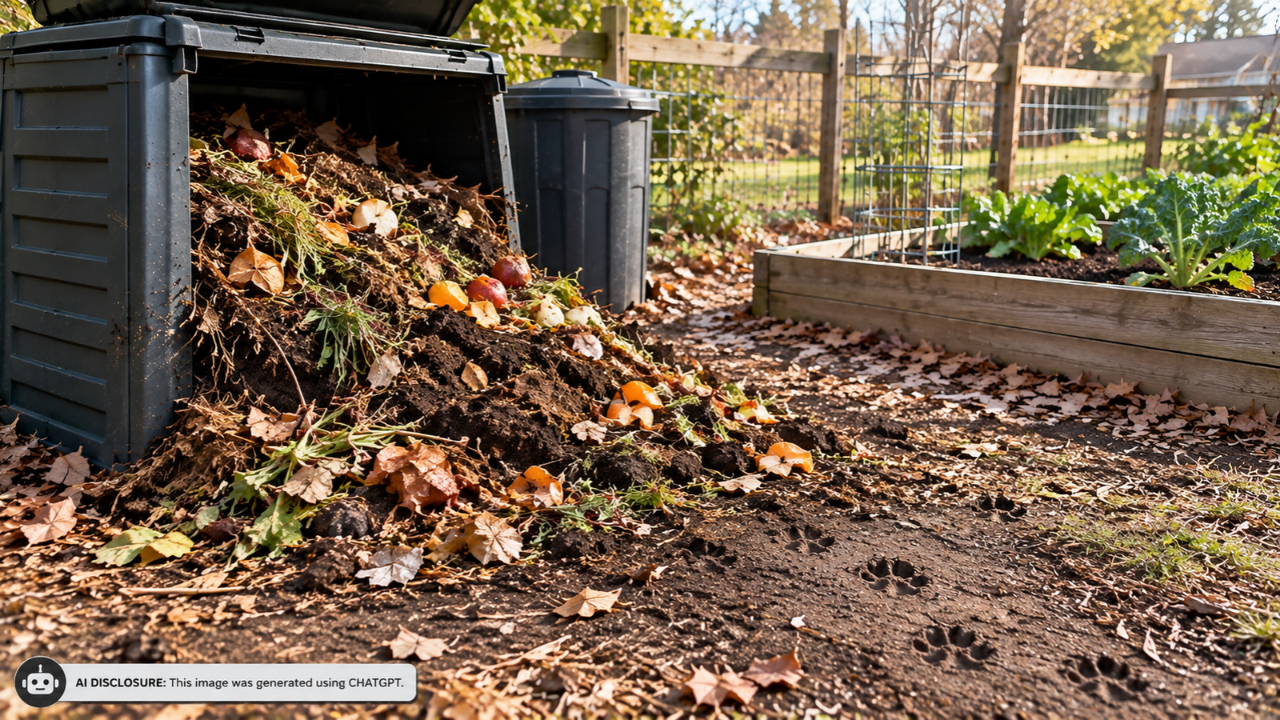
Compost piles are a magnet if you toss in meat scraps, greasy paper, or bones. A comfortable coyote will treat it like a free buffet and come back nightly, same way raccoons do. You’ll see paw prints on the pile, scattered scraps, and little holes where it worked the edge.
Keep animal products out of compost unless you’re running a sealed system. Use a lidded bin or a welded-wire enclosure with a top, and pin it down with stakes so it can’t be rolled. If you bury kitchen scraps in the garden, go deep and cover with soil, a shallow bury just trains it to dig.
8. Chewed Water Hoses Or Irrigation Lines

This one surprises people. Coyotes will chew sprinkler heads, drip line, and even hoses, sometimes for water, sometimes just because it smells like algae, fertilizer, or the dog that drinks from it. If you find tooth marks and a wet patch that keeps coming back, don’t assume it’s just sun damage.
Drain and coil hoses at night if you’re in a dry spell and wildlife is thirsty. Put drip line under mulch and use stakes so it doesn’t sit on the surface like a chew toy. This isn’t the most dangerous sign, but it’s a good early warning that an animal is comfortable enough to hang out in the open.
9. Denning Under A Shed Or Deck
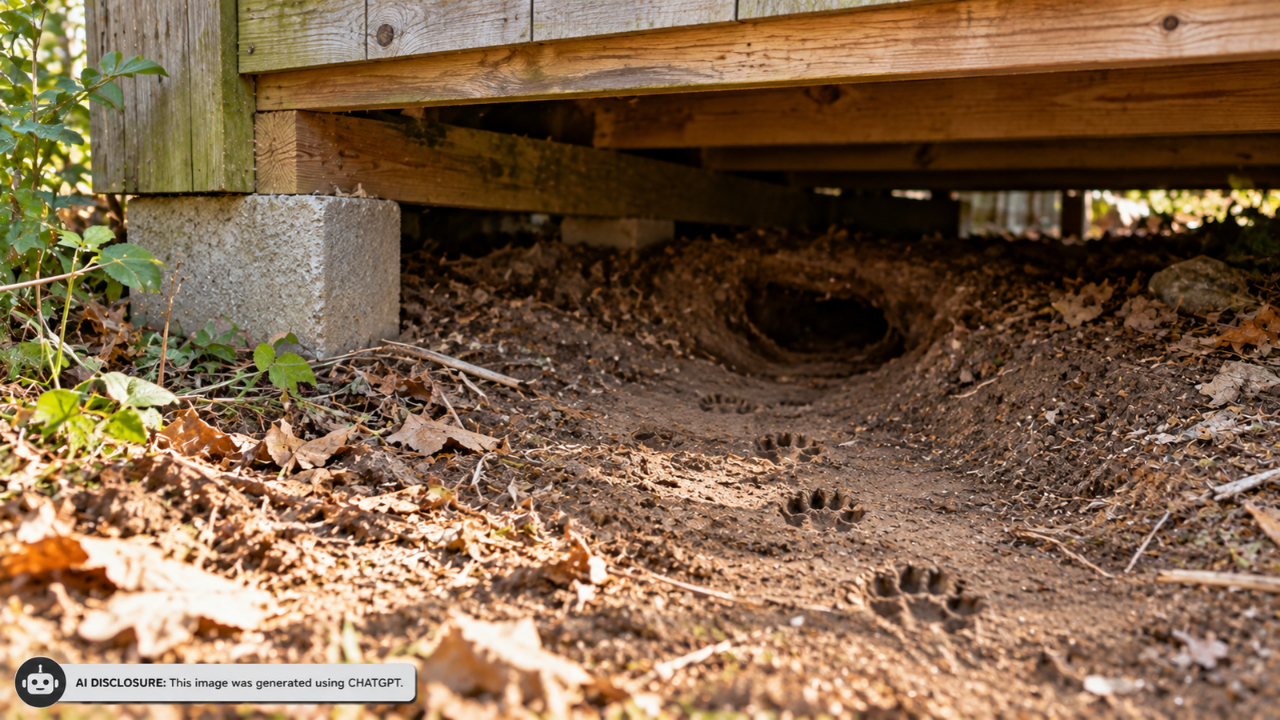
Spring is when this shows up. If a coyote starts using your crawlspace under a shed, deck, or porch, it’s decided your place is quiet and protected. You may smell musky odor, see worn tracks in the dirt, or find a dug-out entrance that wasn’t there last week.
Don’t block an animal in. Call your local wildlife office or a licensed nuisance wildlife pro for removal rules in your area, especially if pups are involved. After it’s empty, fix it like you mean it: trench a few inches, install heavy-gauge hardware cloth or welded wire in an L-shape out from the edge, and backfill with rock so digging turns into a chore.
10. Neighbors Mention Feeding Or Pet Food

Nothing makes a coyote bold faster than steady handouts. Sometimes it’s on purpose, people leaving scraps “for the foxes.” Sometimes it’s accidental, bowls on the porch, overflowing bird seed, or a trash can that tips in the wind.
This is the awkward, necessary conversation. Ask nearby homes to bring food in, secure trash with tight lids, and stop tossing leftovers outside. If the neighborhood won’t change and you keep seeing bold behavior, report it to animal control or your county office so there’s a documented pattern.
If you spot more than one of these signs in the same week, act fast and keep it boring for wildlife. Coyotes are smart, and they’ll move on when the easy calories and quiet hiding spots go away.
Like Fix It Homestead’s content? Be sure to follow us.


