10 Signs a Fence Will Not Survive Another Winter
Photo credit: J.J. Gouin/Shutterstock.com
Winter is hard on fences in a way summer never is. Wet ground turns to soup, then locks up like concrete, and every weak joint gets tested. If a fence already looks tired in fall, it usually looks broken by spring.
1. Posts Wiggle When You Push Them

If you can grab a post and feel it move, frost heave is going to finish the job. The soil expands, lifts, and then settles wrong, leaving the post loose and leaning. Once the post starts pumping in the hole, every gust works it wider.
Don’t just pile dirt around it and call it fixed. Plan on resetting that post before freeze up, and do it right: dig it out, scrape off rot, and set it on a compacted gravel base with proper backfill. Call 811 to locate utilities before digging, and wear gloves and eye protection when breaking old concrete.
2. Water Pools Along The Fence Line
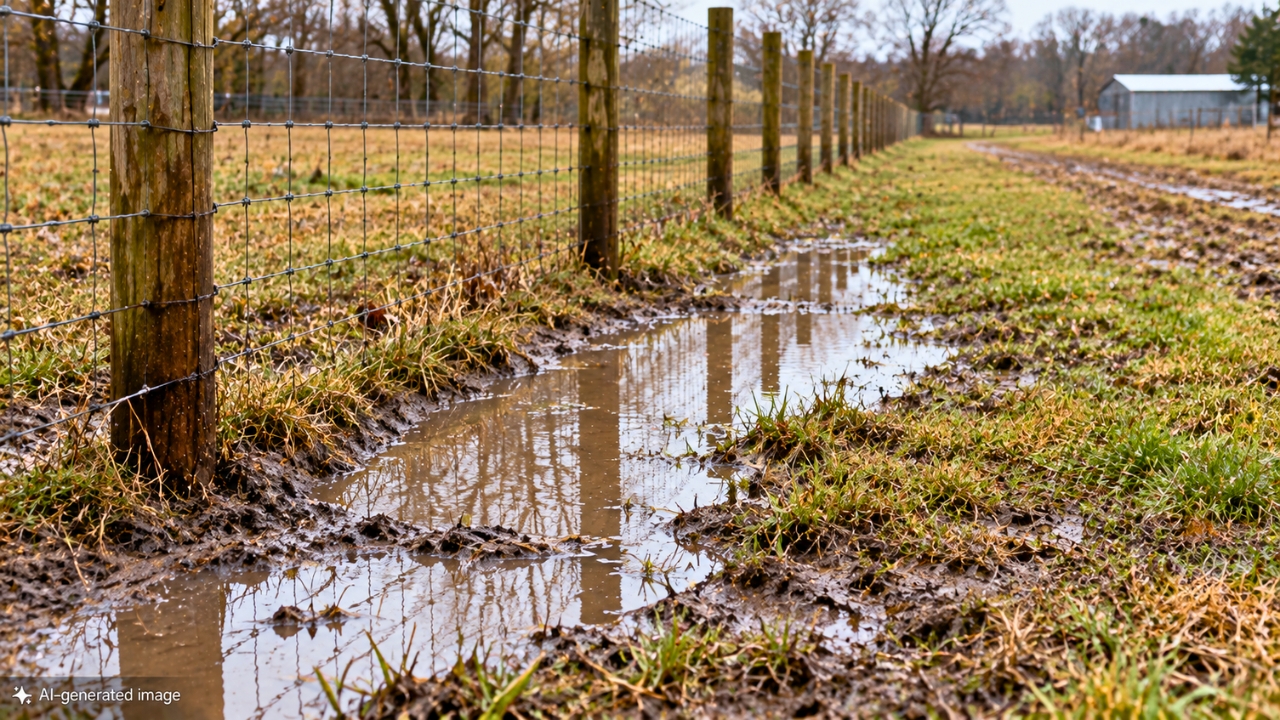
Puddles that sit for days are a loud warning. Saturated soil loses its grip, then freezes and pushes posts out of plumb. In spring, that same soggy strip turns into a rut that pulls your fence downhill one thaw at a time.
Fix the water first or you’ll be redoing posts again next year. Clean gutters, extend downspouts, and regrade so water sheds away from the fence. Sometimes a shallow swale or a short run of drain pipe is all it takes to stop the pooling.
3. Rails Or Panels Pull Away From Posts
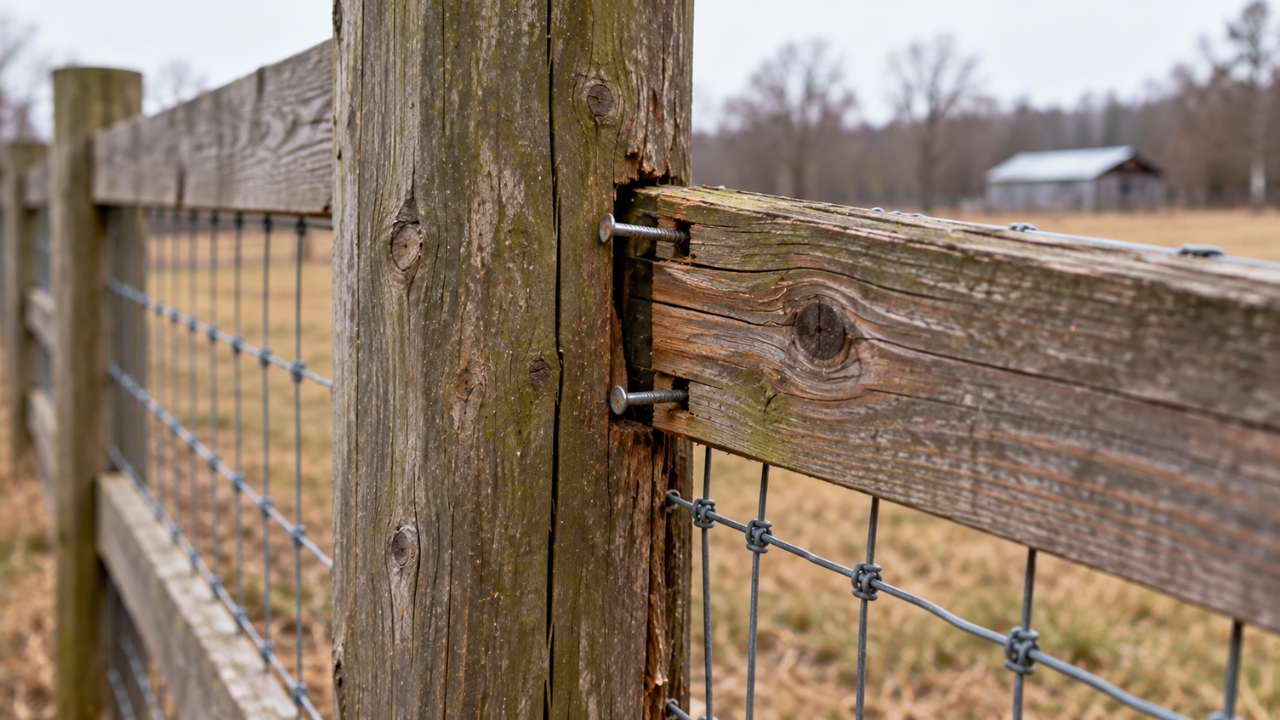
You’ll see daylight at the joints, popped screws, or nails backing out like they’re trying to escape. Cold shrinks wood, then wet swells it, and that movement loosens fasteners. Once a rail slips, the whole section starts acting like a sail.
Pull the loose fasteners and replace them with exterior-rated structural screws, not drywall screws. If the wood is punky where it attaches, sister on a short block or replace that rail end. A drill, impact driver, and a bit of patience beats chasing fallen panels all winter.
4. Gates Drag Or Won’t Latch

The first cold snap is when a “mostly fine” gate becomes a daily fight. Posts shift, hinges sag, and the latch side drops just enough to scrape or miss. You’ll start slamming it shut, which only speeds up the sag.
Adjust hinges and latches while the ground is still workable. Tighten hinge screws, upgrade to longer screws into solid wood, and add a diagonal brace if the gate is racking. If the hinge post is moving, fix that post or no hinge upgrade will last.
5. Rot At Ground Contact And Fastener Points
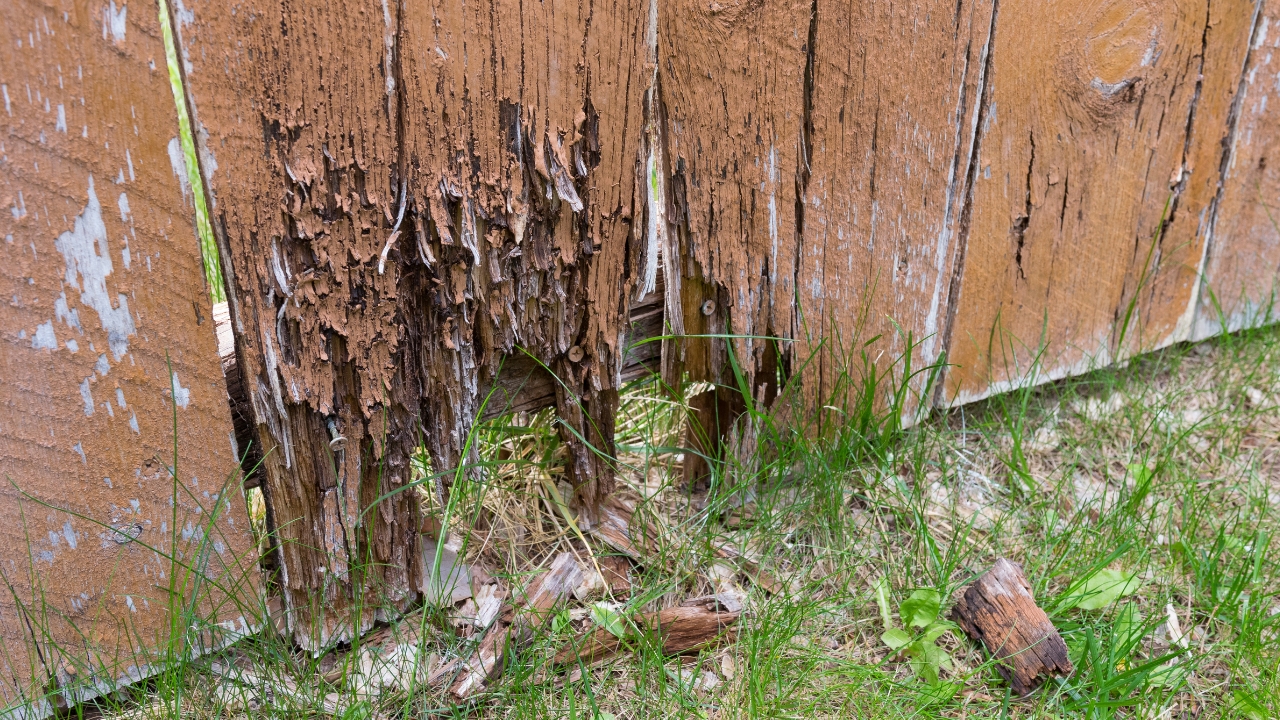
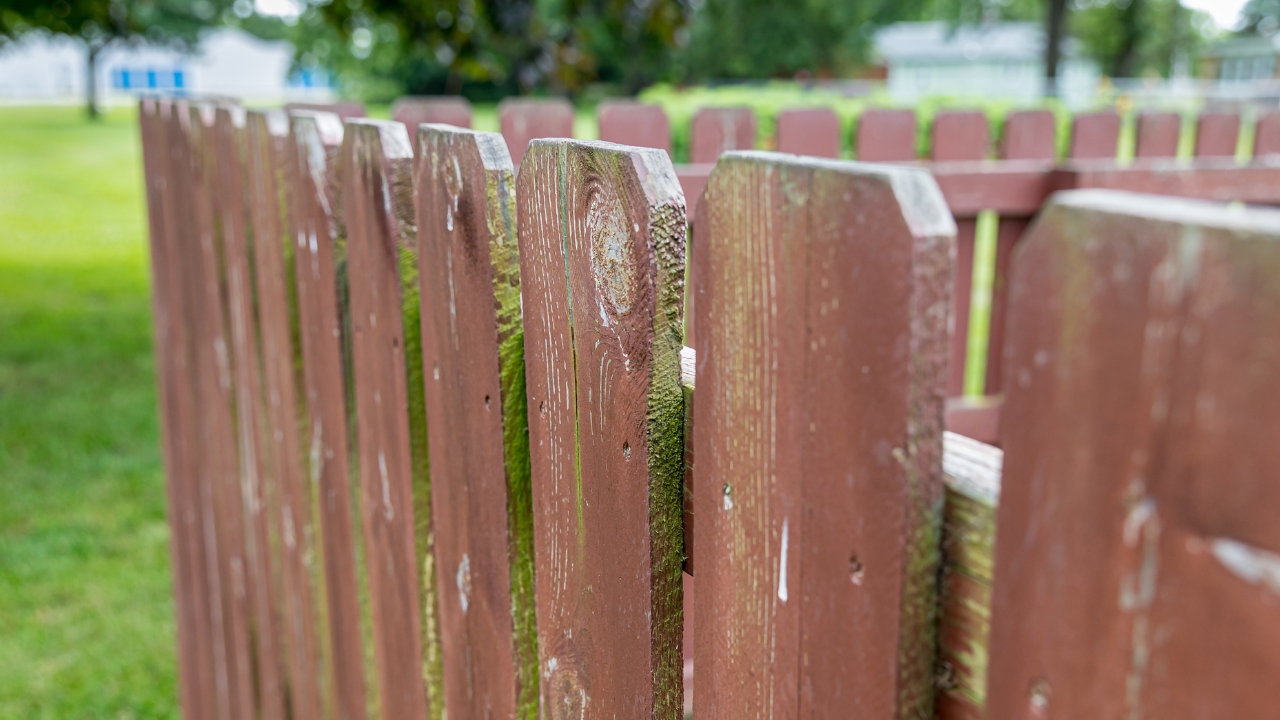
Soft spots near the base of wood posts, dark staining, and crumbly holes around nails mean decay is already ahead of you. Snow piles up, holds moisture, and keeps the bottom of the fence wet for weeks. That is rot weather.
Poke suspicious spots with an awl or screwdriver. If it sinks in easily, don’t waste time with filler. Replace the bad piece, and when you rebuild, keep wood off soil where you can, use treated lumber rated for ground contact, and use hot-dip galvanized or stainless fasteners so the connection doesn’t become the weak link.
6. Rust Streaks And Flaking Hardware
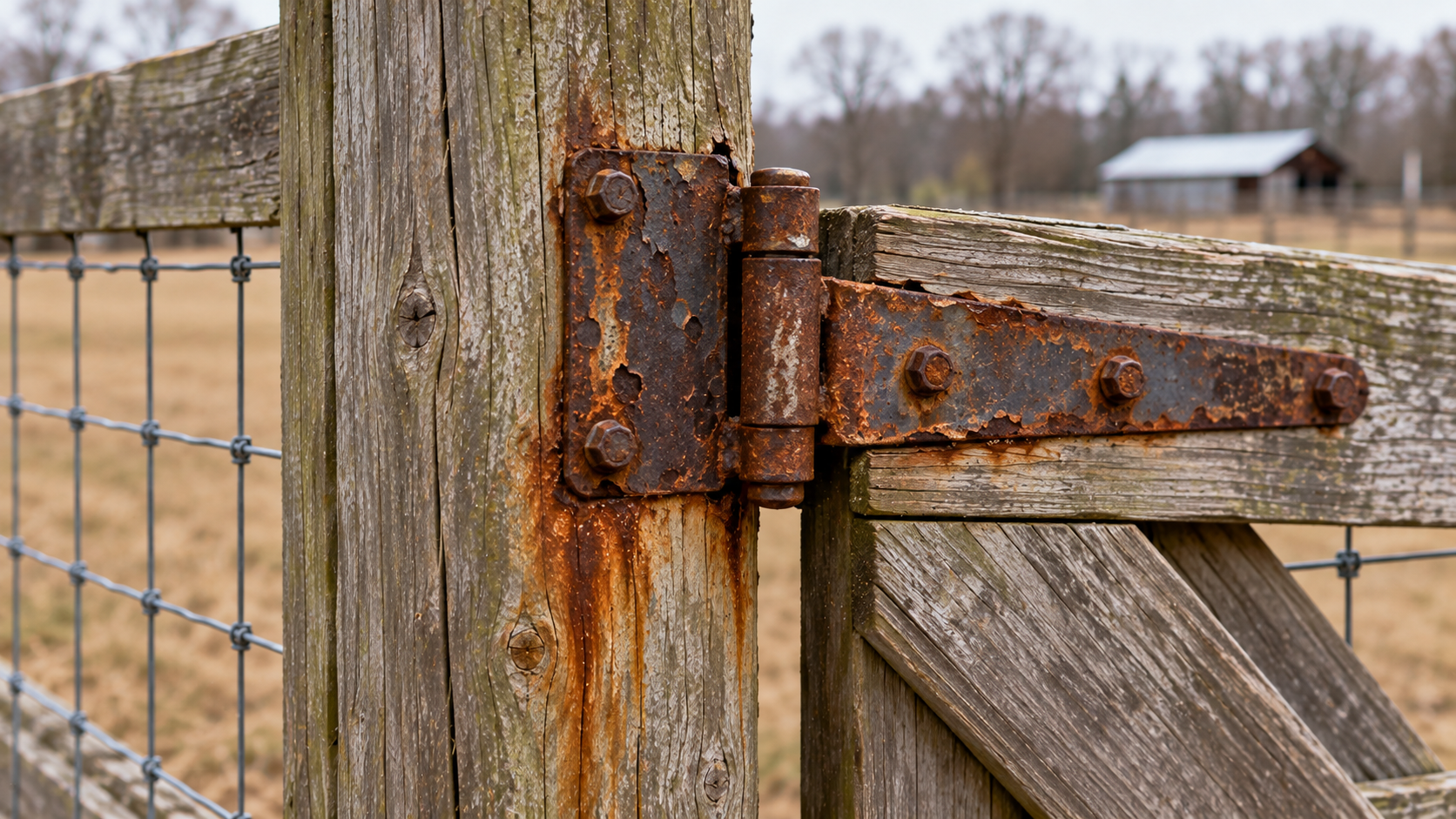
Rusty brackets and hinge straps don’t just look rough, they lose strength right when wind loads go up. Ice and salt spray from driveways speeds corrosion, especially near the bottom of the fence. When hardware starts flaking, it’s already thin.
Swap suspect hardware now, before you’re doing it in gloves with numb fingers. Brush off loose rust, then replace with exterior-rated, galvanized, or stainless parts. A cheap box of the right screws costs less than re-hanging a gate in March mud.
7. Cracked Concrete Collars Around Posts
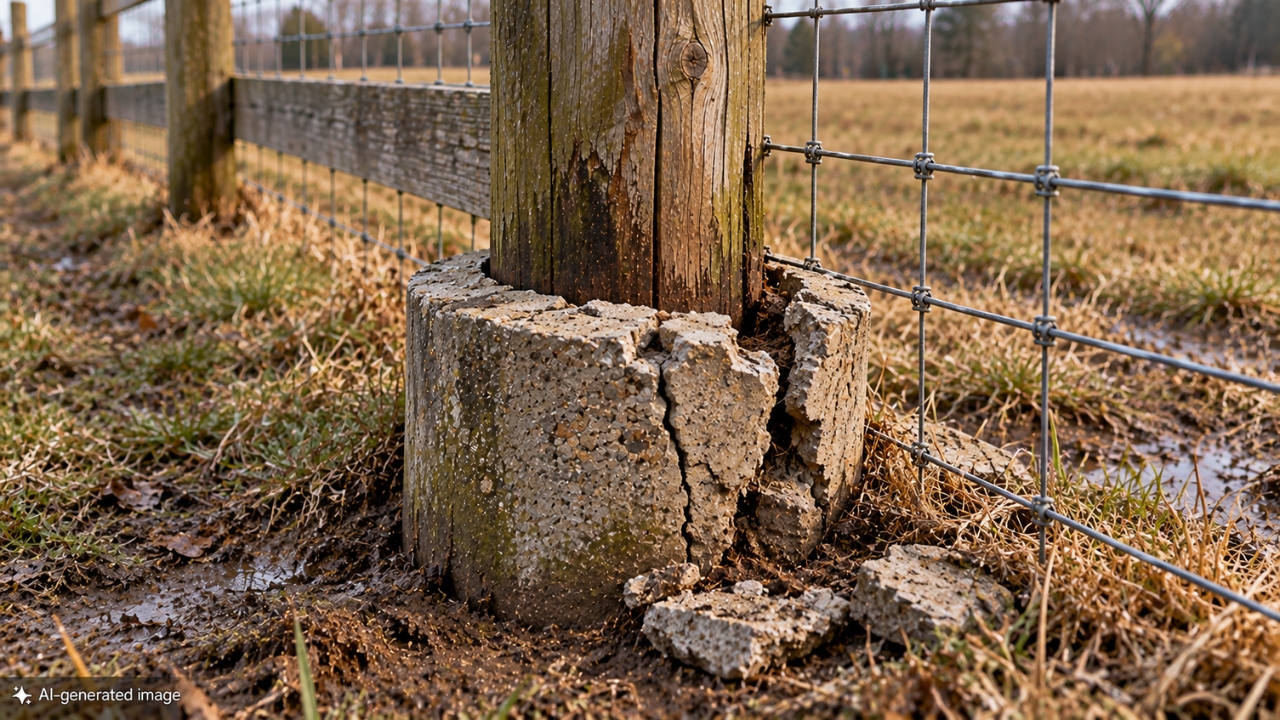
Concrete around a post that’s split, heaved up, or separated from the wood is a sign the base is moving. Freeze and thaw opens cracks, water gets in, then the next freeze wedges it wider. After that, the post starts leaning even if the top looks solid for a while.
Here’s the honest exception: a post set in well-drained gravel without concrete can hold up fine, sometimes better in frost areas because water drains away. But broken concrete that’s still in the ground is the worst of both worlds. If the collar is failing, pull it and reset the post with a better base and drainage plan.
8. Fence Lines Up With Snow Drifts
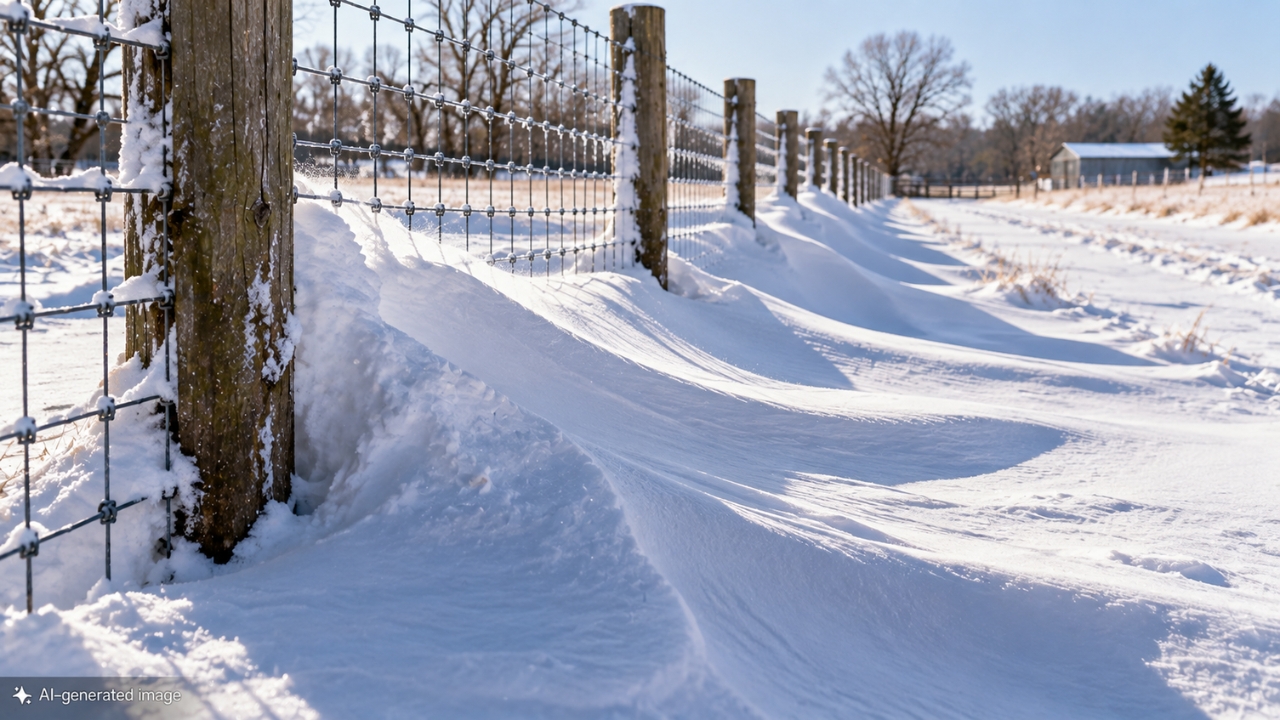
If your fence catches drifting snow, it spends winter under a wet, heavy load. Drifts push on pickets and wire, then the melt refreezes and locks everything in place. The damage shows up as bowed panels, stretched mesh, and staples pulled halfway out.
Knock down drift buildup when it’s safe and you can reach without climbing on the fence. In open, windy spots, consider a design that lets wind pass through, like spaced pickets or woven wire with good tension. A solid privacy wall in a drift zone takes a beating every year.
9. Wire Or Mesh Has Lost Its Tension
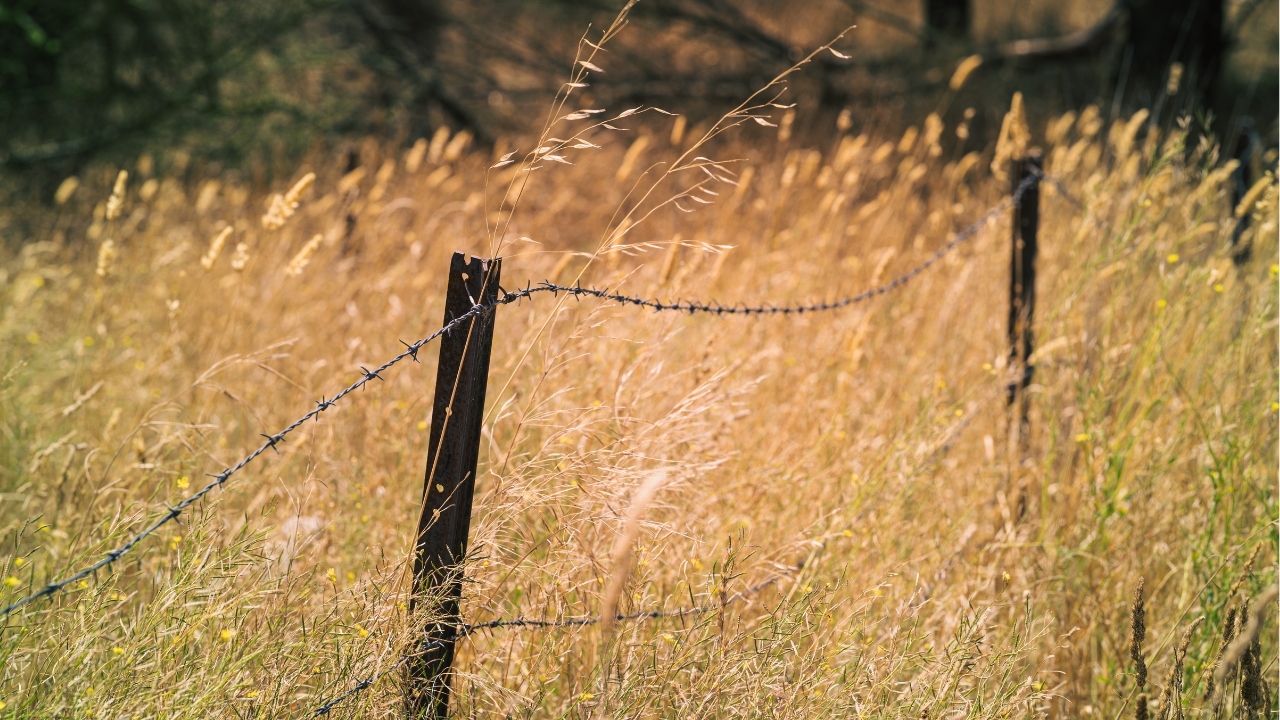
Woven wire that sags, welded wire that bows, or barbed wire that droops is telling you the corners and ends are slipping. Winter makes this worse because frozen ground stops posts from flexing back, so the tension stays wrong. Animals find the loose spot fast, and then it’s a regular escape route.
Re-tensioning is usually a corner-post job, not a “pull it by hand” job. Check braces, tighten or replace strainers, and fix any staples that have ripped out. If you don’t have solid H-braces at corners and ends, build them, otherwise you’re just stretching wire against weak posts.
10. Leaning Sections Near Trees Or Vines
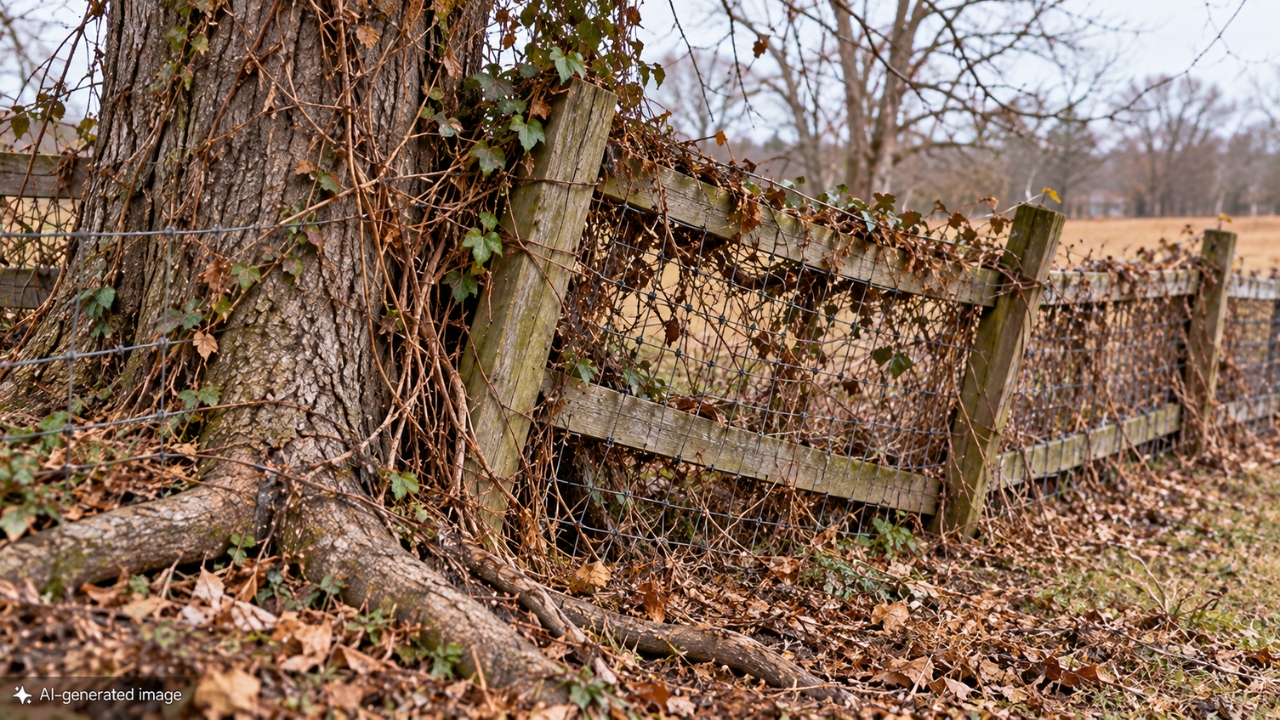
Fences don’t win fights with plants. Tree roots lift lines slowly, and vines add weight and trap moisture all winter. Then an ice storm hits and the vine-covered section folds first.
Cut vines at the base and pull them off, even if it takes a couple sessions. If a tree is already pushing posts, you may need to reroute the fence line or remove the tree, which can be a job for an arborist near power lines. Leaving it “for next year” usually means rebuilding a longer stretch than you planned.
If you do your repairs in fall, you work in dry soil and reasonable light, and you get to choose your materials instead of grabbing whatever is on the shelf in a storm. A fence that’s straight, tight, and dry going into freeze season has a much better shot at still being there when the thaw comes.
Like Fix It Homestead’s content? Be sure to follow us.