10 Signs Deer Are Damaging More Than Your Garden
Photo credit: Barbara Smits/Shutterstock.com
You notice a few nibbled leaves and figure it’s just part of gardening. Then the weird stuff starts, gaps in the fence, muddy paths, and plants failing for no clear reason. Deer pressure spreads out fast, and by the time you catch on, it’s not only your lettuce paying for it.
1. Fence Lines Getting Loose Or Bent
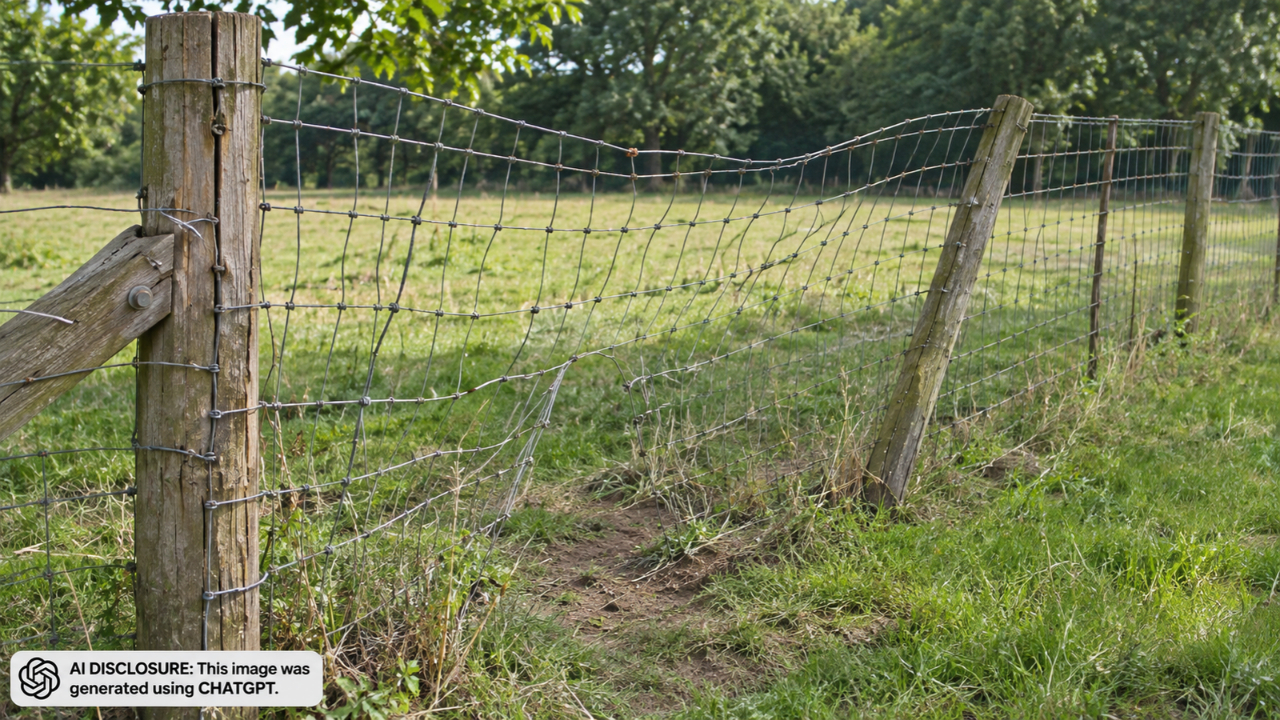
A fence that used to stand straight starts leaning, bowing, or popping staples. Deer don’t need to smash it to ruin it, they test weak spots with their chest, step on the bottom wire, and squeeze through corners. Once one finds an easy pass, it turns into a regular route.
Walk the whole perimeter with a pair of fencing pliers and a post pounder. Tighten sagging wire, add a brace at corners, and replace broken clips instead of twisting more wire around and hoping. If you’ve got a gate, check the latch and the gap under it, deer will use that first.
2. Bark Rubs On Young Trees
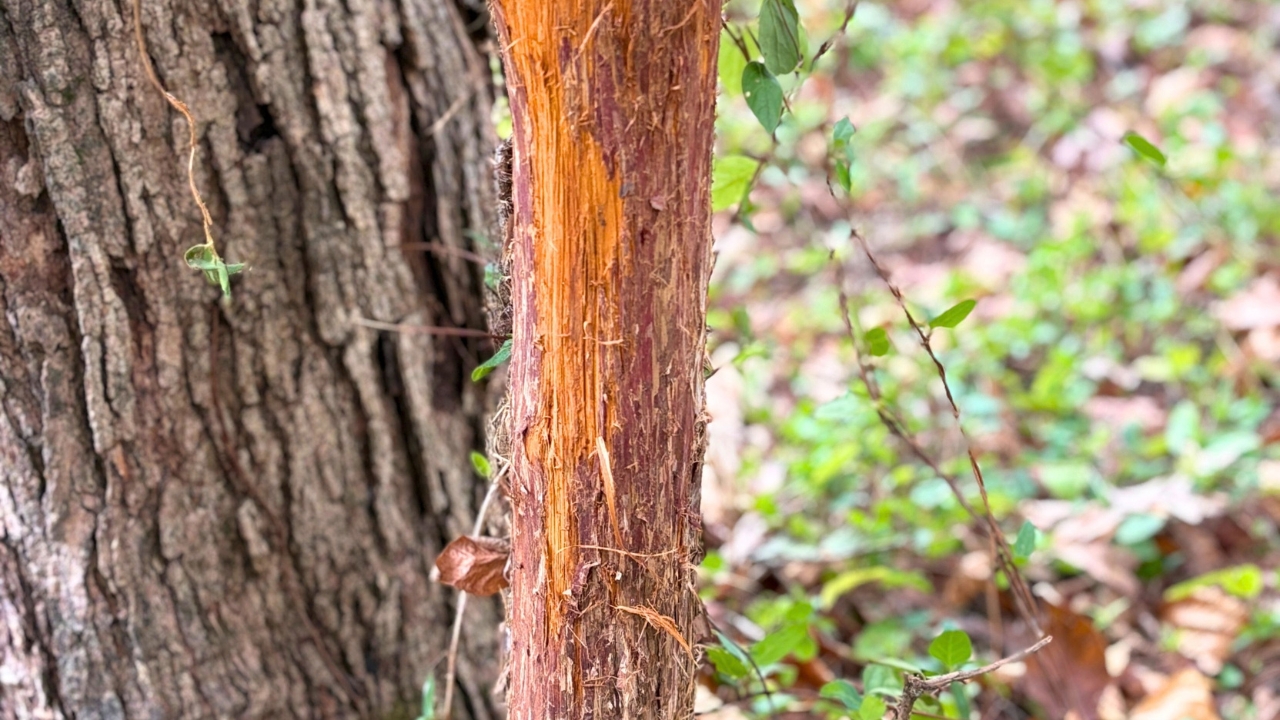
In fall, bucks start rubbing velvet off antlers and they’ll use your saplings like a scratching post. You’ll see bark scraped off in a vertical strip, sometimes with shredded fibers hanging. That damage can girdle a tree and kill it in one season, or leave it stunted and prone to insects.
Put trunk guards on anything you care about, especially fruit trees and new shade trees. A simple plastic spiral wrap or a cylinder of hardware cloth works, just keep it loose enough that moisture doesn’t sit against the bark. If the rub is already fresh, protect it right away and water the tree so it can recover, but don’t paint the wound with leftover house paint.
3. Browsed Hedges With Flat Sides
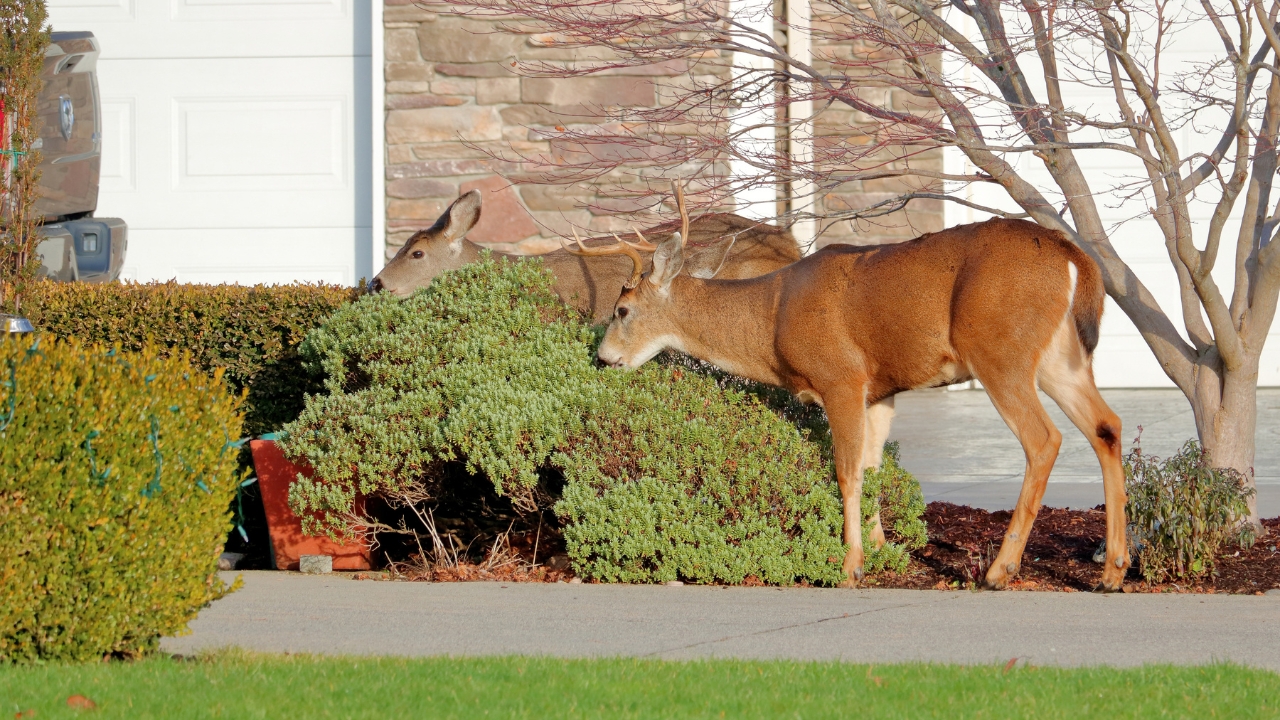
Deer don’t trim evenly, they browse at nose height, step back, and do it again. Boxwood, arborvitae, yew, and hemlock end up with a hard “tabletop” edge or a flat face on the side facing the woods. It looks like bad pruning because it is, just not yours.
Once a hedge is opened up, winter wind and sun get deeper in and you’ll see browning and dieback. Your best fix is to protect first, then reshape slowly over a season or two. Use netting or a temporary fence around the hedge line, and don’t waste money on a pretty slow-release fertilizer until the browsing stops.
4. Hoof Prints Near Spigots And Hoses
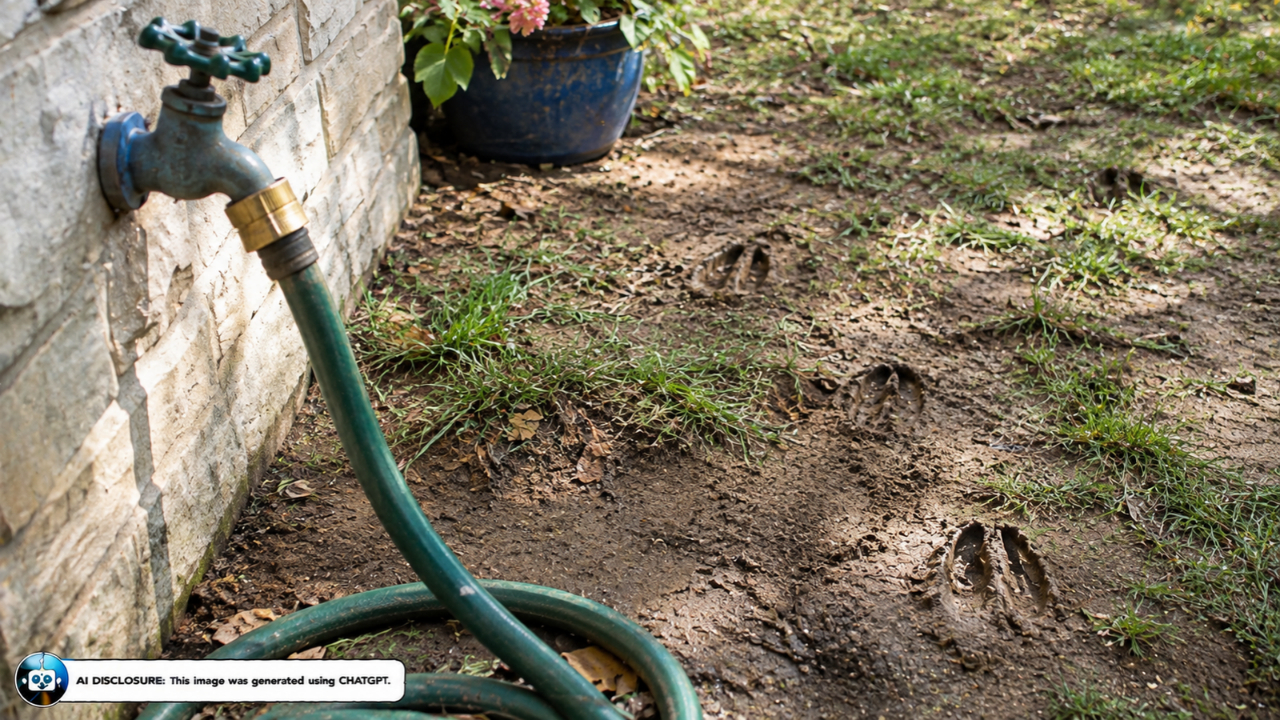
Deer remember water sources. If you’re seeing split tracks and little pellets around a frost-free hydrant, hose bib, stock tank, or drip timer, they’re hanging out close to your house more than you think. That gets expensive when they step on hoses, crack plastic fittings, or tear up a drip line you just laid.
Move loose hoses onto a reel or hang them on a hook at night, especially in dry months. For drip systems, pin lines down with proper landscape staples and keep emitters tucked under mulch so they’re not snagged by hooves. If the water source is a leaky spigot, fix the drip, a steady drip is an invitation.
5. Chewed Drip Tubing And Sprayer Wands
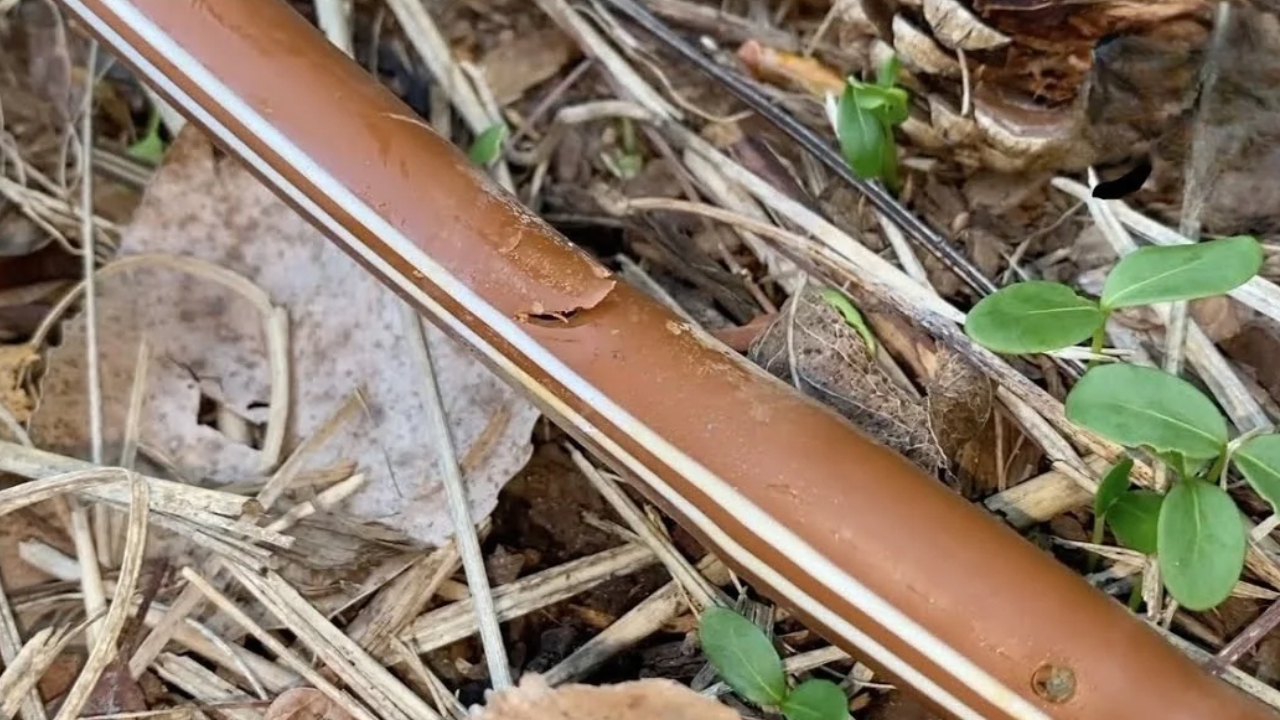
Some deer chew rubbery things, and a drip line tastes like salt and algae once it’s been running a while. You’ll find tiny tooth marks, slow leaks, and damp spots that never dry out. A chewed hand sprayer or wand is the same deal, it sat on the ground, got licked, got chomped.
Don’t patch every little hole with tape and call it done. Cut out damaged sections and use barbed couplers meant for irrigation so it holds pressure. Store sprayers and short hoses off the ground, a bucket hook on the fence or a nail in the shed beats buying replacements all summer.
6. Pellet Piles In The Barn Or Carport
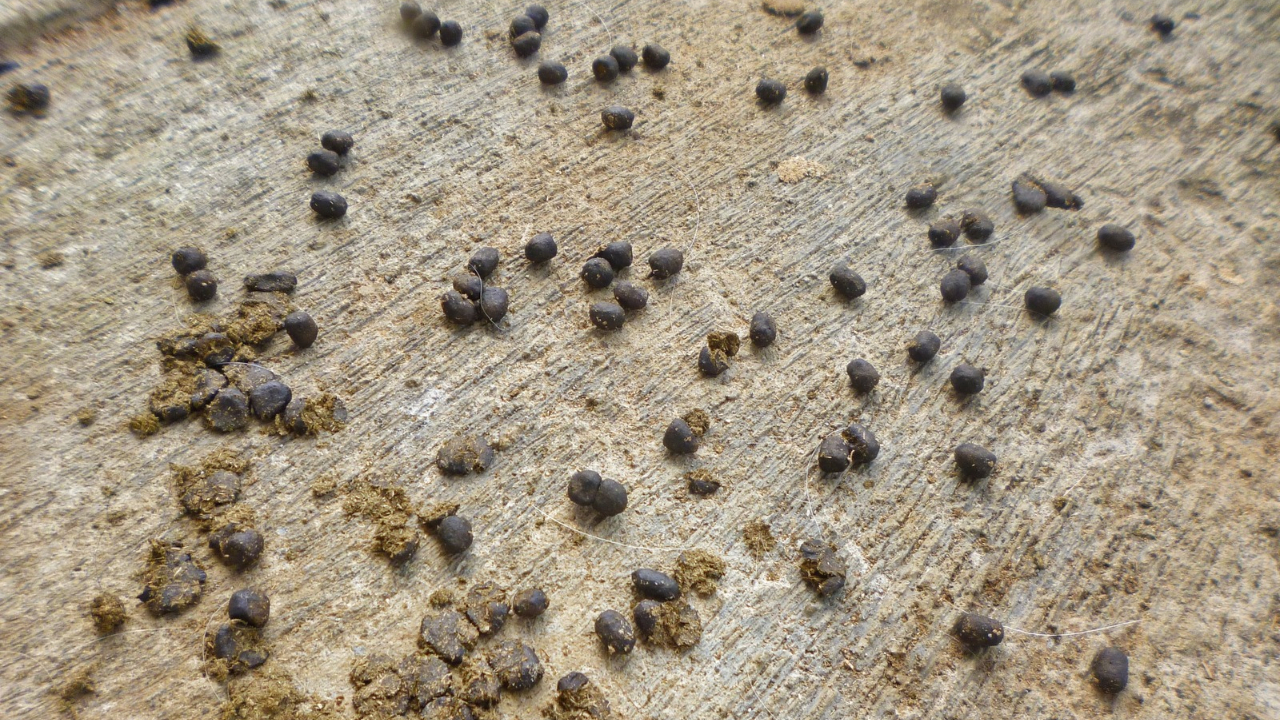
Deer droppings in the open yard are one thing. Finding them under a lean-to, in a hay bay, or along the back wall of a carport means they’re getting comfortable around your structures. That’s when feed bags get torn, mulch piles get scattered, and you start stepping in mess you didn’t invite.
Seal up easy access points. Close doors you’ve been leaving cracked for “airflow,” and use a simple hook-and-eye latch so wind doesn’t swing them open again. If you store feed, put it in metal cans with tight lids, not stacked bags, deer will nose into anything that smells like grain.
7. Trampled Beds With No Bite Marks
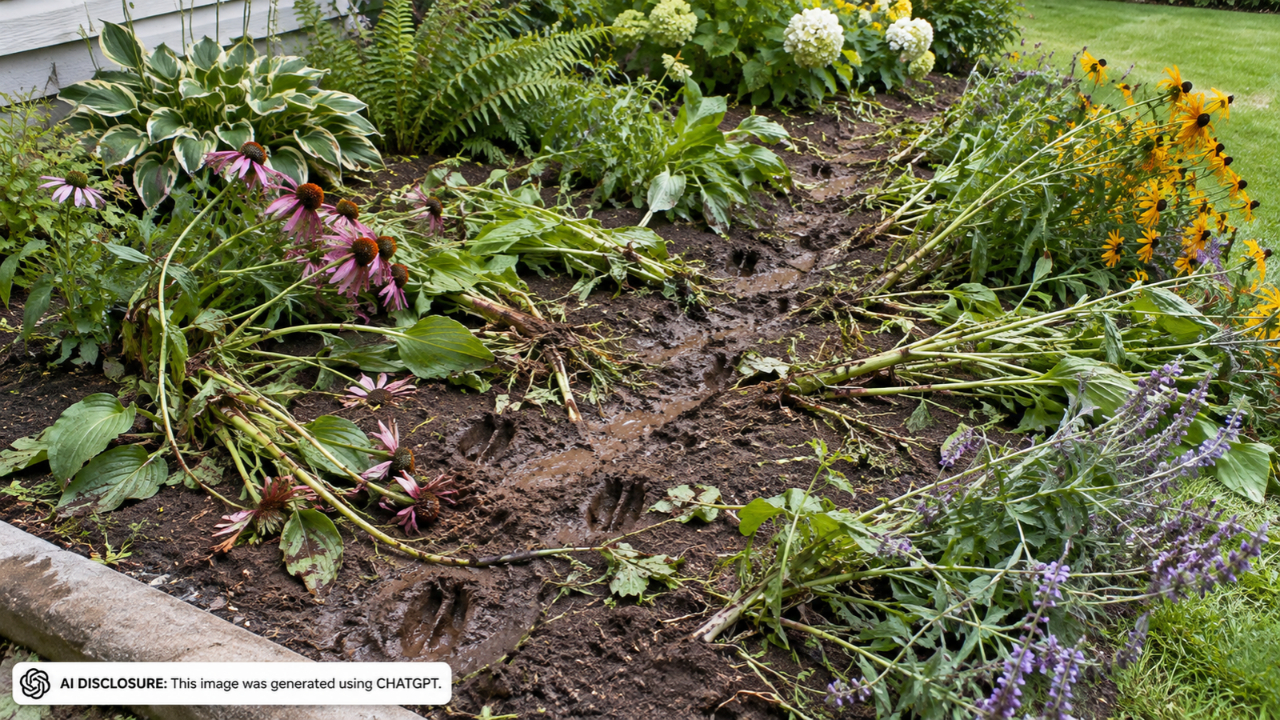
Sometimes your plants aren’t eaten, they’re smashed. Deer cut across a bed to reach something else, or they spook and launch out through the softest path, which is usually your nice worked soil. You’ll see broken stems, muddy divots, and plants pushed flat like somebody fell on them.
Fix the travel route, not just the plant. Add a short barrier where they’re entering, even 3 to 4 feet of welded wire on stakes can redirect them if it blocks the easy line. This is one place where a cheap option can be fine, a few temporary T-posts and fencing is often all you need until the pattern changes.
8. Missing Mulch Around New Plantings
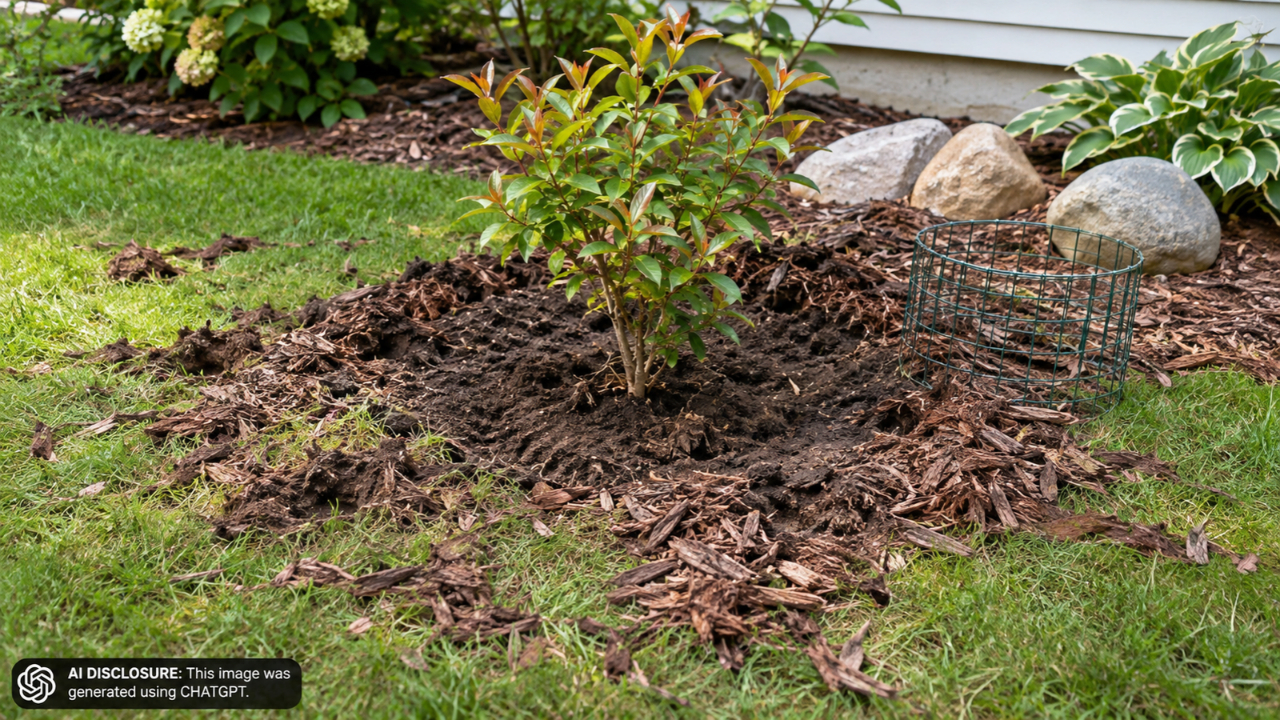
If mulch keeps sliding off a fresh planting ring, it’s not always wind. Deer paw and nose at disturbed soil, especially around shrubs you’ve just watered and amended. They’re after tender shoots, grubs, or just investigating the new smell, and they’ll scatter mulch into the lawn overnight.
Rake it back and water the plant at the base, not with a wide sprinkler that makes a bigger damp area. Lay down a few fist-sized rocks at the edge of the ring or use a low wire collar for a couple weeks until the soil settles. Skip cocoa mulch if deer are already visiting, the smell can draw more attention from wildlife and pets.
9. Repeated Damage To Fall And Winter Crops
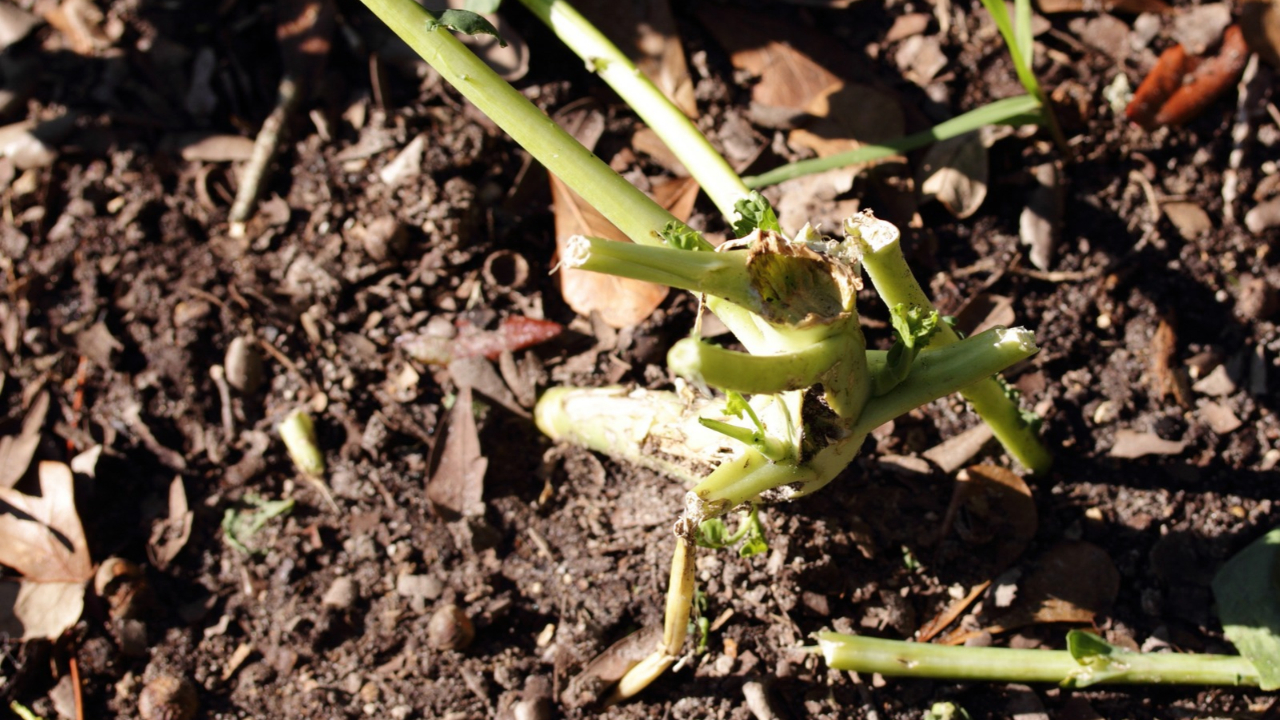
When the first hard frosts hit, deer shift from browsing tender summer growth to whatever stays green. Brassicas, spinach, young wheat or rye cover crops, and even overwintering onions take a beating because natural forage is dropping fast. You’ll notice the same plants hit over and over, right when you hoped the garden would coast.
This is where timing matters more than spray. Put up protection before the first real cold snap, because once deer build the habit, they’ll keep checking that spot. A tall fence is best, but a smaller fenced “cage” around the winter bed can work if it’s tight and well staked so it doesn’t sag under snow.
10. Dogs Barking At The Same Spot Nightly
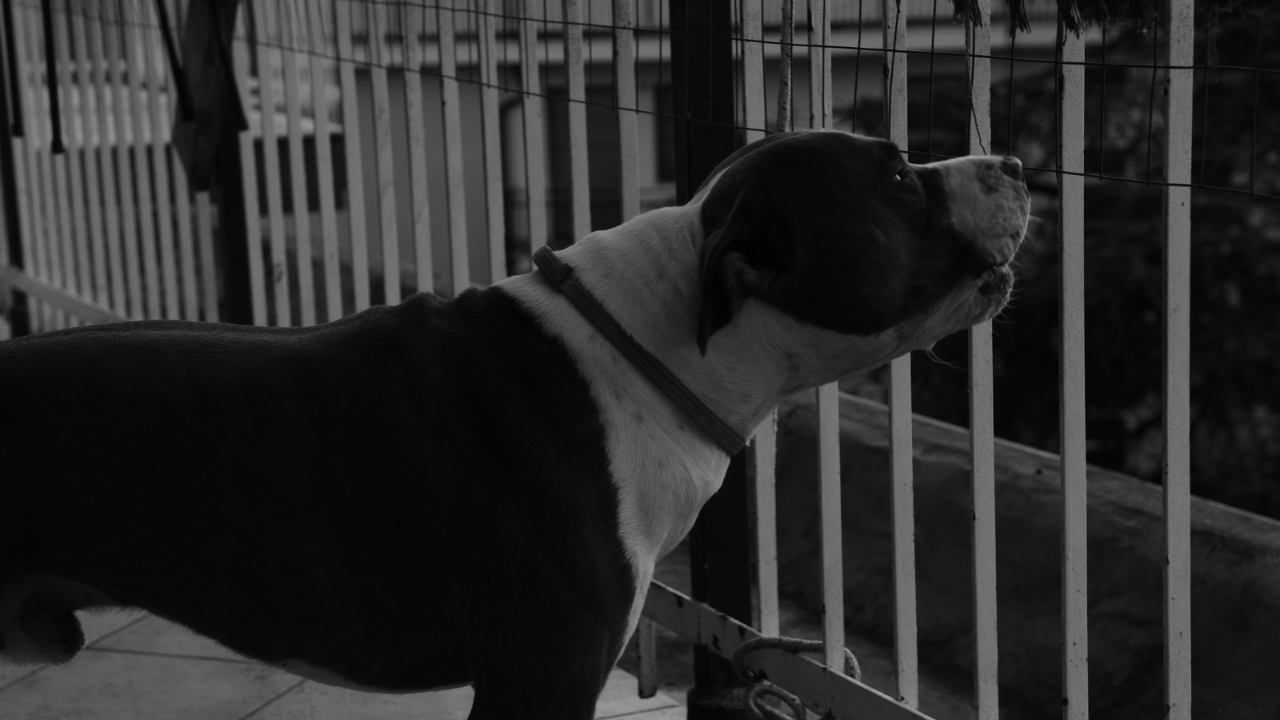
Is your dog losing its mind at 2 a.m. and staring at one window? That’s often deer standing in the yard, testing how close they can get without trouble. Aside from the noise, that pattern can turn into busted screens, scratched doors, and a stressed-out pet that bolts when you open the door.
Turn on a real exterior light where the dog is fixated, and trim back brushy hiding spots along the edge of the yard. Motion lights can help, but only if they’re aimed right and not triggered all night by branches. If your dog is charging fences, fix the fence first, a vet bill costs more than a roll of wire.
Deer problems get easier when you treat them like a property issue, not a garden mystery. Walk your place at dusk, look for the same trails and pinch points, and fix the access before you spend money on plants. A couple hours with posts, wire, and latches beats replanting and re-repairing all season.
Like Fix It Homestead’s content? Be sure to follow us.