10 Signs Something Has Been Living in Your Barn
Photo credit: Dee Browning/Shutterstock.com
You walk into the barn and something feels off. A smell that wasn’t there last week, feed sacks that look “worked on,” or a noise you can’t place once the lights go out. Catching the signs early saves you money and keeps bigger messes from setting up shop.
1. Droppings In Odd, Fresh Piles
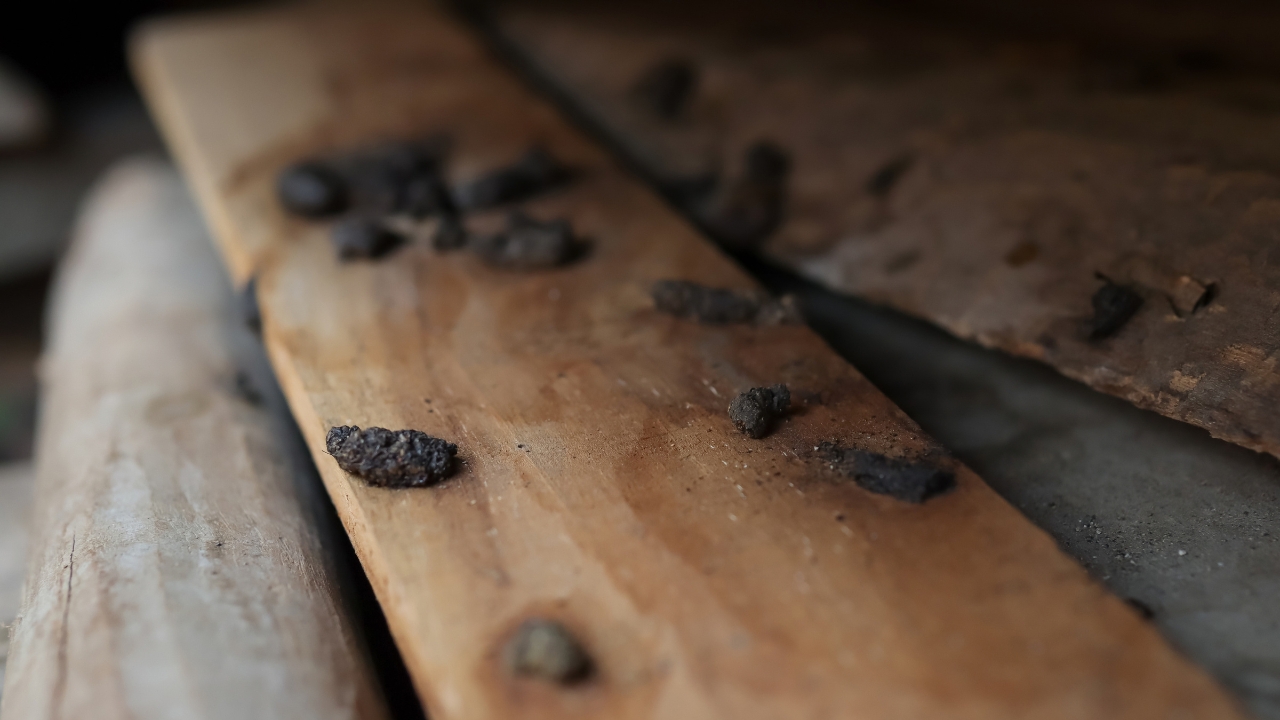
You don’t have to guess when you find droppings that weren’t there yesterday. Mouse droppings look like dark rice, bat droppings crumble and sparkle a little with bug parts, and raccoon droppings are larger and often show seeds or berry skins. Fresh piles near feed bins, tack rooms, or along a wall are a strong clue something is using the same travel path every night.
Start by sweeping everything into a dustpan so you can see what returns, then trace back to the tightest corner or gap. Wear gloves and a good dust mask, and lightly mist dusty areas with water before sweeping so you’re not kicking it all up. If the droppings keep showing up in one spot, you’re looking at an entry point nearby, not a “random” visitor.
2. Chewed Feed Bags And Torn Twine
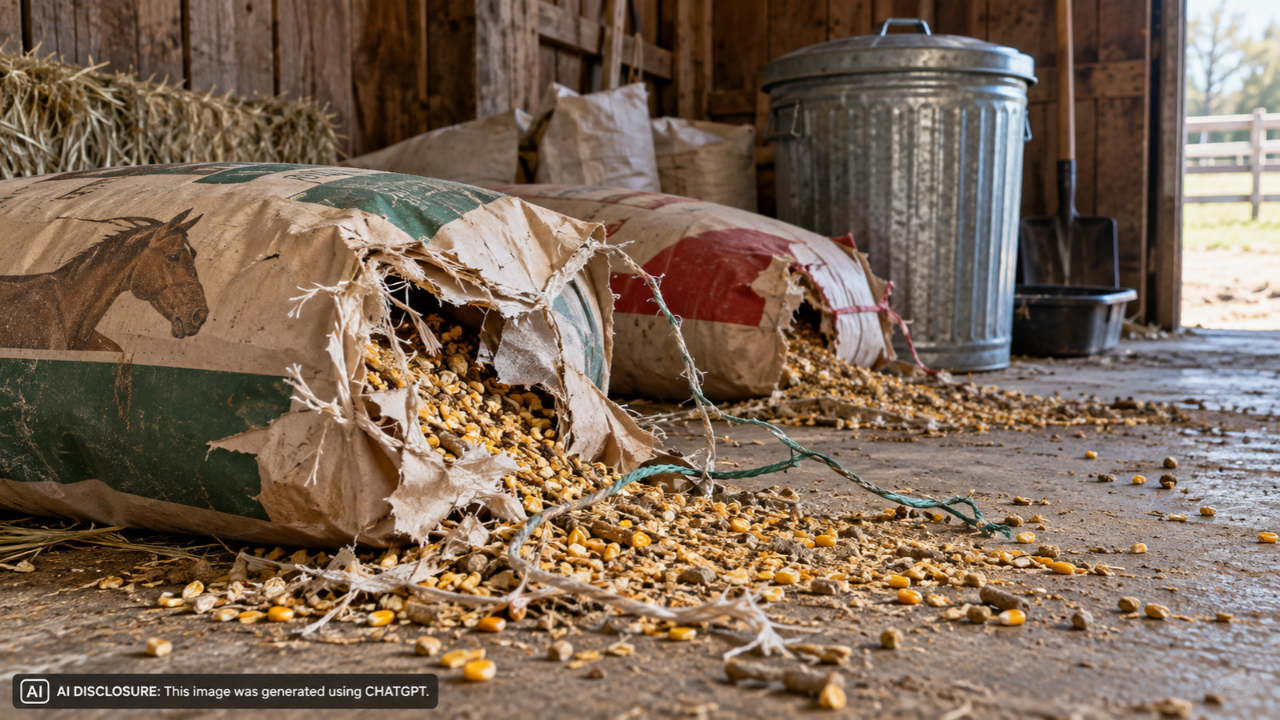
Rodents and raccoons go for the easy calories first, and a barn full of grain is a buffet. You’ll see ragged holes at the corners of bags, shredded paper or plastic, and twine that looks like it was snipped. Sometimes the bag is barely touched but the mess is spread out, which is a sign the animal dragged it to a safer spot to eat.
Stop storing feed on the floor, even “just overnight.” Use lidded metal trash cans or purpose-made feed bins with tight-fitting tops, and keep them a few inches off the wall so you can spot activity behind them. If you’re feeding daily and want the cheapest fix, a heavy galvanized can with a clamp-on lid is fine, just don’t let the rim get bent so it never seals again.
3. Scratch Noises At Dusk Or Dawn
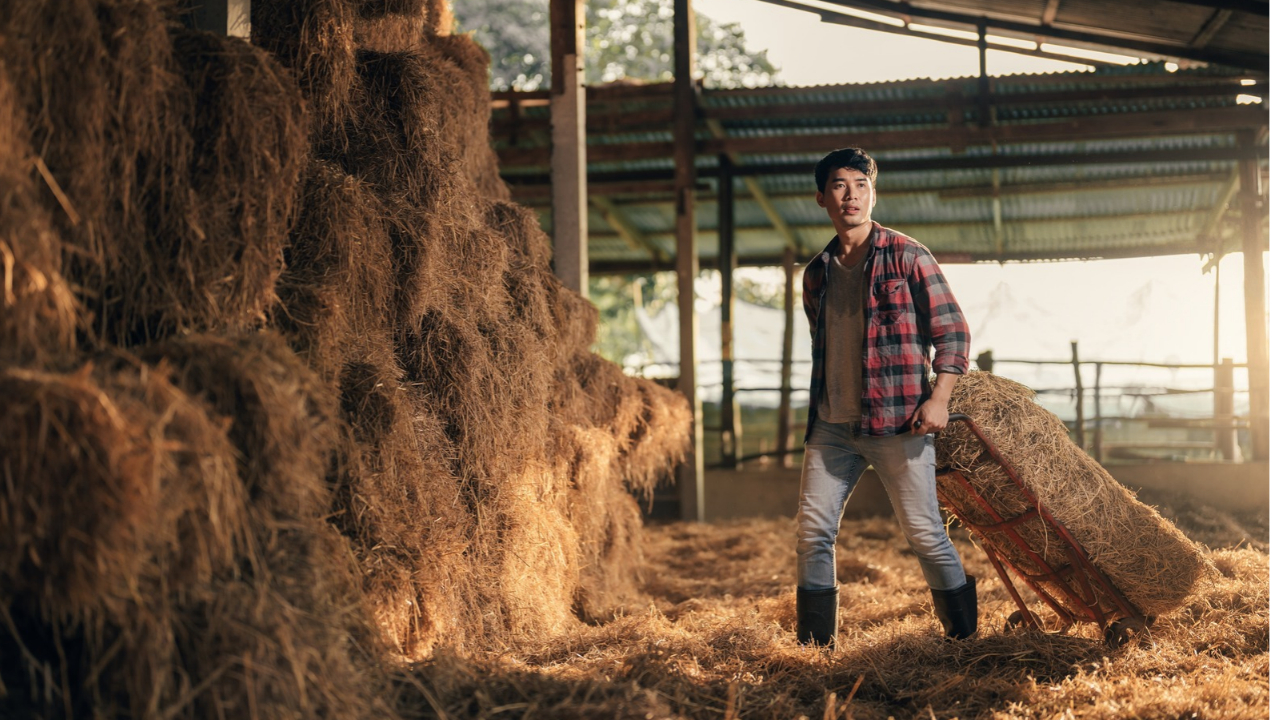
When the barn is quiet, you’ll hear it. Light scratching in the walls, a scuttle across rafters, or a thump that repeats like something hopping down a stud bay. Dusk and dawn noise often points to bats, birds, or rodents timing their movement to low light.
Don’t start by ripping off interior boards. Sit still for five minutes with the lights off, then on, and listen for where the sound is loudest. A cheap mechanic’s stethoscope or even a long screwdriver held to your ear can help you narrow down a cavity before you open anything up.
4. Grease Smears Along Beams And Doors
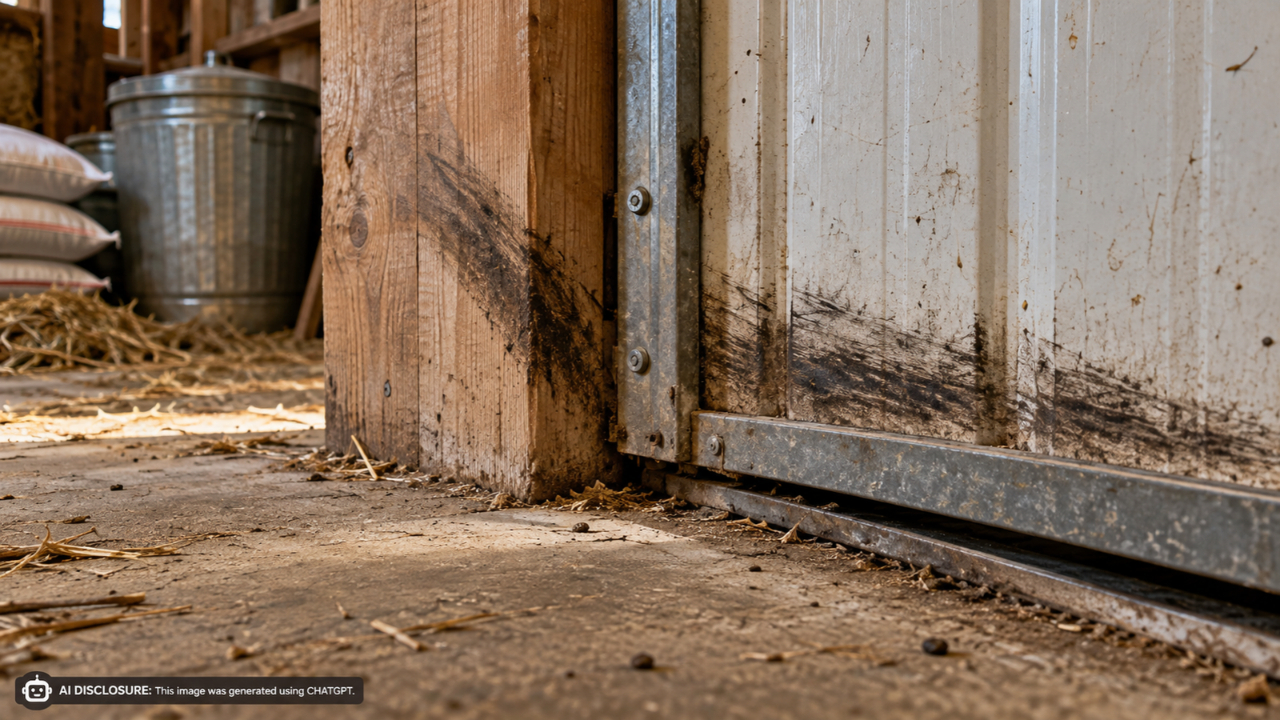
Rats and mice leave dark rub marks where their fur oils hit the same surface over and over. Look along the bottom edge of sliding doors, around man doors, and on beams that run to a feed corner. If the smear is shinier at one end, that’s usually the direction of travel.
Clean the area, then dust a little flour or chalk near the run to confirm it’s active. Once you know the route, seal gaps with hardware cloth and screws, not spray foam alone. Foam is fine as a backer, but it won’t stop teeth.
5. Nesting Material In Tool Drawers
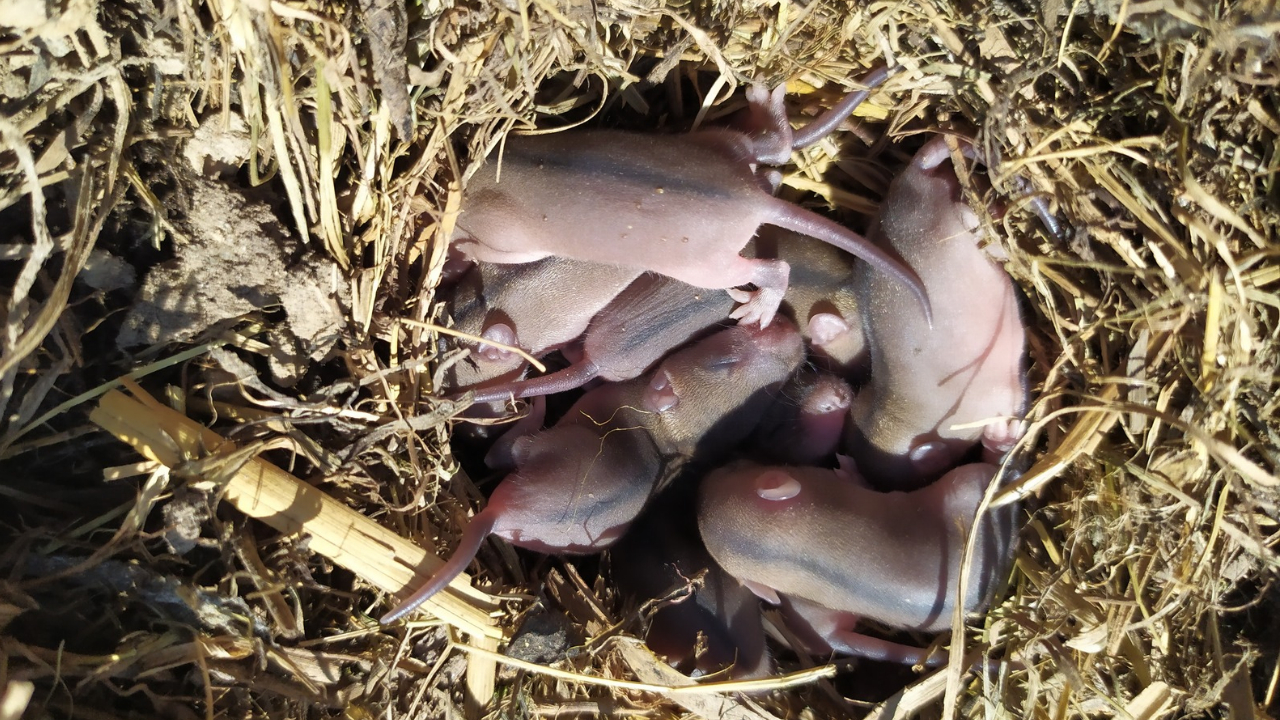
Opening a drawer and finding shredded burlap, baler twine fibers, dryer lint, or insulation is a bad surprise. Mice love quiet little boxes, and birds will pack cavities above shelves with straw and feathers. This one costs you in time because you end up re-cleaning and re-sorting your shop over and over.
Clear the nest, then figure out why that spot felt safe. Put seldom-used gloves, rags, and drop cloths in lidded totes, and keep paper towels and saddle pads in sealed cabinets. If you have open cubbies, line the backs with thin plywood so there’s no gap into the wall void.
6. Strong Ammonia Smell Near Corners

Urine builds up fast in a barn, and the smell gets sharp when it soaks into wood. Cat pee has its own punch, but heavy ammonia in one corner often means rodents or raccoons marking the same place. Aside from the stink, it attracts more visitors because it reads like a safe territory.
Pull anything stored on the floor and check the lower 12 inches of wall sheathing for stains. Clean with an enzyme cleaner made for pet urine, then let it dry hard with a fan and open doors. If the wood is punky or the stain keeps bleeding back through paint, replacing that section is usually the only real fix.
7. New Holes At Eaves Or Siding
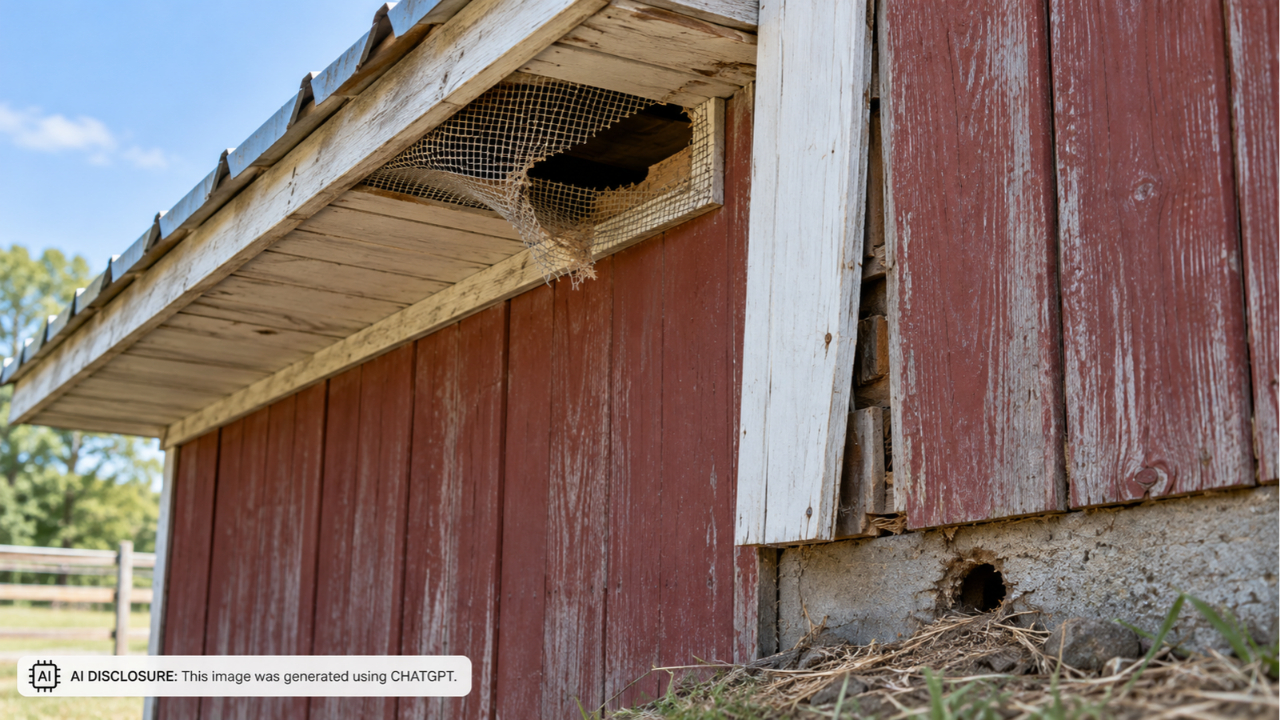
Small gaps turn into entrances once something decides the barn is warm enough to fight for. Look for torn soffit screens, loose corner trim, or a hole the size of a quarter at the base of siding. A raccoon can do a lot of damage in one night, but squirrels can also chew a neat, round opening that looks “too perfect” to be an accident.
Patch with materials that match the threat. Hardware cloth, metal flashing, and exterior screws hold up better than wood patches alone. If the hole is up high and you need a tall ladder or you’re working near power lines, pay a pro, falling off a barn roof is not worth saving a few bucks.
8. Tracks In Dust Or Fresh Snow
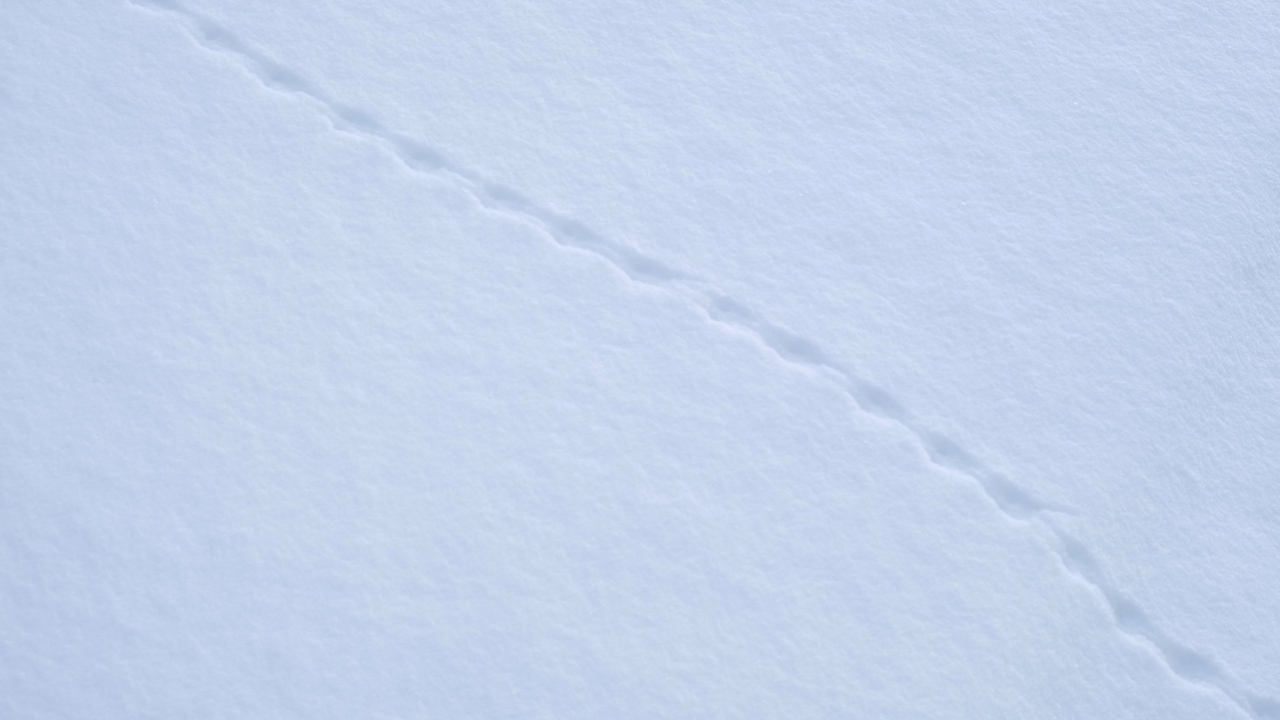
Is there a clean set of footprints where nobody walked? Dusty barn floors record everything, and a light sprinkle of sawdust can act like tracking paper. Outside, fresh snow will show you the exact door, gap, or low spot under the wall where something slid in.
Take a photo before you sweep it up. Then follow the line to the edge of the building and look for a rubbed spot, a burrow, or droppings near the entry. If you’re tempted to scatter poison right away, slow down. You want the entry sealed first, or you’ll end up with a dead animal in a wall.
9. Damp Insulation Or Stained Ceiling Boards
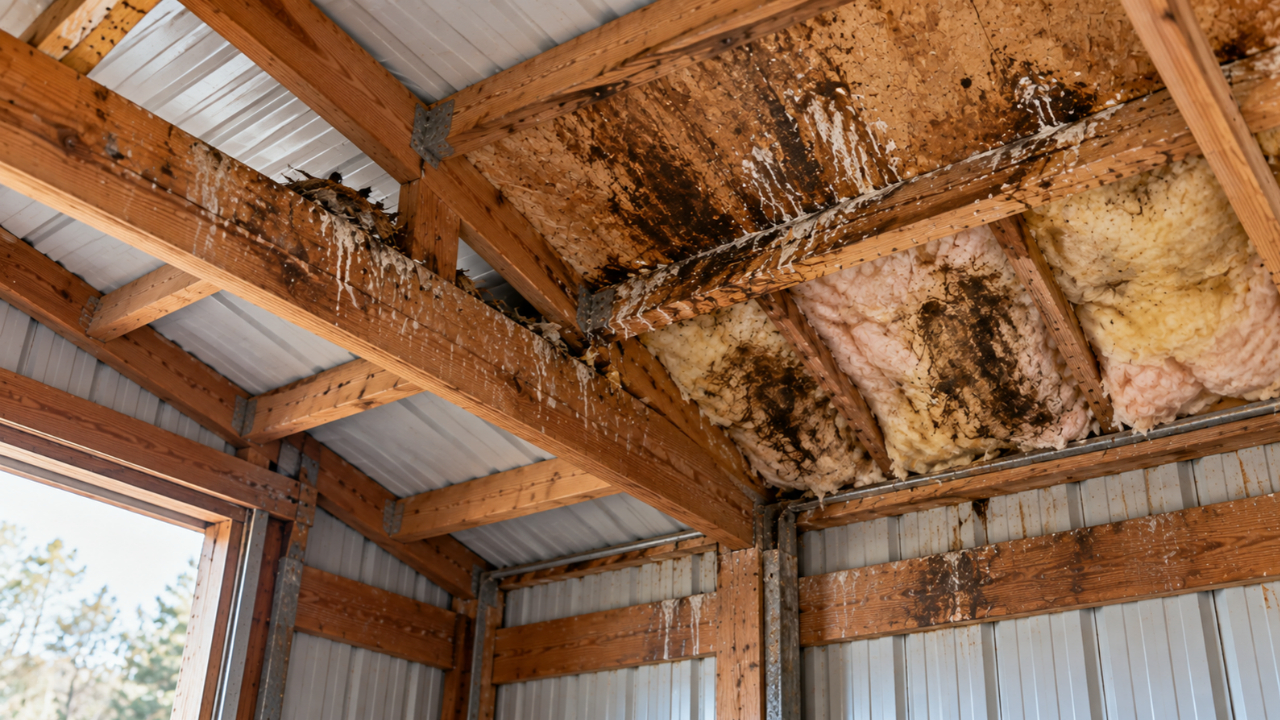
Some barn “critters” are birds roosting overhead, and the mess shows up as stains. You’ll see dark streaks on rafters, wet-looking spots on OSB, or sagging insulation where moisture and droppings built up. Beyond the gross factor, wet insulation loses its value and can rot wood over a season.
Before you blame animals, rule out a roof leak by checking after a hard rain. If it’s roosting, add a physical block like netting or bird wire in the problem bay, and clean the area with a respirator and gloves. For big infestations or high, hard-to-reach lofts, hiring cleanup is money well spent.
10. Chewed Wires Or Blown Fuses

Lights that flicker, a fan that keeps tripping a breaker, or a chewed extension cord on the floor points to rodents. This is a safety issue first, not a nuisance. One nicked cable can arc and start a fire in dry bedding or hay dust.
Unplug what you can and replace damaged cords, don’t wrap them with tape and call it good. If you find chew marks on fixed wiring, junction boxes, or anything tied into the panel, stop and call a licensed electrician. After repairs, run wiring in conduit where it makes sense and get cords up on hooks, off the ground and out of traffic lanes.
Once you spot activity, focus on two moves: remove the easy food and close the easiest entry. Traps and deterrents help, but the barn stays calmer when there’s nothing to eat and nowhere to squeeze in. A quick walk-around every week, especially in fall, catches most problems while they’re still small.
Like Fix It Homestead’s content? Be sure to follow us.