10 Things to Do to a Mower Before Storing It
Photo credit: Itxu/Shutterstock.com
The last mow of the season usually ends with a tired pull cord, a half-empty gas can, and grass packed everywhere it doesn’t belong. If you shove the mower in the shed like that, spring will punish you with hard starts, rust, and surprise parts shopping. A little cleanup now saves time later, and it keeps small problems from becoming next-year repairs.
1. Wash Off Grass, Sap, And Mud
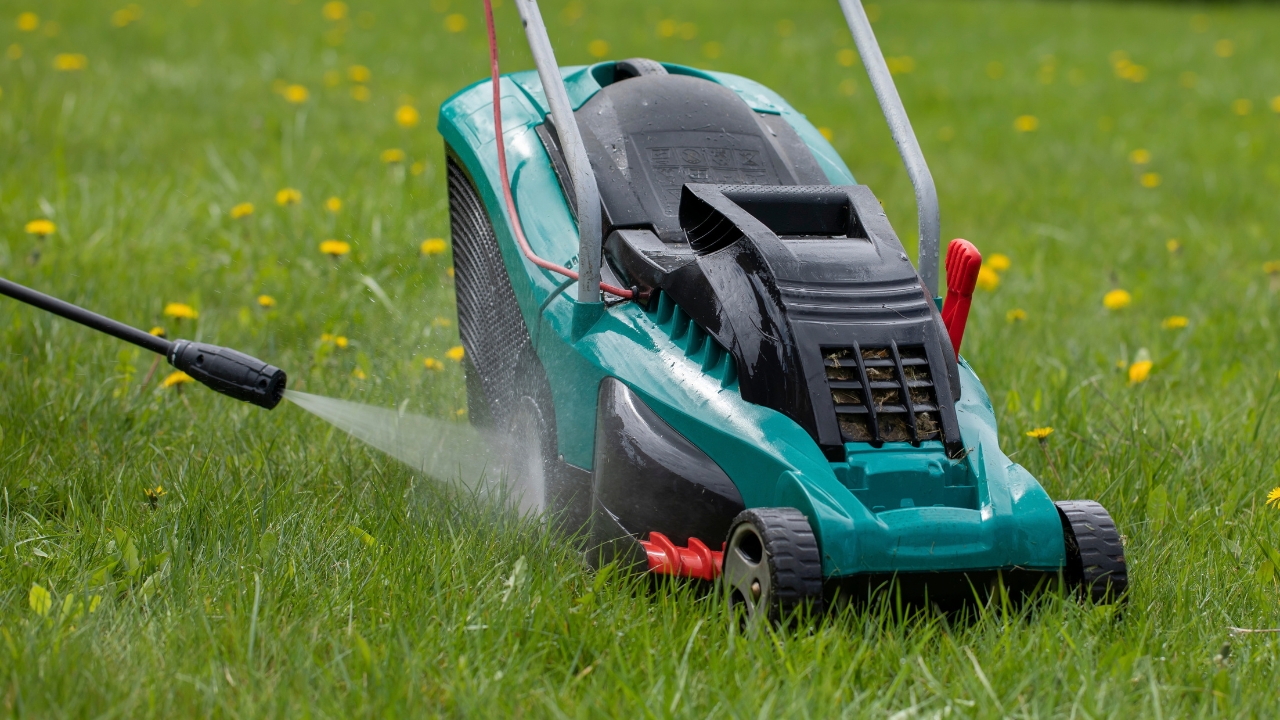
Wet clippings left on a deck turn into a salty, sour mess that eats paint and traps moisture against steel. By spring you’ll see scaly rust, and the deck will hold grass instead of throwing it. That means worse cut quality and more clogging all season.
Scrape the underside with a plastic putty knife or a deck scraper, then brush off the top and wheels. If you hose it, keep the spray gentle and avoid blasting bearings, belts, and the air intake. Let it dry fully before you store it, especially if it’s going in a cold shed.
2. Deal With Fuel Before It Varnishes
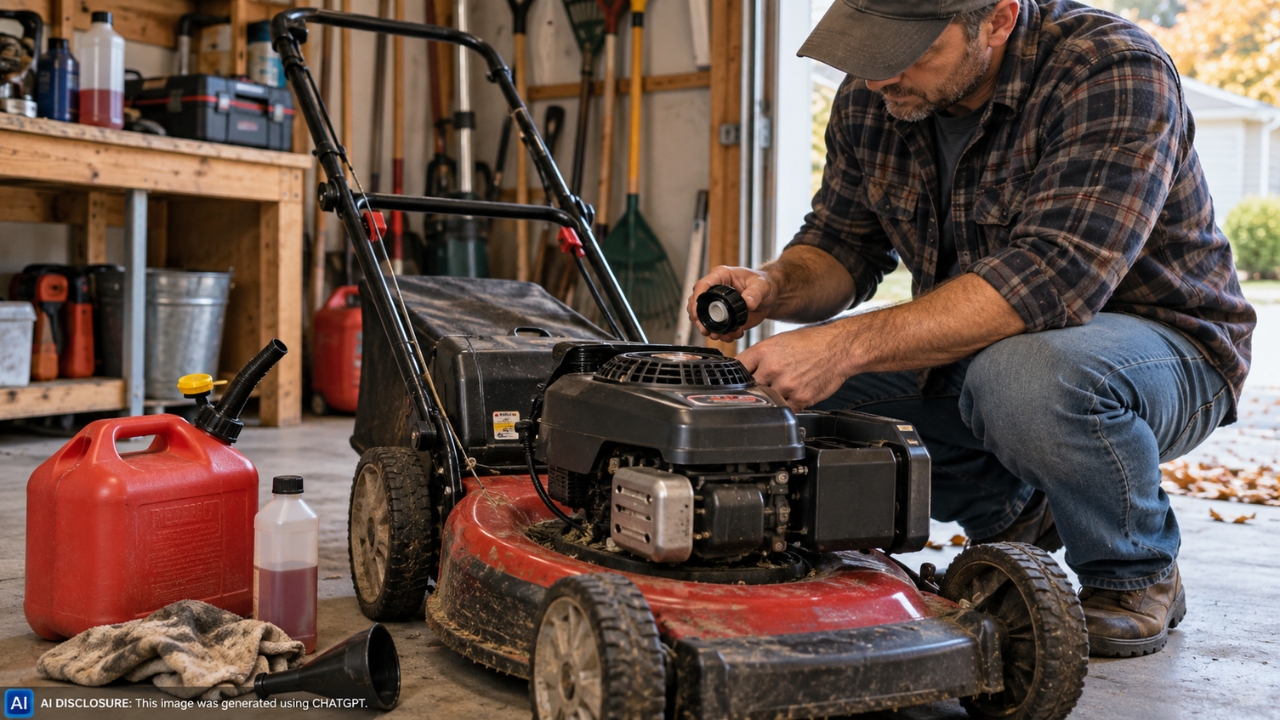
Old gas is the number one reason a mower won’t start after winter. It turns gummy and plugs the carb jets, then you’re pulling the cord until your shoulder hates you. Fixing a dirty carb can be cheap, or it can eat a Saturday.
You’ve got two good options: run the tank dry and keep running until it stalls, or fill with fresh fuel plus stabilizer and run it a few minutes to get treated fuel into the carb. The “run it dry” advice is not always best, though. Some engines with a plastic tank and a vented cap store better with a treated, mostly full tank since there’s less air space for moisture. Pick one method and commit to it, don’t half-drain and walk away.
3. Change The Oil While It’s Warm
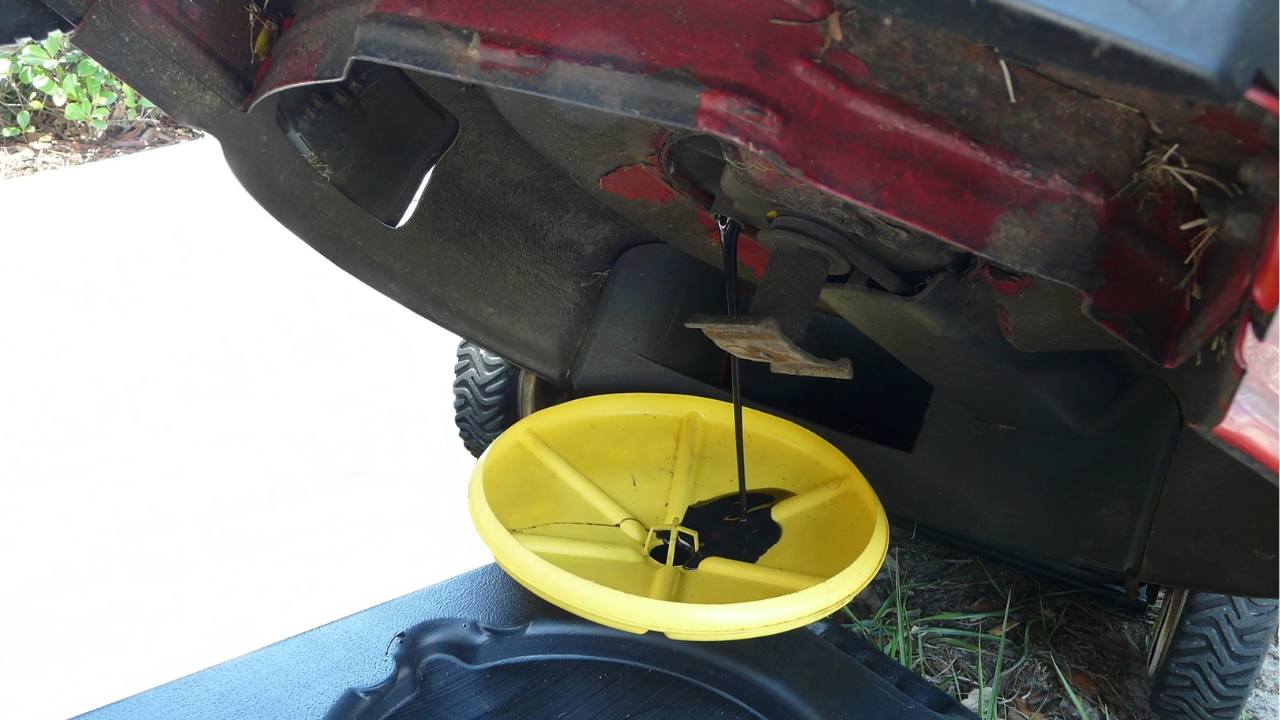
Dirty oil holds acids and grit from a season of mowing. Letting that sit all winter is like marinating the inside of the engine in old soup. You may not notice right away, but it shortens engine life.
Run the mower for a couple minutes, shut it off, and pull the spark plug wire so it can’t accidentally start. Drain the oil into a pan and refill with the weight listed on the dipstick cap or manual. Wipe spills, then check the level on flat ground. This is one of the few “do it every year” jobs that actually pays you back.
4. Sharpen And Balance The Blade

A dull blade tears grass instead of cutting it. You’ll see brown tips and the lawn looks tired even when it’s watered. Next season you’ll mow more often because the lawn looks rough faster.
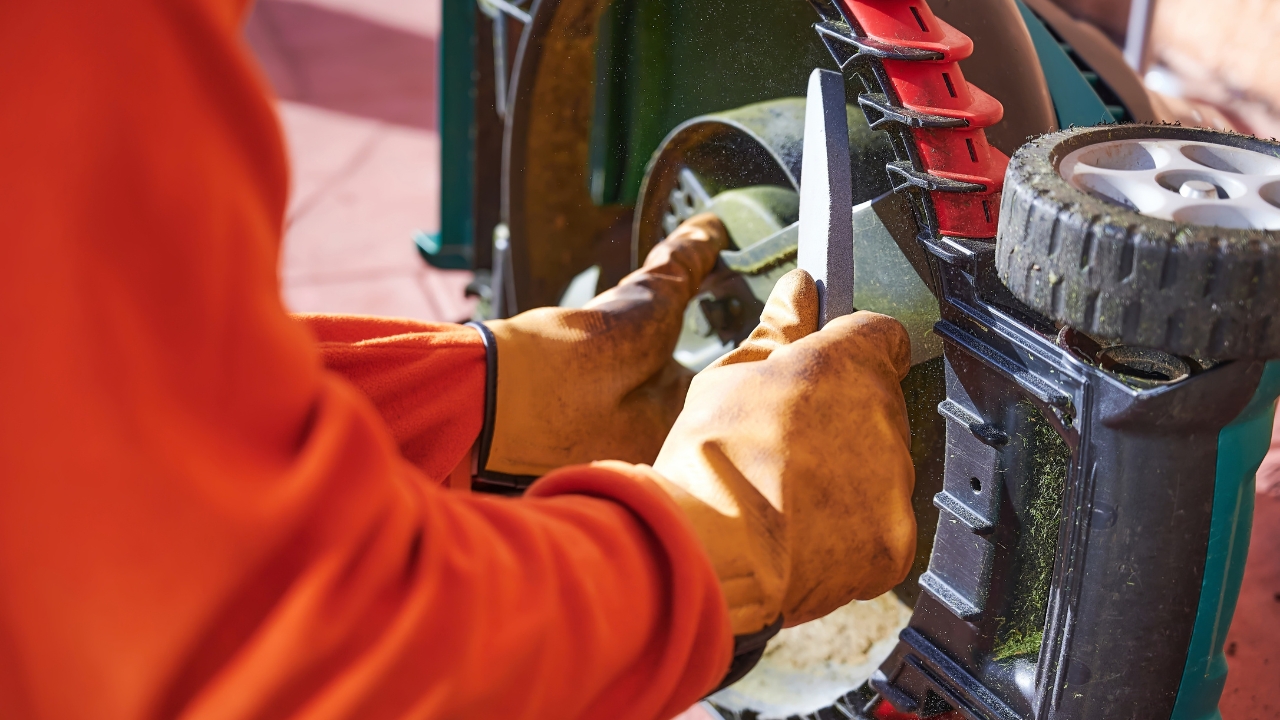
Pull the spark plug wire, then remove the blade with the right socket or wrench and a block of wood to stop it from turning. File or grind the edge back to clean metal, keep the original angle, then balance it on a simple cone balancer or even a nail in a stud. An unbalanced blade vibrates, chews up bearings, and makes bolts walk loose.
5. Inspect Deck, Wheels, And Height Adjusters
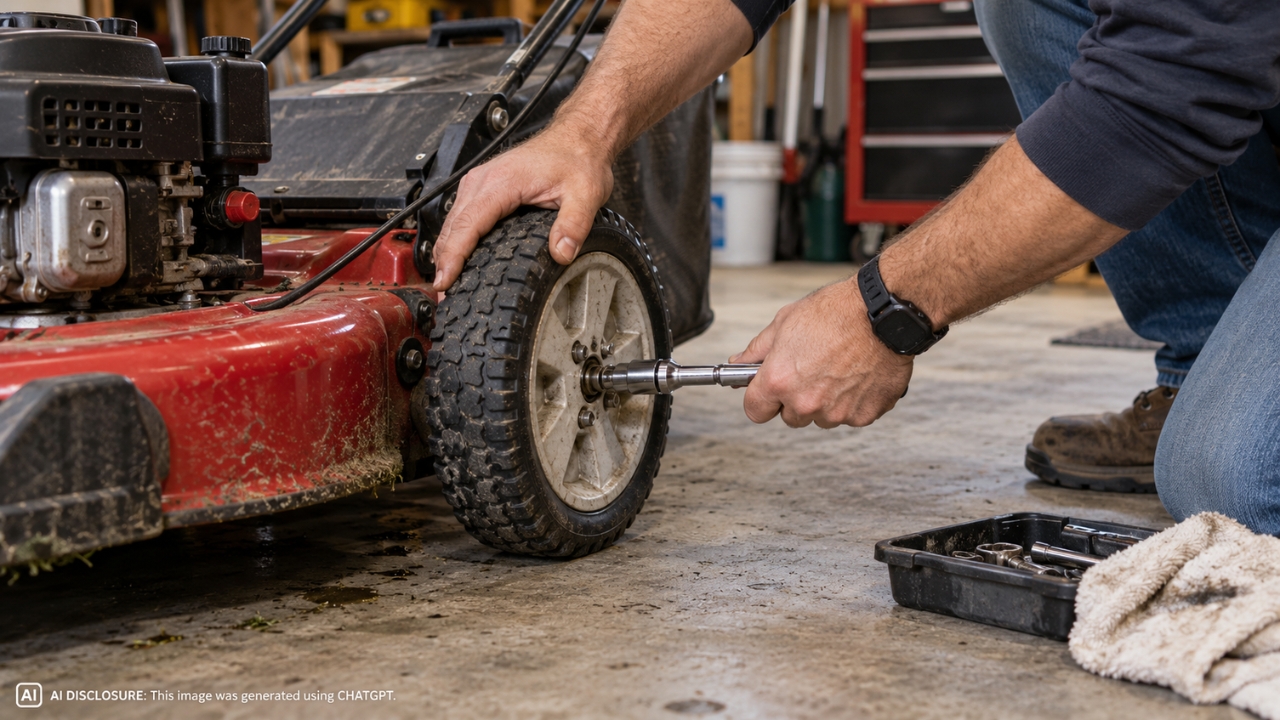
People store mowers with bent deck edges, loose wheel bolts, or a height adjuster that’s half-stripped. Then spring arrives and the mower scalps on one side, or the wheel starts wobbling and wearing the axle.
Flip the mower safely with the air filter side up so oil doesn’t soak the filter, and look closely. Tighten loose hardware, check the wheels for cracked hubs, and make sure the height levers click firmly into place. If a wheel bushing is sloppy, replacing it now is a few bucks and ten minutes, not a mid-mow breakdown.
6. Clean Or Replace The Air Filter
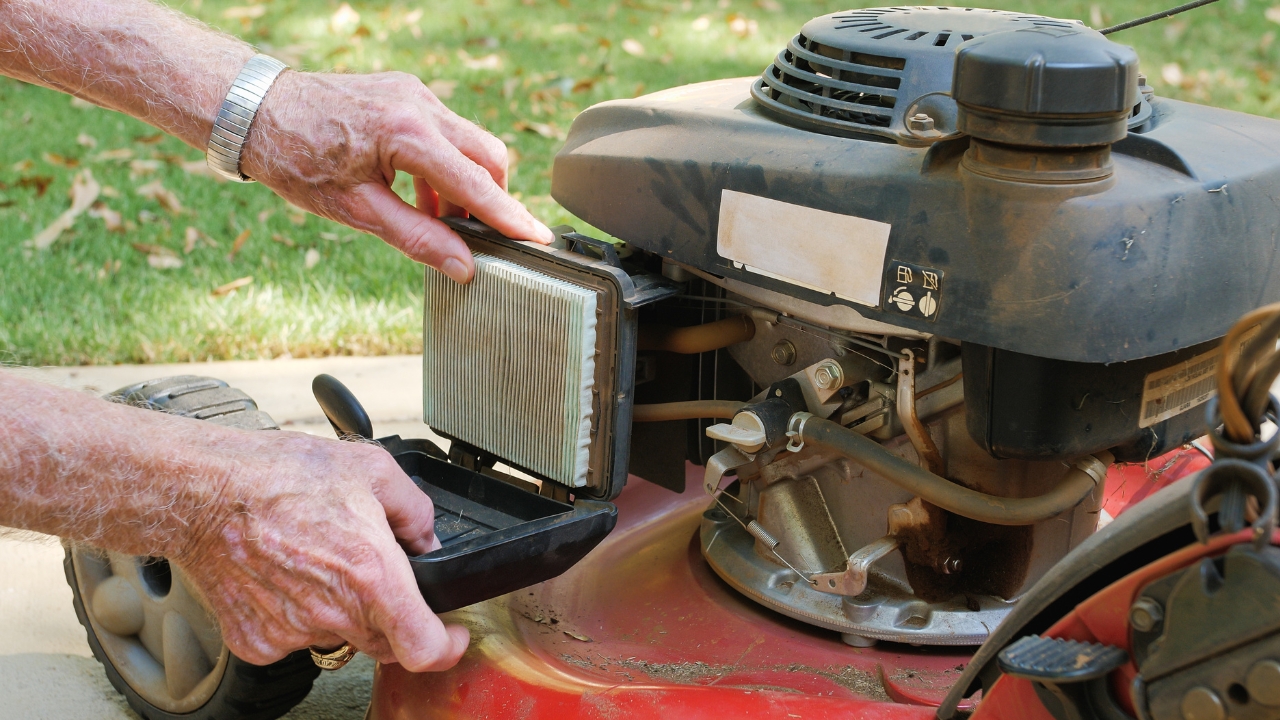
If the filter is clogged, the engine runs rich and soots up the plug. It’ll start, but it’ll smell gassy, surge, and load up when you hit thicker grass.
Foam filters can be washed in warm soapy water, dried, then lightly oiled and squeezed out. Paper filters usually get replaced, and they’re cheap enough that it’s not worth trying to blow them clean with high air pressure. Check the prefilter, too, if your mower has one.
7. Check The Spark Plug And Boot
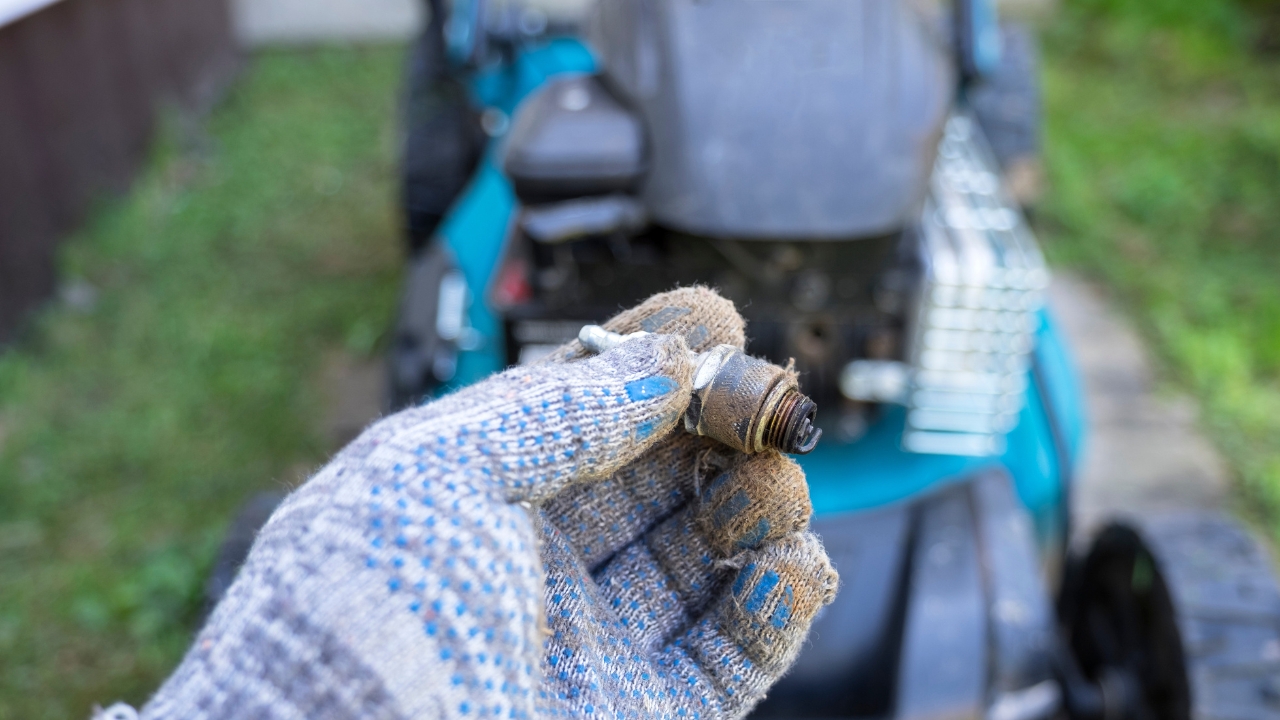
If the mower was getting hard to start toward the end of the season, the plug tells the story. A black, sooty plug points to a dirty air filter or too much choke time. A white plug can mean it’s running hot or lean.
Pull the plug with a spark plug socket, look at the tip, and replace it if it’s worn, oily, or the porcelain is cracked. Make sure the boot fits snug and the wire isn’t rubbed through where it routes past the engine shroud. This is quick, and it keeps spring troubleshooting from turning into guesswork.
8. Lube Cables, Pivots, And Wheel Bushings
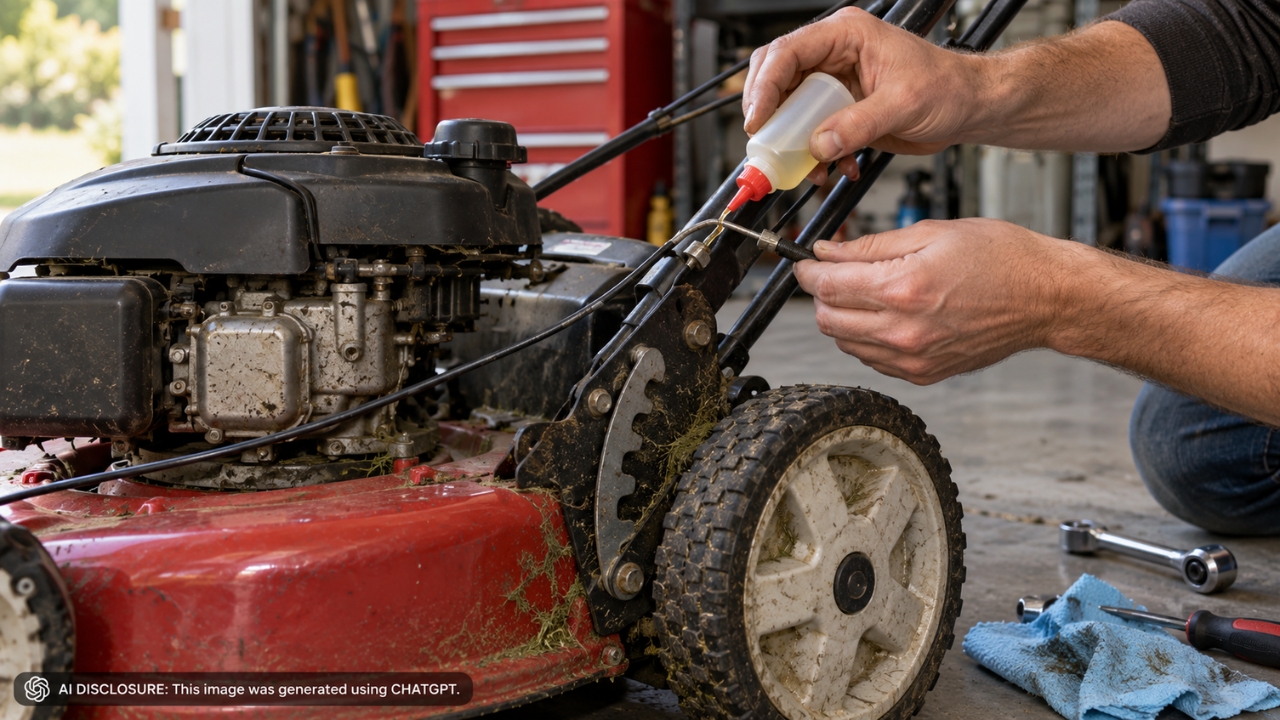
Over winter, moisture creeps into cable housings and pivot points, then things stick. In spring the self-propel lever won’t snap back, or the height adjuster takes two hands and a curse.
Hit pivot points with a light oil and wipe off the excess so it doesn’t collect dust. For control cables, a cable lube tool is nice but not required, a few drops at the cable ends helps if you work the lever while you apply it. Skip heavy grease on exposed parts where it just turns into gritty paste.
9. Store It Dry, Covered, And Away From Fumes
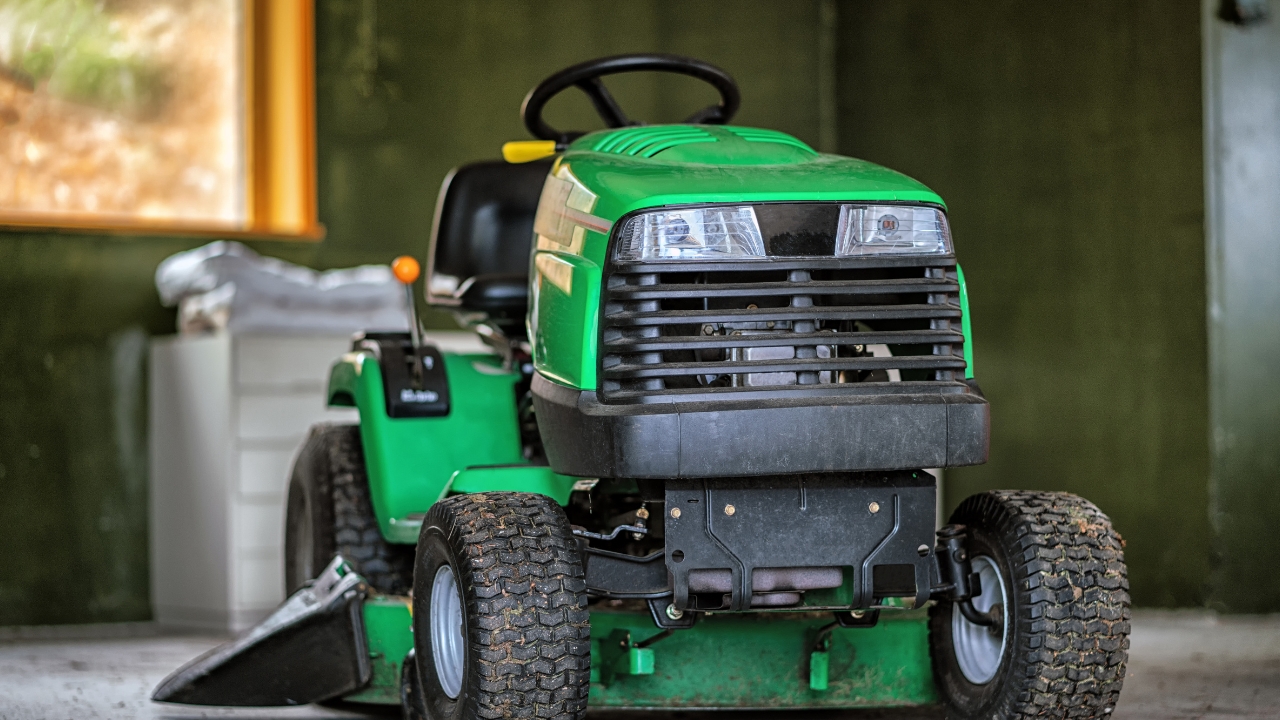
Parking a mower next to fertilizer, pool chemicals, or salt bags speeds up corrosion. A damp corner of the shed does the same, and a tight plastic tarp can trap moisture under it.
Pick a spot off bare dirt if you can, even a scrap of plywood under the wheels helps. Use a breathable cover or an old sheet if dust is the problem. If you store it in a basement or attached garage, deal with the fuel first and keep it away from water heaters or anything with a flame.
10. Handle Electric Mower Batteries The Right Way
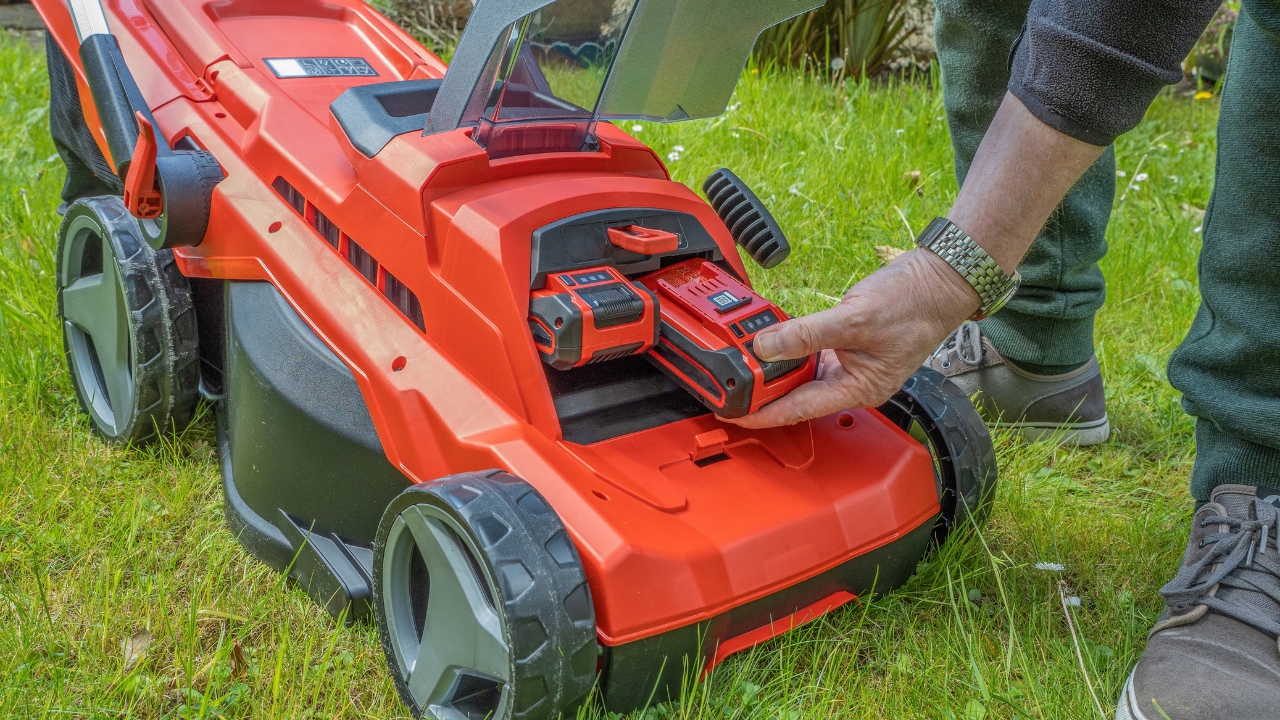
If you’ve got a battery mower, storage is mostly about the pack. Leaving a lithium battery fully dead all winter is a good way to find it won’t take a charge later. Leaving it on the charger in a freezing shed isn’t great either.
Store the battery indoors where it stays dry and above freezing, and aim for a partial charge, around half is fine for most packs. Clean the contacts with a dry cloth and keep the pack out of direct sun. If the battery looks swollen or smells odd, stop using it and follow the maker’s disposal guidance.
Put a note on the mower handle with what you did and the date, especially if you’ve got more than one machine. In spring you’ll know if it’s ready to go or if it’s due for oil, a blade touch-up, or fresh fuel before the first cut.
Like Fix It Homestead’s content? Be sure to follow us.