10 Things Worth Keeping in a Vehicle on Country Roads
Photo credit: Jota Buyinch Photo/Shutterstock.com
Country roads don’t give you much warning. One minute you’re rolling past fence lines, the next you’re stopped on a blind curve with no shoulder, no cell service, and a load that still has to get home. A few smart items in the vehicle turn a bad delay into a quick fix, or at least a safer wait.
1. Real Tire Plug Kit And Pliers
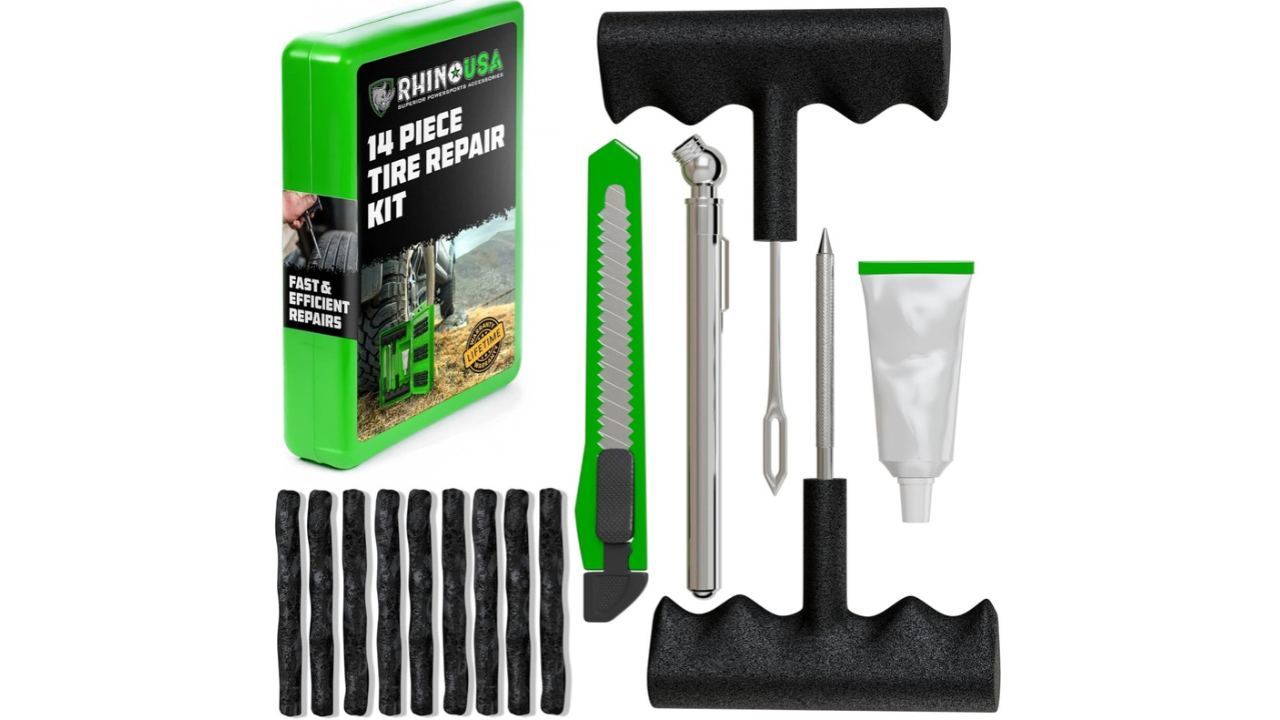
A slow leak on gravel sounds like a faint hiss, then the steering starts to feel heavy. A can of sealant might limp you to town, but it also makes a mess inside the tire and can ruin a TPMS sensor. A basic plug kit with sticky rope plugs and the reamer and insertion tool lets you fix a nail or thorn hole well enough to get home.
Keep a pair of locking pliers or stout needle-nose pliers with it, because pulling a screw out with your fingers rarely works. This isn’t for shredded sidewalls or a tire that’s come off the bead. It’s for the common puncture that would otherwise cost you a tow and half a day.
2. Compact Air Compressor With Gauge
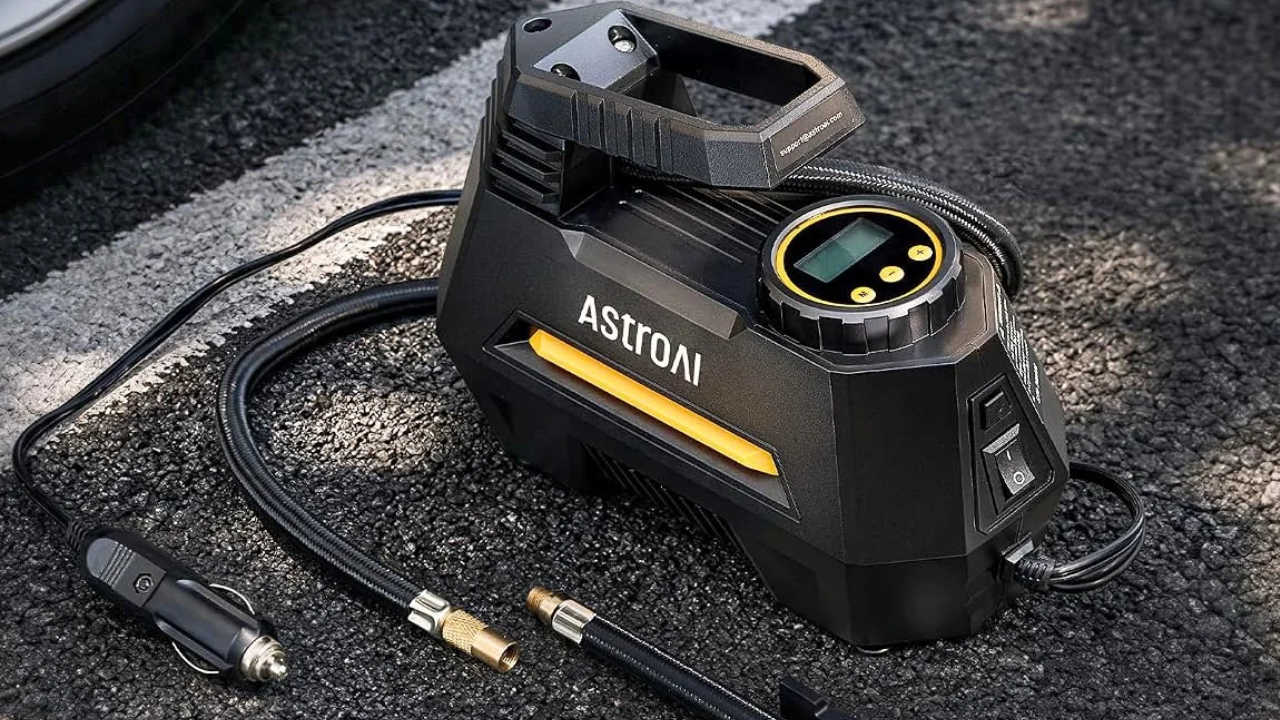
Lots of folks carry a plug kit and forget the air. After a plug, you still need to get the tire back up, and even without a puncture, cold mornings drop pressure enough to trigger lights and wear the edges off your tread. A small 12V compressor that clips to the battery or plugs into the outlet pays for itself in saved tire wear.
Skip the cheapest palm-sized ones that overheat fast. Look for a hose long enough to reach all four tires and a built-in gauge you can read without squinting. Toss in a valve core tool and a couple spare valve cores, they’re tiny and fix a leak that looks like a nail but isn’t.
3. Reflective Triangles Or Road Flares
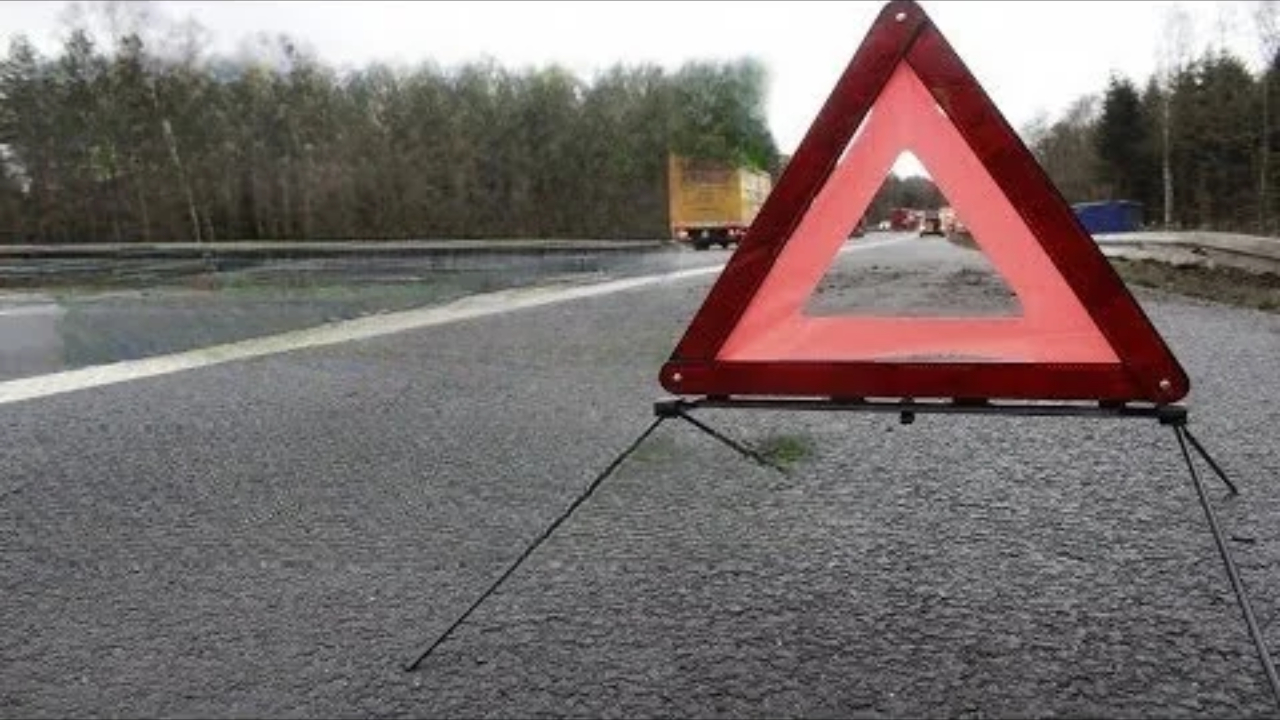
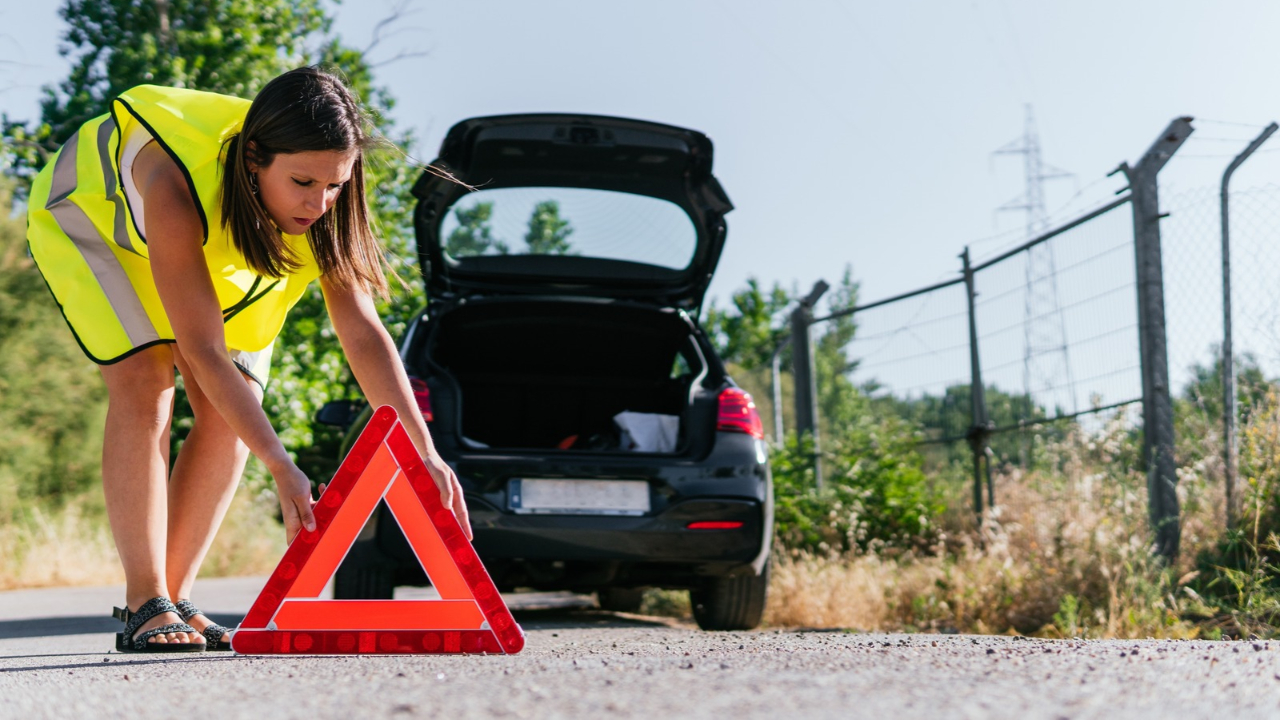
Stopping on a curve with tall grass is how a fender bender turns into a real wreck. Hazard lights help, but they get lost in dust, fog, and afternoon glare. Reflective warning triangles set back from the vehicle give approaching traffic more time to move over.
Flares work too, but they’re not always the right choice. In dry season, near spilled fuel, or along ditch grass, skip open flame and use triangles or LED beacons instead. Keep them where you can reach them without unloading the whole cargo area.
4. Headlamp With Spare Batteries
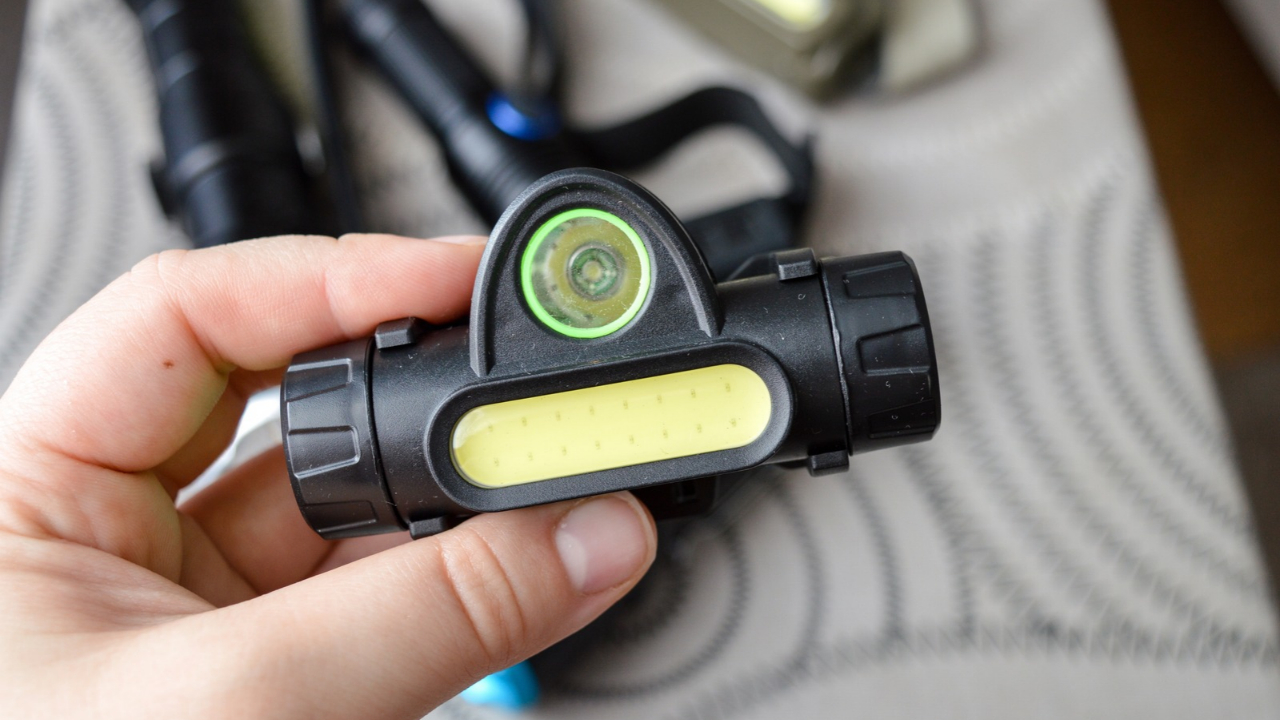
A flashlight ties up one hand, and you always end up needing two. A headlamp makes tire work, chain installs, and fuse checks possible in the dark without dropping tools in the mud. It also helps you stay visible when you’re walking a shoulder to place triangles.
Store spare batteries in a small bag so they don’t short out against coins or keys. If your vehicle sits in deep winter cold, lithium batteries handle it better than alkaline. This is one of those items that costs little and fixes a lot of annoying situations.
5. Basic Tool Roll With Gloves
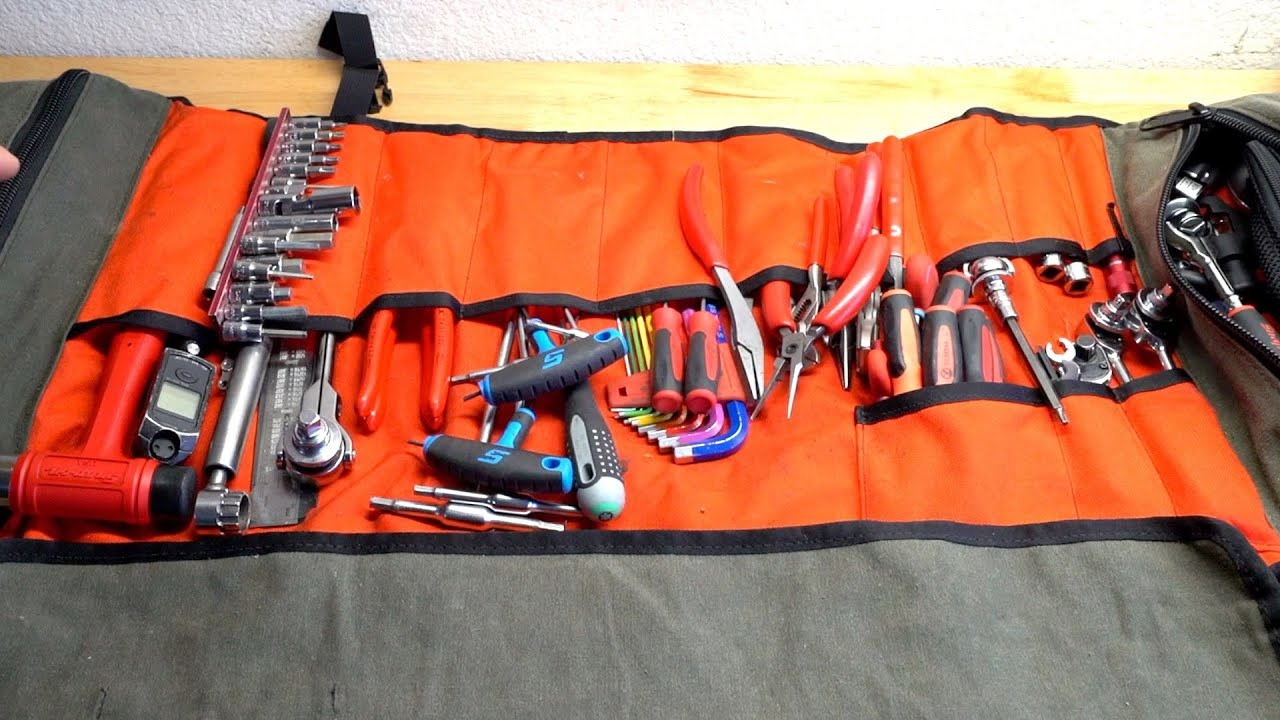
Country road fixes aren’t usually complex, they’re just dirty. A small tool roll with a 6-in-1 screwdriver, adjustable wrench, pliers, a few sockets, and a utility knife handles loose battery terminals, hose clamps, and trailer light screws. Add a couple pairs of work gloves because hot metal and cactus don’t care how tough you are.
Don’t overdo it. A huge metal toolbox becomes a projectile in a crash and gets stolen faster. The point is to tighten, cut, pry, and hold long enough to get back to the shop where the real tools live.
6. Jumper Cables Or A Jump Pack
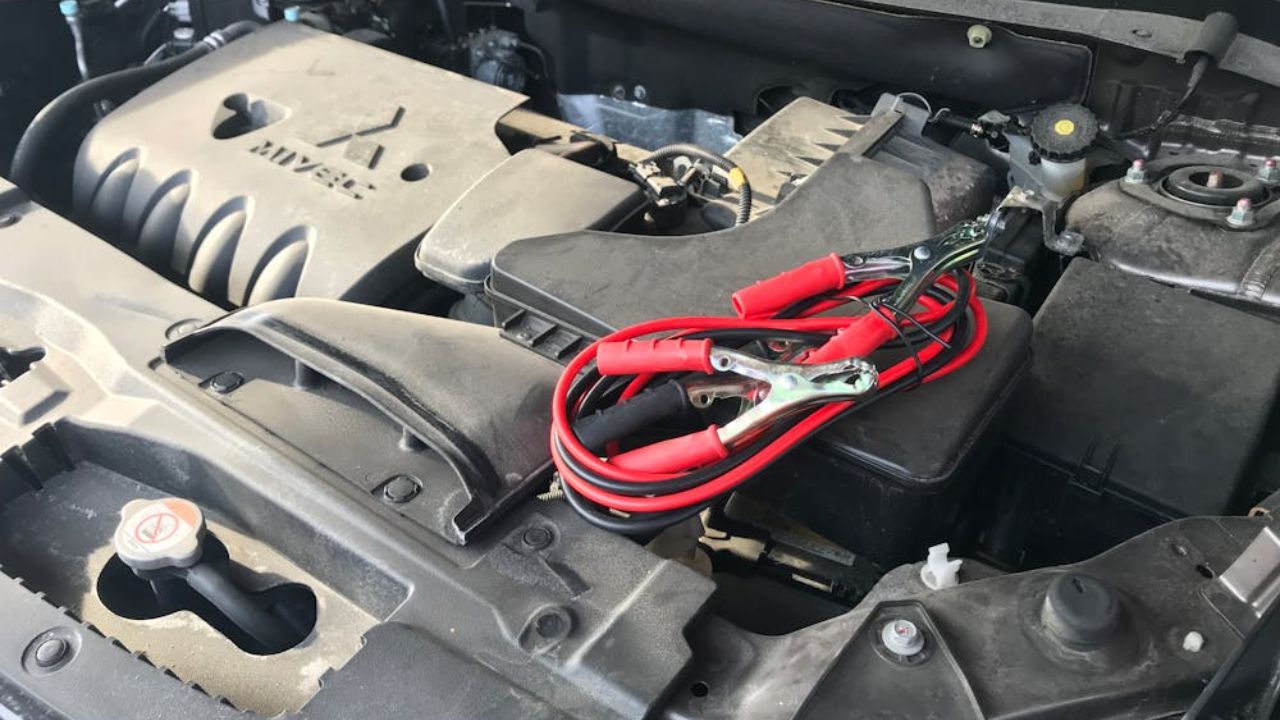
A weak battery loves to show up after you stop to open a gate or idle while you talk. Then the starter clicks and you’re stuck in a spot where nobody drives by for an hour. Heavy-gauge jumper cables work if another vehicle can reach you, and they’ll still be working ten years from now if you don’t leave them wet.
A jump pack is handy when you’re alone, but cheap ones don’t like heat and they don’t like being forgotten under a seat for months. If you go that route, charge it on a schedule and check it before winter. Either way, keep a small wire brush or battery terminal cleaner in the kit so you’re not trying to jump through corrosion.
7. Tow Strap And Rated Shackles

A slick clay road after a summer storm will put a 2WD truck in the ditch fast. A tow strap lets a neighbor tug you back onto solid ground without waiting for a wrecker. Use a proper recovery strap or tow strap with a clear weight rating, not a frayed rope from the barn.
Rated shackles or soft shackles give you safe attachment options, but they only work if you use real tow points. Don’t hook to bumpers, tie-down loops, or a trailer ball, those failures are violent. If you don’t know where the safe recovery points are on your vehicle, look it up at home, not in the mud.
8. Water, Snacks, And A Warm Layer
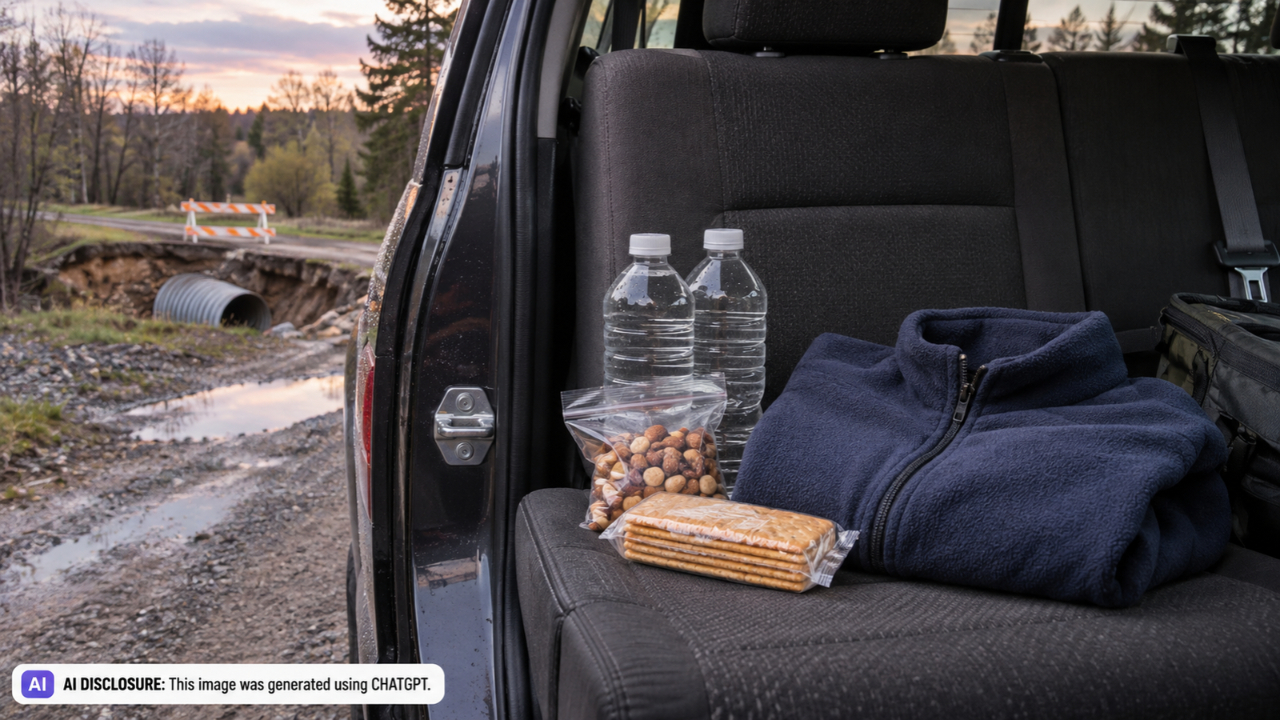
Sometimes the “fix” is waiting. A downed tree, a washed-out culvert, or a calf in the road can stop you for a while, and service calls take longer out of town. Keep a couple bottles of water and simple food that won’t melt into a mess, like nuts or crackers.
Add a warm layer or compact blanket even in spring. Temperatures drop hard once the sun goes down, and it’s no fun trying to change a tire with shaking hands. This isn’t about survival drama, it’s about staying comfortable enough to think straight.
9. Paper Map And Written Contacts
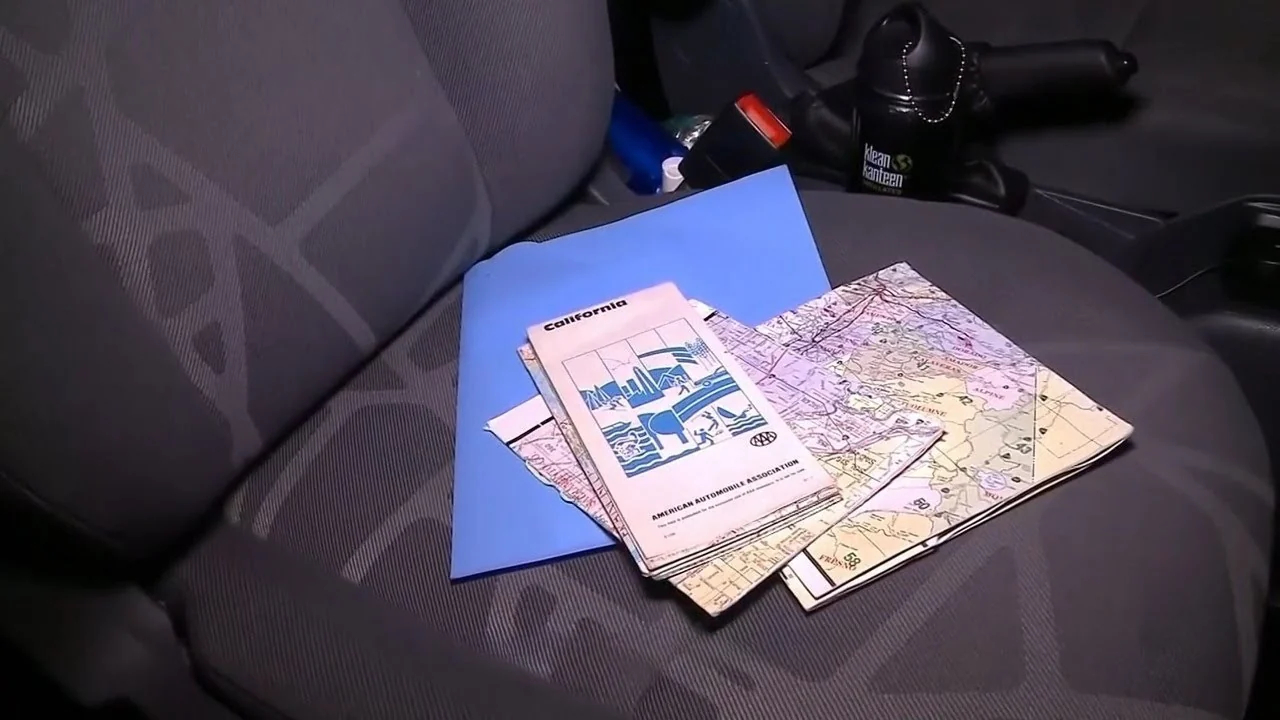
Are you really going to get a signal in that hollow? Sometimes you won’t, and GPS can lag or send you down a “road” that’s really a field entrance. A folded county map or state gazetteer gives you the bigger picture when your phone can’t.
Write down a few numbers on a card: a neighbor, a tow company that actually serves your area, and your roadside assistance line. Phones die, screens break, and wet fingers don’t unlock anything. Paper doesn’t care.
10. Small Fire Extinguisher Rated ABC
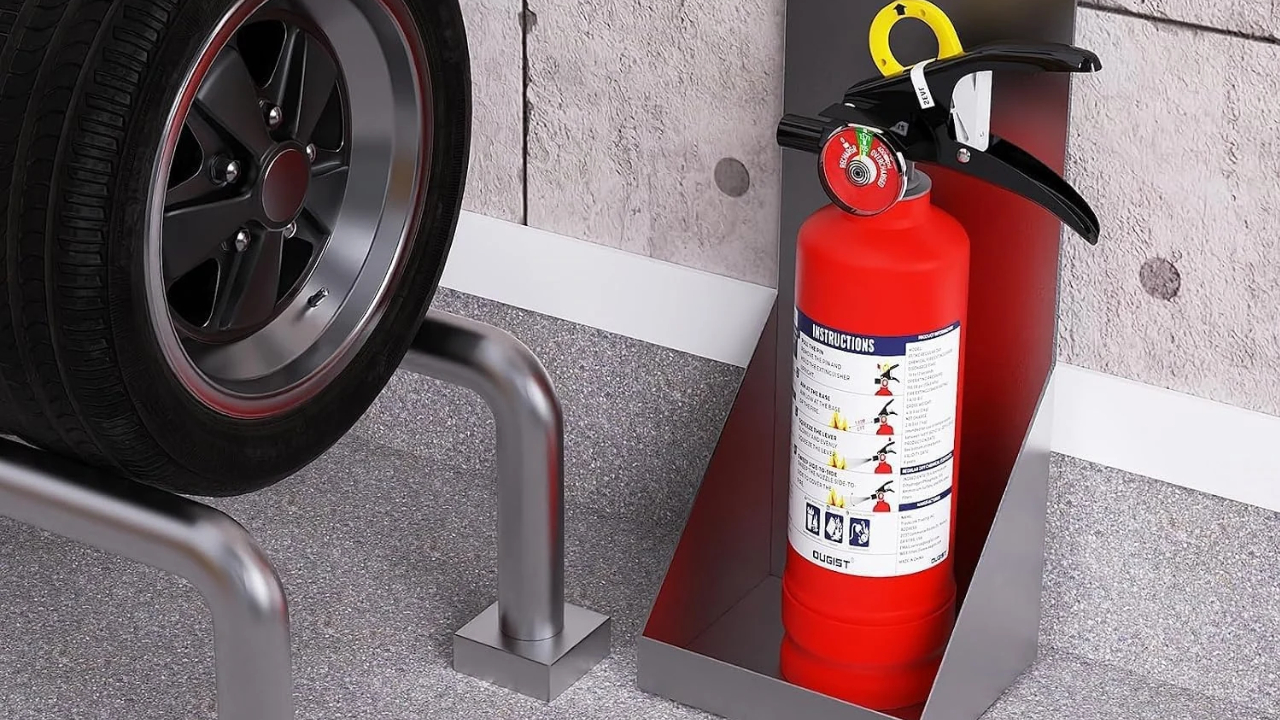
An electrical short smells sharp and plasticky, and it can go from “what’s that?” to smoke in seconds. A small ABC extinguisher under a seat is for putting out a minor under-hood flare-up or a small grass fire started by a hot exhaust. You’re buying time to get away and call for help, not trying to save an engine that’s fully involved.
Mount it so it won’t roll around, and check the gauge now and then. If it’s been rattling for years and the needle’s in the red, replace it. This is one of the few items that you hope stays unused.
Keep this stuff in a tote or bag so it doesn’t migrate under seats and get buried under feed sacks. Once a season, take five minutes to check batteries, tire plug glue, and the extinguisher gauge, then put it all back the same way. When the road throws you a problem, you’ll already know where your hands need to go.
Like Fix It Homestead’s content? Be sure to follow us.