The cheapest way to make your house look custom-built
Photo credit: ThomasPhoto/Shutterstock.com
You’ve probably walked into a home that looks custom-built — those built-in bookshelves, thick window trim, and layered lighting — yet know it didn’t cost as much as it appears. The trick isn’t spending more; it’s investing smarter.
When you focus on character, proportion, and detail instead of price tags, you can make a regular house feel like a one-of-a-kind build without blowing your budget.
Upgrade your trim and casing
Homes that feel “builder grade” often suffer from flat, basic trim that disappears into the walls. Installing taller baseboards or upgrading door and window casings adds structure and visual weight to each room. Even simple molding details make a noticeable difference. You don’t have to use expensive materials either — MDF and paint can pull this off beautifully.
If you’re handy, you can install it yourself for a fraction of the cost. Once you update the trim, even plain walls start to feel more intentional and complete. It’s one of those changes that quietly elevates everything else around it.
Choose lighting that layers the space
Custom-built homes rarely rely on a single ceiling light. They use layers — overhead, wall, and accent lighting — to create depth and warmth. Flat lighting can make even a nice room feel dull, while layered lighting adds dimension and instantly makes a home feel high-end.
The good news? It doesn’t require designer fixtures. Focus on placement and warmth instead. Use a mix of sconces, table lamps, and floor lighting with soft white bulbs to brighten corners and balance shadows. The right lighting setup can make your home look professionally designed without costing much.
Replace cabinet hardware and switch plates

Small details matter more than most people think. Swapping out builder-grade knobs, handles, and plastic switch plates gives your home a polished look instantly. Coordinating metal finishes — like brushed brass, matte black, or nickel — ties everything together so it feels cohesive rather than pieced together over time.
You don’t need to replace everything at once. Start with one room or even one type of fixture. When hardware feels solid and looks intentional, it sets a tone that makes the whole space feel higher quality.
Paint with high-end tones
Fresh paint is still one of the cheapest and fastest ways to transform your home. But what separates “freshly painted” from “custom” is the color plan. High-end homes use cohesive palettes — neutral walls, soft undertones, and strategic accent colors that carry through multiple rooms. That consistency makes spaces feel connected and thoughtfully designed.
Don’t underestimate the finish, either. A matte or eggshell finish on walls paired with semi-gloss trim can make an affordable paint job look high-end. It’s all in the details.
Add architectural accents
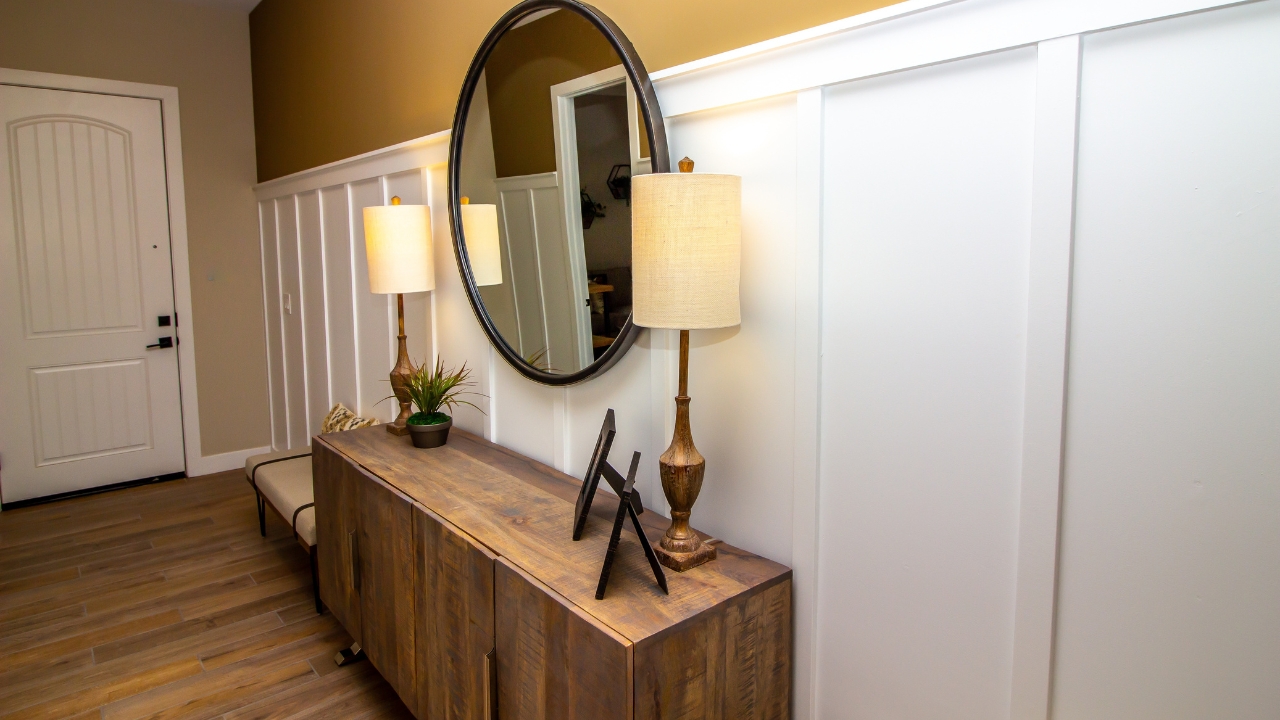
Flat walls and bare hallways make homes feel basic. Adding trim details like picture-frame molding, wainscoting, or board-and-batten creates the illusion of built-in architecture. These upgrades don’t require professional carpenters — just precise cuts, a nail gun, and some paint.
Even a single accent wall can transform the look of a living room or entryway. It’s an affordable way to add personality and depth without changing the layout or spending thousands on renovations.
Frame your windows and doors with substance
Thin window and door trim is one of the biggest giveaways of a builder-basic home. Replacing it with thicker casings instantly makes the space feel more custom and balanced. Choose trim that complements your wall color and baseboards to create visual flow throughout the room.
If you don’t want to replace trim entirely, adding a simple header above your windows or doors can give the same effect. It’s a subtle but high-impact upgrade that frames the view — both inside and out.
Replace flat doors with panel ones

Flat hollow-core doors make even a nice home feel cheaper than it is. Swapping them for paneled or shaker-style doors gives a sense of craftsmanship and weight that’s hard to fake. Even prehung doors from a big-box store can make a big difference when painted to match your trim.
You don’t have to do them all at once. Start with your main living areas or bedrooms and work your way through the house over time. The upgrade is noticeable every time you close a door.
Upgrade key focal points
Every custom home has a few focal features — a standout light fixture, a fireplace mantel, or an entryway detail that catches your eye. You don’t need all three, but choosing one or two focal upgrades can anchor your home’s style and elevate everything around them.
Think statement lighting, a bold mirror, or upgraded cabinet hardware in a high-traffic room. When one element looks intentional and refined, it sets the tone for the entire house — no massive budget required.
Like Fix It Homestead’s content? Be sure to follow us.