Neighbor Builds a Retaining Wall Onto Someone Else’s Land — Then the First Heavy Rain Sends Mud Toward the House
Photo credit: Fix it homestead
A retaining wall can look like a clean solution from one side of the property line.
It holds back soil. It creates a flatter yard. It makes landscaping look more finished. For the person building it, the project may feel like an improvement.
But for one homeowner, a neighbor’s retaining wall became a problem almost immediately.
The wall had not just changed the neighbor’s yard. It appeared to cross onto land that did not belong to them.
Then the first heavy rain came.
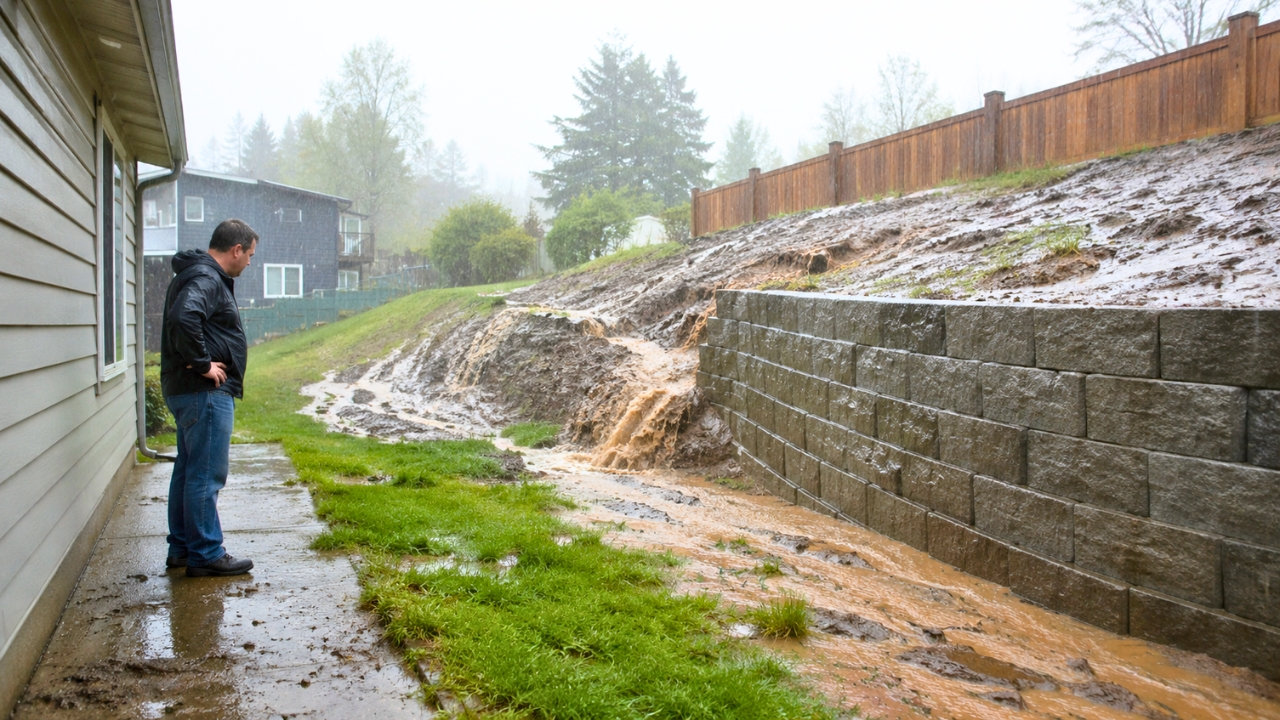
That was when the homeowner realized the wall had done more than create a boundary issue. It had also started sending mud and runoff toward the house.
The wall changed the land around it
Retaining walls are not simple decorations.
They hold weight, redirect water, change slopes, and affect how soil moves during storms. A wall built in the wrong place or without proper drainage can create pressure, erosion, pooling water, and mud movement that did not exist before.
That is why the homeowner’s concern was bigger than a few inches of block or timber over the line.
If the neighbor built the wall onto the homeowner’s land, they may have physically altered the property. And if the wall changed drainage or pushed mud toward the house, the damage could continue every time it rained.
A misplaced fence is frustrating.
A misplaced retaining wall can become expensive.
The first storm exposed the problem
Some projects look fine when the weather is dry.
The wall may have seemed sturdy. The soil may have looked neat. The yard may have looked freshly finished.
Then rain tested it.
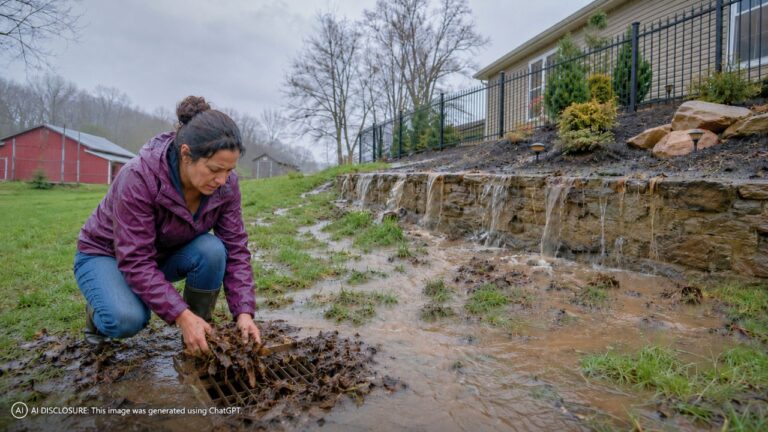
After the first heavy storm, mud began moving toward the homeowner’s house. That kind of result can make a homeowner immediately wonder whether the wall was properly designed, whether drainage was installed, whether the slope was changed, and whether the neighbor considered where all that water would go.
Water always needs a path.
If the wall blocked the old path or concentrated runoff in a new direction, the homeowner’s yard may have become the place where the problem showed up.
The property-line issue made it worse
Had the wall been fully on the neighbor’s land, the drainage problem still would have been frustrating.
But if the wall crossed onto the homeowner’s property, the dispute became even more serious.
Now the homeowner was dealing with two problems at once: an encroaching structure and storm damage.
The neighbor may have viewed the wall as a necessary landscaping project. Maybe their yard had been sloping badly. Maybe they wanted to stop erosion. Maybe they thought the boundary was somewhere else.
But once a wall is built partly on someone else’s land, the neighbor’s intentions do not erase the problem.
The homeowner had not agreed to host part of the wall. They had not agreed to accept runoff from the changed slope. And they had not agreed to let mud move toward the house because of a project next door.
Mud near the house raised the stakes
Mud in the yard is annoying. Mud moving toward the house is different.
If runoff reaches the foundation, crawlspace, basement, garage, porch, or siding, the homeowner may start worrying about water intrusion, soil movement, mold, rot, erosion, and long-term structural damage.
Even if no major damage has happened yet, repeated storms can make the problem worse.
A little washout after one rain can become a deeper channel after the next. Soil can pile against the house. Landscaping can be ruined. Drainage around the foundation can change.
That is why the first heavy rain mattered.
It gave the homeowner a warning sign before the problem had a chance to become even bigger.
The homeowner needed proof before the next storm
In a dispute like this, documentation is everything.
Photos of the wall, the property line, the mud flow, and the area near the house would matter. Videos during rain would matter even more. The homeowner would likely need the survey, the dates of the neighbor’s project, any messages about the wall, and records showing how the yard drained before the wall was built.
If the wall crossed the property line, the homeowner would need that clearly documented too.
A surveyor could help confirm the encroachment. A drainage professional or engineer could help explain whether the wall changed the water flow. Code enforcement or the county may also care if the wall required permits or violated setback rules.
The homeowner needed more than “this feels wrong.”
They needed proof that the wall was in the wrong place and that the drainage changed after it went up.
The neighbor may not have expected the consequences
It is possible the neighbor thought they were fixing their own problem.
Maybe they were trying to stop their yard from washing out. Maybe they hired someone who did not check the survey. Maybe they thought a retaining wall would make everything cleaner.
But a project that solves one yard’s problem by damaging another yard is not really a solution.
That is what made the homeowner’s situation so frustrating.
The neighbor may have ended up with a flatter, nicer yard, while the homeowner ended up with mud coming toward the house.
And if the wall was over the line, the homeowner was also losing control of their own property in the process.
The real issue was building first and dealing with consequences later
Retaining walls require planning because they affect more than the strip of land where they sit.
They affect water, soil, pressure, drainage, and neighboring property. A wall built too close to the line, over the line, or without proper drainage can become a problem that shows up every time the weather turns bad.
For the homeowner, the wall was not just an ugly neighbor project.
It was a structure that may have crossed onto their land and changed how stormwater moved toward their house.
That is the kind of mistake that can get expensive quickly.
Because once the first heavy rain sends mud toward the foundation, the question is no longer whether the neighbor’s wall looks nice.
The question is who is going to fix the damage it created.
Like Fix It Homestead’s content? Be sure to follow us.