Buyer Finds a Neighbor Has Blocked a Shared Drainage Ditch for Five Years — Then the County Says the Ditch Is Legally Required to Stay Open
Photo credit: AI-generated image created using ChatGPT. Illustrative only.
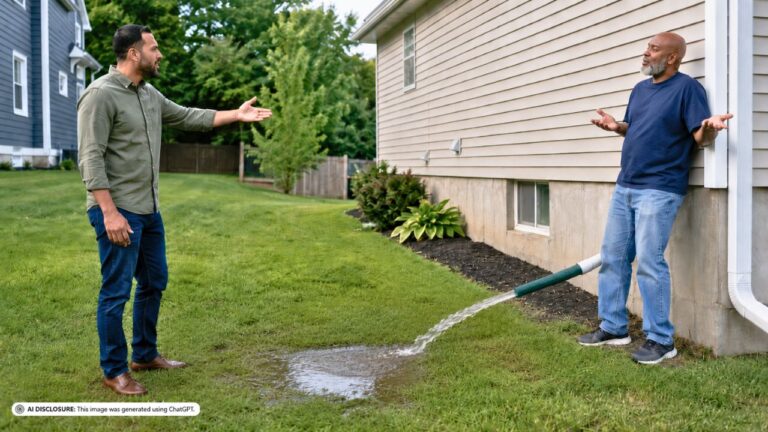
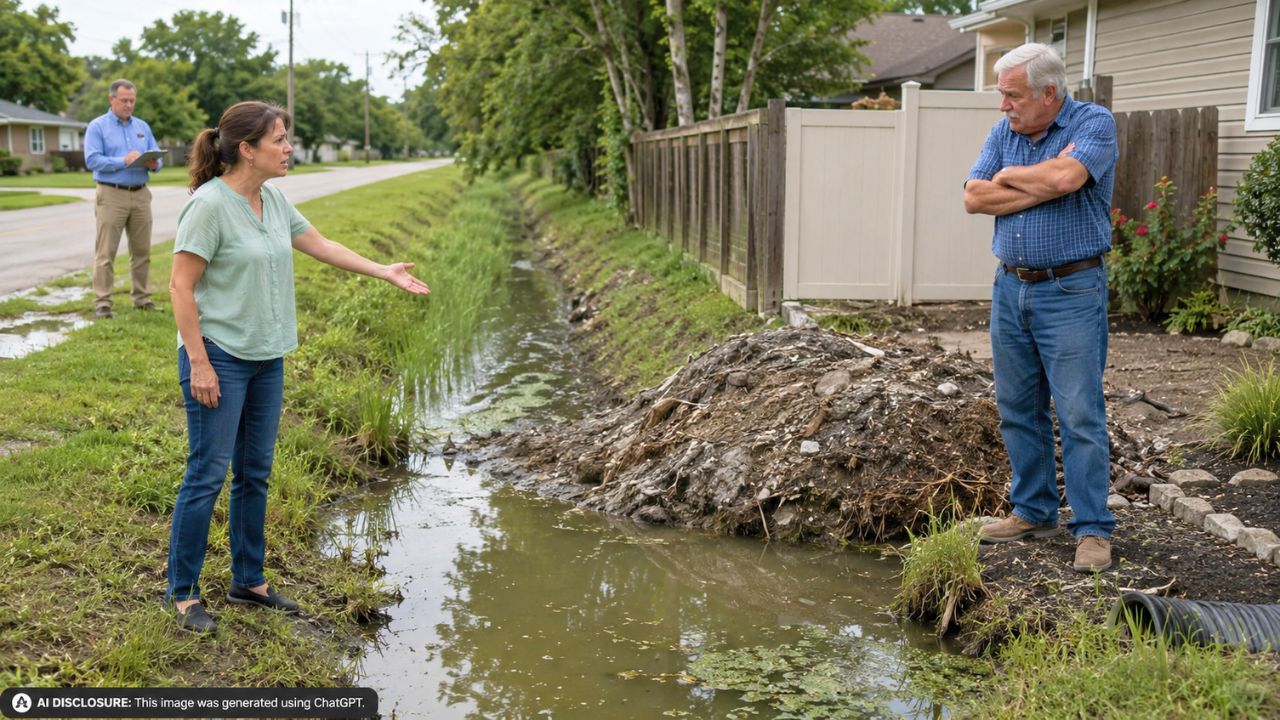
It started the way a lot of neighborhood headaches do: a “small” decorative project that didn’t seem like anyone else’s business—until the next heavy rain. A homeowner said their street has a drainage ditch running the whole block on both sides, and one neighbor decided to “decorate their driveway” by building a shale wall directly in the ditch.
That wall, they wrote in the original post, works like a dam. Water pools several inches deep, then backs up into multiple yards, including theirs. The homeowner’s question wasn’t just frustration—it was practical: is this a code violation, and who do you even call when a shared drainage path gets blocked?
The ditch was built to move water—until someone treated it like landscaping
In many neighborhoods, roadside ditches are unglamorous but critical. They’re meant to collect runoff from driveways, yards, and the street itself and guide it down the block so it doesn’t sit against foundations or turn lawns into soggy sponges.
In this case, the homeowner described a continuous ditch system along both sides of the street. That matters, because a continuous system only works if the low points stay open. Once a single property creates a choke point, everyone “upstream” can feel it.
The shale wall sounds like it was built to make a driveway entrance look nice—or to control erosion right at the culvert area—but placed in the ditch, it changes the ditch from a channel into a basin.
The first real clue was standing water that didn’t belong there
The homeowner didn’t describe a one-time puddle. They described water pooling “several inches deep,” which is the kind of detail that makes neighbors stop saying “it’ll dry out” and start thinking about mosquitoes, mud, and slow damage.
When water sits where it isn’t supposed to, it doesn’t just ruin grass. It can soften soil along driveways and sidewalks, creep into low spots near the house, and keep the ground wet long enough to cause shifting, rot in wood near grade, or dampness that finds its way into crawlspaces.
And the worst part is the way it spreads the blame. One yard floods, then the next. People start comparing notes. Everyone can see the water, but not everyone agrees on what caused it—until there’s an obvious “dam” sitting in the ditch.
When runoff backs into multiple yards, it stops being a “neighbor preference”
Once water backs up into more than one property, it’s no longer just an aesthetic choice or a quirky driveway feature. It becomes a functional obstruction in shared drainage.
The homeowner’s post focused on the basic reality: a wall in a ditch is acting like a dam. It’s not a theoretical worry. It’s changing where water goes, and it’s doing it in a way that pushes the consequences outward onto other lots.
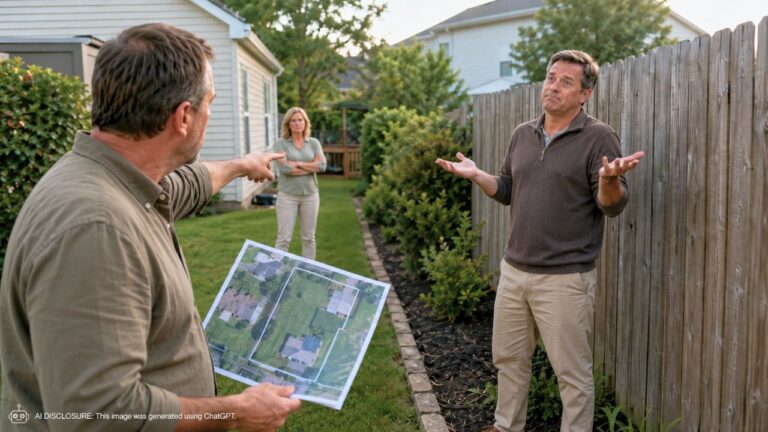
That’s where things get tense fast. Asking a neighbor to undo a landscaping project can feel personal, even when the request is as simple as “please stop flooding my yard.” And if the wall has been there a long time, the neighbor may treat it like a settled feature, not a mistake.
The county question: “Where would I look for code or ordinance?”
The homeowner wasn’t asking for revenge. They were asking for the rulebook—what ordinance or county code might apply, and what office handles it.
That’s a common pivot point in property conflicts: the moment you realize a friendly conversation might not fix it, and you need a neutral third party who can say, “This can’t be blocked,” or, “This has to be permitted,” or, “This is within an easement.”
Many homeowners don’t know whether a roadside ditch is “theirs,” the county’s, or part of a drainage easement that stays legally protected even if it sits on what looks like a private yard. That uncertainty is exactly why people start searching for ordinances and enforcement. If the ditch is legally required to stay open, the homeowner’s next step becomes less about arguing and more about documenting and reporting.
People who’ve been through it tend to push the same first moves
Even without a long thread of back-and-forth included in the source material, this kind of problem usually draws a predictable set of practical reactions from other homeowners: don’t guess, don’t escalate first, and don’t rely on a verbal promise.
In real neighborhoods, the advice tends to cluster around a few themes—confirm who controls the ditch, report the obstruction to the right local office, and keep the focus on drainage function rather than the neighbor’s intentions. People also tend to stress documentation: photos after rain, dates, and notes about where the water sits and how far it spreads.
The reason is simple. If this ends up in front of code enforcement or a public works department, the story that gets traction isn’t “my neighbor decorated wrong.” It’s “a drainage channel is blocked and water is backing into multiple properties.”
The pressure point is what happens next time it pours
The homeowner’s description already shows the direction this goes if nothing changes: more pooling, more soaked yards, and more resentment on the block. Water doesn’t negotiate, and once the soil gets saturated, even moderate rain can recreate the problem.
The neighbor with the shale wall may see it as a finished improvement. The neighbors dealing with the backup see it as a slow-moving property problem that can ripple into repairs and complaints. And if a county office determines the ditch is part of required drainage, the “decorative” wall becomes an obstruction that has to come out, whether anyone likes it or not.
For the homeowner who posted, the next steps sounded less like DIY and more like figuring out the proper channel: what ordinance applies, where to find it, and which office is responsible for keeping a street-long drainage ditch functioning the way it was intended. In neighborhoods, that’s often the only path that keeps the argument from turning into a permanent feud—letting the rules, and the water, do the talking.
Like Fix It Homestead’s content? Be sure to follow us.