New Homeowner Finds a Neighbor Trying to Claim a Corner of the Backyard as Their Own — Then the Neighbor Cites a Decade of Unquestioned Use
Photo credit: AI-generated image created using ChatGPT. Illustrative only.
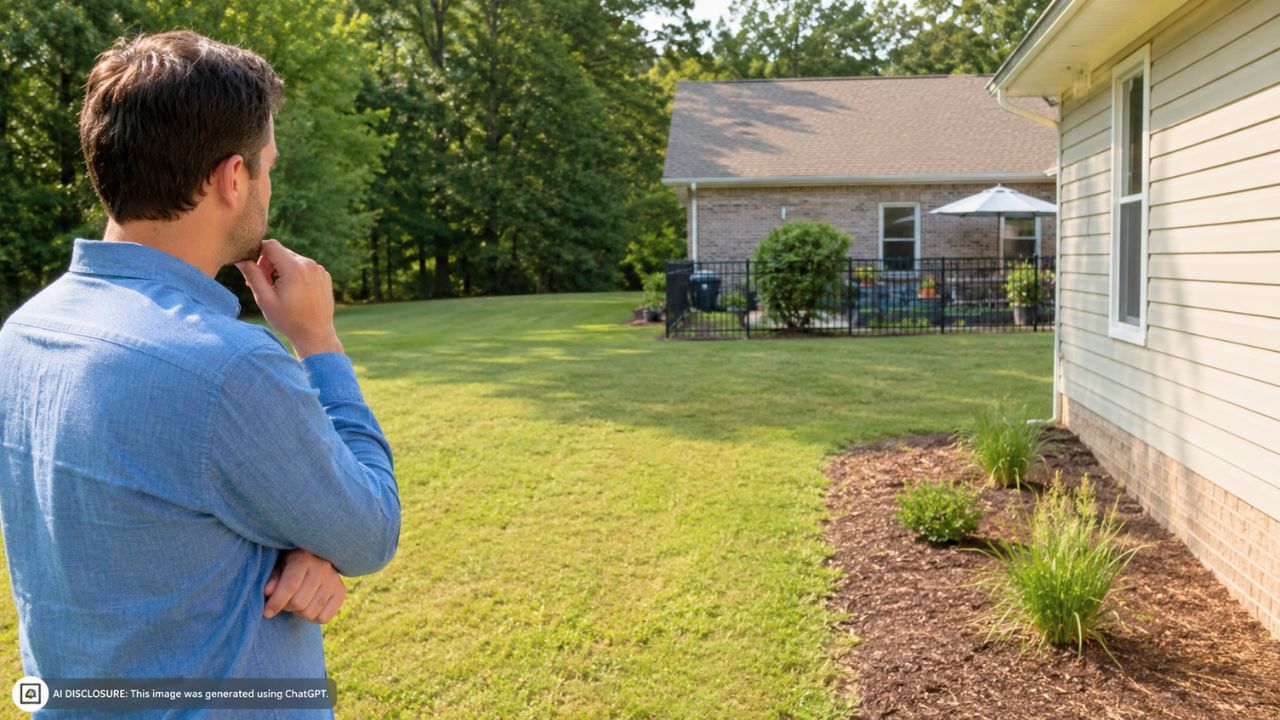
Three months into settling into a new house, the backyard started feeling less like a private retreat and more like a contested border. It began with offhand comments about a fence, but it didn’t stay small for long.
In the original post, the homeowner describes a neighbor who gradually shifted from complaining about the fence placement to behaving like a slice of the yard already belonged to him. The claim wasn’t backed by paperwork—just confidence, repetition, and the insistence that “everyone on the street knows” the boundary is different.
The first sign was easy to brush off
At first, it sounded like typical neighbor chatter: a fence “wasn’t in the right place,” or a previous owner had supposedly agreed to move it. The kind of thing you hear and file away as someone else’s old gripe, especially when you’ve got boxes to unpack and a new home to learn.
But the neighbor kept circling back to it. The fence line became a recurring topic, and the tone shifted from opinion to certainty—like the homeowner was living with a temporary arrangement, not a finished boundary.
That’s the tricky part about these disputes. Early comments can feel harmless, but they’re also a test: will the new owner challenge the story, or let it become the accepted version?
The day the mower crossed the line
The moment it became impossible to ignore was simple and physical: the homeowner came home and saw the neighbor mowing about three feet into their yard. Not trimming along the fence. Not reaching over by accident. Mowing as if it was his routine.
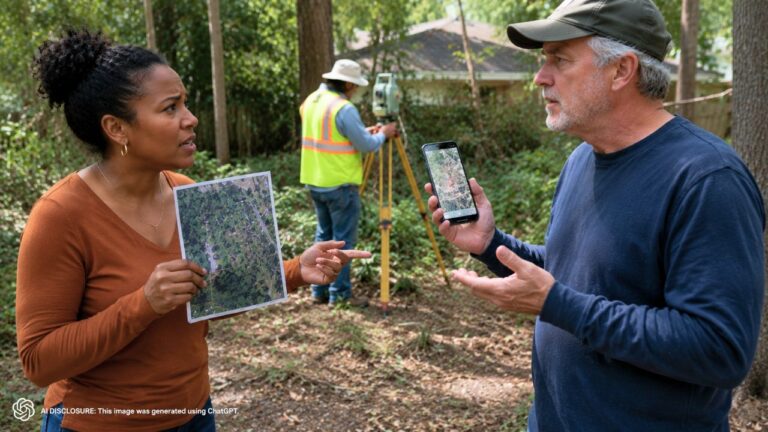
When the homeowner asked what he was doing, the neighbor didn’t apologize or act surprised. He told them that section actually belonged to his property and that the fence had been placed incorrectly years ago.
It wasn’t just a complaint anymore. It was an assertion of ownership, acted out in broad daylight with a lawnmower.
Paperwork versus “everybody knows”
The homeowner did what most people would do: they pulled out the property survey from when they bought the house. It clearly showed the fence line exactly where it sits now.
That should have been the end of it, at least between reasonable adults. Instead, the neighbor dismissed the documents as wrong. He claimed the whole street knew the “real” boundary was different and implied the fence would have to be moved eventually.
This is where the stress starts to seep into normal life. A survey is supposed to be a relief—proof you can point to when someone gets bold. But when the other person treats your proof as irrelevant, you’re left with an argument that has no shared rules.
And the homeowner is still living next to him, day after day, with a fence as the centerpiece of every uncomfortable conversation.
The slow intimidation of being watched in your own yard
The neighbor didn’t stop at the mowing claim. He continued making comments about the homeowner “using his land” and kept bringing up the idea that the fence would need to be moved someday.
Now, every time the homeowner goes outside, they feel the neighbor’s attention fixed on the fence—staring at it like he’s measuring it. That detail lands because it’s familiar to anyone who has dealt with a boundary-pusher: the stare, the pauses, the way they make ordinary yard time feel like you’re being audited.
Even without threats, that kind of scrutiny changes how a home feels. People avoid their own garden. They hesitate to let kids play freely. They second-guess improvements because they don’t want to “invest” in an area someone is trying to claim. The cost starts showing up in daily comfort before it ever shows up on a contractor invoice.
Why a few feet can turn into a big deal fast
Three feet doesn’t sound like much until you picture it running the length of a yard. That strip can hold a garden bed, a shed placement, a gate swing, or the only flat section where you planned to put a patio. It can be the space you need for a new fence, drainage work, or a future addition.
Then there’s the practical mess: if a neighbor is mowing and “maintaining” land they say is theirs, they’re creating a pattern. The homeowner in this story is dealing with a neighbor who is already acting like time and habit matter more than closing documents.
That’s what makes this kind of thing feel urgent. It isn’t just about grass. It’s about someone trying to turn repeated behavior into leverage—so that a new owner feels like they’re the one causing trouble for insisting on what they bought.
Meanwhile, the homeowner is put in the worst spot: if they do nothing, the neighbor may get bolder. If they push back hard, they risk a long-term feud with the person who lives a few feet away.
What people typically urge in boundary fights like this
The post itself focuses on what’s happening on the ground—comments, mowing, the survey, and the neighbor refusing to accept it. In stories like this, the most common practical refrain from other homeowners is to stop treating it like a casual disagreement and start treating it like a documentation problem.
That usually means keeping everything boring and provable: the survey from the purchase, photos of the fence line, dated notes about when the neighbor mowed into the yard, and any written communication if it exists. When someone’s argument is “everybody knows,” the counterweight is a paper trail and clear boundaries.
Another common reaction in disputes that turn physical—like someone stepping onto your property to mow—is that homeowners should avoid escalating face-to-face arguments in the yard. People recommend choosing calm, repeatable responses instead of getting pulled into a shouting match that becomes its own neighborhood spectacle.
And because the homeowner described the neighbor staring and “measuring” the fence, many readers tend to think about cameras—not as a gotcha, but as protection against the next step: moving markers, loosening posts, or doing “helpful” work on the fence when nobody’s home.
Even when nothing dramatic happens, the presence of a persistent claim changes how homeowners think about access, gates, and future improvements. Once someone has announced they believe part of your yard is theirs, every repair and upgrade can feel like a provocation.
For now, the fence is still where the homeowner’s survey says it belongs. But the neighbor’s behavior—mowing into the yard, dismissing the documents, and continuing the comments—has turned a normal backyard into a constant low-grade standoff. It’s the kind of dispute that doesn’t need a big blowup to ruin the peace; it just needs one person who won’t stop insisting that “everybody knows” better than your paperwork.
Like Fix It Homestead’s content? Be sure to follow us.