New Neighbors Move In and Build a Fence Six Inches Into the Property Without Asking — Then Replace the Field Fence That Had Sat Right on the Line for Years
Photo credit: AI-generated image created using ChatGPT. Illustrative only.
Ten years is long enough to learn where the light hits your kitchen window, where the snow piles up, and exactly where your property line feels “real” in everyday life. For one homeowner, that line used to be marked by a plain, forgettable stretch of field fencing—posts and wire that had been sitting there for years without drama.
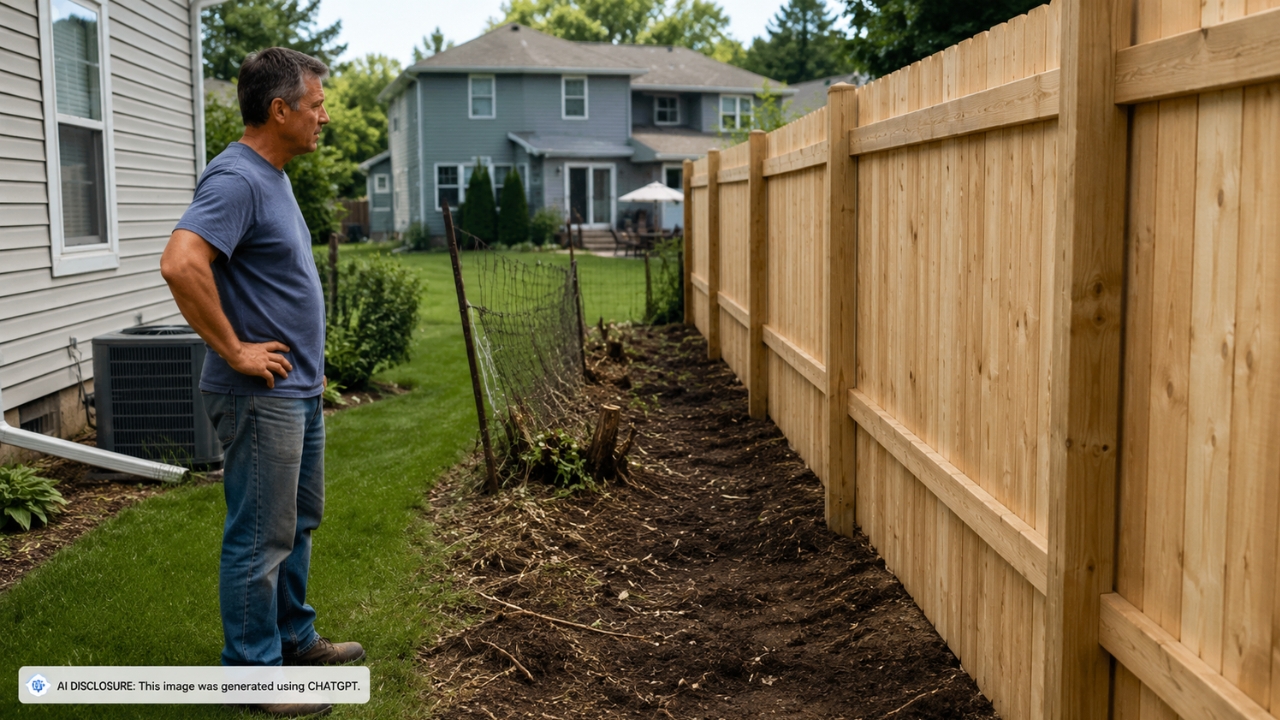
Then, two weeks after new neighbors moved in, contractors showed up and started ripping it all out. By the time the dust settled, the old line-hugging fence was gone, bushes along the border had been removed, and a new fence was standing—about six inches onto the homeowner’s side. The full story comes from the original post, and it reads like the kind of quiet boundary problem that turns into a long-term neighborhood headache if it’s handled wrong.
The old fence wasn’t pretty, but it did its job
The homeowner had lived in the house for about a decade, and the previous neighbors were described as a “lovely older couple.” The fence between the properties wasn’t decorative—just basic field fencing—but it had something going for it: it wasn’t intrusive, and it sat right on the property line.
That detail matters because the homeowner’s house is built right up near the setback, about five feet from the line. In other words, this isn’t a back-of-the-yard issue that only shows up when someone mows. This is a “I look at this border every day out my window” kind of border.
Meanwhile, the neighbor’s house sits roughly 40 feet from the fence. It’s still their yard, still their boundary, but it’s not pressed up against their living space the same way. That imbalance—one person sees it constantly, the other barely notices—can quietly shape how each side treats shared edges.
Two weeks after move-in, the tearing-down started
The new neighbors moved in quickly after the sale. The homeowner hadn’t met them yet, which is common: move-ins are chaotic, schedules don’t sync, and sometimes “hello” happens weeks later.
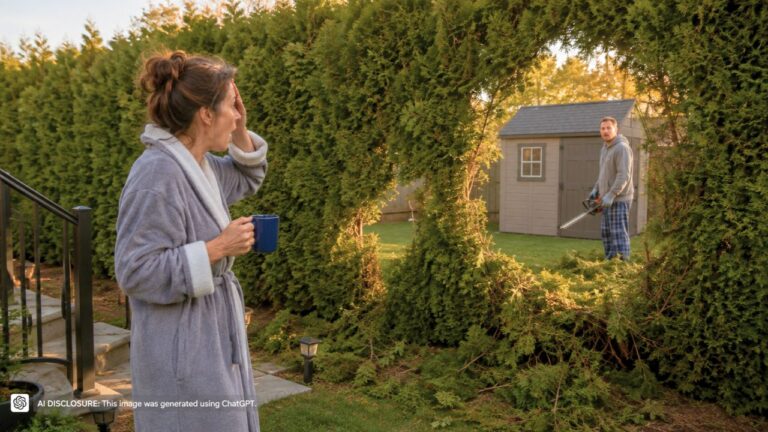
But the introduction didn’t happen over cookies or a wave at the mailbox. It happened when construction workers were spotted tearing down the existing fence and pulling out bushes along the property line.
When the homeowner asked what was going on, the workers didn’t mention a shared plan or a conversation with both property owners. They gave a simple answer: they were “building a new fence.”
Then the new fence showed up… shifted
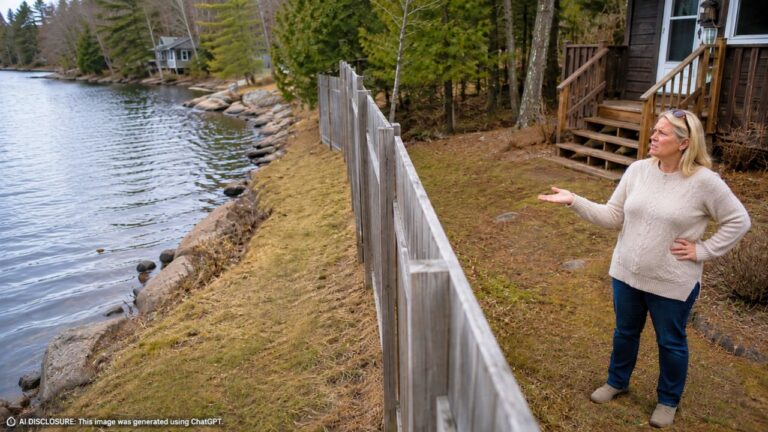
The workers finished the next day. And the homeowner didn’t just dislike it visually—calling it an eyesore in their opinion—they also noticed something more concrete: the new fence appeared to be about six inches onto their property.
Six inches is the kind of number that sounds petty until you picture it physically. Along a long run of fencing, it can swallow a strip of land, change where you can plant, alter where you can maintain, and create a new “assumed boundary” that gets harder to challenge later.
It also changes the feel of the space. When your house sits close to the property line already, losing even a small slice makes the yard feel tighter and the neighbor’s choices feel closer. It’s not just property—it’s proximity.
What makes this sting, though, isn’t only the measurement. It’s that nobody asked. No knock at the door. No quick “Hey, we’re thinking of replacing the fence.” Just a crew removing the old line marker and setting a new one where the homeowner says it doesn’t belong.
The first conversation is the one that sets the tone
The homeowner’s hesitation is relatable: they don’t want their first interaction with new neighbors to be confrontational. Nobody wants to be “that house” two weeks into someone else’s move-in.
But there’s a trap here. If you wait too long, the fence stops feeling “new” and starts feeling “established.” People get used to seeing it. Landscaping grows around it. The story becomes, “It’s been there,” even if “there” is six inches past where it should be.
There’s also the practical side: a fence is not just a line in the dirt. It’s an object that will need repairs, staining, weed-whacking, and access on both sides. When the fence is shifted, the responsibility and the annoyance shift with it.
The homeowner is stuck between two bad options: speak up immediately and risk souring the relationship, or stay quiet and risk losing control of their boundary in a way that’s difficult to unwind.
Where readers typically go: proof first, feelings second
Even without a full comment thread included, this type of homeowner post tends to pull people toward the same core instincts: don’t rely on eyeballing a property line, and don’t rely on a friendly conversation alone if the stakes are permanent.
When a fence is moved, the “fix” isn’t just pulling a few posts. It can mean redoing sections, filling holes, resetting corners, and dealing with whatever landscaping was removed along the way. The homeowner mentioned bushes being taken out, which adds another layer—plants don’t grow back overnight, and replacements can be expensive and emotionally charged if they were mature or deliberately planted for privacy.
In fence disputes, people often focus on documentation because it keeps things from turning into a he-said-she-said argument. If the homeowner approaches the neighbors, being able to point to something objective—where the line is supposed to be, where the old fence sat, where the new one sits—changes the tone from accusation to correction.
It’s also common for readers to encourage keeping the first approach calm and direct: assume the neighbors don’t realize the placement is off, or that the contractor made a choice without the homeowner’s input. That doesn’t excuse it, but it can keep the first conversation from turning into a standoff.
A small strip of land can turn into a long-term maintenance fight
The homeowner isn’t just reacting to a fence being unattractive. They’re reacting to a boundary being rewritten in a way that affects their daily view, their usable space, and their sense of control over their own property.
If the fence is truly set six inches over, that strip becomes a weird no-man’s-land: hard to mow cleanly, hard to plant without worrying about damage, and awkward to maintain if the neighbor treats the fence as fully theirs. Over time, the homeowner could be stuck doing upkeep on space they didn’t agree to give up.
And if the bushes were acting as a visual barrier—something that softened the line between two yards—that removal can make the new fence feel even harsher. A fence isn’t just functional; it’s part of the “view” from both houses, especially when one home is built close enough to stare at it every day.
The homeowner hasn’t made a move yet, and that’s where the tension lives: the fence is up, the plants are gone, and the neighbors still haven’t even met face-to-face. It’s the kind of early, uncomfortable mismatch—one side treating the border like a solo project, the other side suddenly realizing their yard got smaller—that can define a relationship for years if it isn’t handled carefully and quickly.
Like Fix It Homestead’s content? Be sure to follow us.