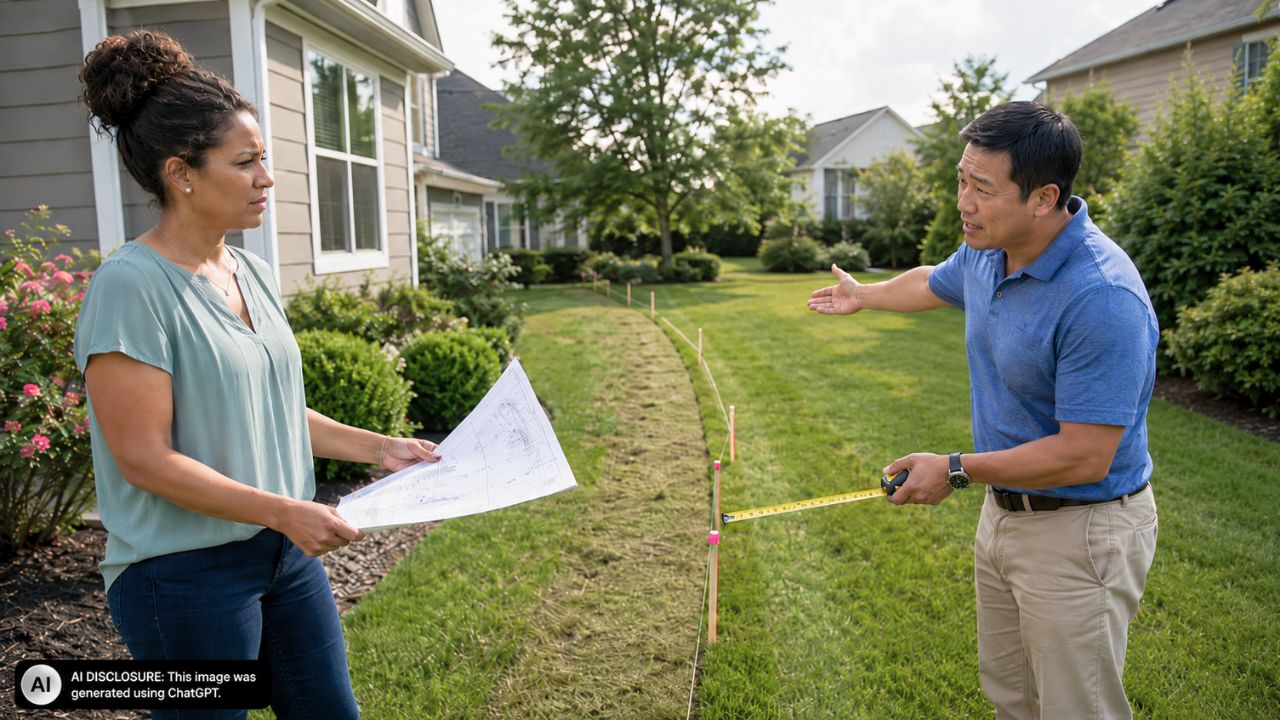
New Homeowner’s Survey Reveals the Neighbor Has Been Mowing a Hundred-Foot Strip of Her Yard — Then He Asks Her to Move the New Fence Line Thirty-Six Inches So He Can Keep Mowing It
Photo credit: AI-generated image created using ChatGPT. Illustrative only.
They’d barely gotten settled in when the backyard plans started. A survey, a fence, a clean line—simple homeowner stuff that’s supposed to bring peace of mind after a move.
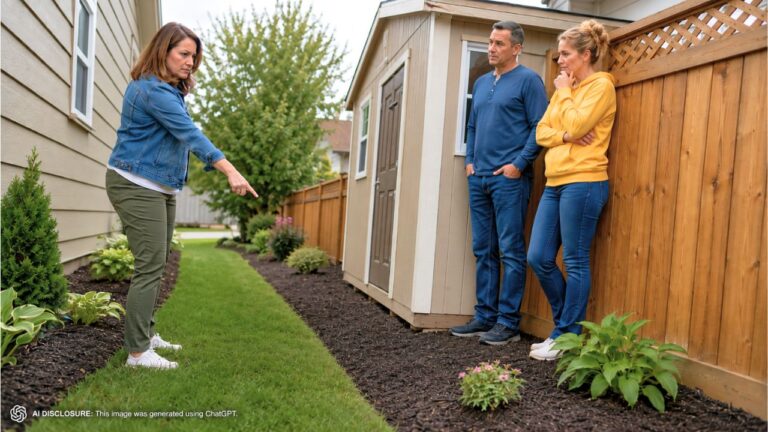
Instead, the survey turned up an awkward surprise: the neighbor next door had been mowing a long, narrow strip of their property, roughly 3 to 5 feet wide and running about 100 feet along the back. When the new owner mentioned placing the fence right on the property line, the neighbor didn’t argue the measurements. He asked for the fence to be moved back 36 inches. The homeowner laid it out in the original post: the neighbor claimed it would help them “mow/maintain both sides,” but the homeowner suspected he mainly wanted to keep mowing behind landscaping that sits right on—or even slightly over—the line.
The survey didn’t just mark corners—it changed the story
A lot of property line issues stay fuzzy for years because nobody wants to spend the money on a survey until they have a reason. In this case, the reason was a backyard fence. The homeowner wasn’t hunting for a fight; they were trying to do the normal “new place, new boundaries” step that comes with pets, kids, privacy, or just wanting to finally enjoy the yard.
But surveys have a way of turning friendly assumptions into hard numbers. Once those stakes go in and the line is clear, it’s no longer “our yards blend together.” It becomes: this section is yours, and that section is mine. And suddenly, that neat strip of grass the neighbor has been cutting isn’t just a helpful habit—it’s a piece of land being treated like it belongs to someone else.
The kicker is that mowing doesn’t look aggressive. It looks tidy. It looks like someone doing you a favor. That’s exactly why it can simmer quietly until a fence forces the issue.
A hundred feet of “just mowing” adds up fast
Three to five feet doesn’t sound like much until you picture it stretched the length of a backyard. Over 100 feet, it becomes a ribbon of property that’s been managed, walked on, and visually claimed—especially if the mowing creates a crisp line that suggests a “natural” boundary.
And because it’s been happening long enough to become routine, the neighbor likely feels ownership in the emotional sense, even if he never had it on paper. Some neighbors start believing the maintenance equals the right to the space. Others simply don’t want to change their routine, particularly if their landscaping was installed close to the line and now requires more careful trimming or access from the other side.
In this case, the homeowner suspected the neighbor’s real motivation wasn’t mutual maintenance at all. They believed the 36-inch request was about keeping access behind landscaping that sits directly on the property line or sometimes crosses it. That detail matters, because landscaping isn’t like mowing. Shrubs, edging, rock beds, and plantings are physical encroachments that can be expensive and annoying to redo.
The 36-inch request sounds practical—until you picture the fence
On paper, “offset the fence so you can maintain both sides” can sound reasonable. A fence built right on the line can be tricky: you still have to stain it, repair pickets, and deal with weeds. The neighbor’s pitch uses that logic.
But in real life, that 36 inches becomes a permanent no-man’s-land. Whose strip is it if the fence is set inside the homeowner’s yard? Who gets to use it? Who gets blamed when weeds explode in it? If the neighbor keeps mowing it, does that reinforce the idea that it’s “his side” even though it’s legally still not?
It also changes the feel of the yard. Fences aren’t just barriers; they’re visual boundaries that can make a backyard feel smaller or more boxed in. Asking a brand-new homeowner to give up three feet along a long run is not a small favor. It’s essentially asking them to donate a continuous strip of usable space so the neighbor doesn’t have to redesign his landscaping maintenance.
And once a fence is installed in the wrong place, fixing it later isn’t just moving panels. It’s posts set in concrete, disturbed soil, possible permits in some areas, and the cost of doing the job twice.
The neighborly-relations trap: keep it friendly, but don’t give away the yard
The homeowner’s real question wasn’t how to win an argument. It was how to address it without torching the relationship next door. That’s the trap with property lines: the stakes are high enough to matter, but the people involved still have to see each other every week.
There’s also a subtle social pressure on new owners. They’re the newcomers. They don’t want to be labeled “difficult” right after moving in. And the neighbor has the advantage of familiarity—he’s been there, doing his routine, and now the new owner is the one “changing things,” even if the change is simply respecting the boundary the deed already describes.
At the same time, letting it slide can create its own long-term tension. Every time the homeowner looks out and sees someone treating their yard like an extension of the neighbor’s, it builds resentment. The fence was supposed to end uncertainty. If they compromise too far just to keep the peace, they may end up with a permanent reminder that they paid for property they don’t get to use.
Reactions leaned toward documentation and a clean boundary
While the post itself focuses on the homeowner’s dilemma and the neighbor’s 36-inch request, this kind of dispute typically triggers a very consistent set of reactions from other homeowners: measure everything, document everything, and don’t build based on vibes. Once a survey exists, most people see it as the definitive reference point—especially when thousands of dollars of fencing is on the line.
Another common theme in these discussions is avoiding “split-the-difference” deals that feel polite in the moment but get messy later. A fence offset inside one person’s yard can create access disputes, confusion about maintenance responsibilities, and a de facto concession that’s hard to walk back. Even if the neighbor is acting in good faith, the physical outcome can still leave the homeowner with less yard and more headaches.
And then there’s the landscaping. The homeowner’s suspicion—that the neighbor’s request is tied to plantings placed right on or over the property line—tends to put people on alert. Landscaping encroachments can be the beginning of bigger arguments, because once plants mature, removal becomes more contentious and more expensive, and everyone feels like they’re losing something.
Now it’s a fence decision with a long shadow
What started as a straightforward backyard project has turned into a decision that will set the tone for years. Put the fence on the surveyed line and risk a cold shoulder next door. Offset it and live with the nagging feeling that the neighbor successfully negotiated a slice of the yard—plus the ongoing question of who maintains the strip and who gets access to it.
The homeowner is trying to do the delicate thing: be firm without being hostile. But property lines don’t stay theoretical. Once you pour concrete and set posts, you’re locking in a version of the story that everyone will repeat—about whose yard is whose, and who “gave” what to keep the peace.
For now, the grass strip is still there, still long, still a little too tidy for comfort. And the new owner’s fence plan has become less about privacy and more about drawing a boundary that won’t need to be redrawn later.
Like Fix It Homestead’s content? Be sure to follow us.
- Man Says He Found Out the Fence He Paid For Wasn’t Actually on His Property
- Woman Says Her Neighbor Started Taking Mulch From Her Delivery Pile Before She Could Even Spread It
- I made Joanna Gaines’s Friendsgiving casserole and here is what I would keep
- What Caliber Works Best for Groundhogs, Armadillos, and Other Digging Pests?