Homeowner Blocks Their Driveway With a Car to Stop the Neighbor From Cutting Across a Shared Grass Strip — Then Comes Home From a Weekend Trip to Find Them Doing It Again Anyway
Photo credit: AI-generated image created using ChatGPT. Illustrative only.
It started as one of those petty neighborhood habits you try to ignore: a shared edge between two driveways, a skinny strip of grass, and a neighbor who keeps cutting across it like it’s a turn lane. The homeowner said they didn’t mind much at first—until the pattern became the new normal, and the reason for it became hard to unsee.
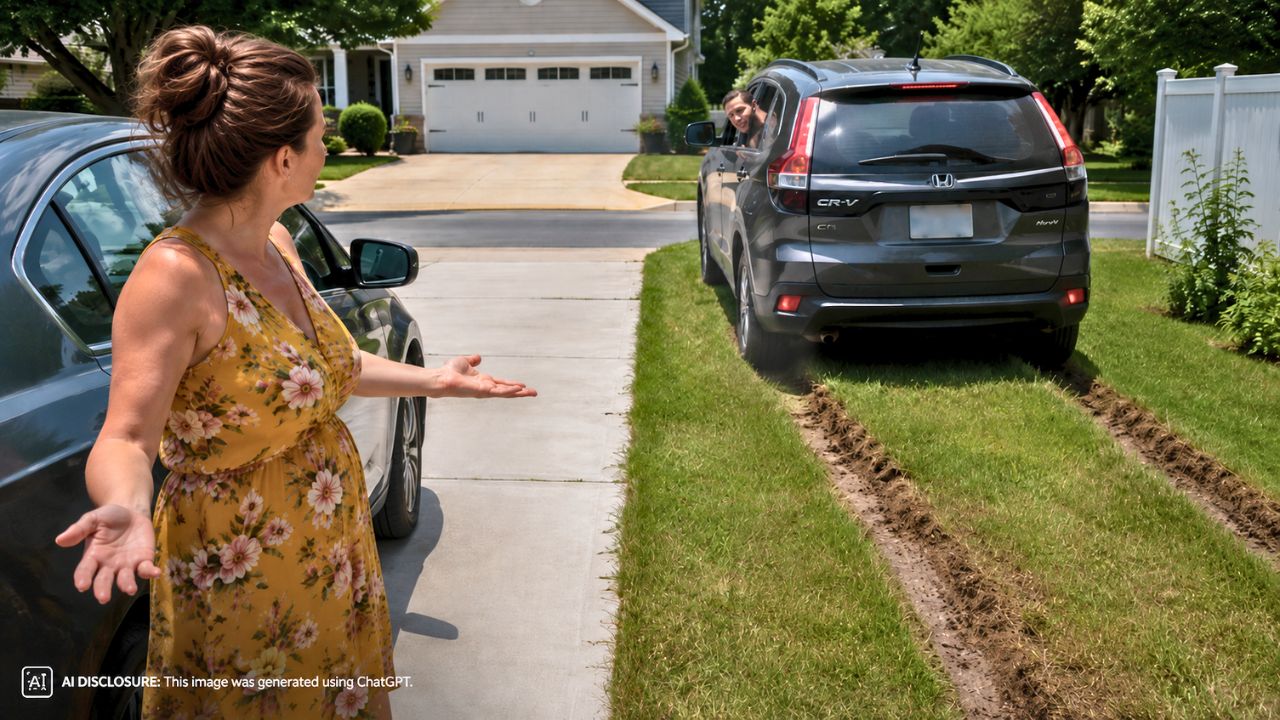
In the original post, the homeowner described living next to a property with a driveway packed with what they called useless junk—car parts, tires, vehicles that don’t move, even a boat they’ve never seen go anywhere. Because the neighbors can’t freely use their own driveway, the cars they do drive end up maneuvering over the dividing grass strip and into the homeowner’s driveway to get out.
The shortcut was annoying, but the reason behind it was worse
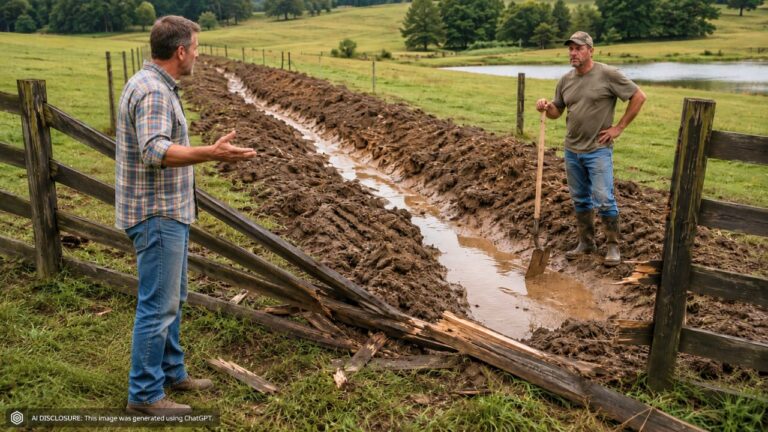
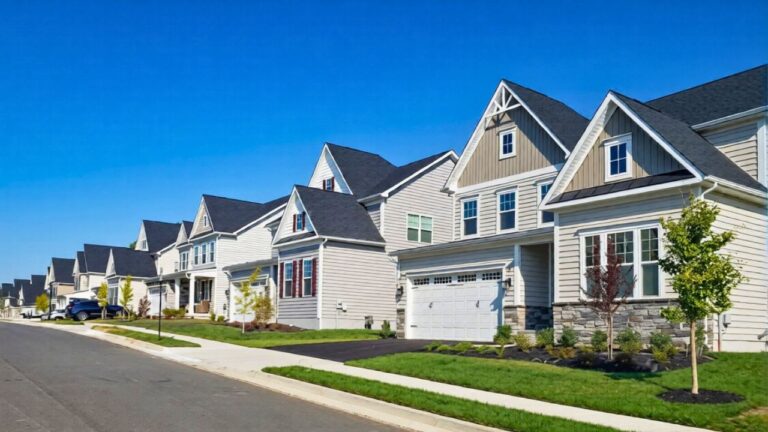
The dividing line between the homes is small: two driveways split by what the homeowner estimated as about a 1.5-foot strip of grass. The neighbors’ driveway, though, is described as so cluttered that their usable cars have to park in a line—one behind the other. When the blocked car needs to leave, the driver takes the quick route: over the grass and across the neighbor’s driveway edge.
The homeowner admitted they brushed it off for a while. People do small inconsiderate things. You roll your eyes and move on.
Then came a separate blow-up that changed the tone. The homeowner said one of the people next door came onto their property and yelled at contractors doing septic tank repairs, then called the city’s emergency line to report it. A city worker arrived, looked things over, and essentially told the contractors to continue—no emergency, no violation described in the post, just a wasted trip and a neighbor willing to escalate.
When they finally pushed back, the neighbor waited them out
After that, the homeowner said they reported the next-door property to the city for the piled-up junk and yard condition. According to the post, the city began doing drive-bys, assessing fines, and making the neighbors come to court over items considered a public nuisance.
At the same time, the homeowner tried a more immediate, physical fix: parking one of their own vehicles in a way that blocked access from the neighbors’ side, so there was no easy path to cut onto their driveway.
For a few weeks, it seemed like the point had landed. Then the homeowner went out of town for a weekend. With the blocking car gone, other nearby neighbors reportedly saw the shortcut start right back up again. Same move, different day—just timed for when the coast was clear.
Old concrete, new cracks, and the fear of paying for someone else’s wear
The homeowner’s wife and parents believed the repeated crossing was cracking the driveway. The homeowner wasn’t sure they could prove that, especially because the driveway was already old and had existing cracks. That uncertainty is part of what makes these problems so infuriating: you can feel the cost creeping in, but you can’t easily point to a single tire track and say, “That did it.”
Still, concrete and asphalt edges are not designed to be a shared turning pad, especially if a vehicle is swinging across at an angle. Even if the damage can’t be proven in the moment, the homeowner’s worry wasn’t abstract. Driveways are expensive, and once an edge starts breaking down, it rarely gets better on its own.
And there were other practical concerns. The homeowner said the neighbors’ carport is also packed with junk, and they’ve seen a rat. A rat next door is not just “their problem” for long.
The biggest obstacle wasn’t confrontation—it was the property line
The homeowner said they had already spoken directly to the neighbors, only to hear the same apology-and-promises routine: sorry, they’ll clean up, they’ll stop doing it. Then nothing changes.
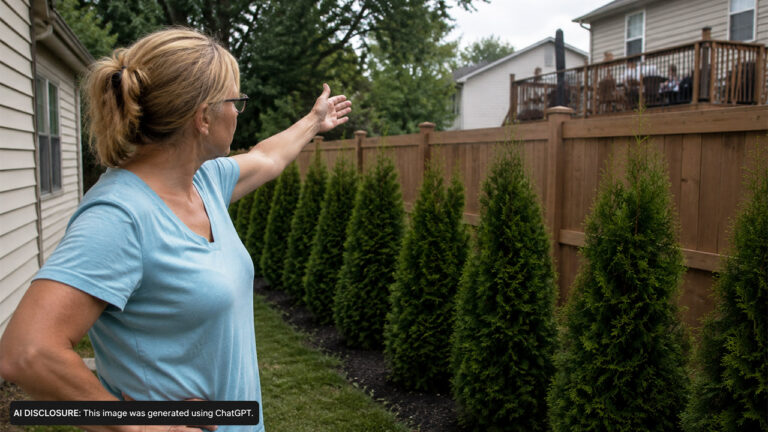
So the homeowner started looking for options that don’t rely on goodwill. The tricky part: they believed the dividing grass strip might not even be theirs. That meant no hedgerow, no planter wall, no landscaping barrier—at least not without knowing exactly where the line sits.
They also said the city won’t allow a fence dividing the driveways because it would count as a front-yard fence, which their road doesn’t qualify for under local rules. In other words, one of the most obvious “just put up a fence” solutions was off the table.
That’s when the plan shifted toward documentation and enforcement. The homeowner said they contacted police to ask about trespassing and were told they’d need multiple clear signs, plus photo or video evidence after the signs were posted, and then they could call it in.
They decided to order no-trespassing signs and aimed one directly toward the neighbors to remove any ambiguity. At the same time, they lined up a survey for the following week and planned to consult a surveyor friend—because until a professional marks the boundary, every “fix” risks becoming its own argument.
Other homeowners zeroed in on proof, then barriers
The homeowner wasn’t just venting—they were asking for ideas, including petty ones, because they were tired of feeling like the only person forced to adapt. The updates show they gravitated toward the suggestions that create a paper trail and don’t require a 24/7 driveway blockade.
The practical themes were clear: confirm the lot line, document the behavior, and make enforcement possible. That means signs, cameras if allowed, and a clean record of “we told you to stop” paired with time-stamped evidence.
There was also a second category of solutions: subtle physical discouragement. The homeowner mentioned looking into planter boxes along the driveway or building a curb-like edge to make crossing inconvenient. Not a fence, but something that communicates “this isn’t a shared lane” without needing a daily confrontation.
Then, suddenly, the driveway cleared—but the pressure stayed on
In the most surprising update, the homeowner said the neighbors cleaned the junk out of their driveway—overnight, basically. They weren’t sure if it was triggered by the no-trespassing signs, the city’s enforcement action, or something else. The carport was still trashed, but the driveway itself was cleared.
Even with that progress, the homeowner still planned to go forward with the survey. That makes sense: one clean-up day doesn’t erase months of behavior, and it doesn’t answer the biggest question—where the legal line is, and what options exist if the shortcut resumes.
For now, the homeowner is left in that uneasy in-between that so many property disputes create. Things look better today. But the long-term fix—boundaries marked, access respected, pests controlled, and the next escalation prevented—still depends on whether the neighbors actually changed, or just reacted to being watched.
Like Fix It Homestead’s content? Be sure to follow us.