Homeowner Wakes to Chainsaws and Finds a Fifty-Year-Old Boundary Palm Tree Beheaded — Then Learns the Neighbor Hired the Crew After Being Told No Years Earlier
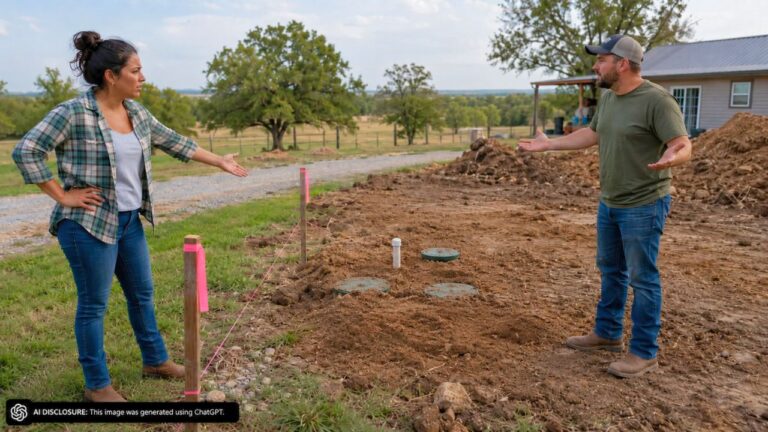
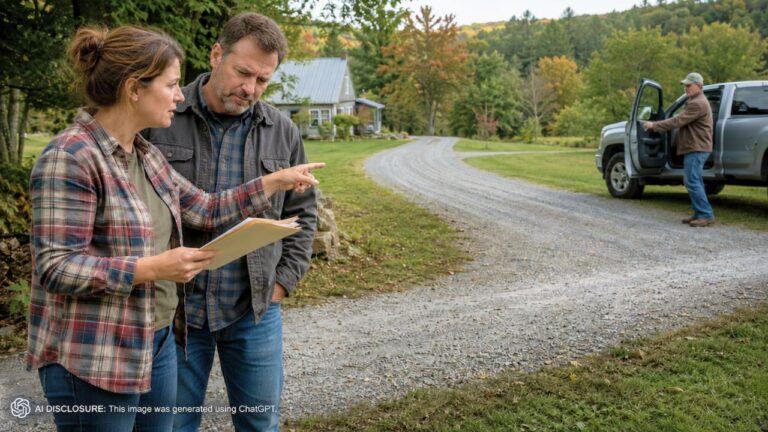
Photo credit: AI-generated image created using ChatGPT. Illustrative only.
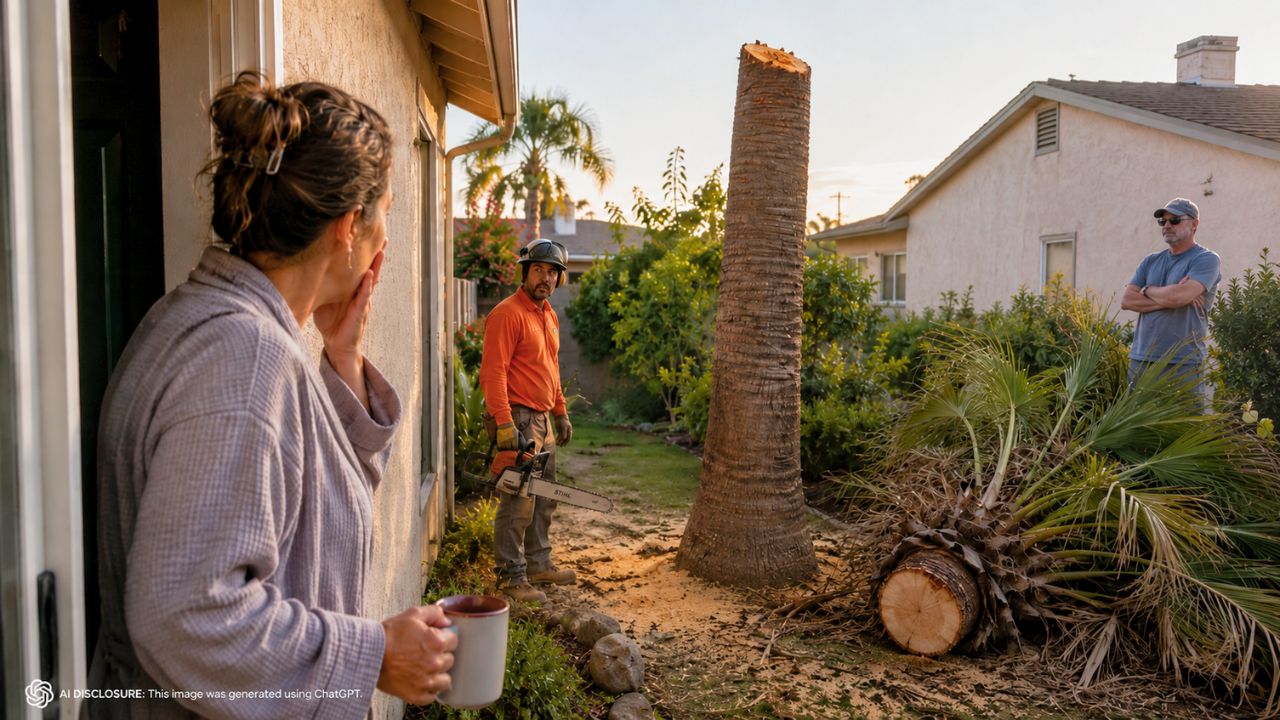
The homeowner woke up to a sound you don’t ignore in a quiet neighborhood: a chainsaw. By the time they ran outside, the job was already halfway done—an enormous palm on the property line had been chopped clean through the crown, leaving the top gone and the tree effectively killed.
In the original post, the homeowner explains that this wasn’t some random misunderstanding with a trimming crew. The neighbor had asked years earlier to remove the palm and was told no. This time, a crew showed up anyway, with equipment and debris access happening from the homeowner’s side.
A “shared” tree until someone decides it isn’t
The palm wasn’t a small landscaping plant. It was described as enormous, likely over 50 years old, and original to when the house was built. It sat right on the property line, just outside the homeowner’s fence—exactly the kind of placement that turns a normal yard project into a boundary fight.
The homeowner had already tried to do things the clean way in the past. Three years earlier, when they installed a fence, they used a professional surveyor and put the fence on the property line. So when they say they’re “fairly certain” where the legal line is, it’s not a guess based on vibes and old sprinkler heads.
That history matters, because the neighbor wasn’t new to the tree. He’d brought it up years ago and was told clearly he didn’t have permission to remove it. He even had other trees removed about a year earlier—just not this one.
The moment the chainsaw started, the choices got ugly
When the homeowner confronted the workers, the crew said the neighbor hired them to remove the tree. There had been no call, no knock on the door, no “hey, we need to talk about the palm,” and no attempt to coordinate a trimming plan.
The homeowner told the crew to stop and said they didn’t consent to removal because the tree was on the line and therefore partly theirs. The crew stopped, but the damage was already done. The palm’s entire top—including the terminal bud—was gone.
That detail is the heart-sink moment for anyone who knows palms. Once the growing point is cut, you’re not talking about “a rough trim” anymore. You’re talking about a tall, expensive, dead stump that will stand there until someone pays to deal with it.
And what was left behind wasn’t a tidy, manageable remnant. The homeowner described it as a roughly 25-foot-tall stump—basically a giant post planted on the boundary, five feet from the front corner of their house.
The neighbor’s explanation: pool debris and a “not neighborly” apology
The neighbor wasn’t home and didn’t pick up at first. When he finally responded by text, he said palm debris had been falling into his pool and damaging the filter. The homeowner’s frustration wasn’t that the pool issue existed—it was that the neighbor apparently jumped straight to removal without warning, especially after being told “no” in the past.
The homeowner says they would have been willing to split trimming costs if the neighbor had simply brought the problem to them. Instead, the work started without consent, and the crew had already used the homeowner’s property for access and staging.
About an hour later, the neighbor called and apologized, acknowledging it “wasn’t neighborly.” He offered to have the rest of the tree taken down and to plant a new starter palm in its place.
But that offer didn’t really touch the homeowner’s reality. A starter palm isn’t a replacement for a 50-plus-year-old, 50-foot-plus tree—especially one that was part of the home’s original landscape.
The real damage wasn’t just the missing top—it was the price tag and the yard
Even if the neighbor paid for the remaining removal, the homeowner was staring at the hardest part: the stump and root system. Removing a mature palm stump can mean heavy equipment, digging, grinding, and tearing up a yard to get it done right.
In this case, the homeowner’s front yard is small, and the palm is only five feet from the corner of their house. Stump removal alone could mean turning that whole area into a construction zone—damage to landscaping, irrigation, and whatever else is hidden under the surface.
Meanwhile, the neighbor’s pool area—the place he says is being impacted—is on the far back corner of his property, roughly 150 feet from his actual structure. That contrast made the homeowner feel like the “urgent necessity” explanation didn’t quite justify the way it happened.
Then the homeowner did what people do when the emotional shock wears off and the practical panic sets in: they started pricing reality. They quickly found that replacing a palm anywhere near that size is “crazy expensive,” and that’s before transport and installation.
People zeroed in on documentation, not debates
The homeowner didn’t want to sprint into court as a first move. They asked what next steps made sense: arborist report, replacement estimates, attorney, small claims, or a demand letter.
That’s where the response from others typically focuses—not on escalating arguments over the fence line, but on locking down proof. Surveys, photos, estimates, written communication, and keeping everything in a record that doesn’t rely on memory.
It’s also the kind of scenario where people push for getting professional numbers early, because once you’re talking about a mature tree and property-line rights, the “fair” amount can jump from a few thousand dollars to something that changes the whole posture of the dispute.
The update changed the stakes overnight
The homeowner followed through and hired a certified arborist, spending $1,000 for an evaluation. The estimate that came back was blunt: removal and replacement cost for a comparable 52-foot palm was $25,000.
That number put the homeowner well beyond small claims court limits in California, where they believed the cap was $10,000. And it reframed the neighbor’s apology offer—because “I’ll plant a starter palm” doesn’t land the same when the measured replacement value is closer to the cost of a small remodel.
Now the homeowner is stuck at the fork in the road that makes neighbor conflicts so miserable. Eat part of the loss to keep the peace, or pursue full restitution and accept that the relationship next door may never recover.
The palm is still gone, the stump is still there, and the yard still faces a major excavation if the root system comes out. The only thing that changed is the homeowner now knows what the damage actually costs—and once you know that number, it’s hard to pretend this was just a misunderstanding over a little pool debris.
Like Fix It Homestead’s content? Be sure to follow us.