Homeowner’s Irrigation Line Gets Hit During the Neighbor’s New Fence Install — Then Instead of Repairing It, They Cut It Back Onto Her Land and Cap It, Killing Ninety-Five Percent of Her Outdoor Water
Photo credit: AI-generated image created using ChatGPT. Illustrative only.
It started the way a lot of backyard projects start: a neighbor decides it’s finally time for a privacy fence, the contractor shows up with an auger, and everyone assumes it’ll be a clean weekend of progress. Then the drill bit caught something it wasn’t supposed to—an irrigation line feeding almost everything outside one Michigan homeowner’s house.
In the original post, the homeowner explains that the damaged pipe wasn’t just a single branch line to one garden bed. It was the main line coming out of the house that supplies water to their sprinkler system and “all of our garden beds,” leaving only one outdoor spigot still working after what happened next.
A survey fixed the garden… but nobody knew what was underneath
The homeowner and their husband bought the house less than three years ago and did what most people assume will prevent exactly this kind of mess: they paid for a survey. That survey showed a little give-and-take—some of the neighbor’s property was on their side, and part of the homeowner’s garden was on the neighbor’s side.
They corrected it like reasonable adults. They moved everything to the right sides, and the neighbors even helped move the garden. The catch, though, was buried: under the edge of that garden ran the irrigation line that tied most of the home’s outdoor watering together.
The homeowner says they didn’t know the pipe ran there, and they don’t think the neighbors knew either. The garden itself had been installed a few years before they bought the home, and while the neighbors apparently knew the garden existed, they hadn’t done a survey back then.
The fence holes went in, and the water went out
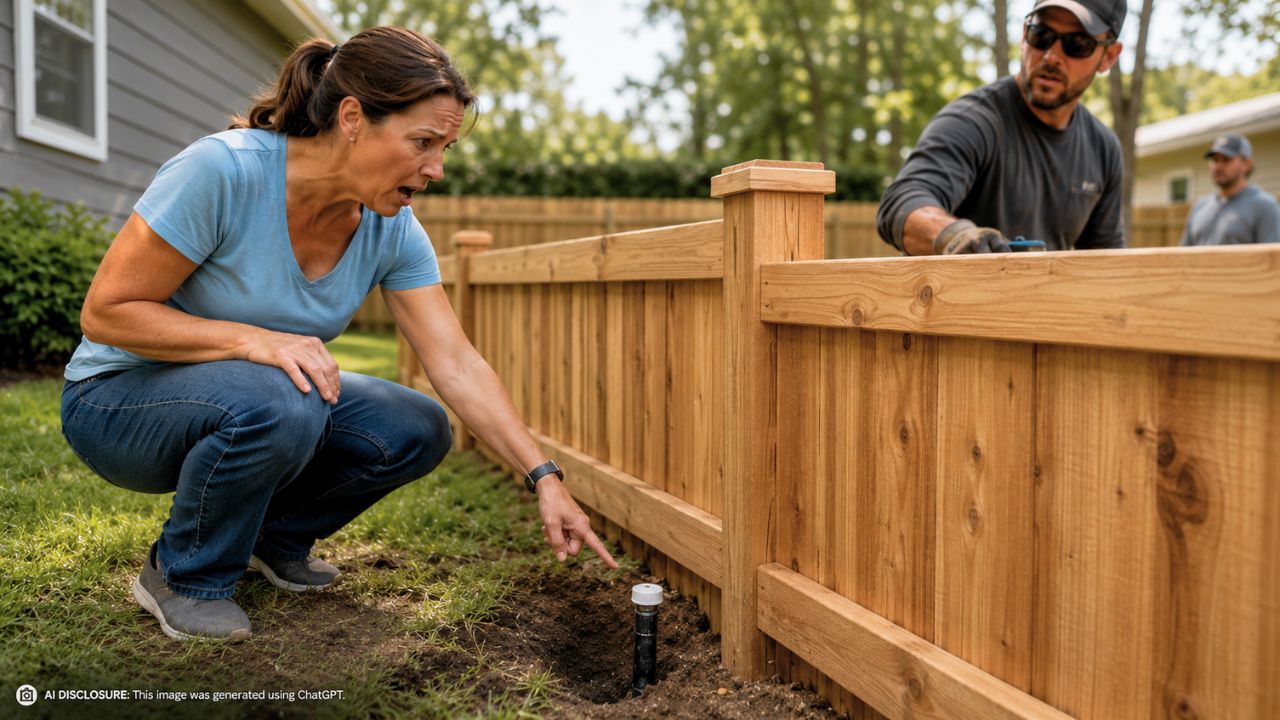
A week or so before the post, the neighbors’ contractor started drilling holes for the new fence. That’s when the irrigation line got hit—specifically, the section that had been running onto the neighbor’s property.
At first, it sounded like the kind of accidental damage that gets patched quickly. The contractor told the homeowner’s husband they would splice the line and get it working again. That’s a normal fix when a pipe is cut cleanly and both ends are accessible.
But a week later, when the homeowner went to talk directly with the neighbor, the story changed. Instead of a splice and restore, they’d cut the line back onto the homeowner’s side and capped it. In practical terms, that decision didn’t just pause watering on the neighbor’s side—it killed the flow feeding most of the homeowner’s outside system.
“We buried everything and won’t tell you where it is”
The homeowner admits they initially considered just letting it go, even though the result was losing “95% of water to the outside” of their property. But reality has a way of forcing a decision, especially in summer when gardens and landscaping don’t wait politely.
They called the irrigation company they use and scheduled a quote. Before the technician arrived, the husband went next door with a simple, practical question: did they mark where the capped end was so the repair crew could find it?
The answer made the repair harder. The neighbor told him they’d rather the homeowners run a totally new line down the side of their own property so “none of it is on their property.” And then the kicker: they buried everything and wouldn’t say where the capped line was located.
This is where the costs start to balloon. If you can find both ends, a splice might be a short, contained repair—dig, cut, couple, clamp, test. But if one end is hidden and unmarked, the homeowner may have to abandon that run and reroute a new line to reach the junction, turning what they expected to be about 10 feet of work into something like 60 feet.
The real stakes: trees, tornado recovery, and a budget that can’t take a hit
Outdoor water systems can feel like a luxury right up until the minute they’re gone. This homeowner wasn’t just worried about thirsty garden beds. Three large Cyprus trees along the edge of their property are still recovering from a tornado, and the homeowner fears they may not establish roots well enough without irrigation.
If those trees fail, it’s not a minor loss. The homeowner estimates around $300 per tree—roughly $900 total—on top of whatever it costs to redo buried irrigation runs. With the homeowner currently unemployed, this isn’t a “we’ll handle it next month” kind of expense. It’s immediate, and it’s heavy.
And there’s an extra layer here that anyone who’s lived next to a difficult neighbor recognizes instantly: the history. The homeowner notes they aren’t on good terms due to earlier issues involving the neighbor’s dog, an anti-barking birdhouse, and a social media post in June. They thought those issues were resolved and things were at least cordial—until the fence and the pipe.
What people focused on: responsibility, documentation, and the survey
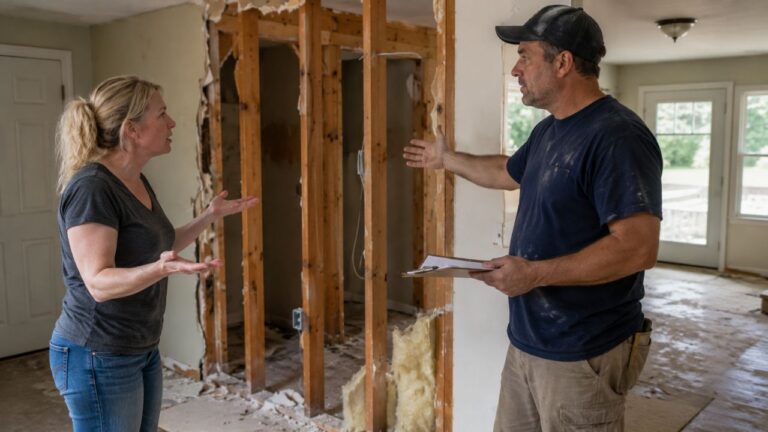
The homeowner’s big question was blunt: even if the line was on the neighbor’s property, can the neighbor just destroy it, cut it off, and refuse to help locate the cap? Or do they have responsibility to repair what their project damaged?
While the post itself is centered on that responsibility question, the practical subtext is what homeowners always end up dealing with in real time: proving what existed, where it was, and what got changed. The homeowner already has one important piece—there was a survey, and both sides previously agreed to move improvements to the correct sides.
In disputes like this, the “fix it” part isn’t just a shovel and a coupler. It’s documentation—photos of the yard before and after, any texts or emails about the contractor’s promise to splice, the irrigation company’s written estimate, and the survey itself. Because once a line is buried and the location is withheld, the repair isn’t just harder. It becomes a fight about what’s reasonable and who should pay for the extra digging.
A small cut can turn into a long-term neighbor war
One of the most tense parts of this story is how quickly a simple mistake turned into something that feels deliberate. Hitting an unmarked line during fence work is common. Promising to splice it is common, too. Cutting it back, capping it, burying the evidence, and refusing to point out where the cap is—that’s where the homeowner feels like the situation crossed from accident into “now we’re stuck.”
The homeowner is left juggling two urgent timelines: plants that need water now, and a dispute that could drag out. Meanwhile the new fence is going up, the buried cap is somewhere underground, and every day without irrigation increases the chance that the most expensive landscaping—the tornado-stressed trees—takes a permanent hit.
For now, their next step is the most practical one: get the irrigation company’s quote and find out what the repair really looks like when you don’t know where the line ends. Whether it’s a short splice or a full reroute, this is the kind of backyard damage that doesn’t stay “just a neighbor thing.” It becomes a budget problem, a landscape problem, and—if nobody backs down—a property-line problem that hangs around long after the fence is finished.
Like Fix It Homestead’s content? Be sure to follow us.