Texas Family Stays Quiet After Discovering Part of the Neighbor’s House Sits on Their Land — Then the Neighbor Builds a New Garage on the Same Land Anyway, Right Next to Their Fence
Photo credit: AI-generated image created using ChatGPT. Illustrative only.
It started as one of those uncomfortable discoveries you don’t bring up right away, because you live next door and you’re trying to be decent. A Texas family says that after becoming full owners of a neighboring piece of land, they realized part of the neighbor’s house and garage weren’t actually on the neighbor’s property anymore.
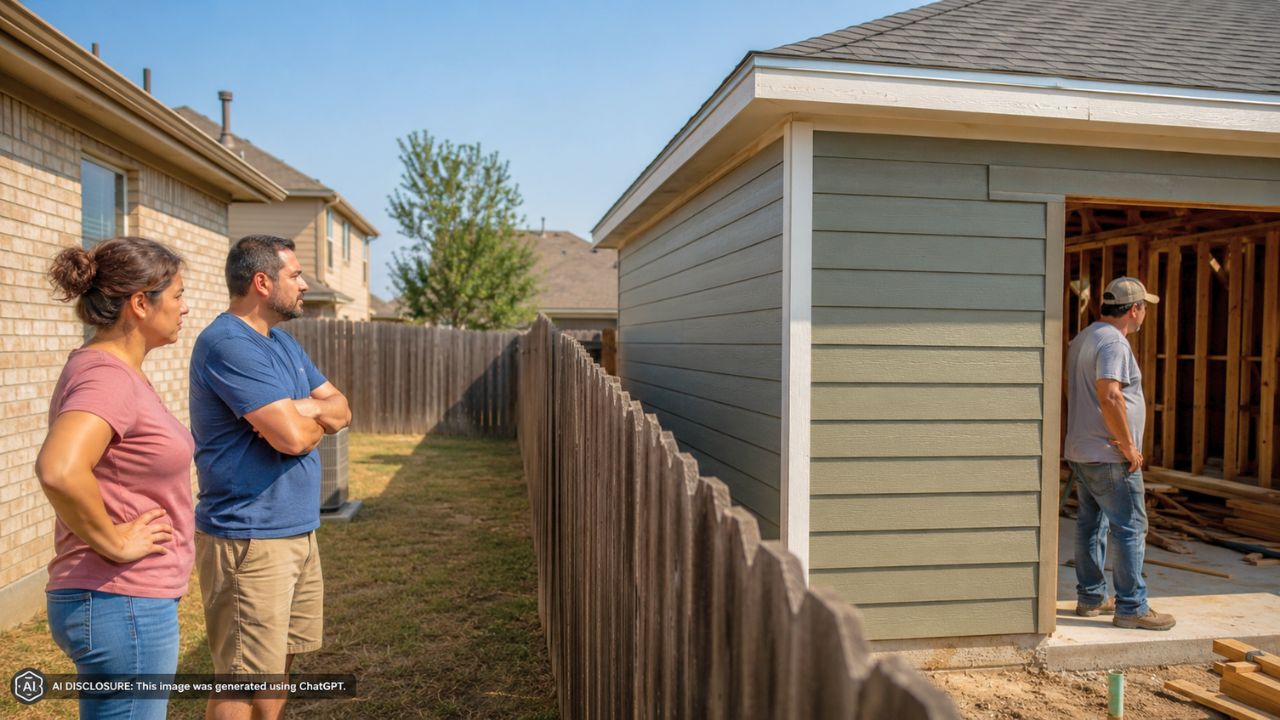
They stayed quiet for a while—partly out of sympathy—until a new structure went up. In the source post, the homeowner explains that the neighbor later built a new garage on the same land, placing it right next to the family’s fence. That’s when the “let it slide” approach finally snapped.
The first sign was easy to brush off
The family describes last year as the turning point: they became “100 percent owners” of the land next to their house, and then learned an awkward truth. A portion of the neighbor’s house was sitting on their newly owned land, along with part of the neighbor’s existing garage.
Instead of charging over and starting a boundary war, they held back. Their reasoning was simple and human: they felt sorry for the neighbor. People make choices based on the layout they think they own, and once a house is involved, it’s not like moving a shed.
But silence has a weird side effect in property-line disputes. It can feel like kindness to one person and like permission to another—especially if nobody is talking and nobody is putting anything in writing.
Then the neighbor built again—on the same ground
The escalation wasn’t theoretical. The family says the neighbor went ahead and built a new garage on part of their land.
And it wasn’t tucked away in some unused corner. According to the homeowner, the neighbor has a huge backyard and could have placed the garage “anywhere.” Instead, they chose a spot right next to the fence—adding a daily, visible reminder that the boundary problem is getting worse, not better.
That’s the kind of move that changes the emotional math instantly. A pre-existing encroachment can feel like a bad historical accident. A brand-new build feels like a decision.
A fence line turns into a pressure point
When an outbuilding goes up near a fence, it’s not just a line on a plat map anymore. It affects how you use your yard, how you maintain that fence, and what happens the first time repairs are needed.
If the structure is close enough, basic chores get complicated fast. Fence replacement, staining, or even weed trimming can turn into “don’t step over there” territory. Any drainage changes from a new slab or roof runoff can end up on the wrong side, and suddenly one neighbor’s project becomes the other neighbor’s muddy strip.
Even without mentioning drainage or access outright, the family’s frustration reads like homeowners who can see the next ten years of awkward interactions coming. It’s not just lost square footage. It’s the daily feeling that someone else is using your property as if it’s theirs.
Why “being nice” can backfire in boundary fights
The family says they kept quiet at first because they felt sorry for the neighbor. But after the new construction, the tone changes: “We let it slide and this is how they treat us.”
That sentence is the core of a lot of neighbor disputes. One side experiences patience and restraint. The other side experiences no pushback, and life continues. Then when the patient side finally speaks up, it feels “sudden,” even though it’s been building for a year.
There’s also the problem of time. In many property conflicts, delays can make resolutions harder—practically and emotionally. The longer an encroachment sits unchallenged, the more normal it feels to the person using that space, and the more painful it becomes for the true owner to reclaim it.
By the time a new garage is built, it’s no longer about a corner of a roofline or an old slab. It’s about whether a neighbor can expand onto your side and expect you to live with it.
What people pushed them toward: proof, paperwork, and a hard line
The homeowner’s question is blunt: what can we do, because at this point we want all of our land back. They also add that the neighbor has “tried to screw us over one too many times,” which suggests this build wasn’t happening in a vacuum.
In threads like this, the most common practical reaction is to stop treating it like a handshake problem and start treating it like a property problem. That usually means documentation—knowing exactly where the legal boundary is and capturing what exists on the ground now, while it’s fresh and visible.
It also means resisting the temptation to solve it with a fence argument alone. A fence can be in the wrong spot, or placed for convenience, or installed long before current owners arrived. When structures are involved—especially something as permanent as a garage—people tend to focus on survey lines, records, and written notices rather than verbal “we thought it was fine.”
And there’s a safety element in how people handle it. Boundary fights can escalate quickly when neighbors feel cornered. That’s why many homeowners in similar disputes lean toward careful steps first: gather proof, keep communications calm and written, and avoid making threats face-to-face at the fence line.
The unresolved tension: you can’t unbuild a garage with good vibes
The family is now past the stage of quiet sympathy. They’re angry, and the reason is clear: they believe they already gave grace once, only to watch the neighbor take more.
That’s what makes this kind of homestead drama so exhausting. It’s not a broken appliance you can swap out on a Saturday. It’s land—permanent, emotional, and tied to a home you can’t simply relocate. A new garage near the fence is the kind of thing you see every time you step outside, and every glance carries the same question: if they built this, what stops the next “small” expansion?
For now, the family is stuck in the hardest part of property disputes: deciding how to reclaim what’s theirs without turning their backyard into a permanent battleground. The neighbor built as if the space belonged to them. And the family is left staring at a structure they didn’t approve, on land they say they own, wondering how much more “quiet” they can afford to be.
Like Fix It Homestead’s content? Be sure to follow us.