New Homeowners Start Tearing Down a Fence They Assumed Was Theirs — Then the Neighbors Return Mid-Demolition and Insist the Final Third Must Stay Because It Frames Their House
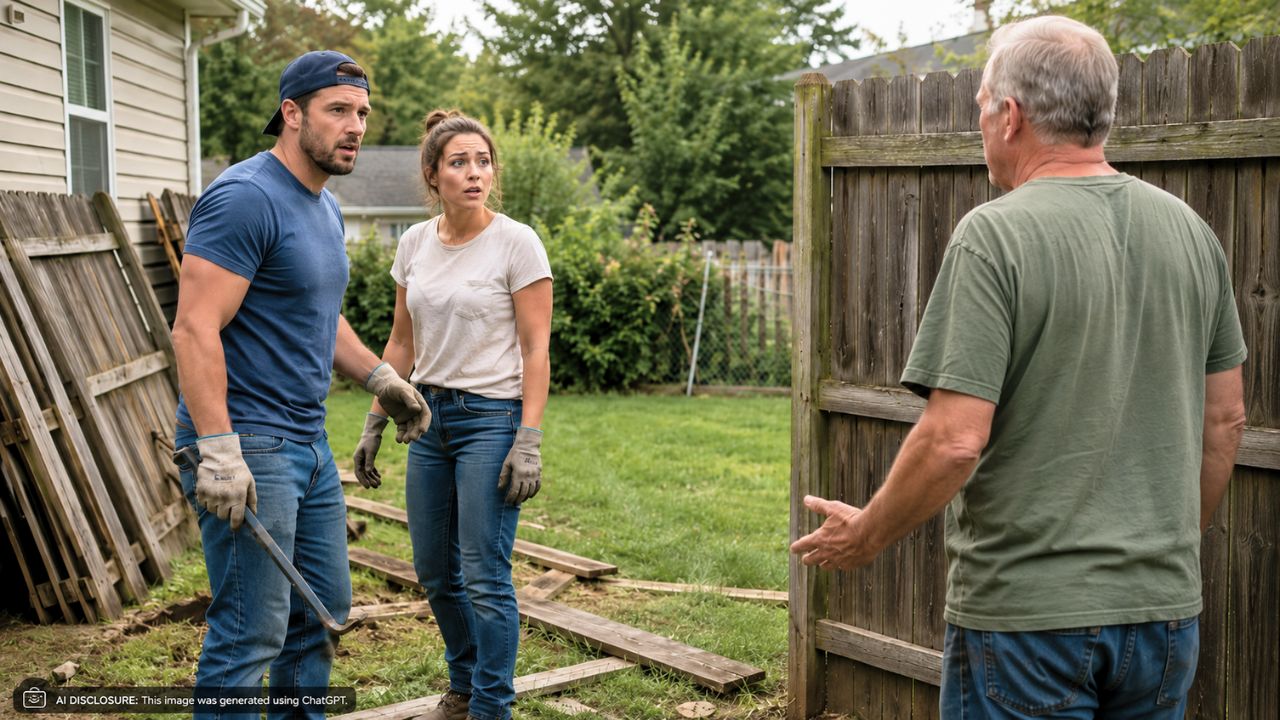
Photo credit: AI-generated image created using ChatGPT. Illustrative only.
New house, empty-looking neighbor property, and a fence sitting a couple feet inside what you’re pretty sure is your yard. That’s how one set of new homeowners found themselves halfway through a demolition job before the people next door finally appeared and said, “Stop.”
In the original post, the homeowners explained they’d just purchased the place while the neighbors were out of the country for six months. With nobody around, the couple assumed the fence running about two feet off the property line—on their side—must be theirs. So they started removing it.
They thought the neighboring home was empty
Moving into a new home comes with a long list of “we’ll deal with it later” tasks. But fences don’t feel like a later problem. They feel immediate: they block access, complicate landscaping, and quietly dictate where you can mow, plant, or put in a shed.
In this case, the neighbors’ absence did most of the mischief. The homeowners didn’t realize anyone lived next door, so there was no one to wave down and ask, “Hey, whose fence is this?” The property simply looked vacant, and the fence looked like an odd, outdated feature they could just remove and replace when ready.
Mid-demolition, the neighbors came home and the story flipped
The homeowners removed about two-thirds of the fence before the neighbors returned. Then the tone changed fast. The fence wasn’t abandoned debris after all; the neighbors said it belonged to them.
What made it even messier is that the neighbors acknowledged the fence was built over onto the homeowners’ side—about one to two feet over the line. According to the post, the neighbors also said they’d been “about to fix it” ever since it was installed two years earlier.
That’s the kind of explanation that sounds reasonable in a casual conversation and infuriating in practice. Two years is long enough for a mistake to stop feeling like a mistake and start feeling like a land grab, even when it’s sloppy rather than malicious.
The awkward detail: the previous owner never objected
Another wrinkle: the woman who owned the home before the current homeowners didn’t live on the property and didn’t object when the fence went in. That matters socially—neighbors often treat silence as consent—even if it doesn’t magically move a property line.
For the new owners, though, “the previous owner didn’t mind” isn’t a comfort. They’re the ones who have to live with the layout every day, and they’re the ones now face-to-face with neighbors who are unhappy about a fence coming down.
It’s a common first-time ownership shock: you inherit not just a house, but a whole web of unspoken arrangements. Some are harmless. Some are the kind that only shows up when a shovel hits dirt or a post starts coming out of the ground.
“Leave the last third” turned into a standoff
Once the neighbors returned, they insisted the final one-third of the fence stay in place. Their reason wasn’t about pets, privacy, or security—it was about appearance. They liked how the remaining section “tapers and frames their house.”
That’s a hard sell when the fence is sitting inside someone else’s yard. Decorative value doesn’t pay property taxes, doesn’t help with maintenance, and doesn’t make mowing around a crooked boundary any less annoying.
Now the homeowners are stuck in that uniquely stressful place: they already started removing something they didn’t own, but they’re also being asked to keep a structure that allegedly shouldn’t be on their land. Their question was blunt and practical—how forceful should they be? Should they insist it’s removed “ASAP,” or accept the last third hanging one to two feet over the property line?
Why this gets expensive even when nobody wants a fight
Fence disputes are rarely about the wood. They’re about what comes next. Leaving a fence in the wrong place can quietly create a long-term headache: who maintains it, who’s liable if it falls, who’s responsible if it blocks access for repairs, and what happens when you eventually sell and a buyer asks why the boundary doesn’t match the survey.
There’s also the very human fear of setting a precedent. New homeowners worry that if they allow an encroachment—even a small one—it becomes “normal,” and normal becomes harder to undo later. Meanwhile, neighbors often fear the opposite: if the fence line changes, they lose the look and feel they’ve gotten used to, and they may worry about losing privacy or curb appeal.
And hovering over everything is the part nobody enjoys talking about: the potential for escalation. A simple “can we move this?” can turn into months of cold shoulders, driveway glare, and passive-aggressive yard projects if it’s handled badly.
Reactions leaned toward proof and paper trails
Even without a full comment thread included in the source material, this kind of story tends to pull the same practical instincts from homeowners who’ve been through it: stop guessing, document everything, and figure out exactly where the legal line is before any more boards come off.
People also tend to zero in on the timeline. The neighbors saying they’d planned to fix it for two years reads, to many homeowners, like an admission that they knew it was wrong but didn’t prioritize it until it became inconvenient. At the same time, others will point out the new owners made a bad assumption too—removing a fence without confirming ownership is a gamble, even if the fence is visibly over the line.
Most homeowners who’ve had to untangle similar messes will tell you the same thing in plain language: if a fence is on the wrong side of the property line, it can’t stay there just because it “frames” someone’s house. But they’ll also warn that winning the boundary argument and losing the neighbor relationship can be its own cost.
For now, the homeowners are left staring at the last stretch of fence—partly removed, partly demanded, and entirely symbolic. It’s only a foot or two of land, but it’s also a first test of how life in this neighborhood is going to work: assumptions versus lines on paper, aesthetics versus access, and how quickly a simple weekend project can turn into a front-yard standoff.
Like Fix It Homestead’s content? Be sure to follow us.