Homeowner’s Survey Reveals a Hillside on Their Land Is Actually the Neighbor’s Septic System Sitting Twenty Feet Over the Line — Then a Year Into the Lawsuit, the Neighbor’s Title Insurance Company Shows Up to Cover Itself
Photo credit: AI-generated image created using ChatGPT. Illustrative only.
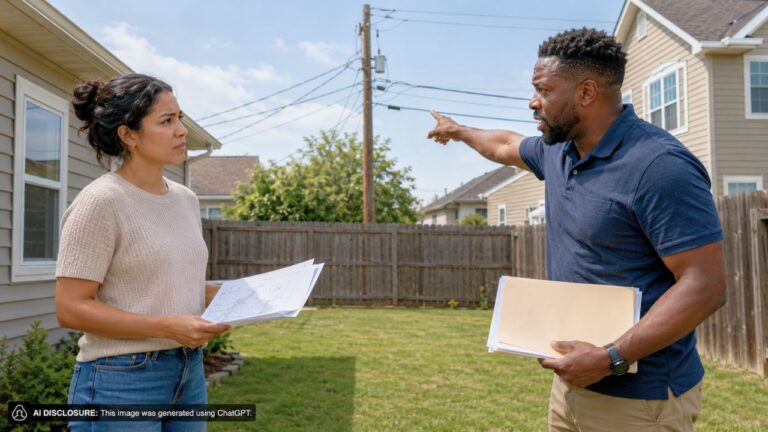
Two years after buying their home, a homeowner thought they were finally putting a nagging boundary question to rest. There was an existing fence, a slope of earth pressed up behind it, and a casual assurance from the prior owner that the land extended about 20 feet past the fence.
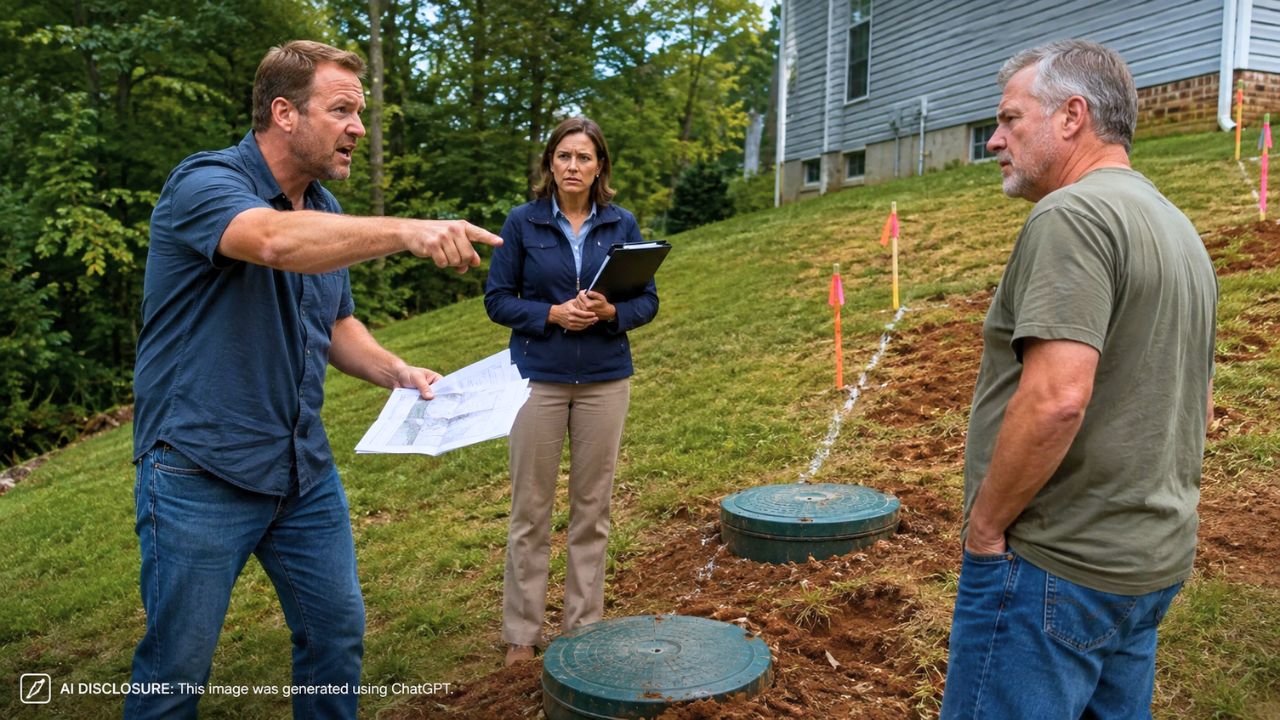
Then they paid for a survey and found out the “hill” wasn’t a harmless landscaping quirk at all. It was the neighbor’s septic system sitting roughly 20 feet onto their property—an underground problem that doesn’t just affect a map, but safety, drainage, and what you can do with your own yard. The homeowner laid out the details in the original post, including how the dispute escalated into a lawsuit and a year of stress.
The survey turned a quiet hill into a very real problem
The couple didn’t order a survey before closing, which is common enough when fences “look right” and nobody’s making noise. But a boundary dispute with the neighbor pushed them to get one a few months after moving in.
That’s when the paperwork did what fences and assumptions can’t: it drew the line. The surveyed property boundary showed that the area behind their fence—where that hill sat—was actually part of their lot, and the neighbor’s septic system had been installed over it.
Septic encroachments aren’t like a misplaced shed you can pick up and move with a weekend crew. A system has a footprint, setbacks, and county health rules. It’s buried, it involves soil, and it’s designed around gravity and drainage. Suddenly, this wasn’t just about “20 feet.” It was about what’s under that 20 feet.
They went to court because the neighbor wouldn’t move it
Once the septic placement was confirmed, the homeowners say they fought “tooth and nail” to get it moved completely off their property. The neighbor didn’t want to do that, and the disagreement hardened into a lawsuit that’s now been going on for a year.
What makes this kind of fight so brutal is that every month that passes tends to raise the stakes. You’re paying legal bills while still living next to the person you’re suing. You still have to take out the trash, let the kids play, and walk to the mailbox with a strained smile—or no smile at all.
The homeowner estimates they’ve already spent over $10,000 on the case, with their attorney projecting $25,000 to $30,000 if it goes to trial. That’s a lot of money for something that started as “we should probably get a survey.”
Mediation brought an unexpected guest: title insurance
At mediation, the homeowners noticed something unusual: a representative from the neighbor’s title insurance company was present. Their own attorney told them the insurer was there “to cover themselves.”
In plain homeowner terms, that appearance says one thing: the paper side of this mess may be almost as important as the dirt side. The homeowners believe the neighbor’s title search failed to pull documents tied to the septic system when the neighbor bought their house. If those documents had been caught, the homeowners think it would have shown the system was installed incorrectly from the start.
They say they have proof pointing at the original septic installer’s negligence, including a proposal sketch physically labeled as being on the east side, while the system ended up on the west. They also noted no property survey was attached to that proposal.
Meanwhile, the homeowners’ own title insurance has told them it won’t touch the claim, because the issue wouldn’t have been found through their title search on their property. That left the couple staring at the same question many homeowners hit too late: if nobody wants to own the mistake, who pays to fix it?
A “settlement” plan raised alarms about sewage and grading
Not every proposed fix is really a fix. The homeowner says the neighbor submitted a settlement proposal involving the original septic installation company, but moving forward with it would create a community health hazard.
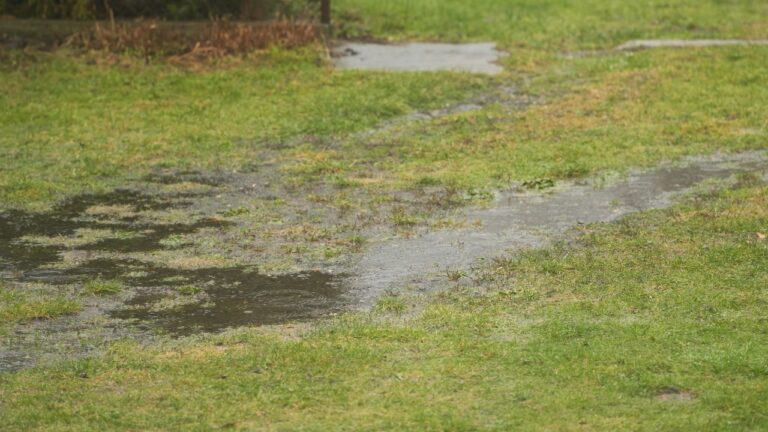
The homeowners had an engineering company review the proposal and were told that leveling out a 60-by-20-foot area to match their existing yard could lead to uncontrollable septic sewage spilling onto their property and into ditches. That’s not just unpleasant—it’s the kind of thing that can turn into a health department nightmare and make resale, insurance, and everyday life harder.
According to the homeowner, the county revoked its original approval for that proposal, meaning the parties have to go back to the drawing board. In other words: even the “compromise” got rejected, and now everyone’s stuck again, still living next door.
The day-to-day toll: cameras, toys, and constant pressure
Legal costs are only one part of what they describe. The homeowner also says the past year and a half has included harassment tied to the dispute. They claim they can’t leave their home without being recorded, and that the neighbor has stolen their kids’ toys if they’re too close to the property line.
That kind of pressure changes how you use your own yard. People stop gardening where they want, stop letting kids roam as freely, and start thinking twice about every interaction. Even mundane chores become loaded.
And it’s not hard to see why this particular fight gets personal. A septic system isn’t a fence post that wandered over. It’s waste management. It’s buried infrastructure. It’s something no homeowner wants on their land unless it’s theirs, permitted correctly, and maintained under their control.
How other homeowners reacted: document everything, and don’t assume insurance will save you
While the post focused on whether they can sue the neighbor’s title insurance (and whether they can also pursue the original installer), the underlying theme was familiar to anyone who’s lived through a property-line battle: documentation is everything, and assumptions are expensive.
Readers tend to zero in on the practical steps that make or break these disputes—surveys, recorded easements, county permits, septic plans, and anything stamped or filed. When a problem is underground, the only “eyes” on it may be the paper trail, the county approvals, and the professionals willing to put their opinions in writing.
There’s also a hard-earned realism that shows up in reactions to stories like this: title insurance is not a blanket home warranty, and it doesn’t always ride in to rescue the homeowner who’s suffering. Insurers look for who they actually insure, what risks were covered, and what was disclosed or discoverable.
For this couple, the frustrating part is that the neighbor’s insurer showing up at mediation suggests the neighbor’s side sees potential exposure somewhere—yet the homeowners are the ones paying to fight for the simple idea that a septic system shouldn’t be on land it doesn’t belong to.
The homeowners are now stuck in the slow middle part of these disputes, where the survey is clear but the solution is not. Moving a septic system can be invasive and costly, but leaving it in place can tie up a property for years. And when the yard itself—your kids’ toys, your fence line, even how you grade the land—becomes the battlefield, it stops feeling like “just a neighbor problem” and starts feeling like you’re defending your home one exhausting day at a time.
Like Fix It Homestead’s content? Be sure to follow us.