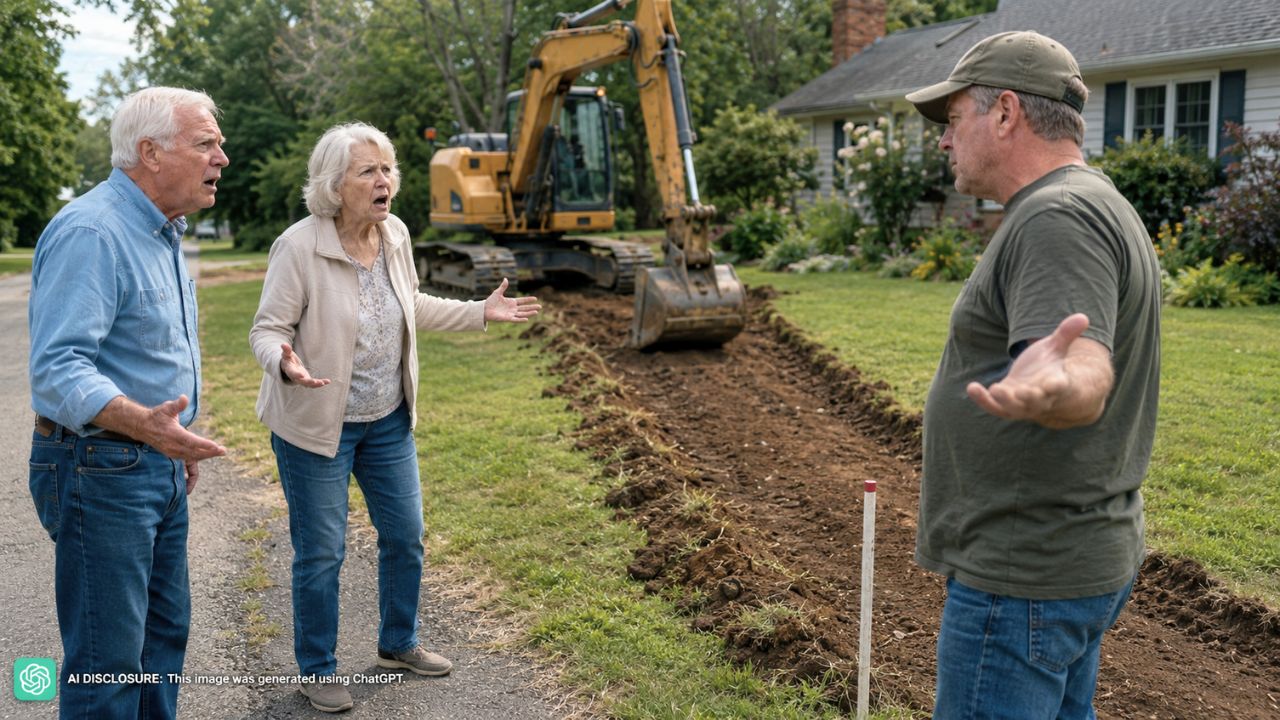
Elderly Homeowners Return Home to Find an Excavator Carving a New Driveway Across the Corner of Their Land — Then the New Neighbor Flatly Denies the Line Was Ever Crossed
Photo credit: AI-generated image created using ChatGPT. Illustrative only.
When you live on a steep hillside, you get used to compromises: switchback driveways, tight turns, and the constant awareness that “usable space” is a moving target. That’s why an elderly couple in a small Canadian town initially assumed the mess next door had to be a misunderstanding.
But when they pulled into their own place and saw an excavator had carved a fresh driveway cut that crossed the corner of their land, it stopped feeling like a simple construction headache and started feeling personal. The full story comes from the original post, where a nearby neighbor watched the standoff unfold and decided to intervene in a way that didn’t require lawyers.
A fresh scar across the corner of their yard
The neighborhood’s lots were so steep that straight driveways weren’t even an option—everything had to snake back and forth up from the main road to meet building code. A vacant lot beside the couple’s home had finally sold, and the new owner was building a house.
That’s when the older couple came home to find a “huge scar” cut into the hillside. The new driveway didn’t just hug the property line. It crossed it, taking the bottom stretch of the switchback across the corner of the couple’s land to connect to the road below.
It wasn’t subtle. This wasn’t a fence panel an inch over, or a shrub planted on the wrong side. This was heavy equipment reshaping the slope in a way that couldn’t be un-seen once the dirt was moved.
They tried polite first, and hit a wall
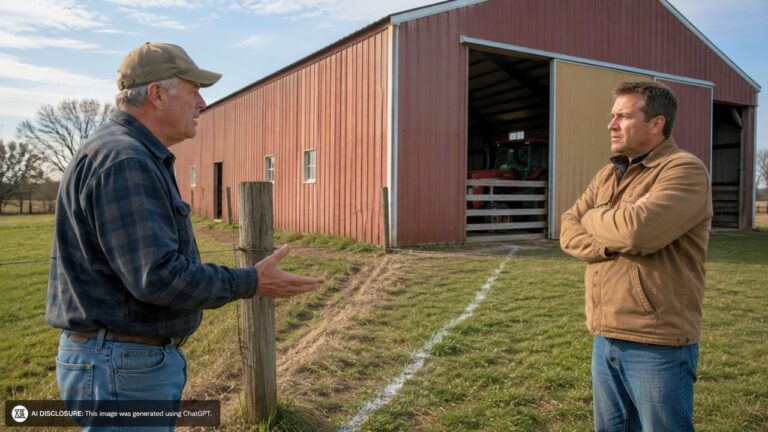
Like a lot of longtime homeowners, the couple didn’t immediately come out swinging. They walked over and talked to the machine operator, hoping it was a simple error. The operator couldn’t offer much, but did provide the new owner’s phone number.
The old husband called and explained, calmly, that the driveway appeared to be on their property. The response wasn’t a discussion or an apology. The new neighbor flatly denied crossing the line and was rude enough that it left the older homeowner visibly upset.
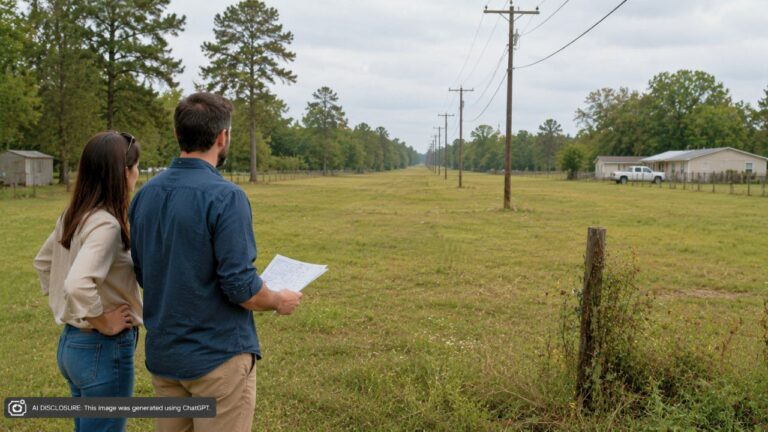
So they did what careful property owners do when the other side won’t listen: they checked their property pins. The markers confirmed what they already suspected. The driveway really had been cut onto their land.
At that point, they were stuck in the spot so many people dread. Legal action is expensive, slow, and stressful—especially when the neighbor is someone you may have to live beside for years. But letting it slide can turn a one-time overstep into a permanent expectation.
Construction kept rolling, and the pressure built
The worst part about an encroachment like this is that time favors the person who’s already digging. Once trucks and crews are using that path every day, it quickly becomes “the way it is.” Even if the owners are in the right, the longer it goes on, the harder it feels to put the toothpaste back in the tube.
And because the driveway was carved out by an excavator, the damage to the slope and yard wasn’t something you could casually undo. Even if the couple had won an argument, they’d still be staring at a cut hillside.
The neighbor’s choice not to ask permission mattered here. If he had come over first, explained the constraints, and offered compensation or an easement agreement upfront, the couple might have treated it like a reasonable compromise on a tricky hill. Instead, they were introduced to their new neighbor by a machine tearing into their property.
A rusty pickup became the “fence” they needed
A friend’s dad—someone who liked the older couple and didn’t enjoy watching them get pushed around—heard the story and couldn’t let it go. After some thinking (and a few beers, as he admitted), he came up with a plan that was simple, legal in spirit, and immediately effective.
He called the couple, asked permission, and then drove his old full-size pickup over. He parked it directly across the encroaching section of driveway, making sure it was entirely on the older couple’s property.
The next morning, the construction crew arrived and found they couldn’t drive up to the build site. There was no easy workaround. On a steep switchback, access is everything—especially when the crew needs tools, materials, and equipment moved up the hill.
The crew noticed a note with the truck owner’s phone number and called to ask what was going on. He told them plainly: he had permission to park there, he was not moving the truck, and any attempt to tow it would be treated as trespassing and theft.
That put the workers in the spot most crews hate: stuck between a homeowner dispute and the job they’re paid to do. They didn’t want to haul gear up a steep hillside by hand, and they didn’t want to be the ones escalating a property line fight. So they called the new owner and told him they’d be taking the day off—and would keep taking days off until the boundary issue was settled.
The denial didn’t survive the cost of a stalled build
The new owner responded exactly the way you’d expect from someone who wouldn’t negotiate in the first place: he called the older couple in a fury. But anger doesn’t move a truck that’s legally parked on someone else’s land.
And that’s the quiet power of what the friend’s dad did. He didn’t threaten anyone, damage anything, or step onto the neighbor’s property. He simply used the older couple’s right to control their own land and made the encroachment impossible to ignore.
With construction stalled, the new owner eventually did what he refused to do at the start: negotiate. The older couple ended up receiving a significant sum of money in exchange for an easement allowing the driveway to cross that corner of their property.
In the end, the friend’s dad got a more neighborly reward—several thank-you cases of beer—and the satisfaction of backing up people who didn’t have the stomach or budget for a full legal fight.
What people latched onto in the reactions
The original storyteller added details that answered the obvious questions: this happened in Canada, the driveway was built that way because it was cheaper and easier than keeping it entirely on the new owner’s land, and the lower stretch—roughly the first 50 feet—was the portion crossing the older couple’s property.
Readers also honed in on the practical reality of steep-lot neighborhoods: access routes are not optional. Block the route and you don’t just slow down a project—you stop it. In a place where everything has to switchback to meet grade and code, you can’t casually “go around” without major additional excavation and cost.
And even without a courtroom scene, the story highlighted the kind of documentation that matters in real life: property pins, clear boundaries, and the difference between a temporary inconvenience and a permanent easement that should be paid for.
The ending wasn’t a feel-good handshake between neighbors. It was a hard lesson in leverage. When someone takes a shortcut across your land and dares you to prove it, the most effective response isn’t always the loudest—it’s the one that makes their shortcut stop working.
Like Fix It Homestead’s content? Be sure to follow us.