Internet Installer Needs Access to a Utility Pole Behind the Neighbor’s Locked Gate — Then the Neighbor Goes Silent, Leaving the Install Stuck With No Way In
Photo credit: AI-generated image created using ChatGPT. Illustrative only.
It was supposed to be one of those easy upgrades: schedule the appointment, wait for the truck, sign a form, and finally have working internet and phone. Instead, the installer showed up, looked around, and hit a wall that had nothing to do with cables or equipment.
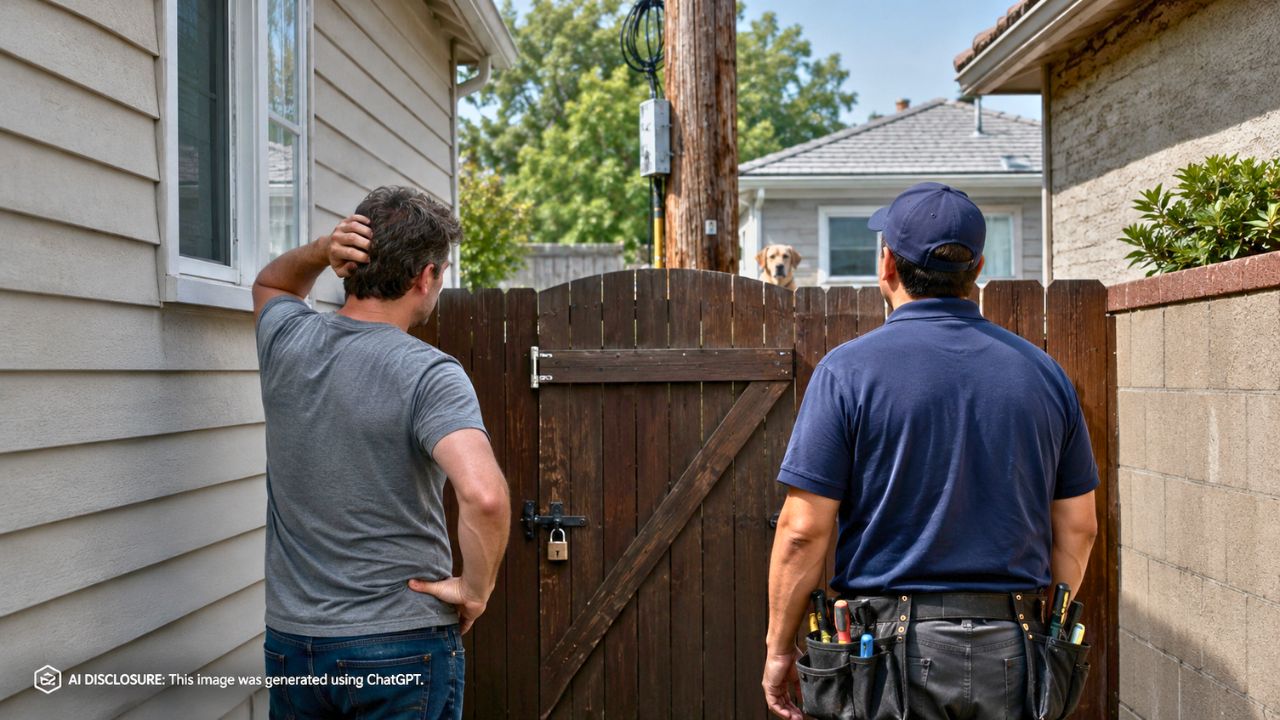
A homeowner explained in the original post that their mom signed up for Comcast/Xfinity service. The technician arrived on time, but said the install couldn’t move forward without reaching a utility pole located in the neighbor’s backyard. And that backyard, unfortunately, was sealed up tight behind a locked gate, a wall, and dogs.
The install appointment ended at the fence line
The tech’s message was simple: to do the job, he needed access to a pole that sits on the other side of the property line. Not the customer’s yard. The neighbor’s.
That’s the moment when a normal home service call turns into a neighbor problem. The homeowner can be ready, available, paid up, and still lose the whole day because the critical piece of infrastructure happens to be in the wrong place.
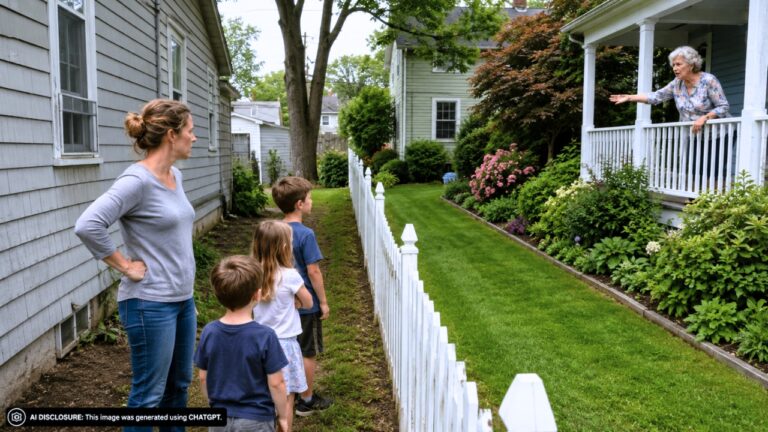
The mom tried to do it the reasonable way—reach out and ask for access so the technician could get in, do the work, and leave. But the neighbor didn’t respond. No yes, no no, nothing at all.
Locked gate, walled yard, and dogs changed everything
This wasn’t a case where the installer could just walk around to an open side yard and knock. The neighbor’s property was secured: locked gate, walled yard, and dogs in the mix.
Even neighbors who normally don’t mind quick access might hesitate when the request involves coordinating a time window, unlocking a gate, and making sure animals are contained. For the homeowner waiting on service, though, it creates a practical trap: the installer can’t legally enter without permission, and can’t safely enter even if he wanted to.
The goal, as the post explained, wasn’t to start a feud. It was to get the neighbor to respond long enough to set a day and time—unlock the gate, keep the dogs inside, let the tech complete whatever connection needed to happen at the pole.
“Isn’t it a city pole?” doesn’t solve the access problem
The homeowner’s big question was the one a lot of people would ask in the same spot: if the pole is owned by the city, shouldn’t that mean the tech can access it?
On paper, utility infrastructure often comes with easements and rights-of-way, and the pole itself may not “belong” to the neighbor. But in real life, the pole can still sit behind someone’s locked gate. And if the only route to it is through a private backyard with a wall and dogs, access becomes less about who owns the pole and more about who can physically—and safely—get to it.
That disconnect is what makes these disputes so maddening. The homeowner isn’t asking to run new lines across the neighbor’s lawn for fun. They’re trying to activate a service they’re paying for. Yet the neighbor’s silence is enough to freeze the entire install.
When a neighbor goes quiet, the costs start piling up
It’s easy to think of this as “just internet,” until you live without it. Missed work-from-home hours, unstable phone options, streaming and security devices that can’t be set up, and the slow drip of rescheduling appointments that require someone to sit at home waiting.
There’s also the weird emotional pressure of it. The mom did everything right—signed up, booked the appointment, was ready when the technician arrived—and still ended up stuck negotiating with someone who won’t even answer a message.
Meanwhile, installers aren’t paid to mediate neighborhood access standoffs. If they can’t reach the equipment safely and with permission, they leave. The homeowner is the one left staring at the fence, knowing the pole is “right there,” but functionally unreachable.
Practical reactions focused on the provider, not the gate
Even without a long thread of comments included in the source material, the shape of the responses in these scenarios tends to be consistent: people push homeowners to stop treating it like a personal negotiation and route it through the company and whoever controls the easement.
The thinking is straightforward. The neighbor can ignore a homeowner indefinitely. It’s much harder to ignore formal contact from the service provider or the entity responsible for the pole, especially if access is covered by an existing easement or utility right-of-entry.
In other words, the fix usually isn’t “try harder to catch them outside.” It’s getting the right party—often the provider—to handle access logistics the way they do in other locked-yard situations, whether that means alternate routing, a different connection point, or arranging access through appropriate channels.
The tension sits right on the property line
What makes this kind of home-and-neighbor problem linger is that there’s no clean, neighborly middle ground when one side won’t communicate. The mom isn’t asking for a permanent change to the neighbor’s yard; she’s asking for a short window of entry so a technician can reach a pole. But the neighbor’s property is secured in a way that effectively gives them veto power through silence.
And silence is the hardest thing to plan around. If the neighbor had said “not today” or “only weekends” or even “no,” at least the homeowner would know what they’re dealing with. Instead, the installer is blocked, the gate stays locked, and the dogs make it a non-starter for anyone trying to improvise.
For now, the mom’s internet install is stuck in that frustrating limbo where the infrastructure exists, the service is available, and the only thing missing is a neighbor willing to unlock a gate and answer the door.
Like Fix It Homestead’s content? Be sure to follow us.