Homeowner Overhears the Neighbor’s Wife Insist on a Concrete Patio Poured Flush to the Shared Fence Line — Then Watches Him Admit It Could Flood Both Yards Before Promising a Fix
Photo credit: AI-generated image created using ChatGPT. Illustrative only.
It started the way a lot of backyard projects start: noise, dirt piles, and a neighbor who seemed confident because he “works in construction.” But from the other side of a privacy fence, one homeowner couldn’t shake the feeling that something about the build was headed for trouble—especially once she overheard a key part of the planning conversation.
In the original post, the homeowner explained that her backyard neighbor was building a deck and patio himself. The patio concrete was going right up to the shared fence line, and she feared the runoff would have nowhere to go except into her yard, potentially turning ordinary rain into a recurring flooding problem for both properties.
The first sign was what wasn’t there: markings in the yard
The first thing that raised her alarm wasn’t the concrete or the fence—it was the digging. She noticed there were no flags or paint markings that typically indicate underground utilities have been located before excavation.
Her husband believed the neighbor should have had someone out to mark lines before digging. She thought it might even be required by law, both for safety and because one bad shovel hit can turn into a neighborhood-wide mess.
It’s the kind of detail that’s easy to ignore when you don’t want drama. But it also sets a tone: a big project moving fast, with fewer visible checks along the way.
Then the concrete went right up to the fence
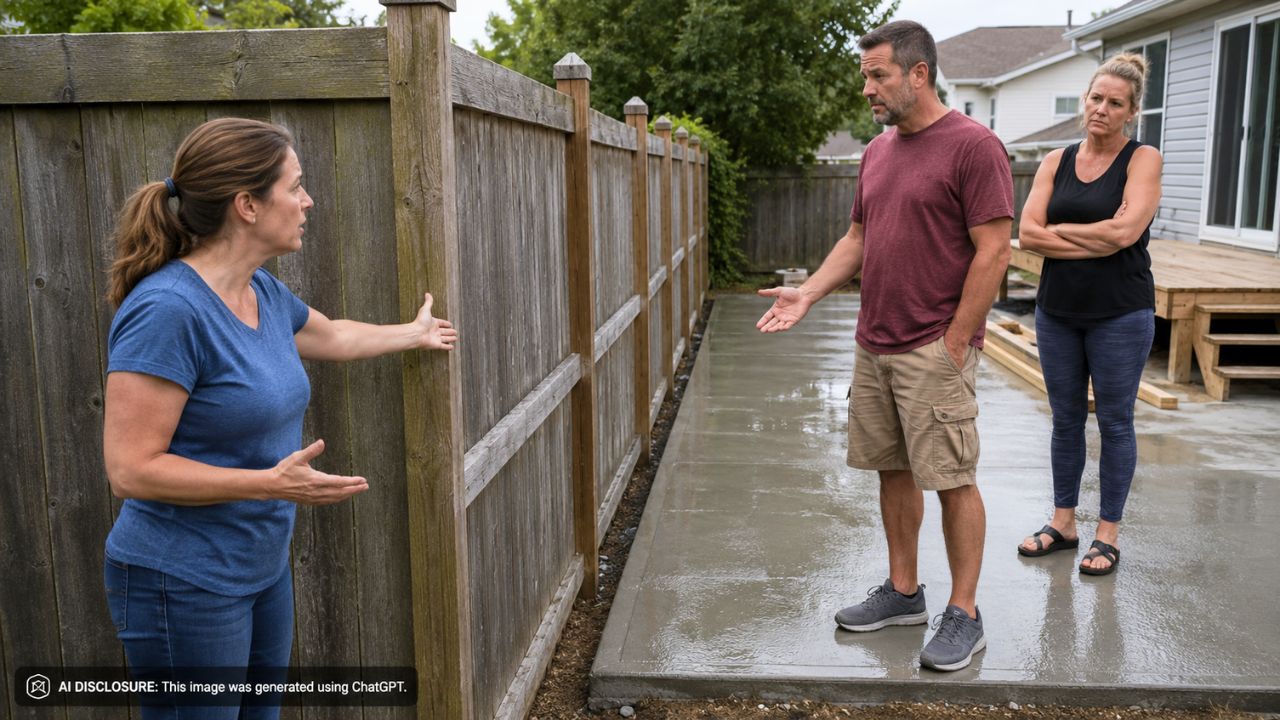
The bigger worry showed up as soon as the patio started taking shape. The homeowner watched the neighbor pour concrete that ran flush along the fence line dividing their yards, and along the fence on the other side as well.
She didn’t claim to be a construction expert. She just knew what water does when it hits a solid surface with no buffer: it runs. And with a privacy fence acting like a barrier, she pictured rainwater being pushed sideways and pooling where it didn’t before—into her lawn, against her foundation, and possibly into her basement if conditions lined up badly enough.
To her, this wasn’t about being picky over a few inches. It was about changing how the entire back corner of the property handled storms.
The moment that made it feel personal
What really stuck with her wasn’t just the layout—it was hearing how it got decided. She overheard the neighbor and his wife planning the patio and deck arrangement, and this fence-line pour was “how she wanted it.”
From what she could gather, the neighbor understood the risk. She wrote that he knew it could potentially cause flooding, but the body language and snippets of conversation made it sound like he wasn’t the one making the final call.
That’s a hard thing to un-hear when you’re the one who might be mopping up later. It changes the worry from “maybe they didn’t think of it” to “they thought of it and did it anyway.”
His promise: grade the yard and add a drain
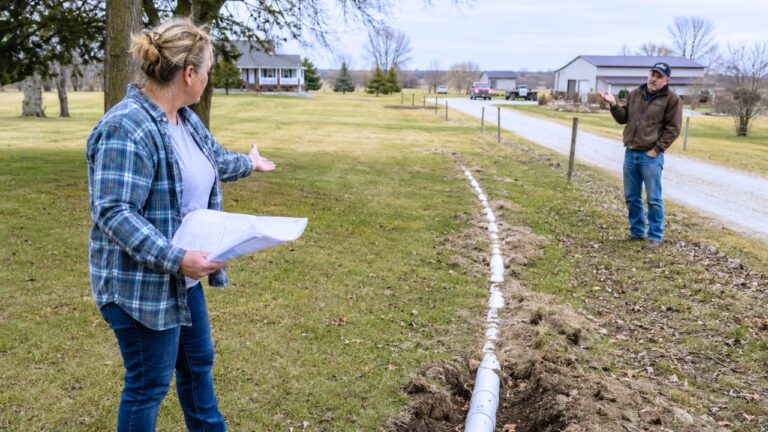
The homeowner’s husband did talk briefly with the neighbor, and that conversation added another layer—some reassurance, but also more uncertainty. According to the post, the neighbor said: “I don’t want to flood you guys out, so I’m going to grade my yard and install a drain”.
On paper, that sounds like the right instinct. Grade away from structures. Give water a path. Add drainage to intercept runoff. But to the homeowner watching from next door, it still felt like a gamble because the patio was already poured, and she didn’t know whether the drainage plan was engineered or improvised.
Her mind went to the worst-case chain reaction: a wet yard that turns into water against the foundation, a sump pump that runs constantly, and then a big storm that overwhelms it. She wasn’t trying to catastrophize—she was trying to understand what “a drain” actually means when it’s meant to protect two households.
The real split was inside the house
The conflict wasn’t just with the neighbor. It was between spouses. The homeowner wanted to be proactive and verify whether permits were pulled, especially because she has a friend who works for the city and could check.
Her husband wanted to avoid lighting a fuse. He worried that if the city got involved, the neighbors would assume it came from them, and that could lead to conflict or retaliation. His approach was to “give him some grace,” let the project finish, and see what happens after the next big storms.
To her, waiting felt backwards. Once concrete is in and the structure is finished, you’re not preventing damage anymore—you’re documenting damage and hoping someone else agrees it wasn’t “normal water issues.” She also worried that if they waited too long, fixing it might shift from a city/code problem into a lawyer problem.
How homeowners reacted: document first, don’t wait for the first flood
Even without a full comment thread included, this kind of homeowner dilemma tends to draw practical, pattern-based reactions: don’t rely on verbal promises, and don’t wait for water to prove the point inside your own basement.
Homeowners in similar disputes often focus on two things early: proof and timelines. Proof can be as simple as photos and videos of the work in progress, especially the patio edge at the fence line and the grading before any landscaping hides it. Timelines matter because “before and after” is what makes a complaint legible to a city office or an insurance adjuster if things go sideways.
Permits are the other pressure point. The homeowner noted there was no permit displayed. Some readers generally push for checking permits not to be petty, but because drainage, setbacks, and stormwater rules exist precisely to stop one yard’s upgrade from becoming another yard’s recurring repair bill.
The emotional undertone is familiar too: nobody wants to be labeled the difficult neighbor, but nobody wants to be the neighbor who paid for someone else’s shortcut with a flooded lawn, a stressed sump pump, or a damp basement smell that never quite goes away.
For now, the neighbor has made a promise to grade and install drainage, and the homeowner is stuck balancing caution against the fear of escalating things too early. It’s a tense place to be—watching wet-weather risk get built in concrete, hoping the “fix” is real, and knowing the next heavy rain might be the thing that settles the argument for everyone.
Like Fix It Homestead’s content? Be sure to follow us.