Homeowner Does a Double Take to Find the Neighbor Built a Heavy Six-Foot Gate Bolted Directly Into Their Fence Post — Then Realizes He Never Asked Permission to Attach It
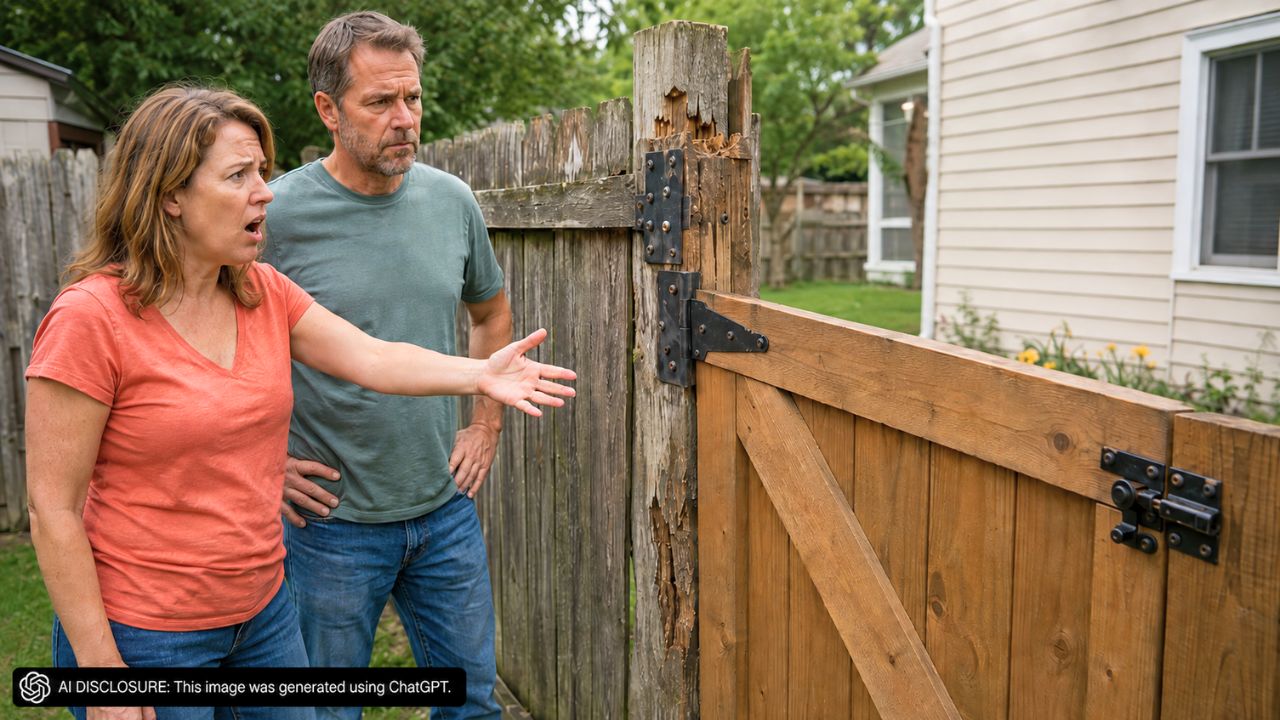
Photo credit: AI-generated image created using ChatGPT. Illustrative only.
It started as a normal day outside until the husband noticed something that didn’t belong on their side of the fence: a brand-new, heavy wood gate hanging off their fence post. Not a shared gate. Not a freestanding one. This one was drilled and bolted into an aging post that sits on their property, and it swings to give the neighbor access into his backyard.
In the original post, the homeowner explains that the fence section is already in rough shape and decades old—exactly the kind of post that can fail when you add weight and torque. What hit them hardest wasn’t just the hardware in their wood. It was the fact that nobody asked.
The gate was the latest surprise in a long pattern
This wasn’t the first time they’d felt steamrolled next door. Years earlier, the neighbor severely cut back a tall heritage tree in his yard, which the homeowner says changed the temperature inside their house, killed shade plants, and removed privacy between the yards. Branches also dropped into their yard and damaged plants.
They texted him that a heads-up would have been appreciated—“A little communication goes a long way,” they wrote—and the relationship reportedly chilled from there. Later, the neighbor asked the husband if he could move a massive water tank across the homeowners’ rotting patio roof to reach the backyard. The husband tried to work with him but ultimately said no because the structure couldn’t safely support it.
Not long after, during an emotionally raw moment when the homeowner was having a miscarriage, she looked out a window and says she saw the neighbor moving that same large water tank across her lawn, over a newly planted garden, and over a delicate sprinkler system. She yelled, her husband came out, and they told him to stop and get off their lawn.
Things thawed out—until the fence suddenly became a “shared” project
Time passed, and for a while the two households kept their distance. Eventually, after the homeowners finally had a baby following infertility struggles, they attempted to smooth things over. They invited the neighbors over for a baby shower, the neighbors brought a lasagna after the baby was born, and there were occasional chats over the fence—even if the homeowner felt the neighbor’s communication style was dismissive and paternalistic.
More recently, their fruit trees overproduced and branches leaned into the neighbor’s yard. The husband asked permission to enter and pick fruit, the neighbor agreed, and the homeowners shared fruit with them. It sounded like they were inching toward normal neighborly behavior.
Then came the gate. The husband spotted it attached to their fence post, with “lots of screws and heavy hardware” drilled into the fence on their side. The homeowner says the fence line in that area is about a foot inside their property line, and the post the neighbor used is extremely old—30 to 50 years by their estimate.
The confrontation went sideways fast
The homeowners sent the husband over first. He tried to keep it practical: the fence isn’t steady, and did the neighbor realize that post is on their property? The neighbor was dismissive and walked away.
So the homeowner approached too, trying for polite but direct: “hey how’s it going? I heard you were doing some improvements on our property!” She says she explained they just wanted a check-in before work was done on their side, especially because the fence is weak and the new gate could damage it or cause it to fail early.
That’s when it escalated. She says the neighbor started yelling and brought up the tree he cut years earlier, claiming he did it to protect their children. He also brought up letting the husband into his backyard to pick peaches—something the homeowner emphasized was done with permission and around the neighbor’s schedule.
Instead of discussing the gate, she says he walked away mid-sentence and slammed the gate in her face. She watched him slam it multiple times, which only reinforced her fear that repeated hard swings could knock the old post loose and take down more fencing with it.
When a gate is bolted to your post, the stakes aren’t just “being annoyed”
On paper, a gate can feel like a small neighbor issue. In the real world, it can become a physical liability with an expensive repair chain attached. A heavy, six-foot wood gate mounted to an aging post adds leverage every time it opens and closes, and slamming it accelerates wear in the post, fasteners, and surrounding fence rails.
The homeowners aren’t just worried about aesthetics or boundaries. They’re looking at a fence that’s already in poor condition and imagining the moment it fails—then trying to guess who pays, who gets blamed, and how ugly that argument gets if the neighbors won’t communicate.
There’s also the access piece. A gate that opens into the neighbor’s yard but is anchored on the homeowners’ property creates a weird gray zone in day-to-day life: maintenance, repairs, and even the basic question of who gets to alter the structure next. If the neighbor felt comfortable installing this without permission, what comes next—more hardware, a latch, a lock, or additional “improvements” attached to the same line?
They tried to reset the conversation through the neighbor’s partner
Stunned by being ignored and yelled at, the homeowner knocked on the neighbor’s door to talk to his partner instead. The partner came out, and eventually the neighbor returned to the yard—but the homeowner says he refused to speak to her or even look at her during the conversation.
The partner initially seemed angry too, responding with a tone that suggested the homeowners were overreacting: “so are you saying you have a problem with this?” The homeowner repeated the core point: the fence is on their property, it’s not in good shape, and they need to discuss changes before anything is attached that could damage it.
They showed where they believe the property line is and asked for a basic five-minute heads-up conversation in the future so they can collaborate. The homeowner said if the neighbor had asked first, they probably would have been fine with a gate—just not one installed unilaterally onto an old post they’ll likely be forced to replace if it fails.
The partner nodded, and the talk ended there. But the bigger problem remained: the person who installed it wouldn’t communicate, and the gate stayed put.
How readers reacted: document first, then decide how hard to push
Even without a blow-by-blow comment section included in the source material, this kind of boundary-and-damage dispute tends to bring out the same practical instincts from experienced homeowners: document everything, confirm the property line, and avoid further heated yard conversations. When fences, posts, and access points are involved, people often recommend getting the line verified rather than relying on “it’s about a foot over” memory—because once repairs start, the argument can shift from behavior to inches.
Another common theme in these disputes is to keep communication short and in writing. Not to inflame things, but to create a clear record: what was installed, where it’s installed, and what the homeowners want (usually removal or a revised installation that doesn’t load their post). The more emotional the neighbor, the more valuable calm, dated documentation becomes.
And because the fence is described as old and failing, many homeowners would be thinking about the same uncomfortable next step: if the post goes, the repair is no longer theoretical. The gate will force a decision—either reinforce and replace on their terms, or wait until a “slam it three times” moment turns into a broken section and a bigger, louder fight.
For now, the homeowners are stuck in the spot so many people dread: they want a peaceful block, but they also don’t want a heavy structure hanging off their property like a timer counting down to the next repair bill. The gate is up, the post is old, and the hardest part may not be the carpentry—it’s figuring out how to protect their fence without giving a difficult neighbor permission to treat their yard like an extension of his own.
Like Fix It Homestead’s content? Be sure to follow us.