Landowner Finds a Neighbor Parking on the Shared Driveway — Then He Claims Ownership of It Despite the Survey Results
Photo credit: AI-generated image created using ChatGPT. Illustrative only.
Shared driveways only work when everyone agrees on the invisible line that makes them “shared.” In North Chesterfield, Virginia, one homeowner thought they had that balance figured out—until a neighbor’s parking habits started creeping over the line and blocking access to their own car.
In the original post, the homeowner describes a year of peaceful routines: two houses, one shared driveway area, and each side using their own end without drama. Then the neighbor’s household changed, the vehicle count exploded, and the driveway turned into a daily game of inches—with property boundaries suddenly being “up for debate.”
The first sign was a car that didn’t fit anymore
For about a year, the arrangement sounded simple. The neighbor and his roommate parked at the end of their driveway space, while the homeowner parked two cars on their side. No one had to negotiate, no one had to measure, and nobody was waking up irritated.
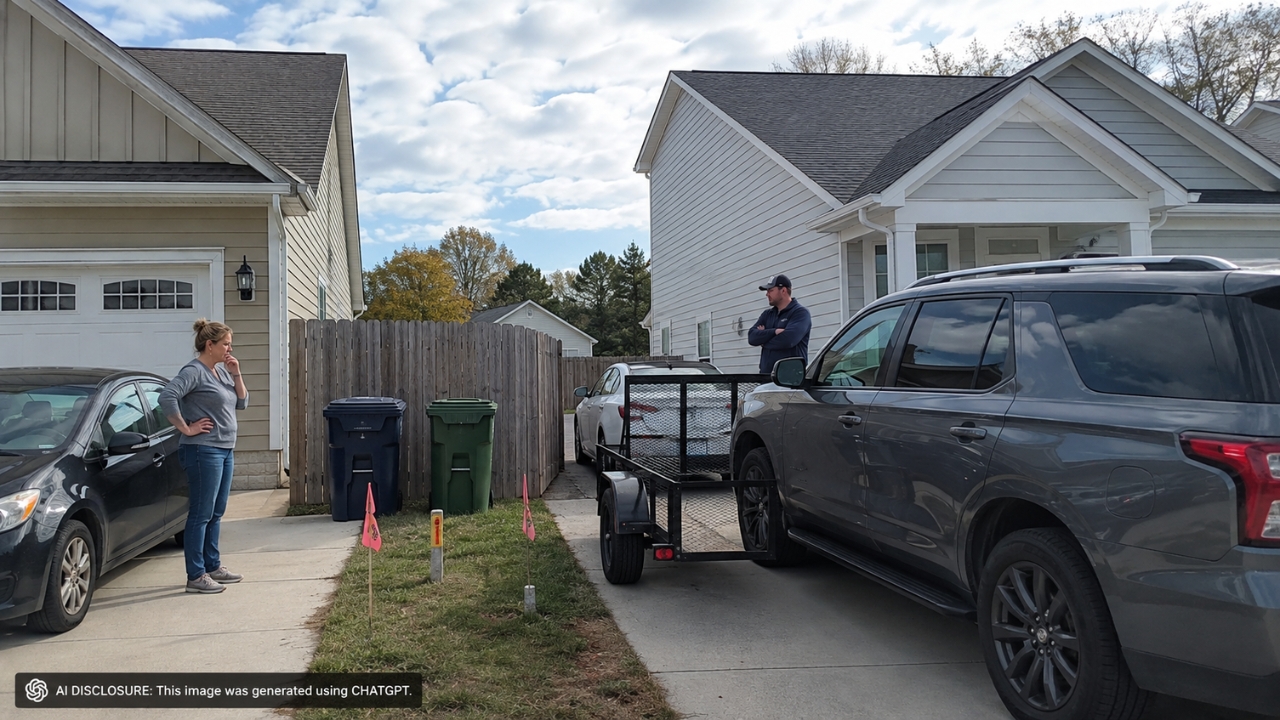
Then the neighbor got a new girlfriend, and the roommate was pushed to street parking. The girlfriend arrived with a large three-row SUV, the neighbor drove a large SUV too, and a motorcycle got added to the mix. Soon there was also a trailer on the property, and the couple still expected to “fit all of this” at the end of the driveway.
The homeowner says they woke up one morning unable to even get into their own car because half of the girlfriend’s SUV was over on their property. That’s the moment it stopped being mildly annoying and started interfering with basic access—one of those homeowner flashpoints that turns a “we can live with it” problem into a “not on my land” problem.
Trash bins and parking lines turned into a boundary fight
To discourage the creep, the homeowner started parking exactly up to the property line. They also moved their trash bins up to that line. It wasn’t fancy—just a physical reminder that the space wasn’t a free-for-all.
That, apparently, lit the fuse. The neighbor responded by parking inches away for about a week, close enough to feel like a message. Then a text arrived from the neighbor asking for an explanation of the “curious new parking situation” and requesting they “kindly move your car.”
And then came the bigger claim: the neighbor insisted the homeowner actually owned five feet past their fence, and that there had been an agreement with the previous owner to let the neighbor use that part of the driveway. In other words, the neighbor wasn’t just asking for courtesy—he was asserting a version of the property line that benefited his new parking reality.
The survey said one thing, the screenshot said another
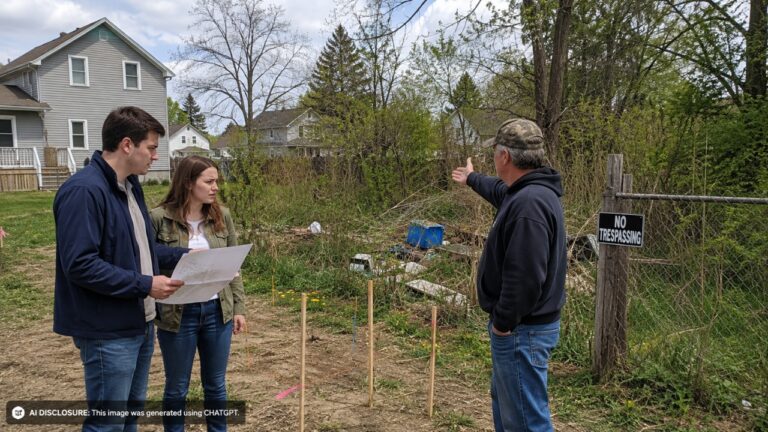
The homeowner did what most people do when a property line suddenly becomes a debate: they went digging for paperwork. They pulled out their survey and checked a measurement from the corner of their house to the property line. According to them, it lined up exactly with the existing fence.
Even better, the old survey flags were still visible and matched what their documents showed. They told the neighbor the property line was clear and backed by a licensed surveyor’s stamp and verifiable measurements.
The neighbor came back with a screenshot of a parcel viewer map that he said proved his point. But the homeowner noticed the same thing many homeowners eventually learn the hard way: these maps often come with disclaimers that the lines are only for illustration and that a real survey is what counts. In this case, the homeowner notes the map was so off that it showed part of another neighbor’s house sitting on their property.
When the homeowner sent a picture of the stamped survey, the neighbor gave a thumbs-up. It looked, for a moment, like the message landed.
De-escalation didn’t slow the encroachment
Instead of hardening their stance immediately, the homeowner tried to cool things down. After hearing nothing further, they moved their car a couple feet farther away from the line to de-escalate and make daily life easier.
The next morning, they woke up to the trailer moved two feet onto their property and the neighbor’s SUV halfway over the line again. The “thumbs up” didn’t translate into changed behavior; if anything, the parking got bolder.
That’s what makes driveway disputes so exhausting. It’s not one big blowup—it’s a drip of small boundary pushes that force the other side to either tolerate it or escalate. And here, the homeowner says the neighbor didn’t just keep parking over the line; he did it after being shown the survey.
Adding another layer of stress, the homeowner explains the neighbor is a police officer in the next town over. That fact doesn’t change where a property line sits, but it absolutely changes how comfortable someone feels about calling law enforcement, taking photos, or turning a driveway argument into an official complaint.
People focused on proof, not shouting matches
The homeowner’s question is straightforward: “What do we do?” They floated a few ideas, like landscaping boulders along the line or paving their side, but they didn’t want to spend money solving something they felt shouldn’t be happening in the first place. They also didn’t want to involve other police unless it became unavoidable.
The story points to the same practical pressure most homeowners feel in these disputes: you can be “right” on paper and still end up spending time, money, and energy just to make your neighbor stop using your property like overflow parking.
In the source post, the homeowner already started building a paper trail the way cautious neighbors tend to: referencing a stamped survey, verifying measurements against the house, and keeping communication in writing through text. Even the detail about the parcel viewer disclaimer matters, because it shows they’re not just arguing feelings—they’re arguing the quality of evidence.
Their immediate next steps were modest: move their car back up to the line once the neighbors leave for the day, and figure out what to do about a trailer sitting on their land. That trailer is the kind of thing that can become a longer-term headache, because it’s not just “in the way” for an hour—it can sit, sink, leak fluids, or leave ruts, and it normalizes the idea that the space is fair game.
When “shared driveway” stops feeling shared
At its core, this is a story about how quickly a workable neighbor routine can collapse when one household’s needs change. Two SUVs, a motorcycle, and a trailer don’t fit in the same footprint that used to handle two cars without conflict. Instead of adjusting expectations, the neighbor tried to adjust the boundary.
The homeowner isn’t describing a theoretical disagreement. They’re describing waking up blocked in, watching a trailer shift onto their property, and realizing that being patient may have been interpreted as permission. Now they’re stuck trying to protect their access and their land without turning the front yard into a permanent standoff.
For now, the driveway is still there, the survey flags are still visible, and the parking problem isn’t going away on its own. The next move—whether it’s more documentation, a physical barrier, or a firmer demand to keep vehicles off the line—will likely determine whether this stays a cold parking war or turns into something that costs real money to untangle.
Like Fix It Homestead’s content? Be sure to follow us.