New Homeowner of Six Months Finds a Survey Disproving the Neighbor’s Property Line Story — Then He Still Blames a County Right-of-Way Move From 2010
Photo credit: AI-generated image created using ChatGPT. Illustrative only.
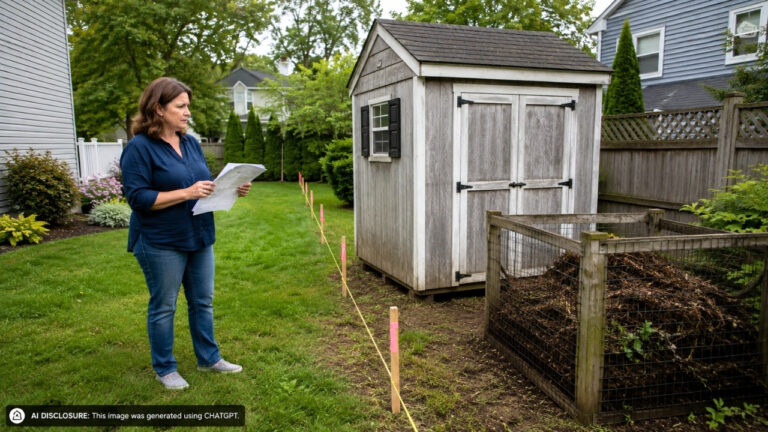
Six months into owning his first house, a new homeowner thought he was doing the responsible, normal thing: order a survey so he could build a fence without starting a war. Instead, the survey cracked open a neighbor dispute that sounds like it’s been simmering through multiple owners—one of those “everybody’s heard the story” property-line myths that doesn’t die until somebody pays for real measurements.
In the original post, the homeowner explains that the neighbor had already been telling him the boundary “was moved awhile back,” supposedly after county right-of-way work in 2010. But when the new survey came in, it showed something much simpler and much more explosive: the boundary hadn’t moved at all.
A fence plan turned into a property line showdown
The homeowner’s goal was straightforward—confirm the property lines, then put up a fence. That’s when the neighbor’s version of history came out: he claimed the county moved the line back due to right-of-way work on his property in 2010.
It’s the kind of claim that can make a new owner hesitate. County work, right-of-way, old deeds—those words carry weight, especially when you’re still figuring out where the water shutoff is and which light switch controls what.
But the homeowner didn’t want to guess. He got the survey done last week, and that’s where the neighbor’s story started falling apart.
The paperwork didn’t match the neighbor’s “county gave it to me” story
According to the homeowner, the right-of-way deed the neighbor pointed to doesn’t explicitly say the property line moved. Even more telling, the county didn’t show any agreement with previous owners on the homeowner’s lot.
Then came the survey result: the boundary has never moved in 70 years. That detail matters because it doesn’t just challenge the neighbor’s timeline—it wipes out the entire premise that the line was adjusted in 2010.
The homeowner’s frustration wasn’t just about one awkward conversation. He believes the neighbor has “essentially lied to every owner” by saying the land was his because “he said the county gave it to him.” That’s not a minor misunderstanding. That’s a pattern.
Railroad ties, “helpful” offers, and the feeling this could get ugly
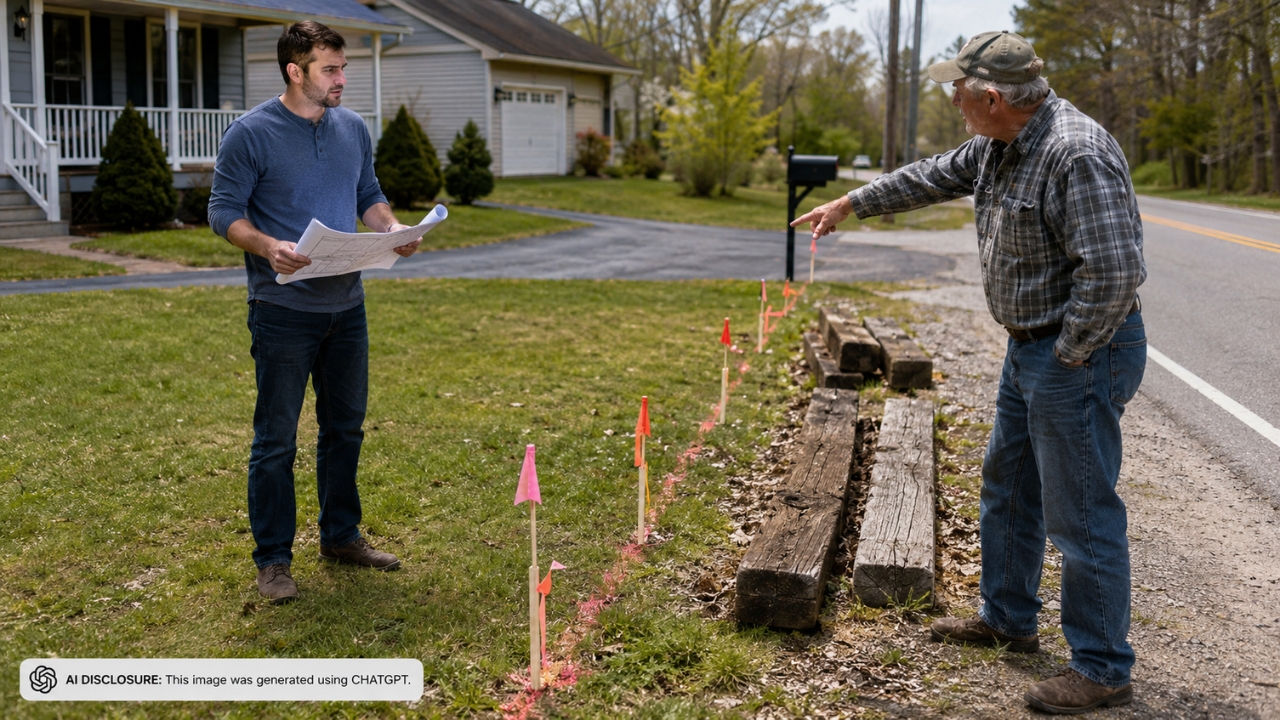
Property disputes rarely stay theoretical for long. In this case, the neighbor had placed railroad ties, and after the survey came back, he asked the homeowner if he wanted him to move them.
The homeowner read that as an admission that the neighbor knew he’d been caught. The offer also raised the stakes: once someone starts moving objects that have been sitting on contested ground, the argument stops being about stories and starts being about actions.
At the same time, the neighbor told him he was going to sue the county or city—but “not me.” The homeowner’s reaction was immediate skepticism: “yea right this will drag me in no matter what.” Even if the neighbor says he won’t target the homeowner, the homeowner is the person currently holding the deed, and any attempt to “fix” a boundary on paper can quickly become a fight over the homeowner’s land.
The quiet panic: title insurance, adverse claims, and who has to defend what
Once the survey says one thing and a neighbor says another, it becomes more than a neighborhood squabble. The homeowner started thinking in terms of legal exposure—specifically an “adverse claim,” the kind of thing that can show up when a neighbor argues they’ve used or controlled a piece of land long enough that it should effectively become theirs.
He called his real estate agent to ask for referrals to real estate lawyers, looking ahead to the possibility that he may have to defend his boundary even if he never wanted a courtroom fight. He also looked at his title insurance and noticed it “looks to have exemptions for this,” which only added to the stress. New homeowners often assume title insurance is a blanket shield, but exemptions can make it feel like you paid for peace of mind and still ended up on your own when the problem actually arrives.
And looming over everything is the fence. Fences are supposed to be the final step—mark the line, build, move on. But a fence can also be the trigger that forces the dispute into the open, because once posts go in the ground, everybody suddenly has an opinion about “where it’s always been.”
What people pushed: document first, don’t negotiate your boundary in the yard
The homeowner asked what the next course of action should be, and the tone of the question makes it clear he’s bracing for escalation. When a neighbor has been telling the same story for years, a clean survey doesn’t always end it—it can just be the moment the neighbor decides to double down.
In disputes like this, the practical reaction tends to be boring but effective: keep everything in writing, keep copies of the survey, and avoid getting pulled into casual “let’s just agree” conversations that accidentally hand away leverage. A friendly chat over the driveway can turn into “you said I could” faster than most people think, especially when emotions rise.
There’s also a reason new homeowners are often urged to route these conversations through professionals once the stakes are real. When someone is already talking about lawsuits—against the county, the city, whoever—words said in good faith can get repackaged later in ways you never intended.
A survey is proof, but living next to the dispute is the hard part
The homeowner now has a survey that backs him up and a neighbor who appears to have built his own narrative for more than a decade. Even if the neighbor backs off, the homeowner still has to live next door to the person who tried to claim part of his yard.
And if the neighbor doesn’t back off, the homeowner is staring at the classic homeowner nightmare: paying to protect something you already own, simply because someone else won’t accept “no.” The fence that was supposed to be a weekend project can become a long-running stressor—phone calls, paperwork, legal consultations, and the constant fear that the next knock on the door is another argument about where the line “really” is.
For now, the homeowner is doing what most people wish they’d done sooner in property fights: getting clear measurements and lining up legal guidance before the dispute grows teeth. The survey settled the question of where the boundary sits. The question left hanging is whether the neighbor will accept that, or try to turn an old right-of-way story into a brand-new problem.
Like Fix It Homestead’s content? Be sure to follow us.