Homeowner Caps an Unpermitted Drainage Pipe Washing Out the Land — Then a House Down the Row Starts Flooding Instead
Photo credit: AI-generated image created using ChatGPT. Illustrative only.
It started like one of those “welcome to homeownership” surprises you only find once you’ve put in sweat equity. A Georgia property owner clearing a heavily wooded lot noticed sections of soil looked chewed up and washed away, like water had been cutting through the land for years.
Then they found the culprit: a drainage pipe end hidden under rocks and bushes, sitting fully on their property. No obvious permission, no visible setup from the road—just a buried outlet pushing someone else’s rainwater onto their land. The homeowner laid out the details in the original post, and what happened next turned a simple “cap it and fix the washout” into a neighbor domino effect.
A hidden pipe, a washed-out lot, and a brand-new owner
The homeowner said they’d bought the property less than a year earlier. It had been heavily wooded, so the drainage setup wasn’t visible until they started clearing and grading. Once the trees and brush were coming out, the damage was hard to ignore—water had been “severely washing away” the land.
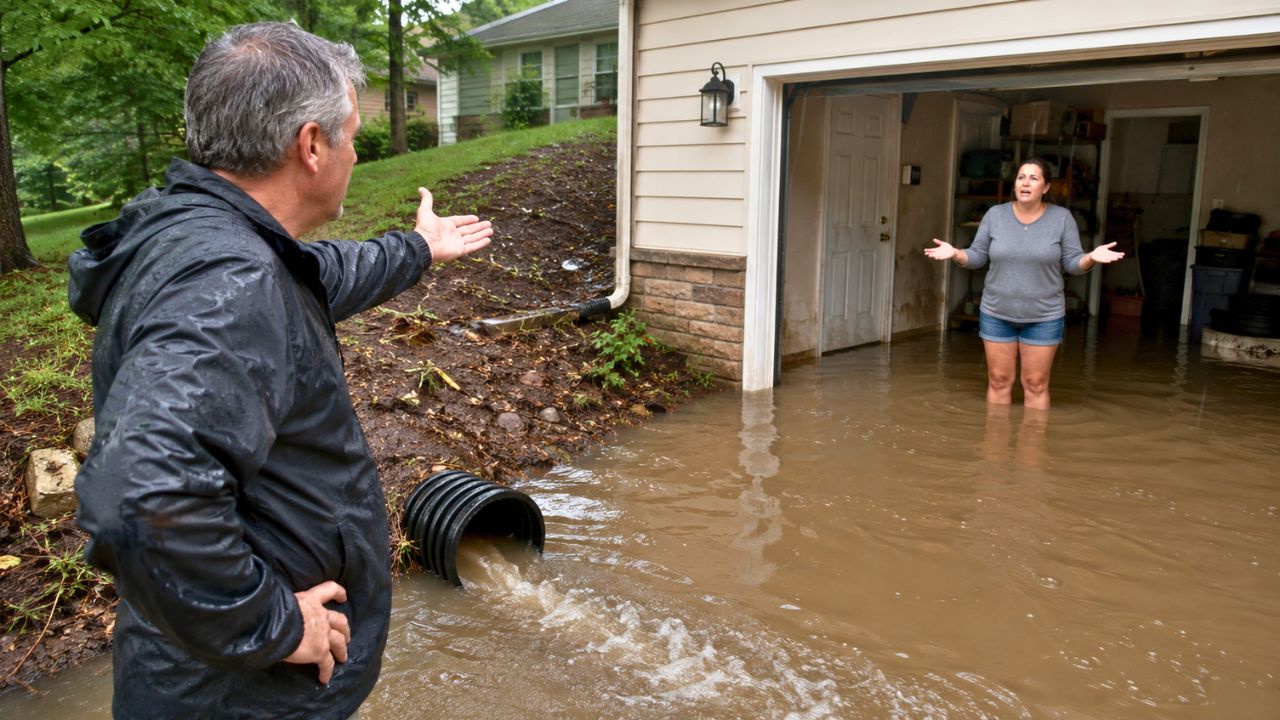
Digging a little deeper, they found an outlet pipe camouflaged with rocks and bushes. Those rocks and bushes were on their land, so they removed them and got a good look at what was going on. According to the post, the pipe was draining the neighbor’s rainwater directly onto the homeowner’s property.
This wasn’t a case of a shared swale or a vague “water runs downhill” complaint. The homeowner said they checked paperwork: deed, plat map, and even had a survey done. They also said there were no easements or access agreements for the pipe.
They capped the line to stop the erosion
With land actively washing out, the homeowner made a straightforward call. While clearing and grading to repair the damaged areas, they capped the pipe and covered it with dirt as part of leveling out the lot.
From a practical perspective, it’s easy to see why. If you discover a discharge pipe dumping water onto your property—and it’s tearing up your soil—your first instinct is to stop the flow before it undermines more ground. Erosion doesn’t wait for a polite conversation.
The homeowner also framed it as more than a preference. They said it was illegal where they live for a neighbor to divert rainwater onto another neighbor’s land. And they weren’t dealing with a tiny dribble; the washout suggested this was a sustained discharge during storms.
Then the water didn’t disappear—it just shifted the damage
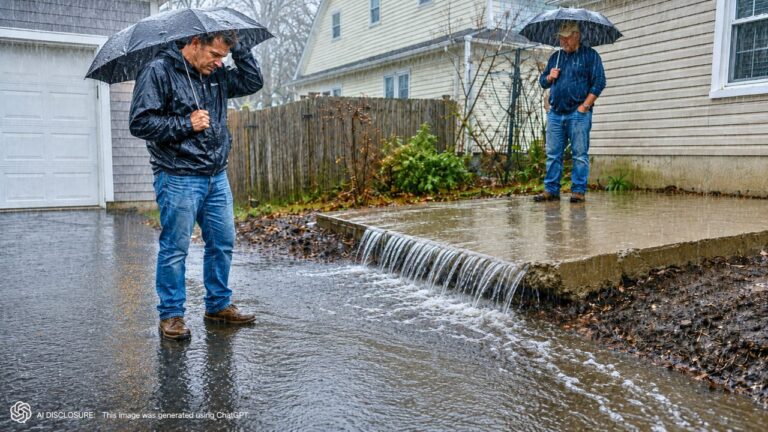
After the cap went on, the homeowner noticed something that made the whole thing feel riskier: a different yard started holding a lot of standing water. Not their yard this time, but the yard next to the neighbor’s house—down the row, so to speak.
That’s when the story got messy. The homeowner said their neighbor had been diverting water through two pipes: one that emptied into the homeowner’s yard (now capped), and another pipe that diverted rainwater toward the neighbor on the other side.
In other words, the homeowner didn’t “create” the second discharge—at least as described—but by stopping one route, they may have forced more water to move through the remaining route. The result: the neighbor’s neighbor ended up with flooding and standing water.
And hanging over all of it was an obvious question: if the homeowner blocked a pipe that wasn’t permitted or authorized, but that action coincided with flooding elsewhere, could they end up being blamed anyway?
The strangest part: there was already a drainage ditch
One detail in the homeowner’s description makes the whole setup feel even more avoidable. They said there’s a “huge drainage ditch” that runs across their land and behind the neighbor’s house—something that sounds like it was intended to handle stormwater in the area.
From the homeowner’s perspective, the neighbor should have directed their pipes toward that ditch rather than into adjacent yards. They said they had no idea why that wasn’t done in the first place.
This is where neighborhood drainage disputes get so heated. People don’t just argue about water—they argue about intent. If there’s an obvious place for water to go, and someone instead runs pipes into a neighbor’s property line, it looks less like “old yard drainage” and more like a deliberate workaround.
The homeowner also added a wrinkle that would make anyone nervous: they spoke to the previous owners, who reportedly never gave permission for the pipe and didn’t even know it was there. That suggests the pipe may have been installed quietly, or a long time ago, without much documentation.
Proof, paperwork, and the fear of being the “bad guy”
Even without a formal complaint from the flooded neighbor, the homeowner could see where this was heading. When someone’s yard turns into a shallow pond, they don’t usually track down the original installer—they look for the last thing that changed.
In the homeowner’s telling, they did a lot of the “grown-up” steps people wish they had done before a dispute starts: checking the deed, checking the plat, confirming no easements, and getting a survey. Those details matter because drainage fights often turn into property-line fights, and property-line fights turn into “who has rights to what” arguments fast.
They were also clear that the pipe’s end was “very much” on their property. It wasn’t sitting on a shared boundary or in a utility corridor they didn’t understand. It was their land, and the discharge was damaging it.
Still, the fear here isn’t just legal—it’s social. A neighbor down the line seeing a flooded yard may not care about your survey. They care about their soggy lawn, pooling water, and what that might mean for mosquitoes, basement seepage, and landscaping damage.
How readers reacted: document everything and don’t own their drainage
The homeowner’s core question—“Am I liable?”—is the kind of thing that makes people urge caution even when the homeowner feels morally in the clear. Responses in these kinds of disputes tend to focus less on who’s right in a conversational sense and more on what can be proven.
Common practical themes people push in drainage conflicts include: keep copies of the survey and plat map handy, take photos of the pipe as found (especially if it was concealed), and document the erosion damage that motivated the cap in the first place. If the pipe was hidden and the damage was severe, that context matters.
There’s also the reality that stormwater systems rarely fail in isolation. Once you change one outlet, the system pressure shifts. That doesn’t mean you “caused” the problem, but it does mean you may get dragged into a dispute simply because your action was the most recent and easiest to point at.
And hovering over everything is the unglamorous truth of rural and suburban drainage: people will spend years quietly routing water away from their own foundation, even if it harms someone else’s yard, right up until a new owner comes in and refuses to absorb the consequences.
The homeowner’s lot was being carved up by someone else’s runoff. They stopped it the way many people would—cap, backfill, regrade. But water doesn’t negotiate. When one illegal shortcut gets blocked, the next one takes the hit, and suddenly a fight that used to be invisible is sitting in plain sight as standing water in somebody else’s yard.
Like Fix It Homestead’s content? Be sure to follow us.