Homeowner Finds Town Officials Confirming a Neighbor’s Pool Doesn’t Belong on the Property — Then Watches It Take Four Warning Letters Before Fines Start
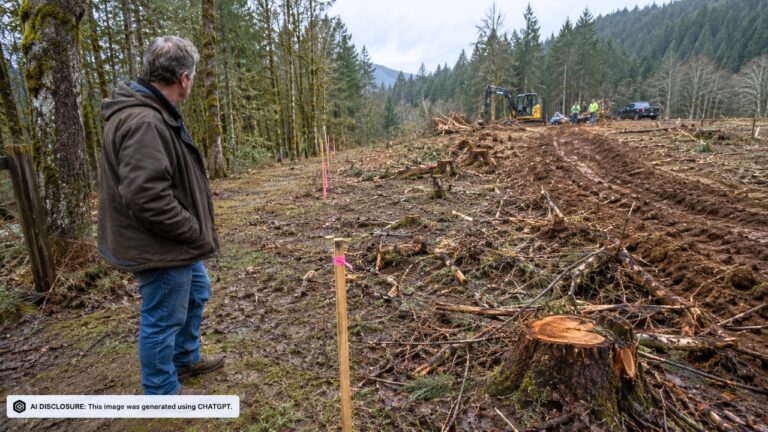
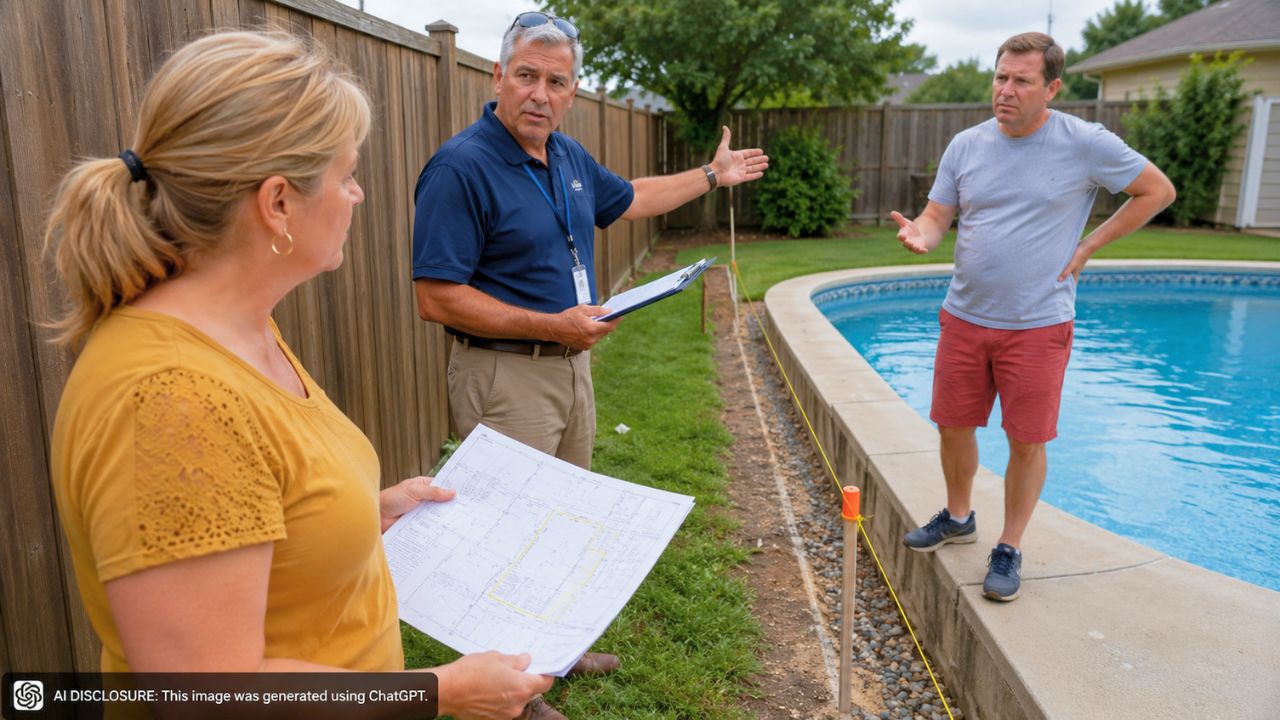
Photo credit: AI-generated image created using ChatGPT. Illustrative only.
It starts the way a lot of property-line headaches do: you’re trying to improve your own backyard, not pick a fight. A homeowner said they watched new neighbors move in, build a “giant pool,” and carry on like everything was normal—until a survey for a new fence revealed the pool and deck were partly on the homeowner’s land.
In the original post, the homeowner laid out a timeline that will feel familiar to anyone who’s ever dealt with a boundary dispute: months of conversations, piles of proof, money spent on an attorney, and then the moment where you realize you can’t “nice” your way into protecting your property.
The first sign was easy to brush off
The homeowner said they bought their house first, and the current neighbors arrived two years later after the previous neighbor sold. When the new folks started building a big pool in their backyard, the homeowner didn’t intervene. They assumed the neighbors had done their homework on property lines and permits.
That’s the trap. Big backyard projects look so official—contractors, materials, visible progress—that it’s easy to think the boring details (setbacks, easements, lot lines) must already be handled. The homeowner let it go until they had their own project to plan.
A fence project turned into a survey surprise
Last summer, the homeowner decided to install a fence and ordered a survey. That’s when the problem became concrete: the survey determined the neighbors’ pool/deck encroached onto the homeowner’s property.
Suddenly this wasn’t an abstract worry or a “maybe.” A pool isn’t like a planter you can scoot over a foot. It’s heavy, permanent, and tied into decking and yard grading. And once a structure is sitting on your land, you’re not just losing space—you’re inheriting risk, liability questions, and a mess that can complicate future sales.
The homeowner said they brought “all the evidence” to the neighbors and tried to handle it directly, person-to-person, without blowing up the relationship. It didn’t stay simple.
They offered a compromise—then paid for it anyway
Instead of demanding immediate removal, the homeowner proposed what sounds like a practical compromise: the pool could stay where it was and the homeowner would build the fence around it. The catch was that both parties would sign an agreement acknowledging the land belonged to the homeowner, and that if something changed down the road—like one of the houses needing to be sold—removal could be required.
To make that happen, the homeowner hired an attorney and spent “north of $1,000” drafting the agreement. Then came the slow bleed: seven or eight months of asking the neighbors to review and sign.
When the neighbors finally responded, they refused to sign. They also said they had no interest in paying any of the attorney’s fees. So now the homeowner was out the legal costs and, on top of that, had to change fence plans again because the original “we’ll fence around it” approach depended on written permission and documentation.
That’s the part that burns: trying to be flexible, spending money to formalize it correctly, and still ending up with no protection. A handshake doesn’t fix an encroachment—especially when you’re thinking about what happens if either property changes hands in the future.
City hall agreed it shouldn’t be there—but the clock still drags
After about a year of dealing with it, the homeowner said they stopped trying to negotiate and complained to the city. Their question was blunt: how could a permit be issued for something that was installed on someone else’s property?
Then came an update that validated the survey and the homeowner’s frustration. The town came out, looked at the issue, and “recognized that the pool doesn’t belong where it is.” According to the homeowner, the town planned to send a letter stating the pool needed to be removed.
But enforcement wasn’t immediate. The homeowner said the town’s process would take four warning letters before fines start. Only after the fourth letter—if the pool hasn’t been moved—will the town begin issuing fines that continue until the pool is moved or removed.
So yes, the homeowner got official confirmation. But they also got a waiting game. Four letters can mean weeks or months where the pool still sits on the wrong side of the line, the homeowner’s fence plans remain stalled, and every backyard moment carries that low-grade anger of “this shouldn’t be my problem.”
What people zeroed in on: paper trails and permits
The homeowner’s post wasn’t just a vent—it was also a “WWYD?” That question tends to pull homeowners into two camps: settle it privately, or involve enforcement before you get boxed in.
This story makes the “paper trail” point loud and clear without needing extra commentary. The homeowner had a survey. They documented the boundary. They attempted a written agreement drafted by an attorney. And when the neighbor refused to sign, the homeowner pivoted to the city—because at that point, informal cooperation wasn’t protecting anything.
The other thing people fixate on in disputes like this is the permit angle, because it feels impossible that something so large could be approved while crossing a boundary. The homeowner asked the same thing: how could the city have issued a permit for a pool that ended up on someone else’s land?
Even when an inspector or town official agrees it’s wrong, the enforcement ladder can be slow. Warnings first, fines later. For a homeowner watching the calendar, that can feel like being told, “You’re right, but you still have to live with it for a while.”
A backyard pool sounds fun—until it’s sitting in your future
Encroachments don’t just steal a strip of grass. They can trap you in weird practical limbo. The homeowner is dealing with a fence project that can’t be cleanly finished, money already spent on legal drafting, and the uneasy reality that a neighbor’s major structure is physically occupying land the homeowner is responsible for.
And the clock matters. If the town is sending letters and then waiting until letter four to fine, the neighbors have time to stall, argue, or gamble that the homeowner will get tired and back down. Meanwhile, the homeowner is the one trying to maintain momentum—because the longer something is in place, the more “normal” it starts to feel, even when it’s clearly not supposed to be there.
The homeowner’s last line captures the exhaustion that shows up in so many boundary disputes: “How much more money can I spend trying to make them happy… where it should be the other way around.” They tried compromise first. Now it’s in the town’s hands, moving forward one warning letter at a time.
Like Fix It Homestead’s content? Be sure to follow us.