Homeowner Finds a Neighbor’s RV Parked in a Paved Gap Between Their Driveways for Years — Then Learns He Needs to Drive Across the Property Every Time He Moves It
Photo credit: AI-generated image created using ChatGPT. Illustrative only.
Four years into homeownership, the “shared driveway” next door still feels like a leftover decision someone else made—and never had to live with. One side of the front yard is basically a giant slab of concrete, and the neighbor treats it like part of his RV storage routine.
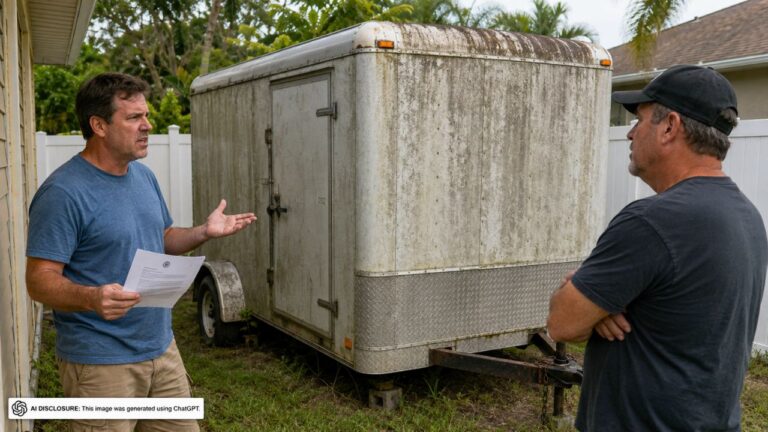
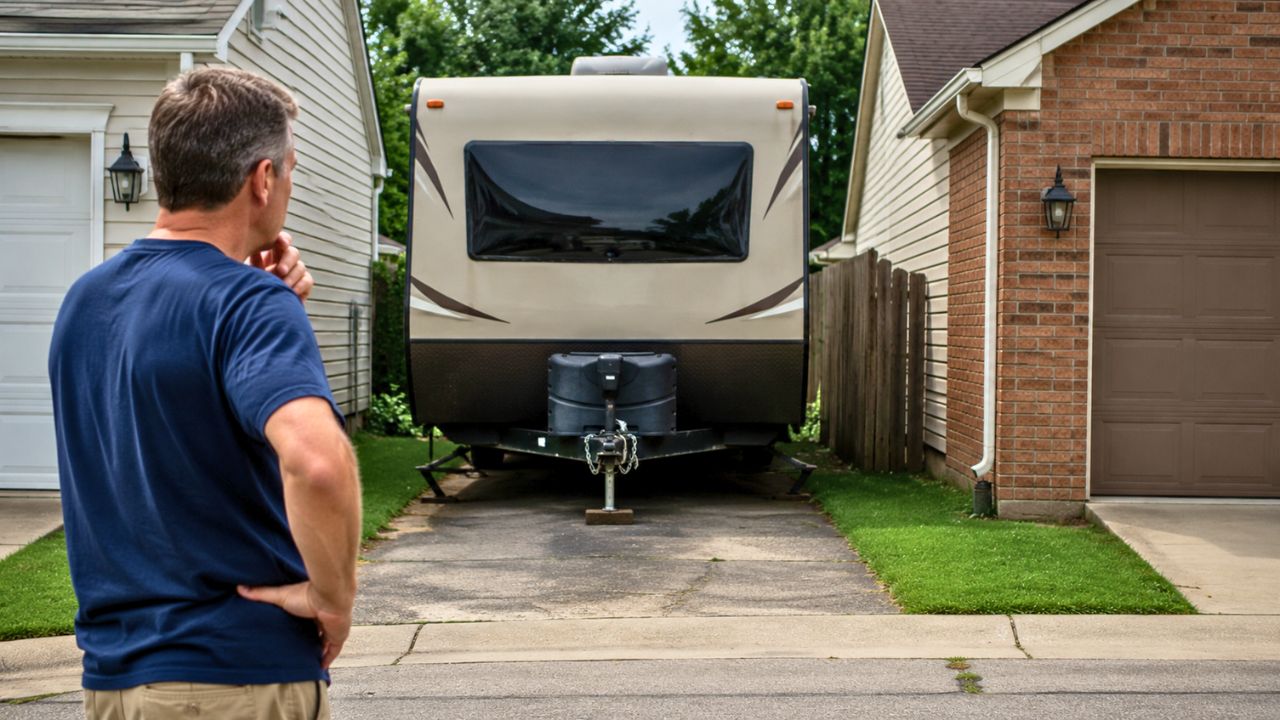
In the original post, the homeowner explains that the neighbor has kept a large RV in his side yard since before they moved in. The catch: the only workable way to get that RV in and out requires driving across the homeowner’s property every single time.
A “mega driveway” built for someone else’s RV
The layout is oddly specific, which is part of why it has been so hard to ignore. At some point, a previous owner and the neighbor paved the space between the two driveways, creating one big connected stretch of concrete.
Down the middle sits a curb that’s on the neighbor’s side but marks the property line. Functionally, it means the neighbor can’t just pull straight out of his side yard like a normal driveway exit. To angle the RV out, he has to bump over that curb and swing into the homeowner’s side—because the fit is so tight there’s “no way” to do it without crossing the line.
It’s not a quick maneuver, either. The homeowner says the neighbor spends about 30 minutes going forward and backward to get the angle right, crossing the curb again and again—at least a dozen times each move—with an F250 and the RV’s weight following behind.
The first boundary problem wasn’t the concrete—it was the asking
The neighbor didn’t start by requesting permission when the new homeowners moved in. He simply told them this is what he does, and claimed he had an agreement with a previous owner.
At first, the homeowner went along with it. New house, new street, and the instinct to keep things cordial can be strong—especially if someone next door has been there since the 1980s and seems settled in.
But the favor isn’t theoretical. Every time the neighbor wants to move the RV, he comes over and asks the homeowner to move their car so he has enough room to swing the truck and trailer out.
The homeowner says their car is parked on their original driveway, not the added extension—yet the neighbor still needs to drive 10 to 15 feet into the homeowner’s driveway to make it work. It turns the homeowner’s parking spot into a temporary loading zone for someone else’s storage plan.
Working from home turned it into a daily-life problem
If this happened twice a year, it might still be annoying but manageable. The bigger problem is how often the neighbor wants to use the RV, and how unpredictable the requests feel when one household is retired and the other is trying to work.
The homeowner works from home and describes the neighbor spamming the doorbell while they were on calls because he wanted the car moved. That kind of interruption hits differently than a casual wave from the driveway. It puts pressure on the homeowner to drop what they’re doing, relocate their vehicle, and make their own property available on demand.
It also creates a small but real safety and liability tension. When a heavy truck and RV are repeatedly maneuvering close to a house and vehicle, the “what if something gets hit” thought doesn’t stay hypothetical for long.
The cracking concrete made it feel less like a favor
Politeness is one thing; watching your property wear out from someone else’s equipment is another. The homeowner reports noticeable cracking in the concrete on their side, right where the neighbor’s truck and RV repeatedly cross over the curb.
They believe the damage is directly connected to the weight and repetition of an F250 plus the RV rolling over the same spot, year after year. And it’s not trending in a good direction—the homeowner says it’s getting worse each year they’ve lived there.
That’s where the “who pays” question starts hovering in the background. Concrete replacement isn’t cheap, and a driveway that’s actively breaking can turn into a bigger repair if water gets in, freezes, shifts, or undermines the slab.
At the same time, the homeowner and their wife simply don’t like the look of the mega driveway. They garden, they want green space back, and they’ve talked about removing their side of the concrete entirely—planting more garden and even putting in a tree. Those plans don’t coexist with a neighbor needing to drive across that area whenever he wants to take the RV out.
The most stressful part: not knowing what rights the neighbor has
The neighbor’s confidence seems to rest on the idea of a past agreement. But the homeowner says they don’t know of any easement, and they didn’t sign anything allowing access across their property.
That uncertainty is its own kind of pressure. If the neighbor has been using that route for years—long before the current owners bought the house—does that create some sort of continuing right? Or is it just a handshake deal that ended when the house changed hands?
It’s the kind of question that can hang over every interaction. If the homeowner puts up a barrier, removes concrete, or plants a tree, are they simply reclaiming their yard—or stepping into a dispute they didn’t realize they inherited with the deed?
The homeowner finally voiced their concerns the last time the neighbor asked them to move their car, telling him they didn’t see the current arrangement continuing. It wasn’t a screaming match, but it was a clear sign the free access era is ending.
Reactions leaned toward documentation before drama
Even with the story told as a vent, the practical worries come through loud and clear: property boundaries, repeated wear and tear, and a neighbor who treats access like a standing appointment.
In situations like this, homeowners often point to the same early steps—before anyone jackhammers concrete or plants a “please hit my new tree” sapling. Get the property line nailed down. Look for recorded easements. Keep communication in writing when possible. And if damage is spreading, document it with photos so the timeline doesn’t depend on memory.
The emotional core is simpler, though: it’s hard to stay neighborly when you’re being asked to rearrange your day—and your driveway—so someone else can use what amounts to a private RV exit ramp.
For now, the homeowner is stuck in the space between “we want to be decent neighbors” and “this is our property and it’s cracking.” And every time that RV needs to come out, the same question rolls back in with it: how long can a workaround last before it becomes a permanent entitlement?
Like Fix It Homestead’s content? Be sure to follow us.