Madison Homeowner Warns a New Neighbor Not to Build on the Property Line — Then Watches Their Lawn Crew Drive and Spray Chemicals on the Encroaching Yard Anyway
Photo credit: AI-generated image created using ChatGPT. Illustrative only.
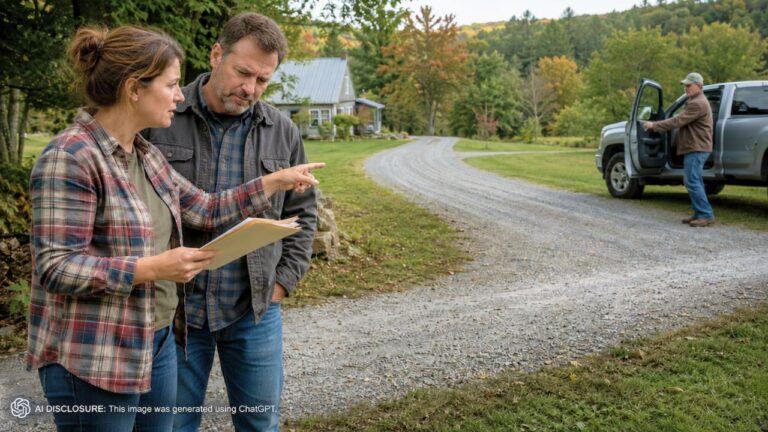
In Madison, Wisconsin, one homeowner thought they were doing the courteous thing: walking over to a brand-new neighbor and giving a simple heads-up not to build right on the property line. The goal was to avoid the most common suburban nightmare—someone “accidentally” placing a fence a few feet into the wrong yard.
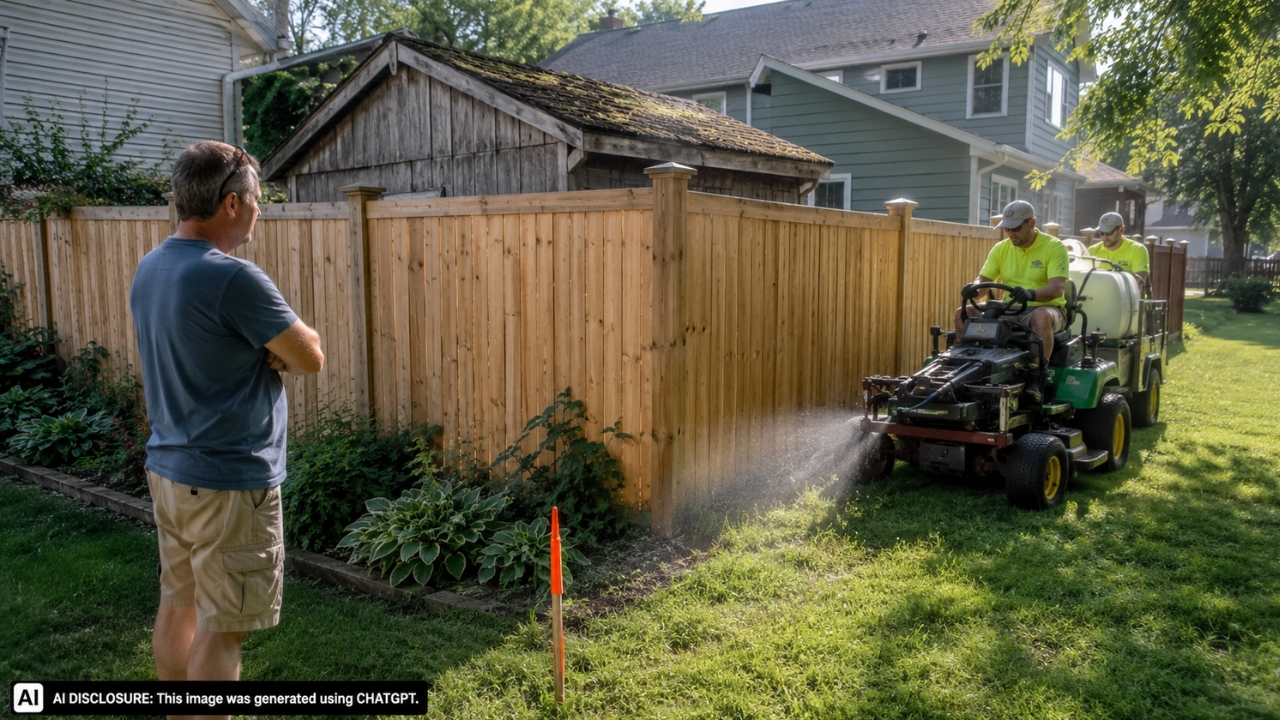
But the warning didn’t prevent anything. In the original post, the homeowner says a new fence still went up in a way that encroaches onto their property. And once the fence was there, the problem didn’t stay quiet. The neighbor’s lawn-care crew started driving on and spraying chemicals on the slice of yard that wasn’t even theirs to treat.
The heads-up that didn’t land
The homeowner describes going “out of my way” to communicate early, before any posts were set and before the property line could become a permanent argument. It’s the kind of neighborly move people make to keep things friendly: mention the boundary, ask for caution, and hope everyone stays on the same page.
Instead, the fence ended up crossing over. Now it’s not just a matter of pride or principle—it’s physical occupation of land the homeowner believes is theirs, with day-to-day consequences that come with a maintained yard and hired crews.
That’s when the conflict moved from awkward to intrusive. Once a crew is driving equipment over your grass and applying chemicals, it stops feeling like a paperwork issue. It starts feeling like somebody is using your property as part of their service contract.
When the lawn crew started treating the wrong yard
The lawn care piece is what makes this feel especially tense. A fence encroachment can sit there silently for weeks while people figure out surveys and boundaries. But tire tracks and chemical spraying show up immediately, and they don’t ask permission.
The homeowner says the lawn care people are now “driving on and spraying my yard.” That’s not just a boundary violation—it’s potential damage, potential disputes about what was applied, and a lot of unanswered questions if anything goes wrong later.
If you’ve ever watched a crew move fast to knock out a route, you know how it goes: they’re following what they’ve been told is “the yard,” and the fence line becomes their guide. Once a fence is in the wrong spot, it can turn into a daily reenactment of the same problem—mowing patterns, application lines, ruts near the corner, and that constant feeling that you’re being pushed back one week at a time.
The neighbor wouldn’t respond—and an older shed made it messier
The homeowner says they contacted the neighbor to address the fence and ask for it to be moved, but got no response. That silence is its own kind of escalation. It forces the issue away from casual conversation and toward documentation and outside enforcement.
Then there’s the detail that would make any homeowner’s stomach drop: there is also a shed that sits more than three feet onto the homeowner’s property. According to the post, it was there due to “an agreement with previous owners.”
That kind of handshake history is exactly how property-line problems become long-term, expensive headaches. Whatever the prior agreement was, the current homeowner now wants the fence and the shed removed. And that raises the immediate question they asked: who do you contact first when a physical structure is sitting over your line?
Commenters pushed the same theme: treat it like proof, not a feud
The post itself is focused on getting a structure removed, not trading insults. And in property-line disputes, the practical voices tend to surface fast: document everything, avoid guessing, and let the right office handle the part you can’t solve with a conversation.
Even without seeing a full thread of replies in the pasted material, the direction is familiar to anyone who has dealt with boundary disputes: don’t pull things down impulsively, don’t assume a verbal agreement transfers neatly to new owners, and don’t rely on “everyone knows where the line is” when fences and sheds are involved.
Once someone has built something, the order of operations matters. People who have been through it tend to focus on the basics: confirm the line, keep communication in writing, and involve the proper local channels if the neighbor won’t engage.
Zoning became the turning point
The update is where the story finally gets teeth. The homeowner contacted zoning, and zoning confirmed something important: no permits had been issued for the shed.
Even more pointed, the homeowner says the shed was “against the rules at the time,” putting it in violation. That changes the feel of the entire standoff. It’s no longer just a disagreement between two households about where something “should” go. It becomes a question of compliance and enforcement.
According to the homeowner, zoning indicated they would proceed on the complaint. Building and zoning inspectors would come out to confirm, issue a fine, and give 30 days to remove it. The homeowner’s tone in the update is cautious but hopeful—“Fingers crossed”—because anyone who has watched a neighbor dispute drag on knows that even promising steps can take time to turn into actual removal.
The part that keeps homeowners up at night
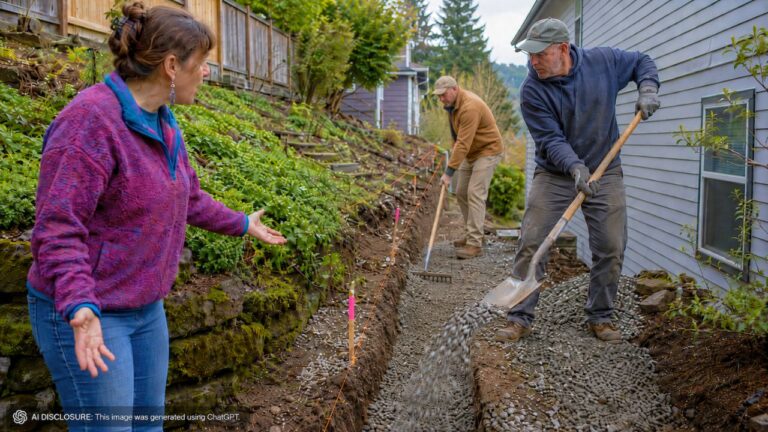
Fences and sheds are deceptively simple structures. They feel small—some posts, a few panels, a prefabricated building. But once they’re over the line, they can create a chain of daily consequences: landscaping crews treating your grass like a work zone, ongoing chemical applications you didn’t authorize, and a new normal where the physical boundary is wrong and everyone begins to act like it’s right.
There’s also the human part: you’re living next to the person you’re having to report. Every time you pull into the driveway or step outside, you’re watching to see if the fence moves, if the shed gets addressed, or if the lawn crew shows up again and runs equipment through your yard.
For now, the homeowner is pinned between the frustration of being ignored and the slow-moving relief of having zoning take the complaint seriously. They’ve got an official process in motion—but until an inspector visit turns into real changes on the ground, they’re still looking at a fence and shed that don’t belong where they are, and a yard that’s being treated like it came with the neighbor’s service plan.
Like Fix It Homestead’s content? Be sure to follow us.