Homeowner Puts Up a Survey-Based Fence After the Neighbor’s Pesticide Crew Sprays the Wrong Yard by Mistake — Then the Neighbor’s Wife Emerges After Years to Hide Every Survey Stake With Lawn Ornaments
Photo credit: AI-generated image created using ChatGPT. Illustrative only.
It started as one of those neighbor quirks you tell yourself isn’t worth a fight: a too-perfect lawn next door, a guy who mows like he’s trimming a putting green, and a little extra “help” that keeps drifting over the property line. But for one homeowner with small kids, the line stopped being theoretical when pesticide crews began driving spray rigs into his backyard.
In the original post, the homeowner describes living beside a childless couple in their 60s on an acre property who regularly spray their lawn, trees, and shrubs. The neighbors keep to themselves, he says, and he’d never even seen the wife outside in a decade—until the day survey stakes went into the ground.
The first sign was easy to brush off
When the homeowner moved in, the neighbor quickly established a habit: mowing about 10 feet into the front of the homeowner’s property. The neighbor’s reasoning, according to the homeowner, was that it kept weeds from spreading back onto the neighbor’s yard.
It wasn’t how the homeowner wanted things done, but he let it slide because, in his words, “it’s grass.” The bigger issue wasn’t the mowing. It was the chemicals. The homeowner says his family doesn’t apply pesticides broadly, only spot-treating when needed, and he made it clear he wasn’t okay with pesticides coming into his yard.
The neighbor’s response, the homeowner says, was dismissive—more of a “yeah yeah” attitude than an agreement. That left the homeowner in a weird spot: tolerate the mowing to keep the peace, but worry that the neighbor’s lawn-care routine might not stay neatly on the neighbor’s side.
Then the “helpful” mowing moved into the backyard
The turning point came when the neighbor expanded that same 10-foot overmow strip into the backyard. In a normal suburban disagreement, that might lead to a grumpy conversation over property lines and lawn stripes.
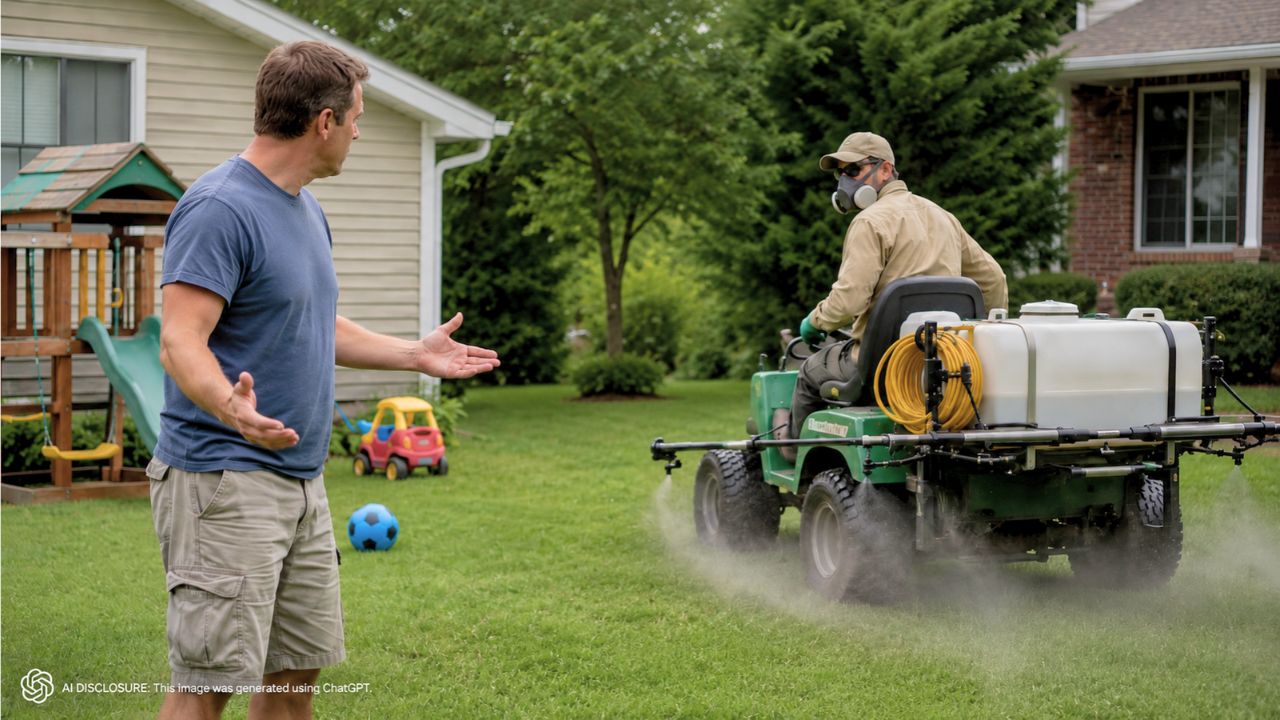
Here, it had a more serious consequence. The homeowner says the neighbor’s mowing pattern started confusing the pesticide applicators. Instead of stopping at the boundary, they began treating the overmowed area like it belonged to the neighbor—driving spray rigs into the homeowner’s backyard.
Not once, either. The homeowner says it happened three times, even after verbal warnings. That detail is what makes the story feel less like a petty turf war and more like a safety issue: when chemicals are involved, “oops” can still mean exposure.
For a family with little kids, it’s not just about the grass color. It’s about where children play, what gets tracked into the house, and how comfortable you feel letting anyone onto your land when they’re applying products you didn’t choose.
A survey and a split-rail fence changed the tone overnight
After multiple spray intrusions, the homeowner did the thing that usually ends arguments: he ordered a survey. And with the boundary made physical through survey stakes, he began putting up a corner split-rail fence.
That’s when the neighbor dynamic changed in an instant. The wife—someone the homeowner says he hadn’t seen outside in 10 years—came out and unleashed a profanity-filled tirade. The homeowner says she blamed “weeds” from his yard for affecting her property and called him a “pos.”
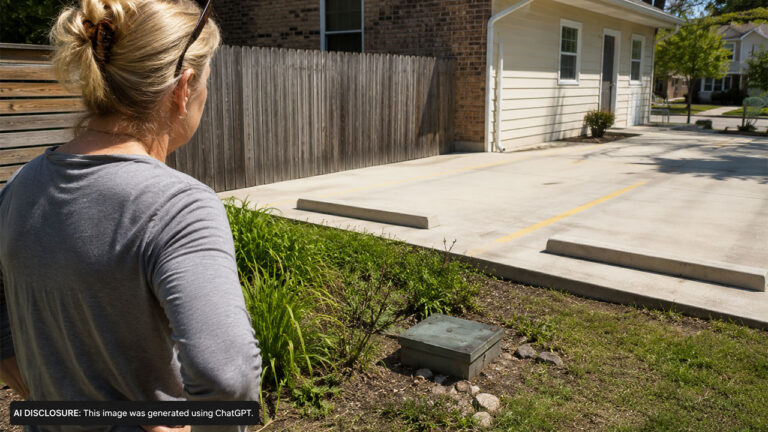
Then came the strangest escalation: the wife placed lawn ornaments in front of each survey stake, essentially trying to hide the markers that show where the boundary is. It’s a small act, but it’s pointed. Survey stakes are there to prevent confusion. Covering them doesn’t move the line, but it can make the fence installation harder and it signals one thing clearly: this wasn’t going to be resolved with a friendly wave across the driveway.
With the fence going in and the stakes being obscured, the homeowner says he put up security cameras because he doesn’t trust the neighbors and considers them unhinged.
When pesticides cross the line, it stops being “just grass”
A lot of neighbor problems are annoying but survivable: leaf piles, loud weekend projects, a mower at 7 a.m. This one has a different edge because it involves pesticide applications and repeated trespass by a service crew.
The homeowner isn’t describing one accidental drift event on a windy day. He’s describing spray rigs entering his backyard, multiple times, because the neighbor’s overmowing made the yard look like one continuous property. That’s the kind of detail that can matter if a homeowner needs to document what happened and why it was foreseeable.
It also puts the homeowner in an exhausting role: having to monitor someone else’s contractors. Verbal warnings clearly weren’t enough to change behavior. So now the choices narrow to boundaries that can’t be ignored—like fencing—and paper trails that don’t depend on memory.
The fence becomes more than a home improvement project. It’s a physical “stop” sign for people who keep acting like the backyard is shared space.
What other homeowners pushed: document first, escalate second
The homeowner’s questions were practical: Should he send a trespass letter? Should he talk to an attorney? He’d already started with cameras, which is often step one when a neighbor dispute turns unpredictable.
Reactions in discussions like this tend to cluster around proof. Not because people love conflict, but because property-line disputes can turn into a contest of who can sound more convincing. Survey work, visible markers, photos of the rigs in the yard, and recordings from cameras can keep it grounded in facts instead of shouting matches.
Another theme that usually comes up is keeping communication formal once the tone turns hostile. When someone goes from avoiding eye contact for a decade to suddenly screaming when stakes appear, it’s a sign that casual driveway chats aren’t likely to produce a rational compromise.
And the lawn ornaments? That reads to many homeowners as a boundary test. If someone is willing to interfere with survey markers—even in a childish way—it raises the question of what they’ll do when the fence panels go up or when another crew arrives.
The fence may go up, but the tension doesn’t disappear
The homeowner is still mid-story: the survey is done, the split-rail fence is in progress, and the neighbors are reacting in ways that don’t match the scale of the “problem” they claim to have. Meanwhile, the original issue remains serious—keeping pesticide applications off a family’s property.
There’s a particular kind of stress that comes with living next to someone who treats your yard like an extension of theirs. It’s not only the lost strip of lawn. It’s the feeling that you’ll have to keep proving the obvious: where your land starts, where theirs ends, and who gets to decide what’s sprayed and where.
For now, the homeowner is doing what many people eventually do when conversations fail—making the boundary visible, installing cameras, and considering next steps that put everything in writing. The grass may be greener on one side, but once chemicals and trespass enter the mix, the real goal becomes something simpler: a backyard that feels safe again.
Like Fix It Homestead’s content? Be sure to follow us.