Rural Landowner Finds a Belligerent Neighbor Trespassed Onto Their Land and Dumped Out Every Rainwater Cache — Then Learns He Did It Because He Can See Their Stored Equipment From His Own Easement
Photo credit: AI-generated image created using ChatGPT. Illustrative only.
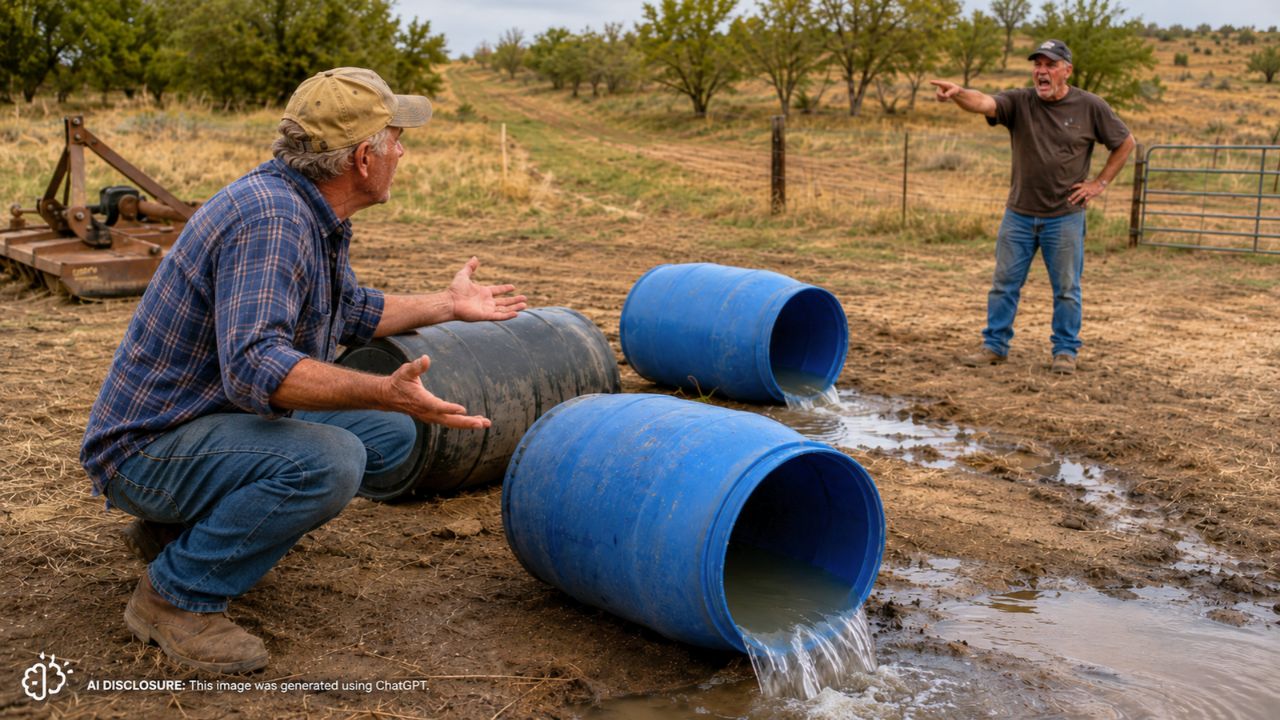
They weren’t even on-site when it happened. A rural landowner says they got a text from a belligerent neighbor announcing he’d gone onto their property and dumped out every rainwater cache they’d set aside.
In the source post, the owner explains they live about an hour away from the land and can’t easily drop everything to make the drive—especially with finals looming and gas money tight. But the neighbor didn’t just complain. He reportedly helped himself to crossing a line that wasn’t his to cross, and made sure they knew it.
It started with a text that wasn’t really a question
The message wasn’t a warning about a problem. It was a declaration: the neighbor said he entered the property and dumped all the collected rainwater. The owner’s first instinct wasn’t to escalate—it was to ask “what would you do?” and to vent, because the timing couldn’t have been worse.
This isn’t a full-time homestead where someone can walk out the back door and check on things. The owner says the property is rural and about an hour from where they live. That distance turns any surprise into a whole day: fuel, time, and the anxiety of not knowing what else changed while you weren’t there.
And then there’s the tone. “Belligerent” is how the owner described him. That one word does a lot of work, because it suggests this wasn’t a misunderstanding or a neighbor doing a misguided “favor.” It felt like a flex.
Rainwater, but also fire safety and basic planning
The owner anticipated the obvious accusation—“you’re breeding mosquitoes”—and tried to head it off. They said the water was for plants and also to have on hand in case brush-burning escaped the burn barrel. In other words, it wasn’t just convenience; it was part of keeping a rural property safer and more manageable.
They also stated the caches had mosquito dunks in them. That matters because standing water in the country is a quick way to start a feud, even when it’s legal and contained. The owner was trying to be responsible, and still ended up on the receiving end of someone else’s anger.
They even added an edit: rainwater collection is legal in their state. That small detail hints they’ve already had to defend normal rural practices to someone determined to object.
The real trigger wasn’t the water—it was what he could see
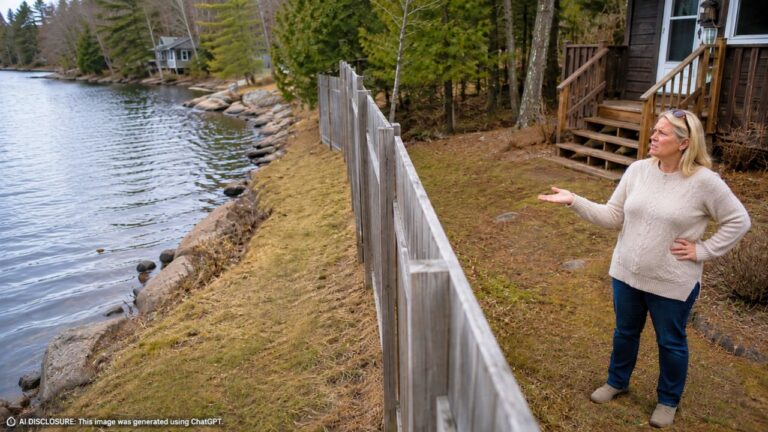
What makes the story feel especially raw is the owner’s explanation of why the neighbor has been upset “since day 1.” The only clear spot on the owner’s legal property is at the end of the neighbor’s easement. That one layout detail—where the open area sits—has effectively put the owner’s storage in the neighbor’s line of sight.
The neighbor reportedly walks down the easement sometimes and is angry that the owner has gardening equipment, chainsaws, and PPE stored on their own property where he can see it. Not blocking access. Not encroaching into the easement. Simply visible.
Rural living is full of these weird pressure points. Visibility becomes “disrespect.” A cleared spot becomes “your stuff is too close.” And an easement—meant for access—turns into a front-row seat where one person feels entitled to police what the other person keeps.
From the owner’s perspective, the neighbor’s complaint isn’t that anything is unsafe or unlawful. It’s that the neighbor doesn’t like looking at it, and acted like that gave him permission to step onto someone else’s land and make changes.
Distance makes every small dispute feel expensive
One of the hardest parts of this kind of property conflict is that it punishes you for not living there. The owner says it’s a bad time to go out until after finals, and even then they’re reluctant to spend about $30 in fuel as a full-time student.
That’s the quiet leverage neighbors like this exploit. They’re nearby, they’re bored, and they can watch your place. You’re the “outsider” who has to budget time and money just to check whether your property is being respected.
Rainwater caches are not high-dollar items compared to a fence or a shed, but replacing the water, resetting containers, and re-stabilizing the system is still labor and cost. And the bigger cost is psychological: now the owner has to wonder what else the neighbor might do when he feels annoyed by something he can see.
When someone is willing to admit by text that they trespassed and dumped your water, it’s hard not to imagine the next steps getting bolder—moving equipment, “cleaning up,” messing with locks, or deciding that anything near the easement is fair game.
People reading it zeroed in on proof and boundaries
The owner’s post reads like they were trying to decide what to say back: explain the purpose of the water, explain mosquito prevention, explain why they can’t come out immediately. That’s a normal impulse—give reasons, make it reasonable, de-escalate.
But the subtext of the story pushes in the opposite direction. This wasn’t a complaint. It was an action already taken. That’s why many people who’ve dealt with boundary-pushing neighbors tend to focus less on explanations and more on documentation and stopping repeat behavior.
When someone announces in writing that they entered your land and destroyed what you stored, the “why” stops mattering as much as the pattern: they felt entitled to cross a property line to fix a personal annoyance. In these disputes, the owner who stays stuck in “if I just explain it better” often ends up stuck reacting to the next escalation.
The owner didn’t include a play-by-play of replies, but the question “what do I do?” signals they’re at that fork in the road: treat it like a one-off outburst and try to keep peace, or treat it like the beginning of a boundary problem that needs a firmer response.
Now it’s not just about water—it’s about what comes next
This is the part that can make a rural property feel less like a refuge and more like a responsibility you can’t ever put down. The neighbor is angry about stored equipment being visible from an easement. The owner has a limited clear area. That means the underlying friction won’t magically disappear when the rainwater containers get refilled.
If the neighbor’s core complaint is “I can see your stuff,” then any practical setup—tools, supplies, PPE, water, gardening gear—could be the next target. And because the neighbor has already crossed onto the property, the owner now has to think in terms of deterrence and control, not just homestead routines.
For now, the owner is stuck with the worst mix: a long drive, a busy schedule, and a neighbor who’s already proven he’ll take matters into his own hands. Rainwater can be replaced. Trust and boundaries are harder to restore once they’ve been dumped out.
Like Fix It Homestead’s content? Be sure to follow us.