Michigan Family Finds a Year-Round Neighbor Confronting Them at Their Lakefront Vacation Lot — Then He Threatens to Claim the Entire Lot Through Adverse Possession
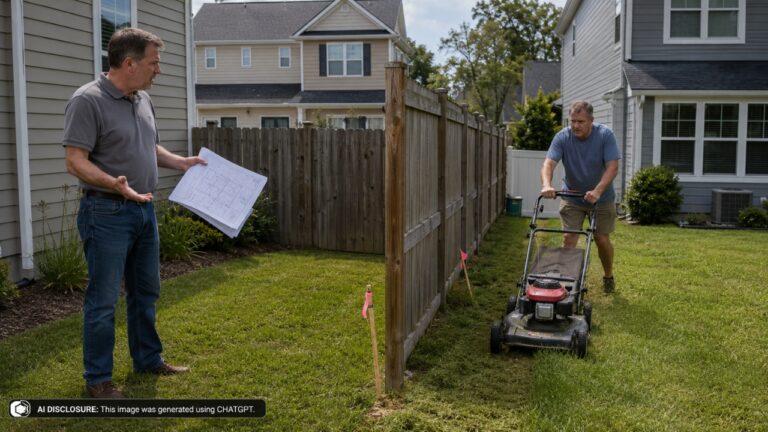
Photo credit: AI-generated image created using ChatGPT. Illustrative only.
It started like so many “up north” property routines do: a family drives in for summer, checks on their lakefront lot, and tries to squeeze vacation into the same weekend as mowing, clearing branches, and making sure nothing’s falling apart. But this time, the year-round neighbor next door didn’t wave or make small talk. He confronted the family and told them he planned to take their land.
In the original post, the Michigan family explained they’ve owned the lot for roughly 20 years and only use it seasonally. The neighbor, who lives nearby full-time, threatened to claim adverse possession of the entire lot—arguing he’s been “maintaining” it for 15 years and therefore has the right to own it.
A vacation lot turns into a face-to-face confrontation
This wasn’t a dispute over a few feet of property line or a fence that drifted over time. The neighbor allegedly went straight for the whole thing: the entire lakefront lot the family has held for two decades.
The family says the claim is false. They visit nearly every summer and maintain the property themselves, with one big exception: a stretch of about four years—2018 through 2022—when they weren’t able to make it up.
Anyone who’s owned a remote or seasonal property knows what that gap can look like to an outsider. Grass grows tall. Storm debris stacks up. Trails appear where no trails were intended. To a year-round neighbor, it can start to feel like “nobody’s using it,” even when the deed says otherwise.
The neighbor’s claim: “I’ve been maintaining it for 15 years”
The neighbor’s argument, as described by the family, is simple: he says he’s been maintaining their lot for 15 years, and that gives him a path to ownership through adverse possession.
But the family’s description adds an important detail: they’re not talking about a neighbor who built a garage across the line, installed a driveway, or put up a fence that swallowed a slice of land. They say he hasn’t built any structures on the lot at all.
That matters in the real world even before you get to the legal definitions. “Maintaining” is a fuzzy word. One person’s “I keep it nice” is another person’s “stop mowing my grass.” And when a neighbor is doing it without permission, it can go from “helpful” to “creepy” fast—especially when the help comes with a threat.
“Don’t step foot on our property again”
After the threat, the father told the neighbor to never step onto their property again. That’s the moment the story shifts from uncomfortable to volatile.
Once you’ve said that out loud, every tire track and footprint matters more. Every time the grass looks freshly cut, you’re not thinking “nice.” You’re thinking, “Was he here again?”
The family is now stuck in that familiar property-drama corner: they want to protect what they own without accidentally making things worse. They’re considering setting up a physical boundary and treating any future entry as trespassing, but they’re worried about whether fencing, signage, or escalation could somehow backfire.
The nightmare scenario isn’t the lawn—it’s the paperwork
When people hear “adverse possession,” they often picture a narrow strip of land that a fence accidentally took over decades ago. What makes this one so alarming is the neighbor talking about taking the entire lot.
And for a seasonal property, the vulnerability is obvious: long stretches where nobody’s physically present. Even when the family visits “almost every summer,” the neighbor is there the other 10 or 11 months. If he’s the one people see raking, mowing, hauling brush, or “using” the space, it can create confusion in the neighborhood about who actually controls it.
That’s why these disputes tend to become documentation wars. Not just who’s right, but who can prove what they did, when they did it, and whether the other person was ever given permission—or explicitly told to stop.
The family already has one anchor point in writing and memory: they told him not to enter again. But with property conflicts, a single confrontation is rarely the end. It’s usually the beginning of a new routine, where the owners start paying attention to things they used to ignore.
What people pushed: proof, boundaries, and not going it alone
Even without seeing a comment thread in the source material, the practical homeowner reactions to a threat like this are predictable because the playbook is always the same: document everything, clarify boundaries, and stop treating it like a casual neighbor disagreement.
In situations like the one described, people tend to focus on tangible steps that create a record—photos of the lot when the family arrives and leaves, dated notes of any interaction, and evidence of regular use and maintenance. The idea isn’t to “win” an argument on the spot. It’s to prevent the neighbor from building his own story over time.
Physical boundaries come up for a reason, too. A clearly marked line—whether it’s signage, stakes, or fencing where allowed—changes the vibe from “open space anyone can wander through” to “private property with a defined edge.” It also makes it harder for someone to claim they thought they had the right to be there.
And then there’s the advice people give when the stakes are high: don’t rely on porch-to-porch negotiations once someone has threatened to take your land. At that point, it’s not about personalities. It’s about protecting an asset that’s likely worth real money, especially lakefront.
The tension that lingers every time they drive away
Owning a vacation lot is supposed to feel like a break from daily life. Instead, this family is now looking at every summer visit as a checkpoint—one more chance for the neighbor to push boundaries while they’re gone, and one more reason to worry about what’s happening when they aren’t there.
The neighbor may never follow through, and threats are sometimes just bluster meant to intimidate seasonal owners into backing off. But the family can’t treat it like a bluff anymore, not after someone said the quiet part out loud: “I want your property.”
Lakefront land doesn’t stay drama-free on its own. It takes presence, clear lines, and a paper trail—especially when the person next door is home year-round and you’re only there when the weather’s nice.
Like Fix It Homestead’s content? Be sure to follow us.