Homeowners Replace Dead Grass With Pavers and Stones — Then the Neighbor Calls Code Enforcement Until They Face Fines and a Lien on Their House
Photo credit: AI-generated image created using ChatGPT. Illustrative only.
It started with a dead patch of grass—one of those sad spots that refuses to come back no matter how much you water it. Loretta and Leroy Bayliss in Lauderhill, Florida, decided to do what a lot of homeowners do: stop fighting it and make it look intentional.
They put down pavers and stones. And then their next-door neighbor began calling code enforcement again and again, a chain of complaints that has now put the Baylisses in the crosshairs of fines and even a possible lien on their home, as described in the original post from Local 10 News.
Dead grass turned into a hardscape project
The Baylisses weren’t trying to start a fight. The way Loretta Bayliss tells it, they were trying to solve a normal homeowner problem: grass died in one area, so they changed the landscaping.
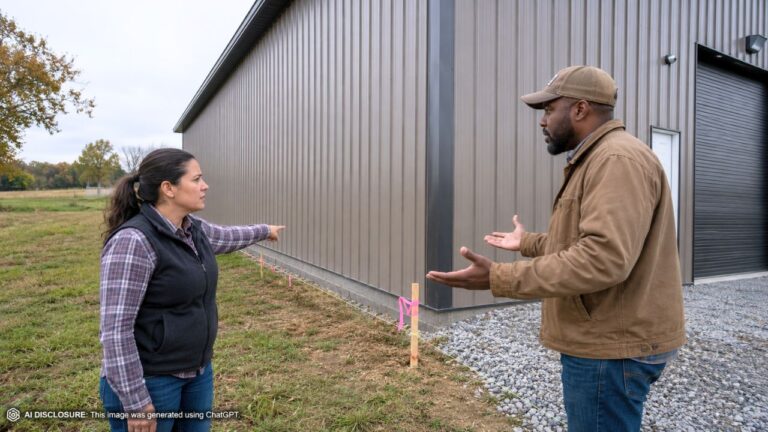
But the neighbor next door didn’t treat it like a simple yard upgrade. Loretta said the neighbor came over and made it clear she didn’t like the pavers and claimed they weren’t allowed. “She doesn’t like it and I’m not supposed to have the pavers there. Period,” Loretta said.
In plenty of neighborhoods, that’s where the story ends—someone complains, someone shrugs, everyone goes back inside. Here, it escalated into official citations and paperwork.
Code enforcement got involved, and the permit was denied
The neighbor took the issue to Lauderhill code enforcement, and Loretta Bayliss was cited. City documents, as described in the report, said her permit was denied.
The problem wasn’t framed as taste or style. The documents said the rocks were too close to the neighbor’s property line and that it apparently created drainage issues. That’s the kind of complaint that turns a “mind your business” argument into something that’s suddenly measured in inches and runoff patterns.
Loretta said she tried to remove the friction by removing the pavers. Not because she agreed, but because she didn’t want the yard to become an ongoing problem with the city.
Even after changes, the complaints kept coming
Once the pavers were gone, Loretta said the focus shifted. Now the neighbor didn’t want the rocks either, Loretta explained, because she claimed they’d end up in her tire. “Now she doesn’t want the rocks because she says they are going to get in her tire,” Loretta said.
So the Baylisses adjusted again—adding grass, adding some plants, and cutting back on the rocks. That still didn’t calm things down. “No. Nothing will ever be good enough. Nothing,” Loretta said. “No matter what I do, she just keeps calling code. All the time.”
That’s the exhausting part of neighbor-versus-neighbor property fights: it stops being about the original issue and turns into a permanent “you’re on notice” feeling every time you touch your own yard.
Loretta also said she’s now facing fines and a lien, with the report noting that at the beginning of August they could face fines.
The neighbor says the rocks affect her driveway—and her car
The neighbor, Arlene Edwards, came out to talk to Local 10 when they showed up. She didn’t hedge about what was bothering her. Asked if the rocks really bothered her, she said yes.
Edwards said rocks were getting into her driveway and into her tires when she left. She emphasized the type of car she drives: “I have a Mercedes. I took it to Mercedes and they want to know why I have so many rocks.” Loretta Bayliss, for her part, disputed that the rocks were ending up in Edwards’ driveway.
Edwards also said rain runoff from the rocks created a puddle. And she framed the issue as a simple rule about what the yard is “supposed to be.” “When I moved here, the grass was here,” Edwards said. “It is supposed to be grass. There are not supposed to be rocks and plants.”
The catch is that, according to the report, the rocks and plants were on the Baylisses’ property, not Edwards’. That’s where these fights get personal fast: one neighbor sees it as “my boundary, my right,” and the other sees it as “your choices are spilling into my daily life.”
It wasn’t just the yard—records show repeated complaints
What makes this uglier than a one-time landscaping disagreement is the pattern described in the report. Records show Edwards has complained repeatedly to code enforcement about a range of issues next door: the Baylisses’ fence, how they park, how they store things on their property, and their pool.
Loretta said it’s not just nuisance calls—it feels threatening. “When she comes down there, she’s stating that she’s going to have their jobs if they don’t do what she wants them to do,” Loretta said.
Edwards pushed back on the idea that she’s overreacting. When asked what she’d say to someone who thinks she’s making a big deal out of rocks, Edwards replied: “Well, they are making a big deal when they are interfering with me.”
In other words, neither side is treating this like a minor neighbor annoyance anymore. It’s an ongoing campaign, and now the city is in the middle of it.
The part that has other homeowners watching: inconsistency and paperwork
Loretta Bayliss said something that will sound familiar to anyone who’s ever dealt with enforcement: she believes other homes nearby have rocks and haven’t been cited. The Local 10 report says the station saw several properties with rocks that hadn’t been cited.
That kind of inconsistency is where people start to feel singled out—whether it’s because of a neighbor who calls constantly, or because enforcement only reacts when someone makes noise. Either way, the homeowner receiving the notice is the one who has to spend time and money chasing approvals, redoing work, and staying one step ahead of fines.
Local 10 said it contacted Lauderhill code enforcement and the city manager about the situation and was told someone would get back to them, but no one had by the time the article was published.
For the Baylisses, the immediate fear isn’t theoretical. Loretta’s frustration is blunt: “I am tired! I’m at my wits’ end with the city of Lauderhill and the neighbor next door.” She asked for help and said she just wants the city and her neighbor to leave her alone so she can enjoy her house and “do what I want in my yard.”
And that’s where it’s left: a dead patch of grass that turned into hardscape, then a drainage and property-line complaint, then revisions, then more complaints—until the cost of the feud is measured in fines and the threat of a lien, not mulch and pavers.
Like Fix It Homestead’s content? Be sure to follow us.