Homeowners Line Up a Buyer for Their Thirty-Three-Acre Place — Then the Neighbor’s Lawyer Tells Him She Holds an Easement Across It and the Sale Collapses
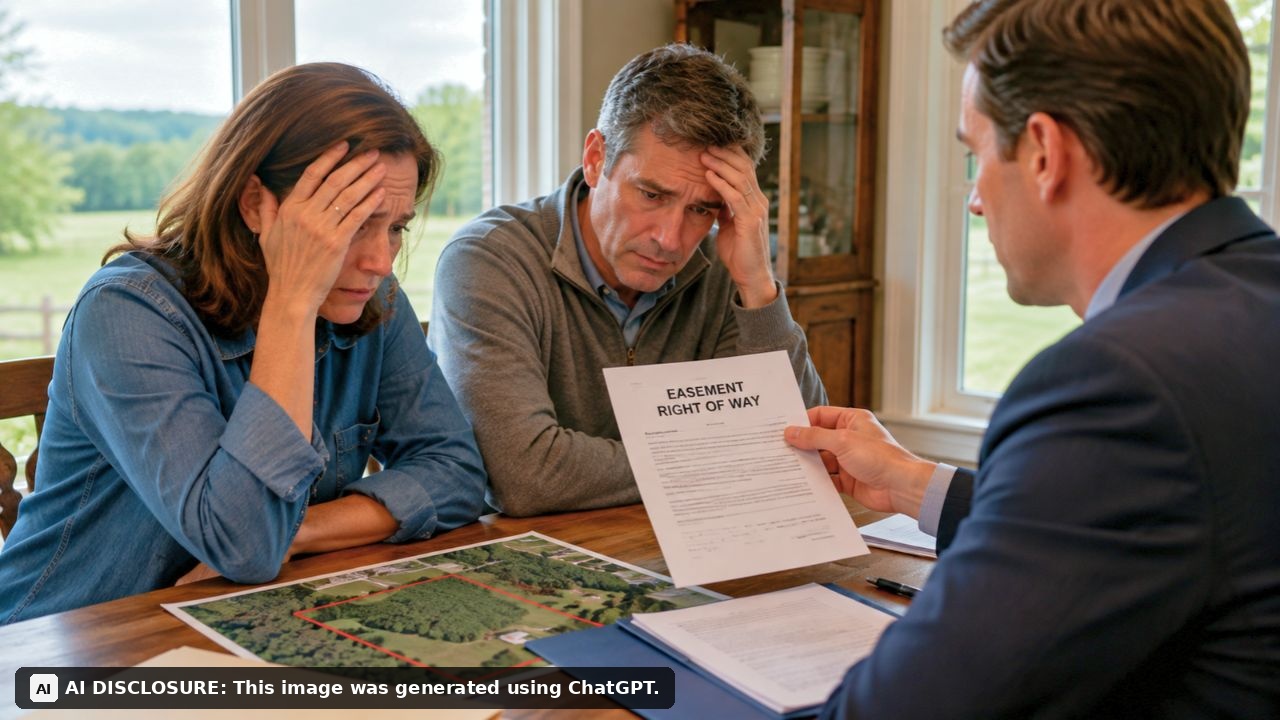
Photo credit: AI-generated image created using ChatGPT. Illustrative only.
The Powells thought they were in the clear: a buyer lined up, a $2.1 million contract signed, and a closing date that just needed the usual final steps. Then the message came that can freeze any rural sale in its tracks—someone next door was claiming a legal right to cross the property, and an attorney was involved.
What followed in Comal County, Texas wasn’t just paperwork friction. It turned into a full-on driveway war that unraveled the deal, escalated into allegations of trespass and title problems, and ended up in the Third Court of Appeals. The details are laid out in the court’s opinion, and if you’ve ever worried about easements, gates, and “we’ve always driven through there,” this one hits close to home.
The “shared driveway” that wasn’t shared
The basic layout sounds like a lot of Hill Country properties: big acreage, long lanes, and routes that look obvious on the ground but get blurry on paper. Gabriela Powell, Keith Powell, and their company Grove Operating LLC owned the property that included a paved driveway off Saratoga Lane.
Next door was Janis Fair and her company, River Rock Event Center. Fair had been using that paved drive for years to reach the event-center property. To anyone watching from the roadside, it probably looked like normal neighbor access—until the ownership changed and the question became: was it permission, or was it a legal right?
Fair said the event center was landlocked and claimed an easement across the Powells’ place. The Powells said no: there was another way in, and the Saratoga Lane use had been allowed as a courtesy, not a binding property right.
The gate went up, and the temperature went with it
Things turned sharply after the Powells bought their property and installed a coded gate. The reason in the record was safety—event-center traffic was a worry, and anyone who’s lived near a busy venue can picture the headaches: strangers pulling in, cars turning around in the wrong spot, deliveries at odd hours.
Fair didn’t take the gate as a neutral “new owners tightening security” move. She rejected an offer for temporary access because she believed she already had the right to use the paved driveway. From there, it wasn’t a neighborly conversation about keys and codes. It became a standoff about whether the driveway was hers to use at all.
The key fact that kept coming back in court was another route: a dirt-and-gravel road that connected Fair’s property to Keeneland Drive. Fair acknowledged it existed, but Saratoga Lane was the preferred approach—paved, easier, and avoiding the cost of improving the alternate road.
The sale that triggered the legal squeeze
In August 2022, the Powells went under contract to sell their property to Sensus Capital Group for $2.1 million. That’s when the easement fight stopped being an unpleasant neighbor dispute and became a deal-killer.
After learning about the pending sale, Fair and her attorneys asserted she had an easement over the Powells’ property and even sought a permanent easement from the prospective buyer. It’s the kind of move that makes a title company and a buyer’s lender sit up straight: if access rights are disputed, the question becomes whether the buyer is purchasing a lawsuit along with the land.
Fair filed suit in September 2022, saying the Powells had landlocked her property by closing the driveway. The buyer extended closing multiple times while trying to get the dispute resolved. Eventually, the buyer terminated the contract on January 31, 2023.
For homeowners, that timeline is the nightmare version of “just one more extension.” You’re still paying taxes, insurance, and upkeep. You’re keeping the place show-ready. And you can’t really move on because the deal is hanging by a thread that has nothing to do with your roof, your septic, or your inspection report.
When the court said “no easement,” things got messier anyway
The trial court ultimately rejected Fair’s easement claim and prohibited her and people associated with the event center from using the Powells’ property without permission. The court also found Fair and River Rock liable for trespass, tortious interference with the sales contract, and slander of title.
Even after the court rejected the easement claim, Fair entered the property several times, according to the record. The details read like a dispute that has left “legal” territory and wandered into personal escalation: Fair struck and damaged the gate keypad with a mower, deposited a dead fawn on the property, and dumped leaves and brush there.
The trial court awarded the Powells $179,950.60, including $2,535 for trespass, prejudgment interest, and $113,112.80 in attorney’s fees. It also included $59,164.23 in expenses tied to continuing to own the property after the failed sale. Notably, the court awarded zero separate damages for tortious interference or slander of title—even though it found liability.
That “liable but zero dollars” detail mattered later, because it became the hinge point for what the appeals court would allow the Powells to recover.
Appeals court: the “other road” changed everything
On appeal, the Third Court of Appeals agreed with the big, practical issue: Fair did not have an easement over the Powells’ paved driveway. The reason was straightforward. Fair’s own testimony established there was another roadway connecting the event center to Keeneland Drive, so Saratoga Lane wasn’t a necessity—it was the nicer option.
That distinction is what a lot of property owners miss until they’re already in a fight. In plain terms: “I’ve always used it” and “it’s the best way” are not the same thing as “I have no other way to access my land.” If there’s another access route—even an unimproved one—the legal claim can collapse.
The appeals court left the tortious-interference finding intact but upheld the zero-damages award on that claim. It also reversed the slander-of-title judgment because the statements behind it were protected by the judicial-proceedings privilege.
Then came the money adjustment. The appeals court ruled the trial court couldn’t separately award the $59,164.23 in post-sale ownership expenses (and $4,881.05 in related prejudgment interest) after awarding zero damages for tortious interference. Those amounts were removed. The rest—including the no-easement ruling, the trespass damages, and the attorney’s fees—stayed standing.
Homeowner reactions: “This is why you survey, document, and gate smart”
Cases like this tend to split homeowners into two camps. One group hears “event center traffic” and immediately understands why someone would install a gate and lock down access. The other hears “family property” and recognizes how often the paperwork lags behind decades of informal use—and how ugly it can get when the next generation starts buying, selling, and refinancing.
The practical homeowner takeaway people usually land on is proof and timing. If you’re buying rural acreage, you want surveys, recorded easements, and written access agreements handled before you’re staring at a closing date. And if you’re the neighbor relying on a driveway, you don’t want to find out what your rights are after a gate goes up and a property goes under contract.
Because once lawyers start sending letters to a buyer, the sale doesn’t just get “complicated.” It can evaporate. And after that, everyone is spending money—often far more than what it would have cost to clarify access on the front end.
In the end, the Powells kept their win on the core question—no easement—and the court left consequences in place for trespass and attorney’s fees. But the bigger damage had already happened in real life: the buyer walked, the property sat longer, and a driveway that used to be a casual shortcut turned into the kind of hard boundary that doesn’t easily soften again.
Like Fix It Homestead’s content? Be sure to follow us.