Homeowner Holds an Agreement Giving Him ‘Nearly Exclusive’ Use of the Driveway Easement — Then the Neighbors Sue to Have His Concrete Columns Torn Out
Photo credit: AI-generated image created using ChatGPT. Illustrative only.
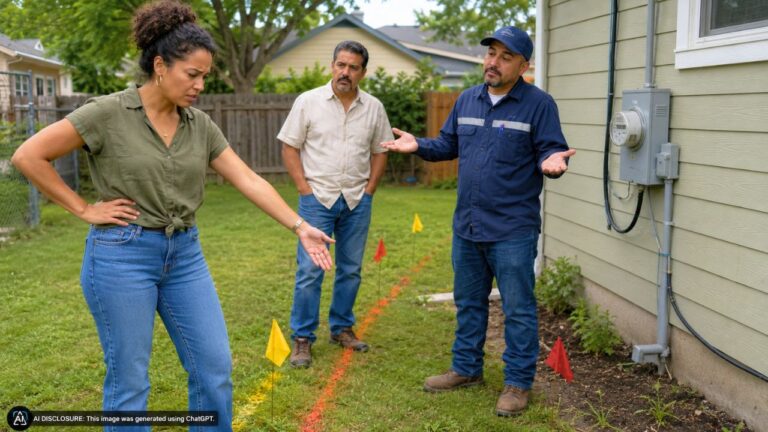
Shared driveways are one of those things that feel fine—right up until someone pours concrete and suddenly the “shared” part gets tested. In Sewall’s Point, Florida, one homeowner built up a driveway area he believed he had the rights to use, adding the kind of touches you’d expect around a well-kept property: plants, a basketball hoop, and a set of concrete columns.
Then the neighbors went to court to force the columns to come out. And in a twist that will feel familiar to anyone who’s ever argued with a building department or inherited a confusing property setup, the case turned on paperwork: an old easement agreement, a town permit that later showed up as expired and revoked, and whether “landscaping” can include decorative masonry. The appellate decision is laid out in the source post.
The paperwork was supposed to make things simple
The starting point here wasn’t a handshake or a vague “we’ve always done it that way.” George Haramis had a written easement agreement signed back in 2013 with the prior owners of the neighboring property (the one later owned by Wayne Scott Craft and Anabela Adams).
That agreement gave Haramis “nearly exclusive” use of the easement area for a long list of practical stuff: ingress and egress, utilities, drainage, landscaping, and the construction of a driveway. The agreement also had a real-world caveat that matters in almost every property fight: he still had to comply with local laws and regulations.
So, on paper, this wasn’t just “I’m allowed to drive here.” It was “I’m allowed to build and improve this area”—with the usual limits that come with permits and municipal rules.
The driveway improvements turned into a flashpoint
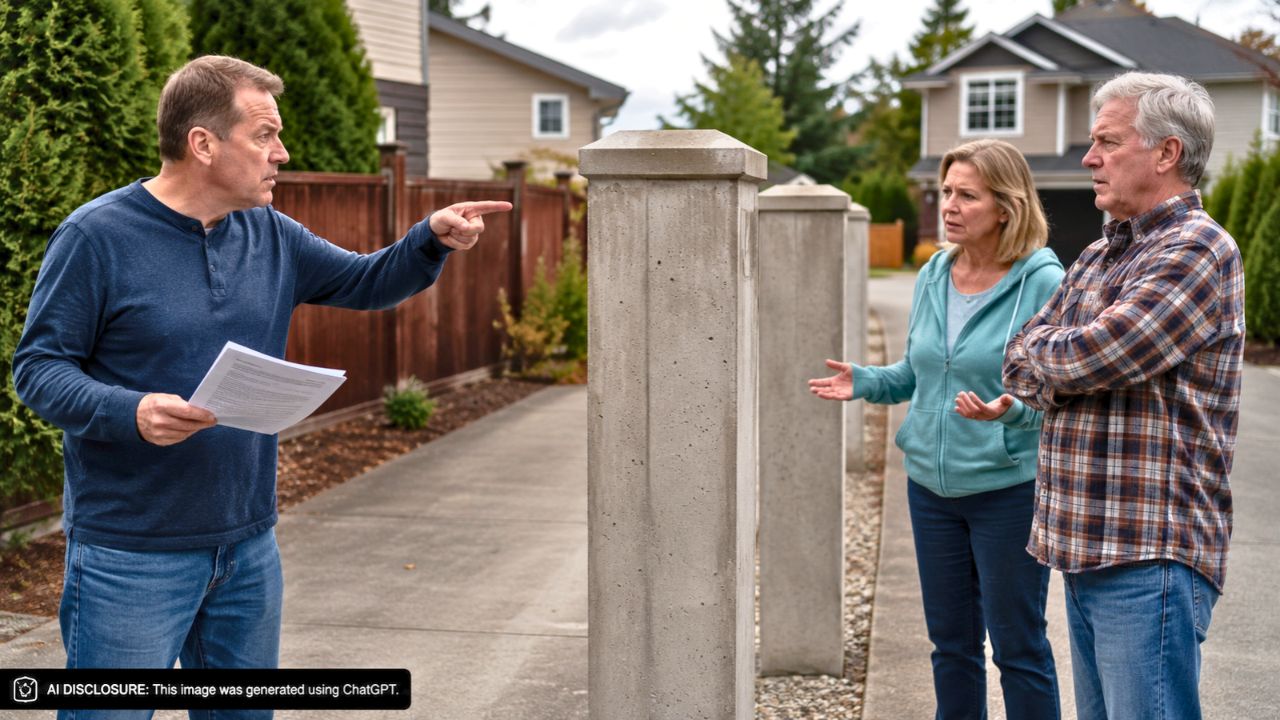
At some point after the agreement, Haramis built a driveway within the easement area and added features around it. The neighbors later pointed to three things in particular: a basketball hoop, plants, and concrete columns.
If you’ve ever lived near a narrow lane or a tight turnaround, you can already see how this gets personal fast. One person sees a nice entrance and a cleaner edge to the driveway. The other sees reduced clearance, a harder time getting through, or a future emergency vehicle problem.
Craft and Adams filed suit in 2024, arguing that Haramis was violating the easement agreement and asking for an injunction requiring removal of certain objects. They claimed the hoop and plants obstructed access. The concrete columns were treated as the bigger issue—either outside what the easement allowed or not properly permitted.
The columns became a permit fight, not just a neighbor fight
The record showed Haramis had received a town permit to build “masonry piers.” It was issued in April 2018, expired in July 2020, and later was listed as revoked. That sequence—issued, later expired, later revoked—is the kind of timeline that makes homeowners nervous, because it can look like you built something illegal even if you didn’t.
But there was another detail that cut the other way: town records also stated the building got a final inspection in January 2020, before the permit expired. In homeowner terms, that sounds like, “It got signed off while it was still valid.”
And that matters, because if something was properly permitted and finalized, the question shifts. It’s no longer “you never should have built this.” It becomes “even if the permit later expired or was marked revoked, do you need a new permit just to leave it standing?” The appeals court later pointed out that nothing in the record established that Haramis needed a new permit merely to keep already-built columns in place.
A trial judge ordered everything removed—then the appeals court hit pause
The neighbors moved for summary judgment, aiming to win without a full trial. Haramis opposed the motion, but the trial court struck his response and affidavits because they were untimely and, in part, based on inadmissible hearsay. With his opposition knocked out, the neighbors’ case looked cleaner on paper.
The trial court granted summary judgment and ordered Haramis to remove the columns along with the other claimed obstructions.
But on appeal, Florida’s Fourth District Court of Appeal drew a hard line on how summary judgment is supposed to work. Even if the other side doesn’t file a timely response, the moving party still has to prove there’s no genuine factual dispute and that they’re entitled to judgment as a matter of law. A judge can’t just treat “no proper response” as “automatic win.”
The appellate court said the neighbors hadn’t presented enough evidence to justify summary judgment when it came to the concrete columns specifically. So that part of the removal order was reversed and sent back for further proceedings. The rest of the judgment against Haramis was affirmed, meaning he didn’t get a total victory—just a narrow one focused on the columns.
The word “landscaping” did a lot of heavy lifting
This is the part that will make any homeowner with a signed agreement pull it out of the drawer and read every word twice. The easement agreement explicitly allowed “landscaping,” but it didn’t define what that meant.
The appeals court noted that landscaping can include decorative structures and improvements around a building, and that a reasonable factfinder could conclude the concrete columns fit within that category. In other words: you can’t assume columns are automatically outside the scope just because they’re heavy, permanent, and made of concrete.
The neighbors also didn’t point to a specific town law, ordinance, or regulation the columns violated. They argued permitting issues, but the record suggested the work may have been completed and inspected while the permit was still valid. Without something more concrete—an ordinance section, a code provision, a clear requirement—the case wasn’t clean enough for summary judgment on that issue.
That doesn’t mean the columns are permanently safe. It means the evidence wasn’t strong enough to tear them out without further fact-finding.
The homeowner takeaway people kept circling back to: documents beat memories
Cases like this tend to trigger the same practical reactions from property-minded readers: save everything, because you never know which piece of paper will matter five years later. Here, the most important “characters” weren’t the neighbors—they were the easement agreement’s exact wording and the town’s permit/inspection records.
The other big practical point is procedural but painfully real: deadlines and admissible evidence can decide what a judge even gets to consider. Haramis’s filings were struck for being untimely and partly hearsay-based, and that kind of mistake can put you in a hole even if your underlying argument is decent.
And finally, this is the shared-driveway lesson homeowners don’t want: even an agreement that sounds like “nearly exclusive” use can still end in a removal order if the other side convinces a judge you overstepped—or if your improvements start affecting access.
For now, the concrete columns stay in the “not so fast” category. The neighbors won parts of the case, but they didn’t have enough, at least at the summary-judgment stage, to force those columns out immediately. And anyone who’s lived next to a contested driveway knows what comes next: a quiet stretch, more paperwork, and the uneasy feeling that the next dispute might start with something as small as where a tire tracks after a rain.
Like Fix It Homestead’s content? Be sure to follow us.