New Homeowner Finds a Neighbor Disputing a Property Line Professionally Surveyed Two Weeks Earlier — Then the Neighbor Hires a Second Surveyor to Contest It
Photo credit: AI-generated image created using ChatGPT. Illustrative only.
He thought the property-line drama was already handled years ago: permits pulled, contractors lined up, and a licensed crew had come out, found the existing pins, verified them, and staked the line so he could place a new workshop with a little breathing room.
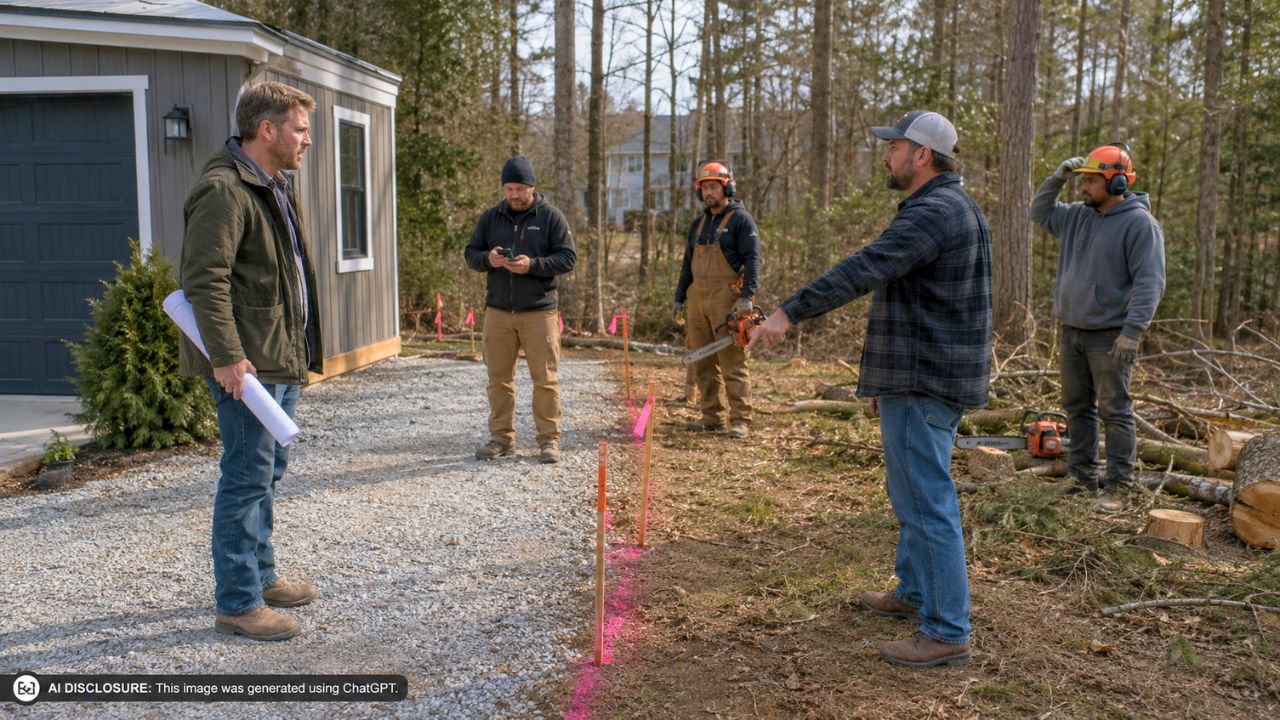
Then a new neighbor moved in—and the first real introduction was a tree-cutting crew working right along that boundary. The homeowner laid out the whole mess in the original post, and it reads like the kind of “welcome to the neighborhood” no one wants: chainsaws, a contractor with a phone app, and a property line that suddenly “moved” onto his driveway and shop.
The line was “settled” back when the shop went up
Seven years earlier, the homeowner had done what people always say you’re supposed to do. Before building a workshop near the side yard, he talked to the neighbor first. They didn’t mind the placement, even though it would sit between the properties and a bit forward of their house.
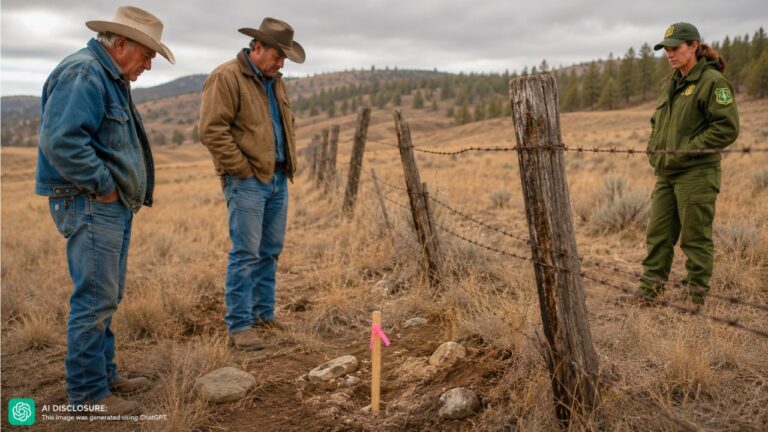
He still didn’t rely on a handshake. He hired a local engineering and surveying firm to mark the line before anything went in the ground. According to his retelling, the surveyor pulled township documents, compared them to the deed, found pins in the road, verified measurements, and then located the boundary pins along the lot line—1.5-inch pipe driven into the ground with flagging.
Stakes went in. A string line went up. The shop got built with about six feet of clearance from the line—one extra foot beyond the five-foot setback at the time. He even hammered in some unofficial rebar markers after the survey, worried a kid or dog might pull a stake.
The new neighbor arrived with Google lines and a crew
Fast forward: the “awesome neighbor” retired, and someone new bought next door. Things were fine—until the homeowner came home and saw workers cutting down trees along the boundary.
The neighbor was planning a garage in a similar spot, tight to the side yard. But instead of looking for monuments in the dirt, the neighbor and contractor leaned on property lines shown on Google Maps and OnX. On their screens, the boundary ran well into the homeowner’s side. In their version of reality, half the driveway and the existing shop were suddenly sitting on the neighbor’s land.
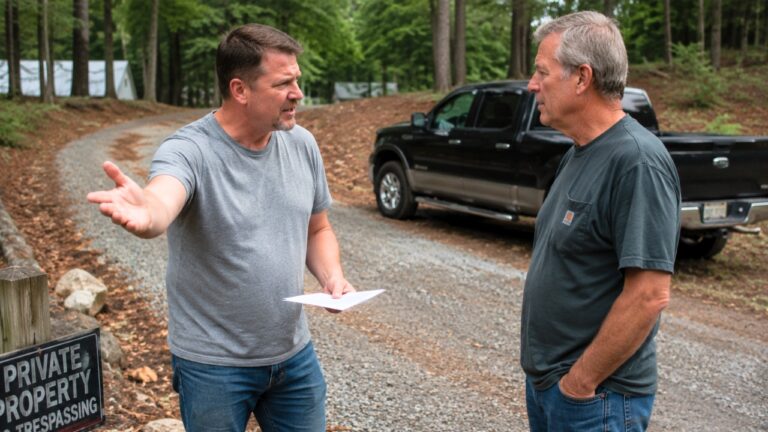
The homeowner wasn’t having it. He says he argued with them for about 40 minutes, pointed out how unreliable map overlays can be for construction, and physically showed them the pins the earlier surveyor had verified. His point was simple: if you can’t confidently spray-paint the exact line on pavement, you don’t actually know where it is.
Stakes got real when the contractor set pins into his yard
This wasn’t just a dispute over whose app was “more accurate.” The homeowner says the neighbor’s contractor placed corner pins about a foot onto his side for where foundation footers would be dug.
That’s when a theoretical argument turns into a dirt-moving problem. It’s one thing to bicker about a line on a screen; it’s another to see layout marks that would put a permanent structure over the boundary—or to watch mature trees come down while everyone insists it’s “fine.”
He says he told them to stop and then followed up with a certified letter: if the neighbor wanted to keep building, the property line needed to be resurveyed. Work stopped that day, and the neighbor reportedly said they were waiting for someone to come out and survey again.
The setback change made the timing even uglier
The homeowner’s anxiety isn’t just about pride or a bad first impression. The township rules changed. When he built, the side-yard setback was five feet. Recently, it changed to 15 feet.
He had placed his shop roughly six feet from the line to give himself “wiggle room,” which looked smart at the time. But a new survey fight now feels like it could drag his shop into a regulatory argument he didn’t plan on having.
Meanwhile, he doesn’t claim he’s trying to block the neighbor’s garage altogether. His stated position is narrower: build it, just not on his property. And after all the pushback he says he got—questions about his shop placement, pressure from the neighbor and contractor—his patience wore thin. If they’re going to build, he wants it pushed back the full 15 feet.
“How accurate are surveys?” is really “how messy can this get?”
Underneath the story is the question homeowners ask when they’re staring at two different “truths” about the same dirt: how much can surveys vary?
He doesn’t doubt the firm he hired years earlier, especially because they found existing monuments and verified them with measurements. His fear is more human than technical—what if the neighbor hires someone sloppy, or someone willing to “adjust” the outcome?
He’s not trying to become a surveying expert overnight. He just wants to know what to ask if a second survey shows a wildly different line from the first one, and whether that can happen when the pins and monuments are already there.
What other homeowners focused on: proof, paper trails, and not letting apps run the jobsite
The strongest practical theme in reactions from people familiar with this kind of dispute is that phone-based map lines aren’t a substitute for boundary work on the ground. Mapping layers are useful for rough orientation, but they’re not where you hang a form board or place footers.
And once a crew is on site, the advice tends to get blunt: document everything, keep communication in writing, and treat “we saw it on an app” as noise until it’s backed by monuments, records, and a licensed professional willing to stamp their work.
In this case, the homeowner already did one of the biggest things people regret skipping—he got a survey before he built, and he remembers where the pins were found. Now he’s trying to keep the next steps from turning into a battle of contractors racing to pour concrete first.
For the moment, the machines stopped, the neighbor says a resurvey is coming, and the homeowner is left watching a quiet strip of yard that suddenly doesn’t feel so quiet. When property lines get questioned after structures are already in place, it’s rarely about the line alone—it’s about what happens next if someone starts digging like the phone is right and the pins don’t matter.
Like Fix It Homestead’s content? Be sure to follow us.
- Man Says He Found Out the Fence He Paid For Wasn’t Actually on His Property
- Woman Says Her Neighbor Started Taking Mulch From Her Delivery Pile Before She Could Even Spread It
- I made Joanna Gaines’s Friendsgiving casserole and here is what I would keep
- What Caliber Works Best for Groundhogs, Armadillos, and Other Digging Pests?