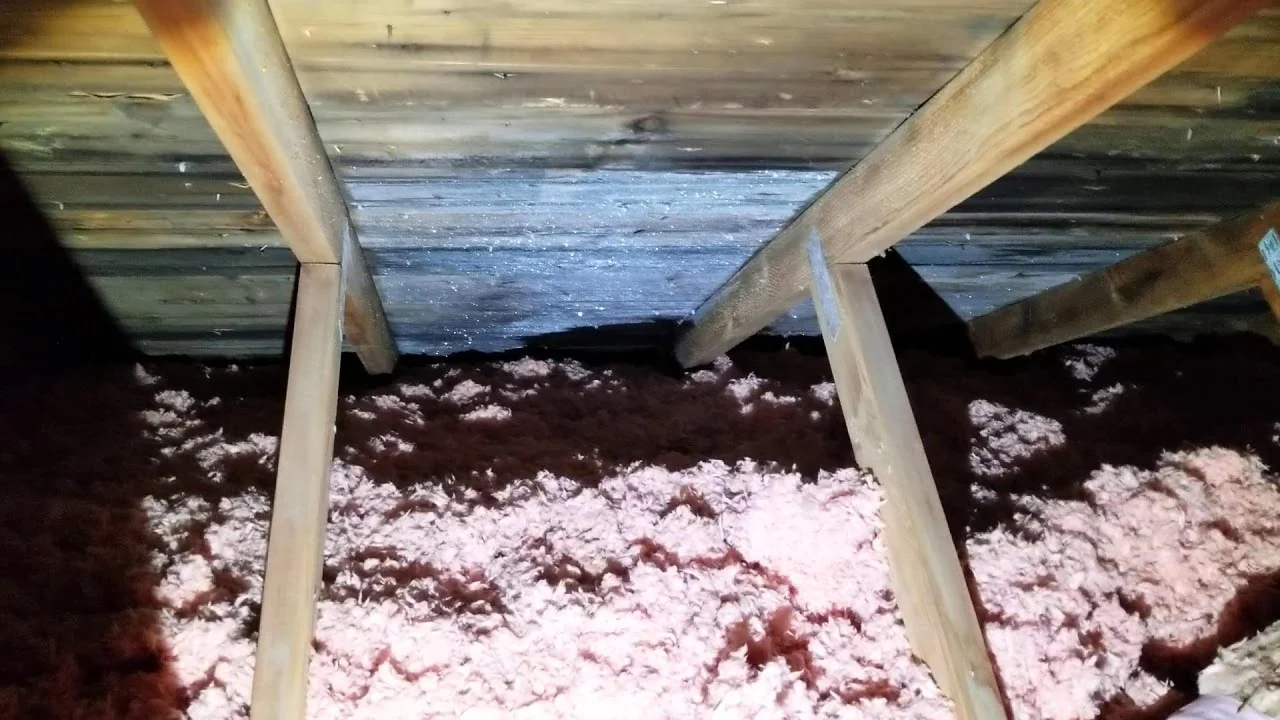
10 Signs an Attic Has a Ventilation Problem
Photo credit: Border Property Inspections/Youtube
You don’t usually notice attic ventilation until something else starts acting up. A room won’t cool down, paint peels for no good reason, or you catch a musty smell that shouldn’t be there. The attic is one of those places where small airflow problems turn into bigger, pricier ones if you ignore them.
1. Upstairs Rooms Never Cool Down

If the second floor stays hot long after sunset, your attic is probably holding heat like a blanket. Poor airflow traps hot air above your ceiling insulation, and your AC or fans spend all day trying to fight it. You’ll feel it most during the first real heat wave of summer.
Start simple. On a warm day, pop your attic hatch and take a quick look with a flashlight, if it feels like opening an oven, that’s a clue. Check that soffit vents aren’t painted shut and that insulation hasn’t slid over them, then look for a clear path for air to exit at a ridge vent, gable vent, or roof vents.
2. Moldy Smells After Rain

That damp, sour smell that shows up a day or two after a storm often points to humid attic air that never gets flushed out. Moisture can come from tiny roof leaks, but bad ventilation turns small damp spots into a lingering humidity problem that feeds mold and mildew.
Go up with a bright light and look at the underside of roof sheathing and around vent pipes and chimneys. If you find dark staining or fuzzy growth, don’t just spray it and call it fixed. You need to stop the moisture source and get airflow moving again, and if the mold covers a large area or you have respiratory issues, it’s worth paying for professional remediation.
3. Frost Or Water Drops In Winter
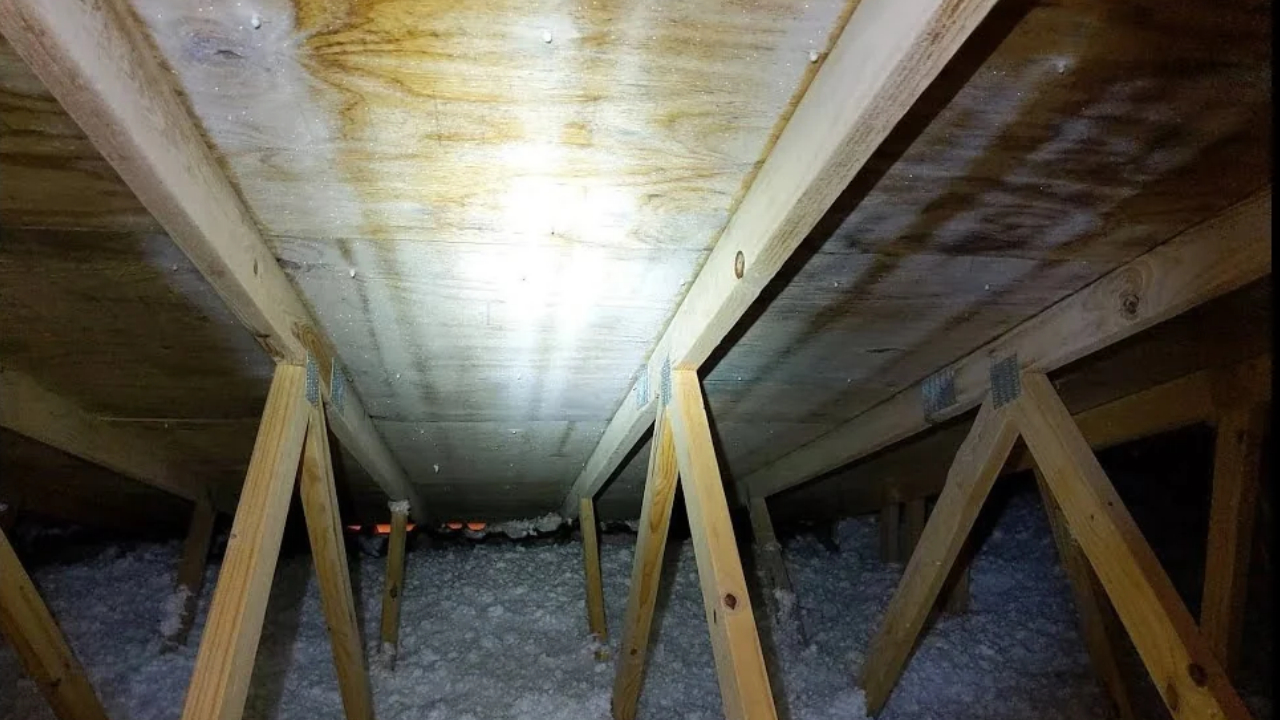
In cold weather, warm indoor air sneaks into the attic and hits cold roof decking, then turns into frost or beads of water. When it warms up, that frost melts and can drip onto insulation, drywall, and ceiling fixtures. People often blame the roof, but the real problem is moist air getting trapped.
Look for frost on nails sticking through the roof deck or damp spots on the wood. Then check the big air leaks first, attic hatch, recessed lights, plumbing stacks, and the top plates of interior walls. Air sealing with foam and caulk is usually a better first move than adding more vents, and it’s a job you can handle with gloves, a mask, and a few basic supplies.
4. Roof Shingles Curling Too Soon
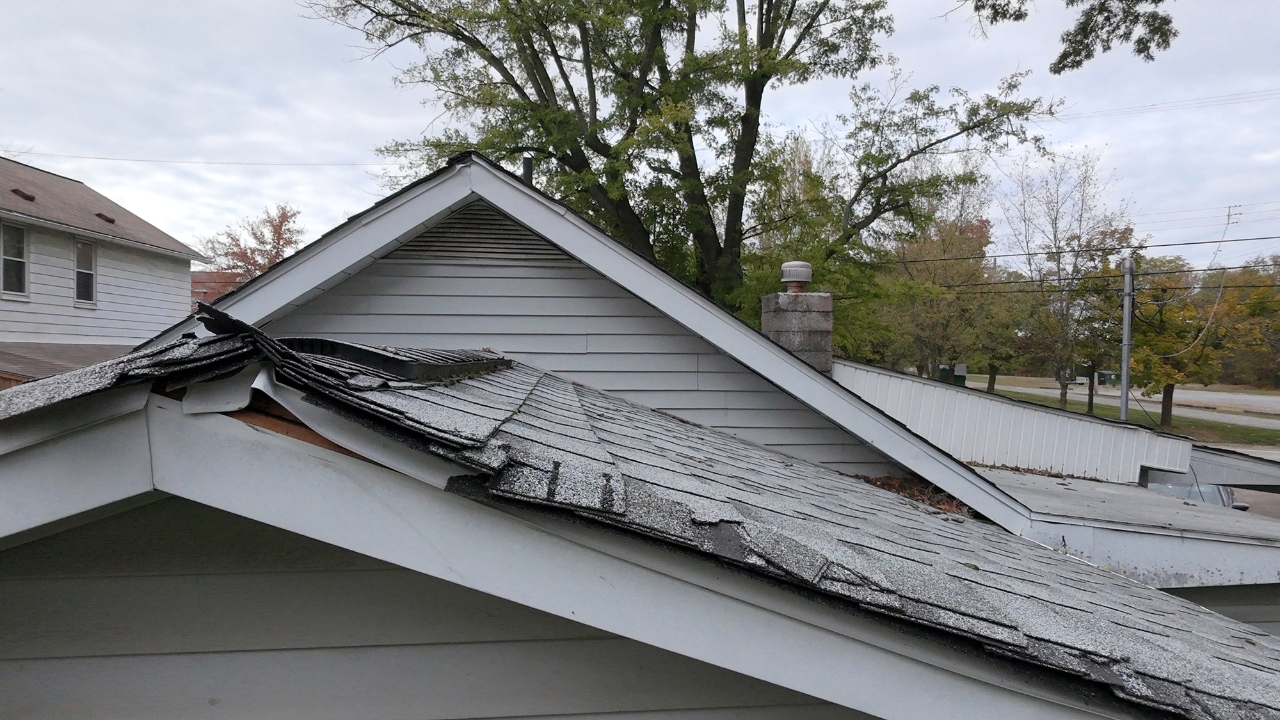
When an attic runs hot for years, the roof above it cooks from below. Shingles age faster, edges start to curl, and granules shed earlier than you’d expect. It’s not always ventilation, hail, low quality shingles, and bad install work can do it too, but chronic attic heat speeds up wear.
If your roof is still fairly new and it’s already looking tired, have a roofer check the whole system, intake vents, exhaust vents, and the balance between them. This is one place where guessing gets expensive. A good pro will also look for blocked soffits, crushed baffles, and fans vented into the attic, which is a surprisingly common mess.
5. Rusty Nails And Metal Connectors
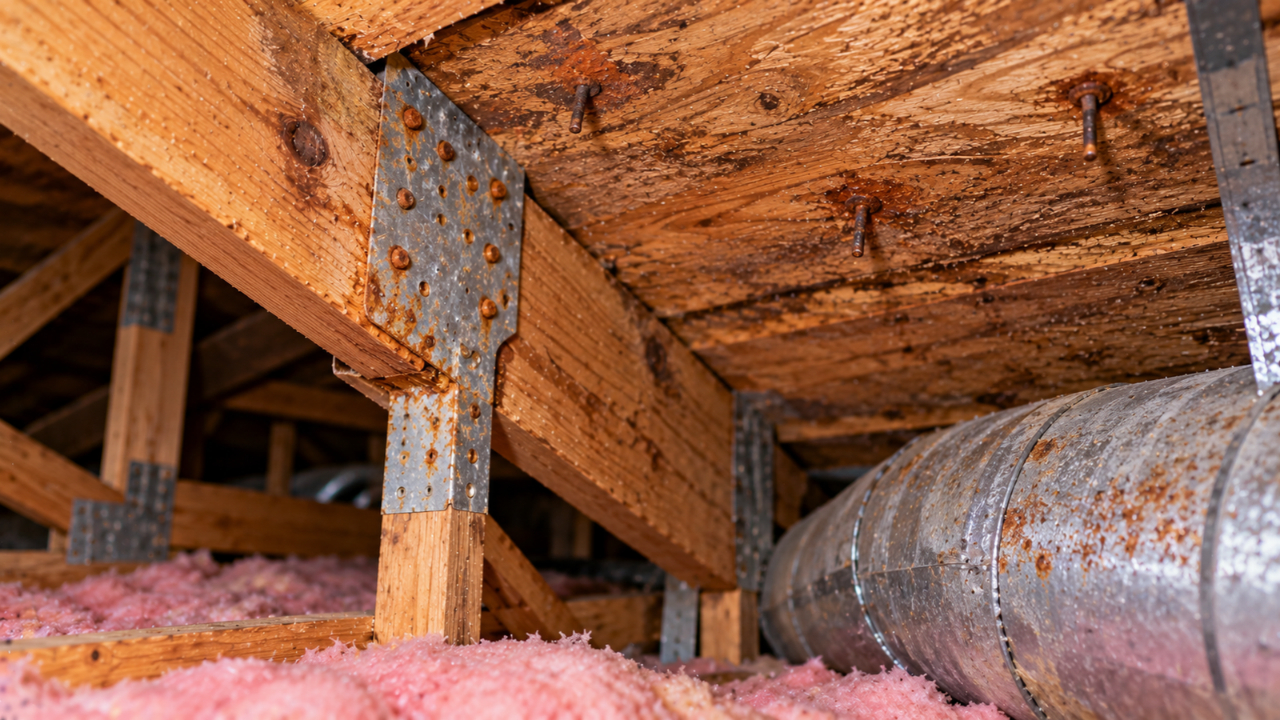
Rust in an attic is a humidity meter you can see. Nail heads turning orange, roof straps spotting, and light surface corrosion on metal ductwork all point to moist air hanging around too long. Left alone, rust can weaken connectors and stain wood, and it makes future repairs harder.
Don’t assume you need to replace hardware right away. First, figure out why humidity is high, bathroom fan dumping into the attic, leaky duct joints, or poor venting. Once airflow and moisture are under control, light surface rust often stops getting worse.
6. Bathroom Fans Venting Into Attic
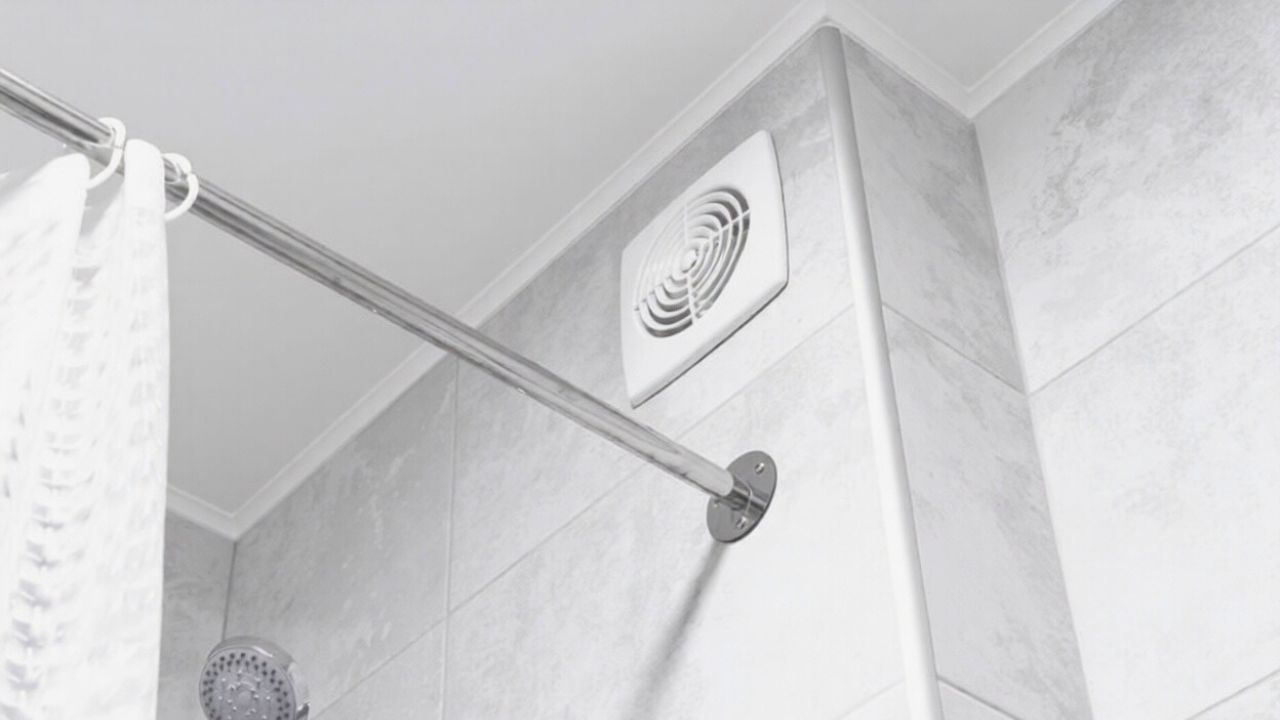
This one is more common than it should be. If a bath fan ends in the attic, all that warm, wet air gets blown onto insulation and roof wood, and it will find a cold surface to condense on. You might not see damage for a season or two, then it shows up all at once.
Fix it by running an insulated duct to an exterior termination, usually a roof cap or a wall cap, not just to a soffit where it can get sucked right back in. Use foil tape or mastic on joints, not duct tape that dries out and falls off. If you’re cutting a new roof or wall opening and you’re not comfortable flashing it, hire that part out.
7. Ice Dams Along The Eaves
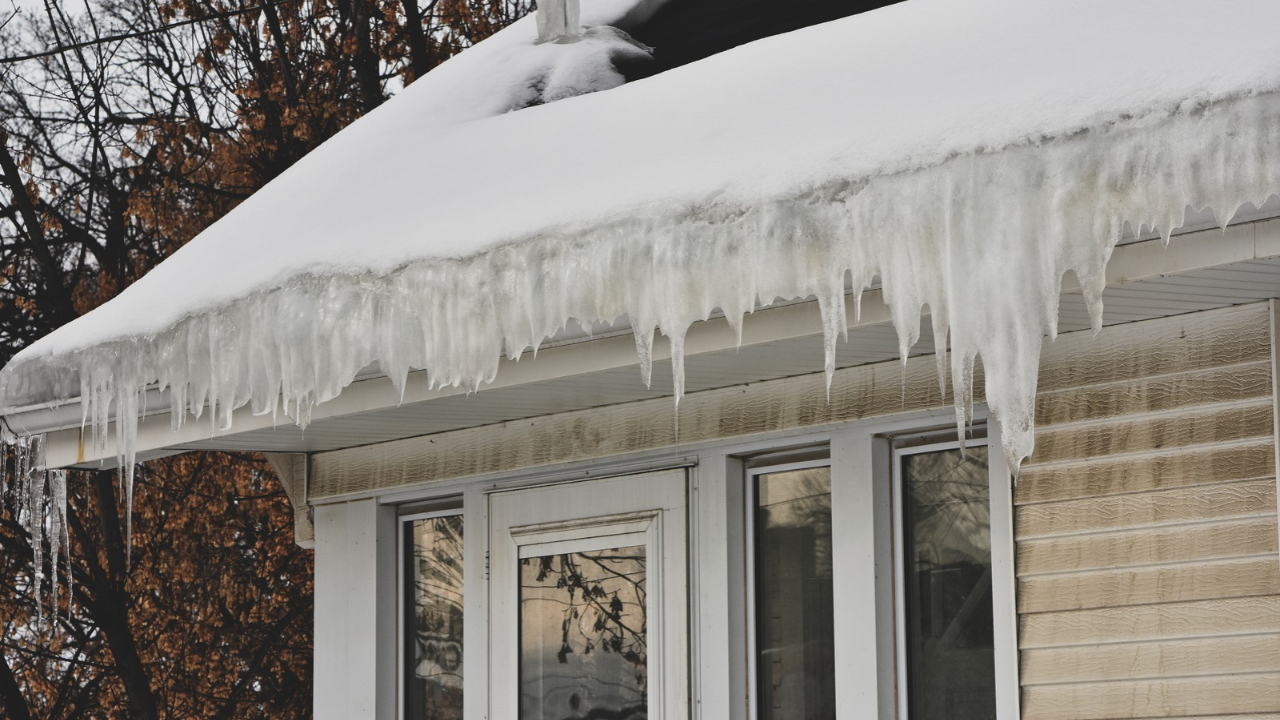
Icicles look pretty until they back water under shingles. Ice dams happen when roof snow melts from heat escaping into the attic, then refreezes at the colder eaves. Ventilation helps, but this problem usually starts with missing insulation coverage and air leaks from the house into the attic.
On a cold day, look for bare roof patches where snow melts first. Inside the attic, check for thin insulation near the eaves and blocked soffit vents where insulation is jammed tight to the roof deck. Adding baffles to keep an air channel open and air sealing the attic floor are often more effective than throwing a powered attic fan at it.
8. Insulation Looks Damp Or Matted
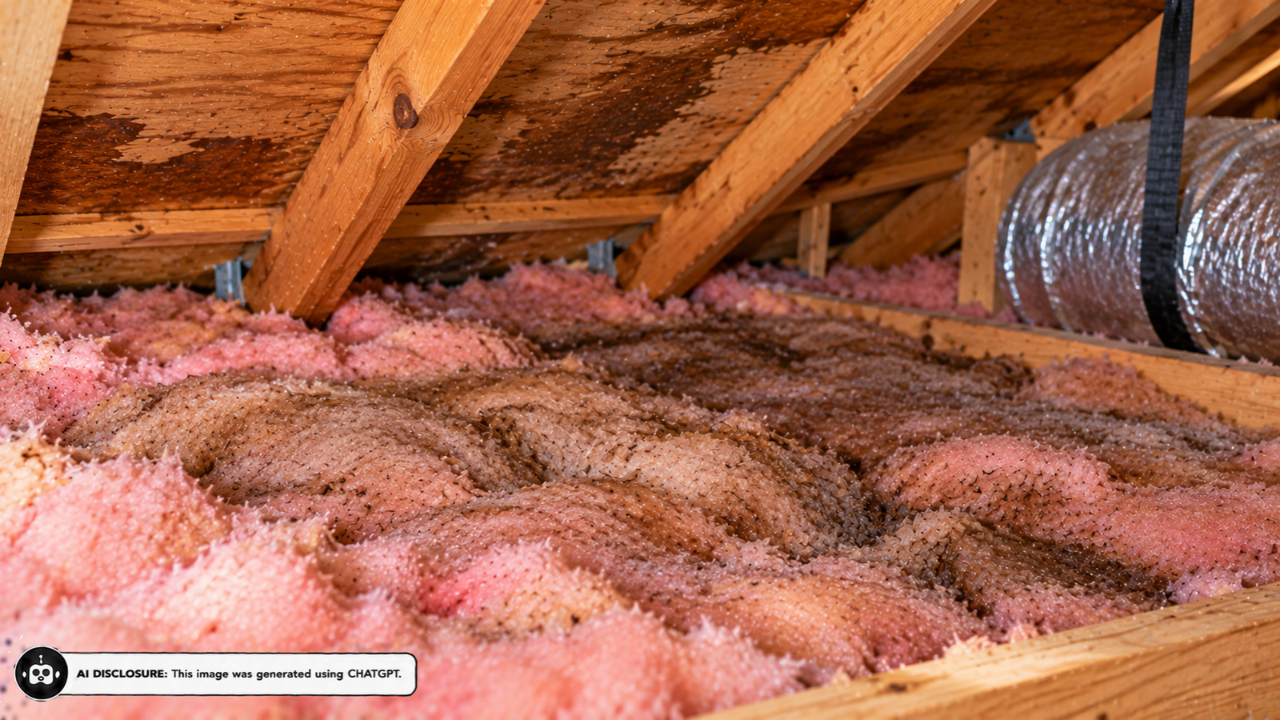
Fluffy insulation should stay fluffy. When it gets damp, it mats down and loses performance, and it can take a long time to dry in a stagnant attic. Wet insulation also hides stains and makes it harder to spot small roof leaks early.
If you find damp spots, track what’s above and below them. A roof leak usually leaves a trail on the wood; condensation often shows up in wider areas, especially near eaves and around ducts. Small sections of wet fiberglass can sometimes be pulled, dried, and put back, but soaked, dirty batts and wet cellulose usually need replacement after the moisture problem is fixed.
9. Powered Attic Fan Running Constantly
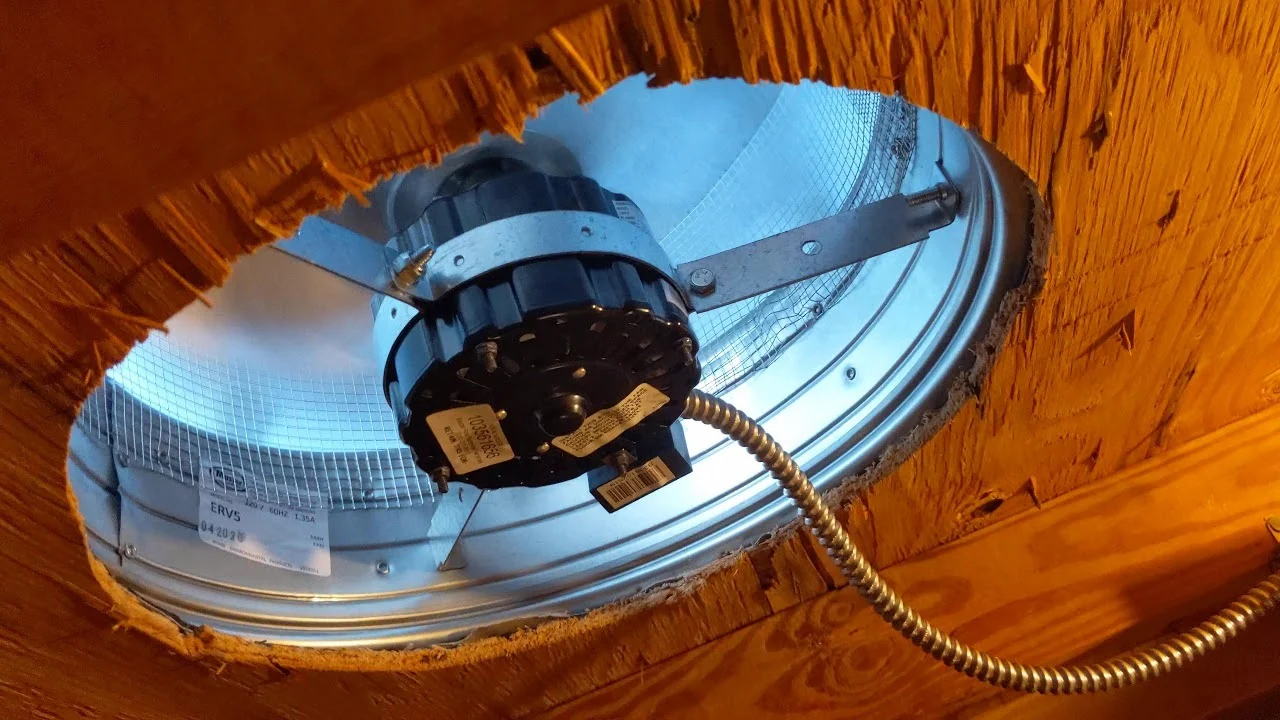
A powered attic fan that never seems to shut off is a red flag, but not always for the reason people think. The cheap fix is to install a bigger fan, and that’s often wasted effort. If you don’t have enough intake air at the soffits, the fan can pull air from the house instead, stealing your conditioned air and pulling moisture up through gaps.
Here’s the exception where the common advice is wrong: in some hot, dry climates with good soffit intake and a tight ceiling plane, a properly set up fan can be fine. The key is balance. Before spending money, check that soffit vents are open, baffles are in place, and the fan isn’t backdrafting a water heater or furnace, if you have atmospheric combustion appliances, get an HVAC pro to verify safe operation.
10. Siding And Paint Blistering Near Roofline
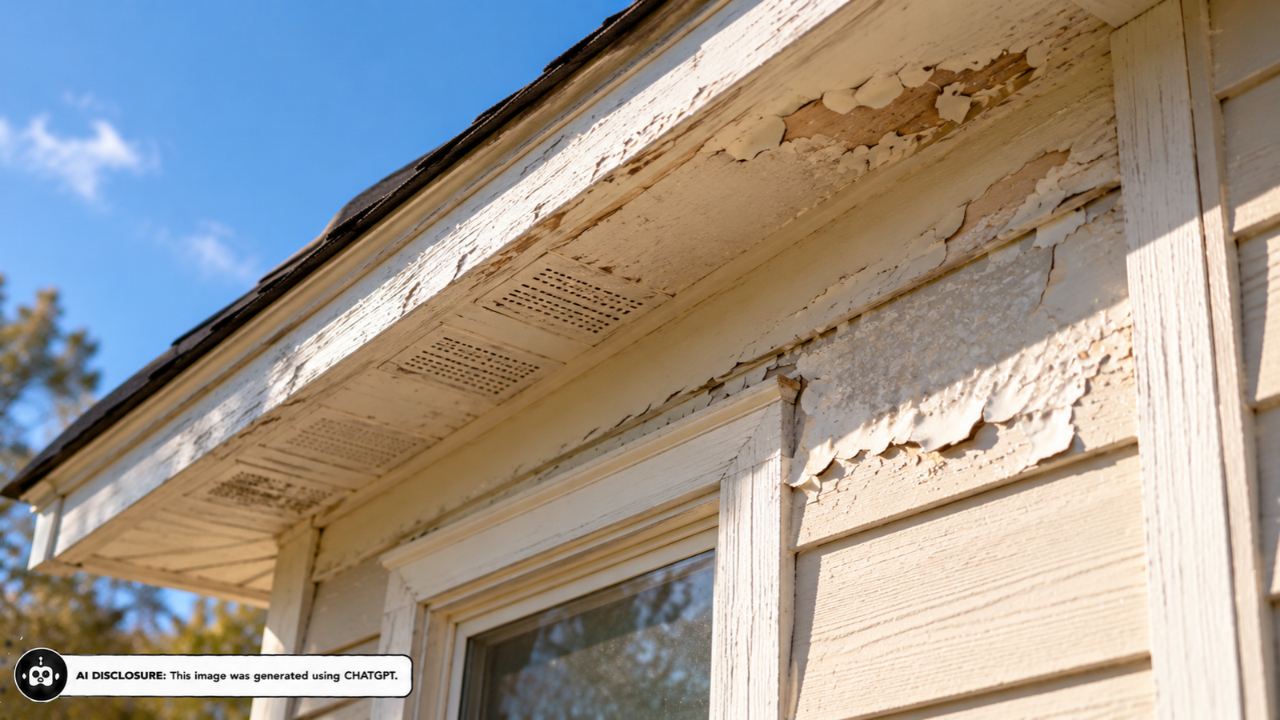
When attic air is hot and humid, it doesn’t always stay in the attic. Warm moist air can push out into overhangs and wall cavities, and you’ll see paint bubbling or peeling near the top of exterior walls, especially on the sunny side. It looks like a paint problem, but it can start with trapped moisture above the ceiling.
Take a look at soffits and fascia for staining, soft spots, and blocked vents. Also check that kitchen and bath vents aren’t dumping into soffit areas. This is a timing issue as much as anything, catch it early and you’re scraping and repainting; wait too long and you’re replacing wood.
If you only do one thing this week, go up there with a flashlight and look for blocked soffits, disconnected ducts, and damp wood. Most ventilation fixes are cheaper before the roof or insulation gets damaged, and you’ll feel the difference in the house pretty fast once the attic can breathe.
Like Fix It Homestead’s content? Be sure to follow us.