Homeowner Finds an Electric Gate and No Trespassing Signs on the Public Road He’s Biked Twenty Years — Then the City Orders It Removed
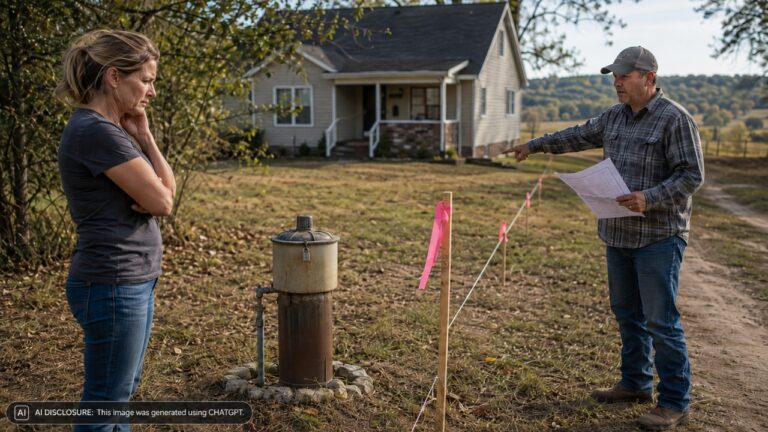
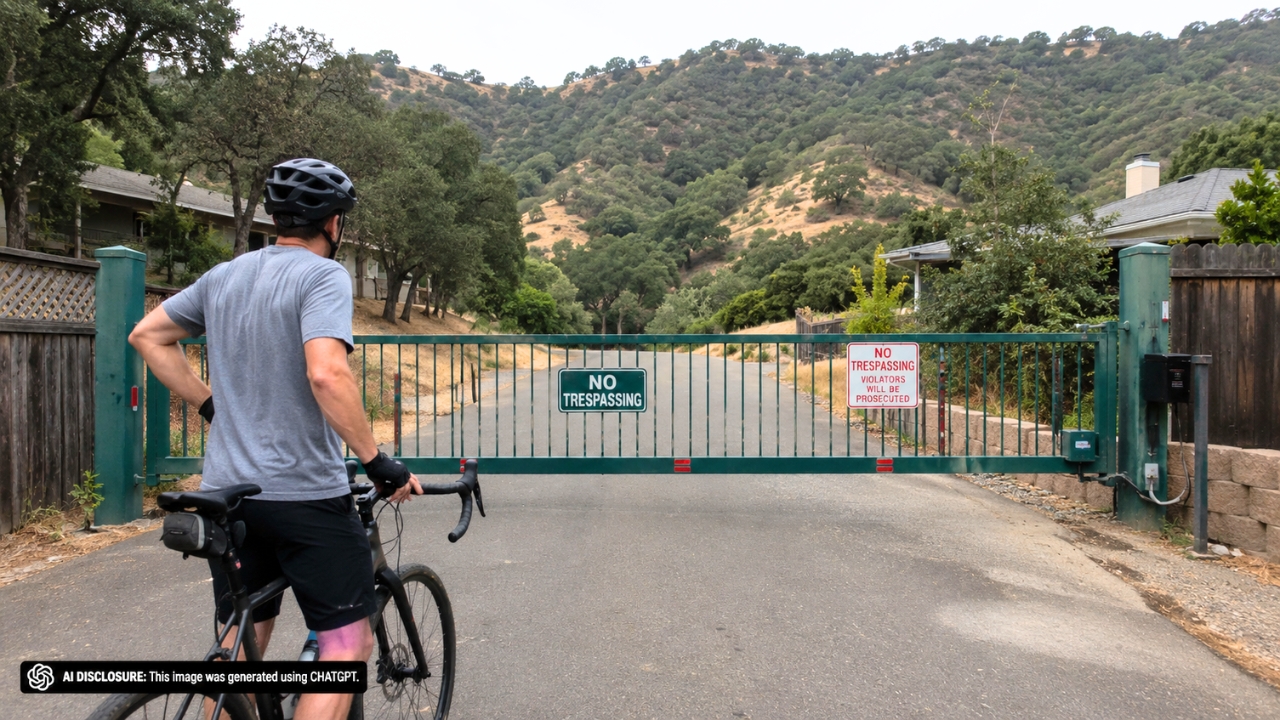
Photo credit: AI-generated image created using ChatGPT. Illustrative only.
Paul Perkins didn’t discover a cracked foundation or a surprise easement the hard way. He discovered a locked electric gate.
For more than 20 years, he says he’s biked Morrison Canyon Road in Fremont—enough times that his fitness app reportedly shows “a thousand” rides. Then earlier this month, the route changed overnight: a green electrical gate appeared across the road, along with “No Trespassing” signs. The standoff—part property-line fight, part access-to-nature fight—is laid out in the original post.
A road that felt like part of the neighborhood
Perkins told CBS News Bay Area that he bought his house on Morrison Canyon because of the road. For people who live near scenic access points, that kind of detail isn’t small. It’s daily quality of life: a quick bike ride, a walk after dinner, a way to get outside without loading up a car and fighting for parking.
Others described the same routine. Monica Melville, who said she has hiked down the path for 20 years, called it peaceful and beautiful—especially on foggy or winter days when the views open up. She also pointed out something homeowners and neighbors tend to notice quickly: it isn’t just about recreation for the fittest people. She described mobility-impaired visitors parking nearby and using wheelchairs with family help to enjoy the straightest, easiest stretch—now cut off.
When a route like that gets blocked, it doesn’t feel like a minor inconvenience. It feels like someone took a shared front yard and put a lock on the gate.
The new gate wasn’t subtle
This wasn’t a couple of cones or a chain that might get moved after the weekend. Perkins described it as a green electrical gate—installed across the road with clear signage telling the public to stay out.
According to the report, the gate went up about 1,000 feet from the private property of Christopher George, a rancher and mortgage company owner who lives at the end of the road. That distance matters because it changes the vibe: it’s not someone protecting their immediate driveway. It’s a barrier placed down the line, in a stretch that everyday riders and hikers considered part of their public route.
Perkins’ frustration sounded familiar to anyone who has watched a “minor” boundary issue turn into an all-consuming neighborhood problem. One day you’re following the same routine; the next day you’re staring at a locked structure and realizing access depends on paperwork you’ve never seen.
Private property claims meet public-road paperwork
George’s side says the public is crossing private land. CBS News Bay Area obtained a letter from George’s attorney to the City of Fremont alleging there are no records showing Alameda County or Fremont ever asserted control over the roadway. The letter also complains that the public is “frequently trespassing” and “staging their harassment of Mr. George by photographing and recording his otherwise quiet use and enjoyment of the Property.”
On the other side, Fremont city leaders say the roadway is part of the city’s system. The city attorney wrote back that an “undisputed record demonstrates” the roadway—including the disputed terminus—became part of Fremont’s roadway system 70 years ago when the city incorporated.
And then came the part that makes this feel less like a philosophical argument and more like a homeowner enforcement nightmare: the city attorney said George “has illegally constructed an unpermitted gate.”
That’s the hinge point in these disputes. People can argue forever about where a line is on a map. But when one side installs physical infrastructure—posts, concrete, electrical work, a motorized gate—it drags permitting, code enforcement, and liability into the picture.
When the county steps back, the city steps in
The timing made everything messier. Last month, the Alameda County Board of Supervisors relinquished control over its portion of the final 1,000 feet of Morrison Canyon Road that extends beyond the gate to George’s property.
If you’re a resident hearing that secondhand, it’s easy to think, “So the county gave it up—does that mean it’s private now?” But Fremont’s response was basically: not so fast. City leaders pushed back and said the road is part of the city roadway system, despite the county’s move.
To regular people, this is the maddening part of public-rights-of-way drama. A road doesn’t look like it changes ownership. There’s no ceremony. No fence line moving two feet overnight. It’s just a gate, a sign, and suddenly you’re trying to figure out which agency actually controls the strip of pavement in front of you.
Jason Bezis, attorney for Citizens to Protect Morrison Canyon Trail, described the boundary like this: “The dividing line goes somewhere down the middle here. There should be about 25 feet on one side of the county and 25 feet in the city of Fremont.” He said that’s where the fight is—exactly where the line sits—and added, “What their attorney is saying is absolutely untrue.”
Code enforcement shows up: “nuisance abatement”
Things escalated fast once enforcement entered the frame. CBS News Bay Area reported seeing the city’s enforcement code team place a nuisance abatement order on the gate on Thursday.
George wasn’t available to interview, but his lawyer said they’re aware of the notice and plan to file an appeal. That’s another familiar moment for anyone who has dealt with building departments: once paperwork gets taped up, the argument is no longer just neighbor-to-neighbor. It becomes a process with deadlines, filings, and the risk that someone’s going to be ordered to undo expensive work.
Fremont officials also confirmed they launched a code enforcement case against the George property. Alameda County and the City of Fremont declined interviews, which leaves residents watching the physical barrier stay in place while the administrative wheels turn.
And in the meantime, that final stretch of disputed roadway remains closed to the public.
The reactions weren’t just about nature—people wanted proof
Even without a comment section attached, you can feel where public reaction tends to go in a story like this. When a gate blocks a route people have used for decades, the first instinct is emotional—anger, disbelief, the feeling of being pushed out.
The second instinct is practical. People start asking the unglamorous questions: Who owns the underlying land? What do the old maps show? Was the gate permitted? Who maintains the road? If a cyclist gets hurt turning around on a narrow section, who’s liable?
That’s why the “unpermitted gate” claim and the nuisance abatement order land so hard. A motorized gate on a disputed roadway isn’t just a boundary marker; it’s electrical equipment, a physical obstruction, and a trigger for the kind of documentation battle that can outlast everyone’s patience.
Perkins, for his part, said he simply wants access to public spaces along Morrison Canyon Road. He also talked about the bigger connectivity dream—Vargas Plateau as a connection toward the Sunol area—and suggested a trail could be put in “at a very reasonable cost.” That’s the homeowner version of compromise: if the road itself is a headache, maybe there’s a path forward that doesn’t run right up against someone’s home.
For now, though, the gate is the reality on the ground. And for the neighbors who bought into this area believing that road access was part of the deal, it’s a reminder that sometimes the most disruptive “home improvement” in a community isn’t a remodel or a fence—it’s a lock placed in exactly the wrong spot.