Homeowner Finds Her Own Fence Sits Six Feet Onto the New Neighbor’s Land — Then He Threatens to Sue Unless She Moves It
Photo credit: AI-generated image created using ChatGPT. Illustrative only.
It started like the most routine rental-property upgrade there is: a landlord replacing an old fence that had been there since the day she bought the house. Same line, same footprint, just new boards and a clean look.
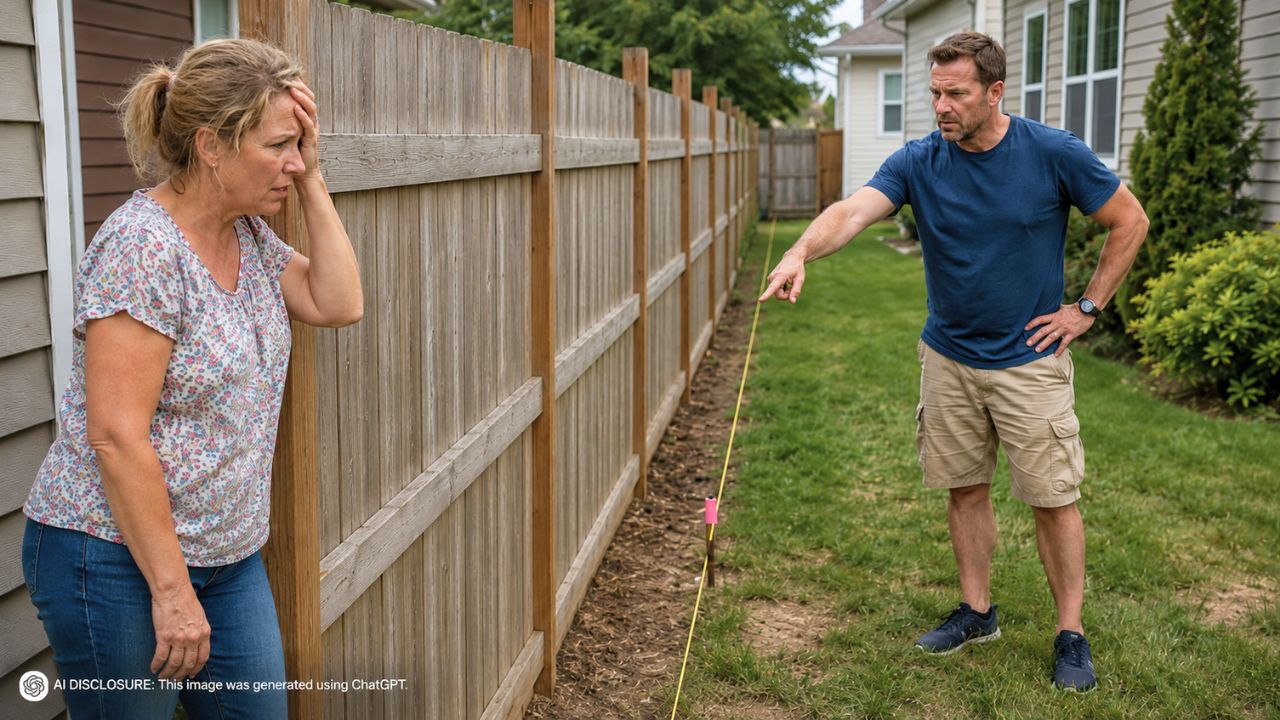
Then a new owner moved in next door, took one look at the boundary, and came in hot with paperwork. Through her property manager, the neighbor sent a survey claiming the “new” fence wasn’t just a little off—it sat roughly six feet onto his land—and warned he’d sue if it wasn’t moved. The landlord laid out the mess in the original post, trying to figure out whether she had any defense or if she was simply on the hook for fixing it.
The fence wasn’t new—just newly replaced
The owner wasn’t describing a fence she decided to push outward for extra yard. She said the fence line was already established when she bought the property a few years ago, and it stayed that way the whole time she owned it.
When it came time to replace it, she did what a lot of landlords do: swapped the old fence for a brand-new one along the existing line. No new layout, no “let’s gain a little space,” no visible drama—until the neighbor changed.
That detail is what makes these cases so maddening. A fence can sit in the wrong spot for years, even decades, and no one says a word. But the day someone new buys the neighboring parcel, the past suddenly becomes very present.
The new neighbor showed up with a survey and a threat
According to the homeowner, the neighbor had also turned his backyard into a bit of an eyesore, parking a rusted junk car behind the house. It’s not directly tied to the boundary issue, but it sets the tone: this wasn’t shaping up to be a friendly “hey, can we talk about the line?” introduction.
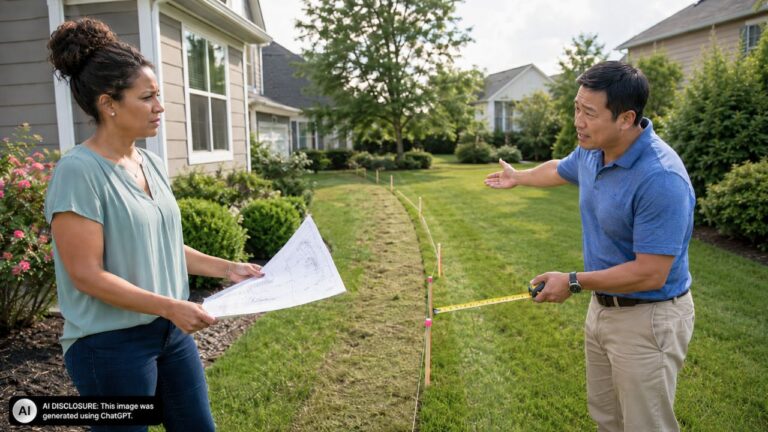
Instead, the neighbor contacted the property manager and provided a copy of a survey. The survey, he said, showed the fence was encroaching about six feet onto his property. His message was simple: move it, or he’ll sue.
Six feet is not a sliver. It’s enough that moving the fence could change how the yard functions, where gates sit, where mowing happens, and even how a tenant experiences privacy. It also isn’t the kind of measurement most people can shrug off with “well, surveys are sometimes wrong.”
She checked her own paperwork—and it matched
At first, the owner was looking for recourse. The fence line had been accepted by previous neighbors, and she’d only rebuilt what was already there. She even noted that the earlier neighbors didn’t object when she replaced the fence.
To make the picture clearer, she added a quick sketch: a solid line for the fence and a dotted line for where the survey claimed the true boundary ran. The gap between those lines was the problem, and it wasn’t small.
Then came the gut-punch update. She found a copy of the survey done by her own title company, and it matched the neighbor’s survey “unfortunately.” In other words, this wasn’t just the new neighbor waving around questionable paperwork. The documentation she already had lined up with his claim.
That moment is where a lot of homeowners feel trapped. If both surveys match, the question stops being “is he right?” and becomes “how bad is this going to get?”
The real cost isn’t just moving boards—it’s moving boundaries back in time
The homeowner’s main questions were the ones people ask when they feel blindsided: Do I have any defense? If not, am I responsible for the cost of moving it?
On paper, a fence built over a line is still a fence built over a line—even if it’s been there forever and even if she didn’t create the mistake. But the emotional friction here is that she didn’t push it over; she inherited it. She replaced an existing structure and believed she was maintaining the status quo.
In real life, though, the party asking for the fence moved usually wants it moved now, not after a deep dive into old property transfers and neighbor history. And because this is a rental, there’s extra pressure: access has to be scheduled, tenants have to be notified, and the owner can’t just walk outside and start negotiating face-to-face.
If the fence truly sits six feet onto the neighbor’s land, moving it isn’t a quick Saturday project. Posts need to be pulled, panels rebuilt, corners squared, gates re-hung, and the yard left functional. Even when it’s “just a fence,” it can be a major bill.
People focused on proof, not personality
While the homeowner mentioned the junk car as part of the backdrop, the paperwork is what gave the neighbor leverage. The moment a survey is involved, the argument stops being about who’s been reasonable and starts being about what’s recorded—and what can be enforced.
The owner had already done the most important—and most painful—step: she compared surveys. Finding that her title-company survey matched the neighbor’s meant she wasn’t just dealing with a loud complaint. She was likely dealing with a real boundary error that had been sitting there quietly until the neighbor decided he wanted his land back.
In these disputes, reactions tend to split into two camps: people who want to fight on principle because “the fence has always been there,” and people who want to limit damage by treating it like a documentation problem first. A survey match pushes many people into the second camp fast.
The threat to sue also changes the temperature. Even if it never turns into a court case, the cost of ignoring it can stack up quickly once attorneys are involved, especially when there’s a clear claim of encroachment.
A clean fence turned into a messy rental headache
There’s something especially aggravating about spending money to improve a property and then being told that improvement is the problem. The owner replaced an old fence to keep the rental maintained, only to learn the “same fence line” might be six feet into someone else’s parcel.
The previous neighbors didn’t object, which probably made the line feel settled and safe. But neighbor turnover has a way of reopening old assumptions. A new buyer arrives with a survey, different priorities, and no emotional investment in the old handshake understandings that sometimes develop between long-time neighbors.
Now the owner is stuck balancing practical next steps against a neighbor who’s already talking lawsuit. The fence may be the physical object in dispute, but the real tension is about control of space—who gets to use it, who pays to correct it, and how quickly the correction has to happen once it’s been put in writing.
For a landlord who thought she was doing routine maintenance, it’s a hard lesson: sometimes the biggest property problems aren’t in the house at all. They’re hiding in the lines everyone assumed were true—until someone new shows up and measures.
Like Fix It Homestead’s content? Be sure to follow us.