Rural Landowner Watches a Logging Crew Hired by the Neighbor Cross the Line and Cut Down a Dozen 100-Year-Old Oak and Walnut Trees — Then the Contractor Calls the Damage Only $500
Photo credit: AI-generated image created using ChatGPT. Illustrative only.
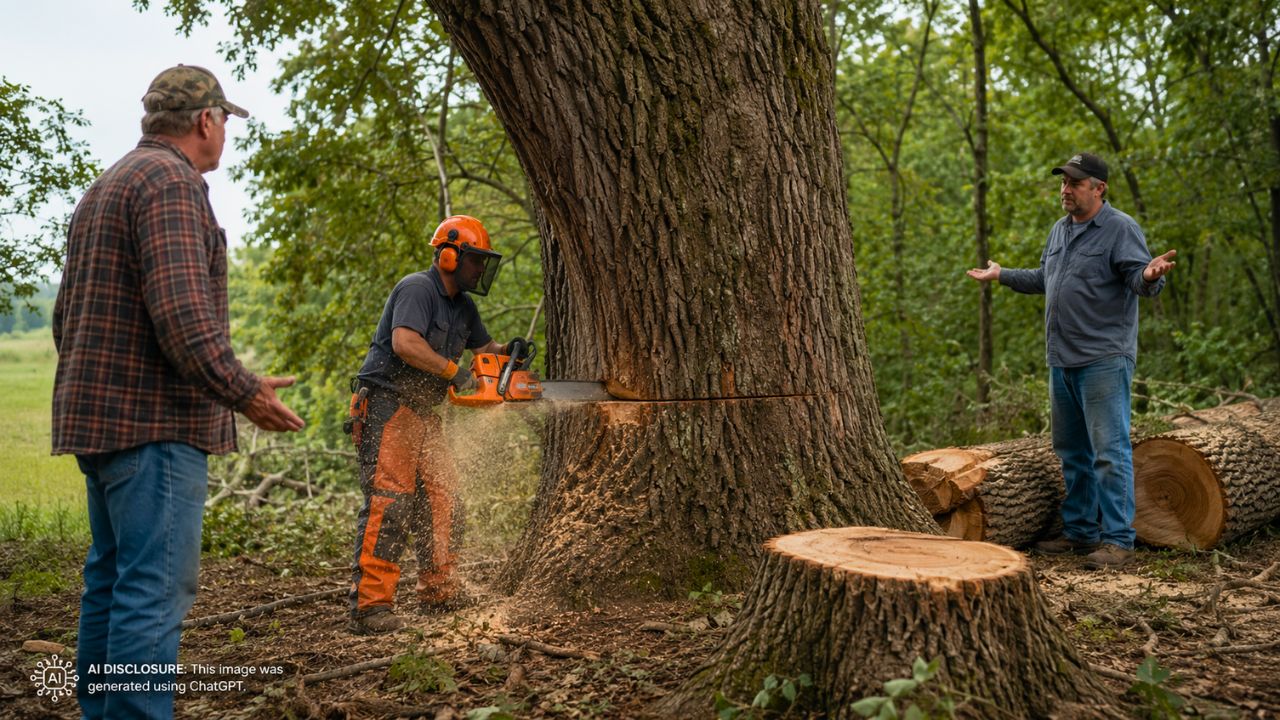
The sound of logging isn’t unusual in rural country, especially when a neighbor decides to cash in on mature timber. But for one landowner’s family, it turned into a gut-punch: a hired crew reportedly crossed a property line and dropped more than a dozen century-old oak and walnut trees that weren’t theirs to take.
In the original post, a writer explained that the neighbors had hired contractors to harvest walnut and oak lumber from their forest. Somewhere in the middle of that work, the crew “accidently cut down” trees on the wrong side of the line—trees that had been part of the landowner’s long-term vision for his 40 acres and the trails he maintains.
It wasn’t just timber — it was the heart of the property
This wasn’t a back-corner patch of brush that no one ever sees. The writer described a dad who works hard maintaining walking and horse trails across 40 acres, building what they called his “lifes dream” oasis. The cut trees weren’t framed as a minor loss or an inconvenience. They were described as “priceless.”
Anyone who’s spent time shaping rural land knows how personal it gets. You don’t just own acreage; you learn it. You plan around shade, views, windbreaks, wildlife paths, and where you want people to ride or walk. A 100-year-old oak doesn’t come back in a couple seasons, and walnut—especially mature walnut—has a value that goes way beyond firewood.
That’s what makes the emotional part hard to separate from the practical one. When a line gets crossed and old trees come down, it’s not just a “whoops.” It changes the land, the trails, the feel of the place, and sometimes the erosion and drainage patterns too.
The moment it turned from mistake to fight: “Only $500”
Mistakes happen in the woods. Property corners can be hard to spot. Old fences can wander. Logging operations are noisy, fast, and sometimes sloppy. But the escalation here wasn’t just the cutting—it was the response.
According to the post, the contractor claimed the damage amounted to $500. That number lands like an insult when the loss is described as “over a dozen 100 year old oak and walnut trees.” Even if the contractor meant $500 for cleanup or some quick estimate, it’s the kind of figure that tells a landowner they’re about to be brushed off.
And once someone tries to minimize damage like that, it changes how you handle the whole thing. It’s no longer neighborly problem-solving. It starts to look like a claim that the trees didn’t matter, or that the landowner should take a small check and move on.
Rural property lines are clear on paper — and messy on the ground
The worst part about timber trespass is how quickly it happens and how hard it is to undo. A crew can drop trees, limb them, and haul them before anyone’s had a chance to check corners, pull a survey, or even realize what’s going on.
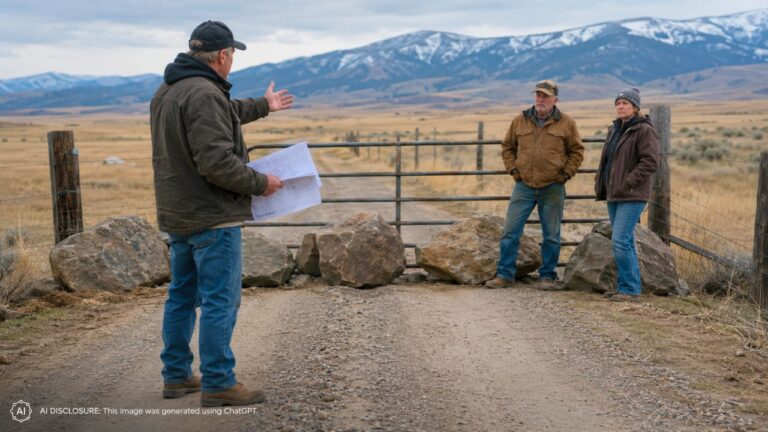
On big parcels, especially 40 acres, the “line” can feel theoretical until someone turns it into a real boundary dispute. Markers might be buried, painted blazes fade, and GPS apps aren’t always precise enough to stake a claim when thousands of dollars in hardwood are involved.
Then there’s the practical aftermath: stumps, ruts, compacted soil, torn-up trail edges, and openings in the canopy that change sunlight and undergrowth. Even if the crew took only the trunks, the land is left with the kind of damage you notice for years every time you walk or ride the trails.
That’s why these conflicts often hinge on documentation—what was standing, where it stood, and who authorized what. Once the logs are gone, it becomes a story told through photos, maps, and competing estimates.
The hidden cost: not just what was cut, but what’s now exposed
When mature trees disappear, the immediate loss is obvious. But landowners also worry about the problems that show up later. An opened canopy can change how water moves during storms, especially if heavy equipment disturbed the ground. If the logging crew crossed the line with machinery, the damage might include soil compaction that affects regrowth and trail stability.
There’s also the question of access. Trails that were carefully maintained for walking and horses can get chewed up fast by equipment. Even if the main cut was “only” a dozen trees, the travel path matters. A narrow corridor of damage can become a muddy trough every spring, or a new erosion channel down a slope.
And there’s safety. Dead branches, partially damaged trees, and disturbed root systems can create hazards along trails. The aftermath can include leaning trees that didn’t fall during the cut but are now compromised—something you don’t want near riders, kids, or anyone out there enjoying the land.
What commenters tended to push: proof first, feelings second
The writer’s question was blunt and practical: “My dad should obviously get a lawyer right?” That’s usually where online responders steer people away from handshake resolutions and toward a paper trail.
In property-line tree disputes, the most common practical reaction is to stop treating it as a misunderstanding and start treating it as a claim. That means documenting the cut area, identifying exactly where the boundary sits, and getting professional valuation rather than accepting a casual number from the party that caused the damage.
People also tend to urge landowners not to negotiate based on the logger’s estimate, especially when the logger has an incentive to lowball. A contractor saying “$500” doesn’t make it true; it just signals what they hope the problem costs them.
Even in neighbor-heavy communities where everyone wants to stay civil, the advice often boils down to the same theme: be polite, but be precise. The goal is to protect the landowner without turning the dispute into a shouting match at the fence line.
A quiet property can turn tense fast when trees are the tipping point
There’s a particular kind of heartbreak in watching someone else’s crew erase something that took a century to grow and years to plan around. The writer described their dad as devastated, and it’s easy to understand why. Land improvements like trails and managed woods aren’t just hobbies; they’re a long project that becomes part of a person’s identity.
Now the family is stuck in the uncomfortable space between rural neighbor relations and real financial stakes. If they push back hard, it could sour things with the people next door. If they don’t, they may be left with permanent loss, damaged trails, and a contractor who thinks a few hundred dollars closes the book.
It’s the kind of dispute that makes every future chainsaw sound different. And once trust is cut down along with the trees, putting the property back together—emotionally and practically—can take much longer than the logging itself.
Like Fix It Homestead’s content? Be sure to follow us.