Homeowner Says No to a Neighbor Rolling a Ten-Foot Water Tank Across a Rotting Patio Roof — Then Watches Him Roll It Across the Lawn, Garden, and Sprinkler System Anyway
Photo credit: AI-generated image created using ChatGPT. Illustrative only.
It started with a fence line that never quite felt settled, and it escalated into something you can’t just shrug off: a neighbor fastening a heavy gate onto a fence post that isn’t even on his property. The homeowner who shared the story in the original post says they walked outside and realized the new six-foot wood gate—complete with hardware and lots of screws—was attached to their fence on their side of the property line.
That would be irritating in any neighborhood. But in this household, it landed on top of years of odd boundary-pushing, including the time the same neighbor was told “no” about moving a massive water tank across a rotting patio roof… and did his rolling anyway, straight across the lawn, garden, and sprinkler system.
The first sign was easy to brush off—until it wasn’t
The backstory reads like a slow build of friction that never fully resolves. Years ago, the neighbor “butchered” a tall heritage tree in his own yard, cutting it back so severely it changed the temperature in the poster’s house, killed shade plants, and stripped away privacy.
Branches fell into the poster’s yard during the trimming, damaging plants. The homeowner says they texted that a heads-up would have gone a long way—“A little communication goes a long way,” is how they put it—and the neighbor stopped speaking to them after that exchange.
That kind of silent grudge can sit for years, right up until someone needs access, needs help, or decides the rules are optional.
The water tank “no” turned into a lawn-and-garden surprise
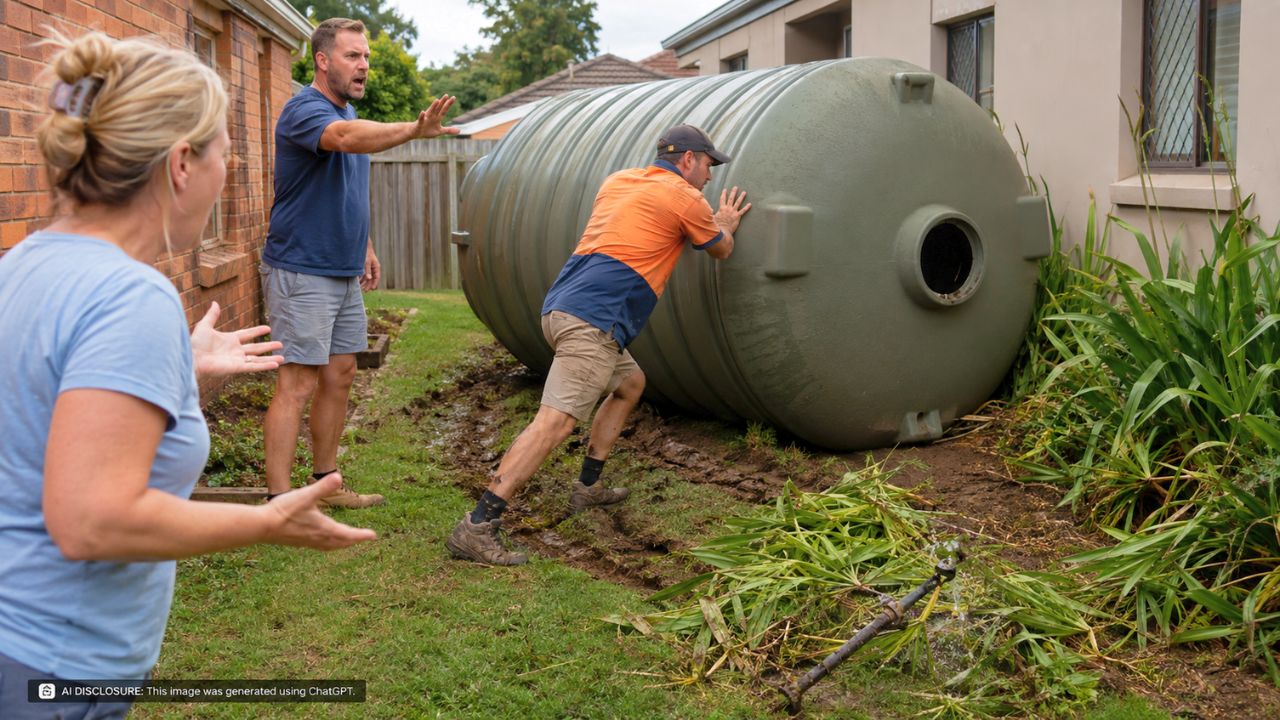
Not long after the tree dispute, the neighbor asked the poster’s husband for permission to roll a giant water tank into his backyard by going over the couple’s rotting patio roof. The poster estimated the tank at roughly six feet tall and possibly ten feet in diameter—big enough that weight and concentrated pressure would be a real concern on any aging structure.
The husband tried to work with him but ultimately said no. The patio simply wasn’t safe for that load, and the couple later replaced the roof, which suggests their concerns weren’t hypothetical.
Then came the moment that stuck. The homeowner, in the middle of a miscarriage and just home from the doctor, looked out the side window and saw the neighbor “eye to eye” as he rolled the same giant tank across their lawn—over a freshly planted garden and over a delicate sprinkler system that breaks easily.
She yelled in shock, and her husband went outside and told the neighbor to stop and get off their lawn. The tank moved, the damage was done, and the message was clear: even a direct “no” didn’t necessarily stop him.
A brief thaw, then a gate appears on the wrong side of the line
Time passed and the families settled into an uneasy quiet. Eventually, there were small gestures that sounded like progress: a baby shower invitation, polite conversation, a lasagne dropped off after the baby was born. The homeowner says they made a point of ignoring the neighbor’s paternalistic, misogynistic communication style to keep the peace.
They even had a practical, neighborly exchange about fruit trees leaning into the neighbor’s yard. The poster’s husband asked permission to pick fruit and clear straining branches; the neighbor agreed; fruit was shared. For a moment, it sounded like the kind of normal, boring cooperation most people hope for.
Then the new problem appeared without any conversation at all. The husband noticed the fence between the properties sits about a foot into their property line, and the neighbor had built and mounted a heavy wooden gate on their fence post—on their property—drilling in hardware and screws.
Worse, the poster says the fence in that section is in poor shape and the post is decades old. A heavy swinging gate, especially one that gets slammed, can torque an old post and pull panels out of square fast. This wasn’t just a “please don’t” issue. It was a potential repair bill, plus the headache of who pays when it fails.
“Can we talk?” turned into yelling, stonewalling, and a slammed gate
The couple did what many homeowners try first: they went outside and talked to the neighbor directly. The husband started with a practical point—did he realize the gate is on their property, and the fence isn’t steady?
According to the poster, the neighbor was dismissive and walked away. So she went out too and tried to keep it light, even joking awkwardly: “I heard you were doing some improvements on our property!”
That’s when things blew up. The neighbor yelled, brought up the old tree argument from three years earlier, and claimed he cut it to protect their children. He also threw it back in their faces that he “let” the husband into his yard to pick fruit—fruit that was leaning over the property line and was handled with permission and scheduling.
When the homeowner tried to say, again, that a heads-up would help and that they wanted to work together, she says he walked away mid-sentence and slammed the gate in her face. She watched him slam it multiple times during the exchange, which only reinforced her fear that the old post and weak fence wouldn’t survive long.
She then tried to speak with his partner at the door to avoid leaving things in a hostile limbo. The partner initially responded as if the homeowners were being unreasonable—“so are you saying you have a problem with this?”—but eventually nodded along as the couple explained their boundary: don’t attach structures to their fence, on their property, without permission and a plan.
The neighbor, however, would not look at or speak to the homeowner during that conversation.
What neighbors in the comments zeroed in on: proof, boundaries, and not “sharing” a fence by accident
The post itself doesn’t include a full comment thread, but the homeowner’s question—“What do I do next?”—is the kind of thing that typically triggers very practical homeowner responses: document everything, confirm the property line, and stop treating a physical boundary like a social one.
Because once hardware is drilled in, the gate becomes more than an annoyance. It’s leverage. If that post rots out or the fence fails, the neighbor can claim it was “your fence anyway,” or argue the gate was there for years and everyone accepted it. Even when people have good intentions, fences and gates have a way of turning into expensive, emotional projects.
And this neighbor isn’t presenting as someone who will accept a friendly verbal agreement and follow it. The water-tank episode already showed a willingness to take a shortcut through someone else’s yard and landscaping when it suited him.
A quiet street can still have one loud property line
The homeowner’s stated goal is the one most people have: a friendly relationship where you can borrow a tool, share fruit, and wave hello without tension. But the pattern here—big unilateral moves, dismissive reactions, and escalation when confronted—makes “friendly” feel like something only one side is working for.
What they’re left with is the hard homeowner question: do you tolerate the gate and risk damage to an already failing fence, or do you insist it comes down and accept that the relationship may never recover? Either way, they’re no longer dealing with vibes. They’re dealing with load, leverage, screws in aging wood, and a neighbor who has already demonstrated that “no” is sometimes just background noise.
And on a property line, background noise has a way of turning into real repairs.
Like Fix It Homestead’s content? Be sure to follow us.