Vacant Lot Owner Who Regularly Clears Brush for Fire Safety Finds a Neighboring Nursing Home Dumping Concrete, Paint Sludge, and Tile Debris on the Land — Then the Promised Cleanup Never Comes
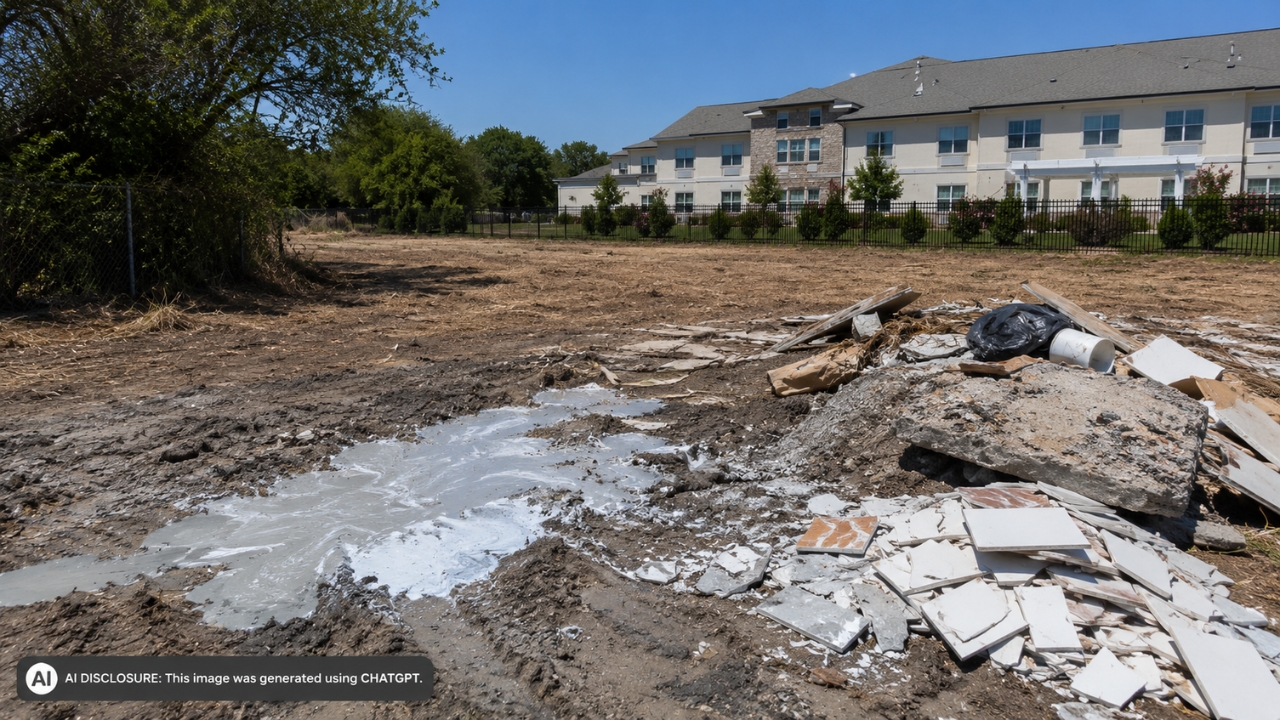
Photo credit: AI-generated image created using ChatGPT. Illustrative only.
Owning a vacant lot sounds simple until it becomes everyone else’s “extra space.” One property owner had been trying for years to develop a vacant parcel, stuck in the slow grind of zoning issues, while also doing the unglamorous work of keeping the land maintained—especially with wildfire risk in the mix.
Then, in the middle of summer, they walked the lot and found something that didn’t belong there: construction debris. In the original post, the owner describes discovering tile-remodel waste dumped on their land, along with mud spread across the property and a deeper pile that wasn’t just messy—it was hardened concrete mix and paint sludge.
They were already doing the “right” things to keep the lot safe
This wasn’t an absentee owner ignoring a problem until someone complained. The neighbor next door—an operating nursing home that recently changed ownership—had been “constantly complaining” about vegetation on the vacant lot.
So the lot owner kept clearing brush and staying on top of overgrowth. Not because it was fun, but because it lowered fire risk and kept the peace. In areas prone to wildfires, that kind of maintenance isn’t just cosmetic. It can be the difference between a manageable perimeter and a fast-moving hazard.
That’s what makes the dumping feel so upside-down. The person being pressured to keep things tidy is the one left staring at someone else’s waste.
The first pile looked like remodel leftovers—until they found the rest
The problem started in July with what looked like tile work materials—construction debris that didn’t come from the vacant lot at all. When the owner raised it with the nursing home neighbor, they learned remodeling was underway next door, and the lot had been used to stage equipment and dump waste.
But it wasn’t only a neat little stack of discarded tile and packaging. Mud had been spread across the property. And farther inside the lot sat a more troubling mix: hardened concrete and paint sludge.
That detail matters. A bag of broken tile is one thing; paint sludge is another. Even if it’s “just” leftover material from a remodel, it’s the kind of mess that can seep, stain, or trigger an entirely different level of cleanup than a quick haul to the dump.
A polite email got an apology—and then nothing happened
The lot owner tried the normal approach first. They sent a polite email asking the neighbor to remove the debris and trash from the lot. The neighbor apologized and promised to clean it up.
Months went by. The debris stayed.
That’s the part that tends to drive people up the wall in property disputes: not the first mistake, but the refusal to finish the fix. When someone says, “We’ll take care of it,” you wait. You don’t immediately escalate, because you’re trying to live next to each other. But every week the pile sits there, the promise starts to feel like a stall tactic.
And while it sits, the owner is still dealing with the original pressure—being told to keep the lot maintained—now with added trash and questionable material baked into the soil like a permanent “signature” from the remodel next door.
The argument got loud enough that police showed up
Eventually, the frustration boiled over into what the owner described as an ugly screaming match. Whatever working relationship existed between them was “effectively” over after that.
Police responded, but the owner didn’t get the kind of immediate relief people imagine when they think “call the cops.” Instead, they were told something many property owners learn the hard way: without proof, it’s difficult for law enforcement to treat it as a crime.
The advice they received was simple and practical—install a camera to capture evidence. Without video, the owner was told, it couldn’t be classified as a crime.
That leaves the owner in a weird limbo. They can see the debris. They can point to it. They can describe when it appeared and who admitted to remodeling. But in the moment, it’s still their land, their headache, and their cleanup risk—unless they can document exactly who did what.
What people pushed: documentation first, then the city
The owner’s questions were the ones most people hit after the first polite request fails: Should they escalate to the city? Consider legal action? Would posting video on social media help, or just make things worse?
Even without a long comment thread included in the source material, the contours of the advice are familiar to anyone who’s watched a neighbor dispute turn into a months-long standoff. People tend to focus on proof before confrontation—photos, dates, and clear boundaries—because these fights often turn into “he said, she said” the second someone feels accused.
And with a nursing home involved, there’s also an implied layer of complexity: multiple employees, vendors, and contractors rotating through. The person you argue with may not be the person who physically dumped anything. That doesn’t make it okay—it just makes it easier for responsibility to get blurred unless there’s solid documentation.
That’s why the officer’s camera suggestion is such a common turning point. It changes the dispute from emotional to factual. And in property problems, factual usually wins.
The mess isn’t just ugly—it can complicate the lot’s future
The owner has been trying to develop this land for years, already delayed by zoning issues. Dumped debris adds another obstacle at exactly the wrong time.
Concrete piles and paint sludge aren’t just eyesores; they can become “scope creep” in a hurry. What started as someone else’s trash can become the landowner’s cost if they need removal before grading, surveying, or any future work. If the owner eventually hires contractors to prep the lot, they may get hit with extra disposal charges or delays—especially if any material is considered difficult to handle.
There’s also the day-to-day reality: a vacant lot can attract more dumping once it’s known as a place where dumping happens. A single pile can signal “nobody’s watching,” even when the owner is watching closely. And the longer it sits, the more it blends into the landscape—until the owner becomes the one blamed for it.
Right now, the relationship with the neighbor is damaged, the promised cleanup never arrived, and the owner is staring at the same choice many property owners face: eat the cleanup to move on, or fight it and risk even more escalation. Either option costs something.
What makes this kind of dispute so exhausting is how lopsided it can feel. One person is trying to keep land safe and compliant. The other uses it like a back lot for a remodel. And the person who did everything “responsibly” ends up being the one left figuring out cameras, city calls, and next steps—while the piles of tile, concrete, and paint sludge sit right where they were dumped.
Like Fix It Homestead’s content? Be sure to follow us.