New Homeowner Finds a City Drainage Ditch Blocked by the Neighbor’s Tree Debris — Then Floodwater Erodes the Yard and Pools Six Inches Deep Around the Electrical Box
Photo credit: AI-generated image created using ChatGPT. Illustrative only.
The first week in a new house is supposed to be about paint swatches and learning which light switch does what. For one Kansas City, Missouri homeowner, it turned into a muddy lesson in how fast water can wreck a yard when it stops going where it’s supposed to.
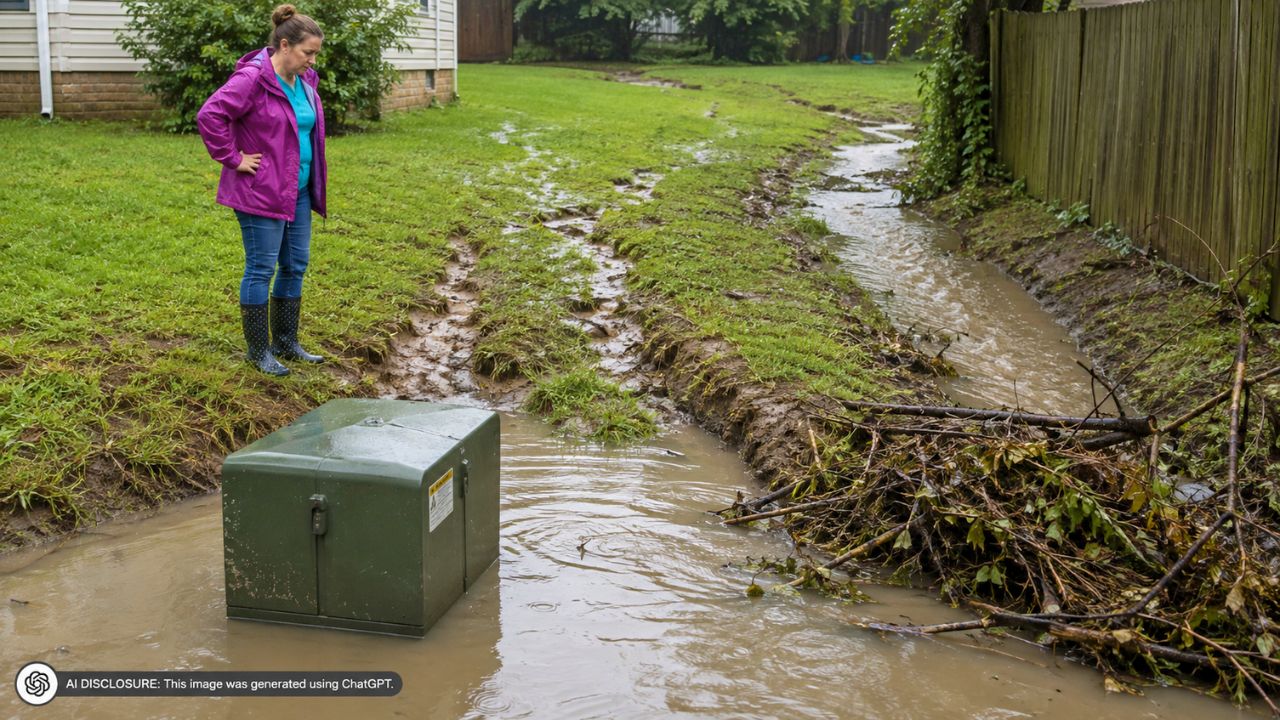
Not long after moving in, the homeowner noticed runoff that should have been staying in a drainage ditch along the back fence line was now cutting across their property instead. In the original post, they described watching grass disappear and soil wash out—while water pooled around an electrical box on their property, standing six to ten inches deep.
The “ditch” wasn’t on their land, but the damage was
The drainage channel in question runs between the two properties, along the fence line. But the homeowner said the ditch itself sits on the neighbor’s side, not theirs. That detail matters, because it means the water infrastructure they rely on is physically located where they can’t just jump in and clear it without risking a boundary dispute.
According to the homeowner, the previous owner had already complained to the city before the sale. The warning came with a story: the neighbor behind them had cut down a large tree and left the debris piled in the back corner—right in that drainage ditch.
It wasn’t just a few branches. The homeowner described “leaves, huge tree trunks, and trash” clogging the runoff path until it was completely blocked.
Once the ditch clogged, the yard became the new creek bed
When stormwater can’t move through its intended channel, it doesn’t politely stop. It hunts for the next easiest route. Here, that meant water spilling out of the blocked ditch and taking a shortcut—straight through the new homeowner’s yard.
They said the diversion wasn’t minor. Within a week of living there, the runoff had already eroded about one to two feet of grass and dirt. That’s not just ugly; that’s land physically moving away from the house, which can create low spots, undermine fence lines, and turn routine rain into a repeating disaster.
Then came the part that makes every homeowner’s stomach drop: the electrical box on their property was being surrounded by standing water, reportedly six to ten inches deep. Even when you don’t see sparks, water and electrical infrastructure in the same place feels like a countdown clock. It’s the kind of thing that makes you stop letting the dog out back and start watching weather forecasts like they’re personal threats.
The city said they sent notice—meanwhile, the ground kept washing out
The homeowner did what many people would do first: they contacted the city. The city reportedly responded that they had sent an “official notice” to the neighbor. But a month after complaining, the homeowner said they hadn’t heard anything back that actually changed conditions on the ground.
That gap—between paperwork being “sent” and the real-world blockage being removed—is where property damage piles up. Every rain event is another round of erosion, another widening channel carved into the yard, another chance for pooled water to linger near equipment that was never meant to be in a swamp.
And because the ditch sits on the neighbor’s property, the homeowner felt boxed in. If the city drags its feet, do you trespass to prevent your yard from disappearing? Or do you wait, photograph the damage, and watch the problem worsen while you hope enforcement catches up?
The scariest detail wasn’t the mud—it was the utilities
Losing a strip of grass is one thing; dealing with standing water around electrical infrastructure is another. The homeowner emphasized that the water was collecting around the electrical box, not just passing through as runoff.
When water pools, it can soften soil and create sinky areas that get worse with each storm. It can also become a magnet for mosquitoes and other pests once it sits long enough. And psychologically, it changes the way you use your property. A backyard stops being a backyard when it turns into a hazard zone you don’t trust.
The homeowner wasn’t describing a theoretical future risk. They were describing an active, visible problem happening in real time, with the yard continuing to erode while the enforcement timeline remained unclear.
People zeroed in on documentation and responsibility
The homeowner’s big question was the one you ask when the mud starts costing real money: who pays? They asked whether the neighbor—or the city, if it didn’t act quickly—could be responsible for the damages and required to cover repairs.
Even without a pile of back-and-forth comments included in the source, you can see the familiar pattern from these kinds of property disputes: responsibility gets fuzzy when multiple parties are involved. The neighbor created the blockage (according to the homeowner). The ditch is tied to city drainage and enforcement. The damage is happening on the homeowner’s land. And the clock doesn’t stop while everyone figures out whose form needs which signature.
What makes these stories spiral is that the “right” fix—clearing the ditch—can be simple, but getting it done through the proper channel can be slow. Meanwhile, the homeowner is staring at erosion lines getting deeper and water creeping toward equipment they never expected to think about in their first month of homeownership.
Living with a problem you can’t fix yourself is its own kind of stress
The homeowner described being a first-time buyer, which adds another layer. When you’re new, you don’t yet have a mental catalog of what’s normal, what’s urgent, and what’s going to turn into a five-figure nightmare if you ignore it.
This is also the kind of issue that can sour neighbor relations fast. The debris pile wasn’t described as an accident; it was described as tree trunks, leaves, and trash left in the ditch after a tree was cut down. Whether it was negligence or “I’ll deal with it later,” the effect was the same: one property’s debris became another property’s flood path.
For now, the homeowner is stuck in that brutal in-between—trying to get the city to enforce a fix, watching the yard continue to wash away, and worrying about what happens if the next storm is bigger than the last. And once you’ve seen water pool inches deep around an electrical box, it’s hard to unsee it.
Like Fix It Homestead’s content? Be sure to follow us.