Homeowner’s Water Turns Dark Gray for a Week After a Neighbor Drills a New Well Across the Street — Then the Well Company Says “These Things Happen”
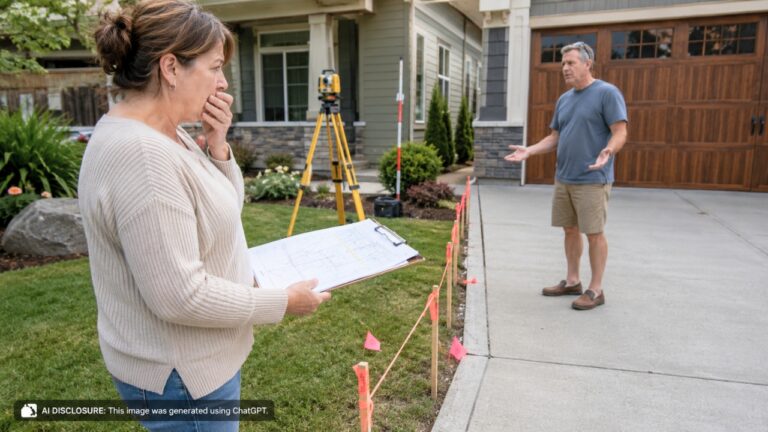
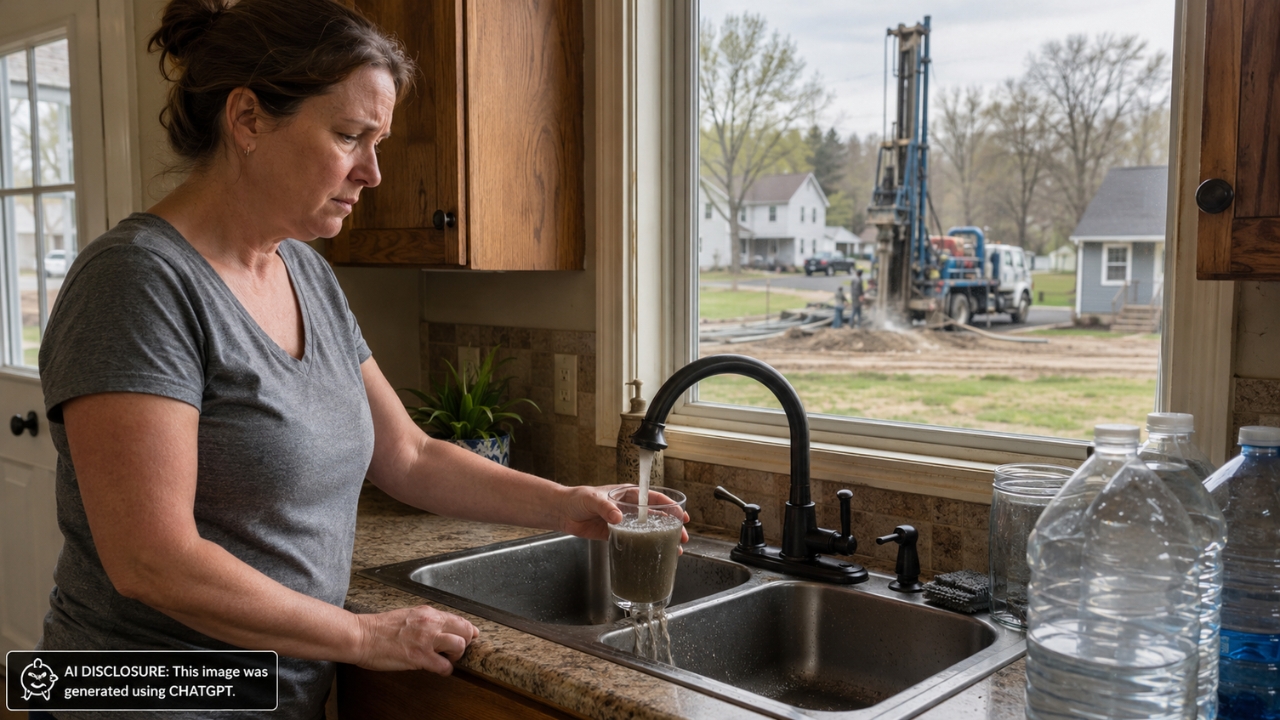
Photo credit: AI-generated image created using ChatGPT. Illustrative only.
When you’re on a private well, you learn to read your water the way other people read the weather. Clear today, metallic tomorrow, a little cloudy after a storm—most homeowners can live with small swings. What’s harder to live with is turning on the tap and watching it run dark gray, gritty, and unusable day after day.
That’s what one homeowner described in the original post: a new well was drilled on a vacant lot across the street, and suddenly two nearby homes—this homeowner’s and the closest neighbor’s—were stuck with muddy, silty water that wouldn’t clear, even after running it for long stretches.
A new well across the street, and then the taps changed
The timeline was simple and maddening. A neighbor drilled a new well on a vacant lot across the street. Soon after, the homeowner’s water “was disturbed and ruined,” turning dark gray and filled with particulate.
This wasn’t a quick burp of sediment that cleared in a few minutes. The homeowner said it stayed that way for a full week, no matter how long they tried to flush it out.
And when the water goes bad on a well, it isn’t just an inconvenience. It knocks out drinking, bathing, cooking, and cleaning—normal life stuff you only notice when it’s suddenly off-limits.
“Let it run for a little while” turned into a week without usable water
When the homeowner raised the issue, the response they got was dismissive: the neighbor and the well company reportedly said “these things happen” and told them to let the water run for a little while.
Anyone who has lived on a well has heard some version of that. Sediment happens. Aquifers shift. Pumps stir things up. But the homeowner’s frustration came from the duration and the severity—dark gray water, visible particulate, and “little to no change” after a week of trying.
That’s where the tension really set in. It’s one thing to be told it’s normal. It’s another to be standing in your kitchen a week later, still unable to trust what’s coming out of the faucet.
The damage didn’t stop at one house
What made it feel less like a random fluke was that the closest neighbor was affected too. Two nearby wells being hit right after a drilling job across the street is the kind of pattern that makes people stop shrugging and start documenting.
The homeowner wrote that the affected neighbor even got a quote to fix their well—and it was “a large amount of money.” No exact number was shared, but the implication was clear: the “fix” wasn’t going to be a cheap filter change.
That’s also where the emotional math changes. If the only way out is a major repair or remediation, it stops being “annoying” and starts being “life-disrupting.” And it raises the obvious question: why should the neighbors pay to clean up a problem they didn’t create?
The expensive part is not knowing what “fixing” even means yet
The post captured a specific kind of homeowner dread: the fear that you’re about to get dragged into a repair rabbit hole where everyone points somewhere else. The drilling company says it happens. The neighbor isn’t eager to take responsibility. Meanwhile you’re the one buying bottled water and staring at gray tap water.
On private wells, “muddy” can be a few different problems. It might be sediment stirred up in the aquifer, fine silt pulled through the system, or disturbance that affects multiple wells in the same area. Homeowners also worry about what that grit is doing to equipment—clogging filters, wearing down a pump, coating fixtures, or settling in a water heater.
The homeowner didn’t list what kind of system they have (well depth, pump type, filtration), but the lived reality came through: even if the water eventually clears, the week-long stretch of unusable water can leave behind costs and damage that don’t simply “run out.”
People zeroed in on recourse, proof, and paper trails
The homeowner’s core question was blunt: “Is there any recourse?” They described it as unreasonable that another person’s actions could have such a detrimental effect on daily life with no path forward.
Even without a long thread of comments included in the source material, the practical next steps almost write themselves because this is how these disputes typically turn: you need a record of what happened and when, and you need something more solid than a phone call with a contractor who says it’s normal.
When water turns visibly gray and remains that way, homeowners start thinking in terms of documentation—photos or videos of the water, notes about dates and how long it was flushed, any communication with the neighbor and the drilling company, and any written estimates or findings from well professionals. The reason isn’t drama; it’s that once money enters the picture, memory turns into argument.
And if the neighbor already has a drilling company involved, homeowners often want to know whether permits, local well rules, or professional standards apply to the work. The post didn’t mention any permit details, but it’s the kind of thing people immediately want to verify when “these things happen” becomes the only answer.
Living with the gray water while the blame game starts
The most frustrating part of this kind of mess is that the harm is immediate, but accountability is slow. You can’t wait weeks to bathe. You can’t “just run it” forever when the water stays dark gray and gritty. And you can’t easily prove cause and effect from your kitchen sink.
Meanwhile, the neighbor who drilled the well has already gotten what they needed—work completed on their end—while two nearby houses are stuck troubleshooting a problem they didn’t sign up for.
The homeowner’s post didn’t offer a neat ending, just the stuck-in-the-middle reality: two households dealing with unusable water, a well company brushing it off as routine, and at least one expensive estimate floating around. In rural and semi-rural neighborhoods, that’s the kind of dispute that can linger long after the water clears—because once you’ve watched your tap run dark gray for a week, it’s hard to forget how quickly “normal life” can be knocked offline by someone else’s project across the street.
Like Fix It Homestead’s content? Be sure to follow us.